Inspired by and inspiring the textile design discipline

Thirty years ago I began my art school experience studying a diploma in Surface Pattern, a little unsure of what was meant by the course title, but keen to find out more as it involved drawing, printmaking, pattern and textiles. I thrived at art school, building practical skills and theoretical knowledge, growing in confidence in my ability, encouraged to experiment and play with ideas and processes. When I think back to what I understood of careers in textile design at this time, I have little memory of career planning, or job role research. This was the era of the Yellow Pages; I couldn’t Google it! I made decisions about my degree course based on the fact my tutors suggested I was more of a printer than a knitter or weaver. 
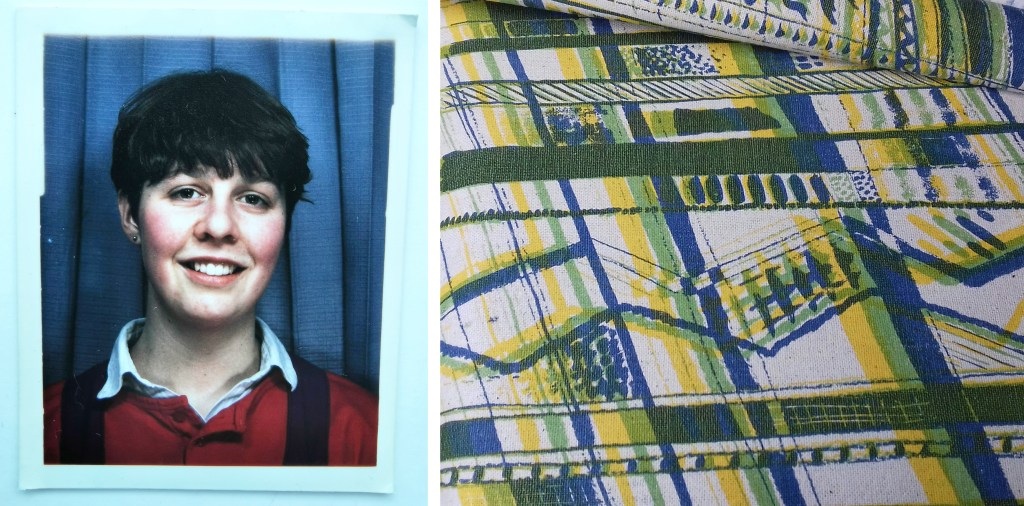
The art school student and the first screen printed pattern

During my degree I undertook a floral print project in the first year and hated it so much I nearly threw it in for fine art printmaking, but then I gave myself a talking to, and realised I wanted to frame my practice in design, to apply my thinking to scenarios, and to problem solve. This has stood me in good stead, both as a designer and academic. I believe the context in which we work is as important as the role we undertake.

I think back to those days and see a very different textile industry to the one we are experiencing now. I graduated at the dawn of digital design, without the range of composite surface materials for interior applications, or bespoke digital production that enabled me to collaborate with Formica when launching my collections in the mid 20-teens. As a freelance designer in the late 1990s I was posting hand painted textile designs in large cardboard tubes across the country to my agent and sending my portfolio out as slides (transparencies) for exhibition applications, hoping they would be returned to save me money and hassle – they rarely were! Thank goodness for the digital cloud of today, allowing files to be accessed around the globe in an instant. Laser cutting and 3D printing have become the norm (even in schools) since then, and expertise in digital software is a basic requirement in graduate jobs. It is easy to take these developments for granted – but our line of work is transformed.

Over the years since that time, I’ve built a career embracing many different opportunities as a designer, artist and designer maker: launching my own brand collections, undertaking illustration or pattern commissions, exhibiting, designing public art (including three large gravel roofscapes and three public toilets!) as well as leading residencies in healthcare settings. I have enjoyed the variety of projects I have completed, building my understanding of several sectors of the industry. Ensuring I remain up to date with industry developments has been key to the relevance I maintain in my academic position. 
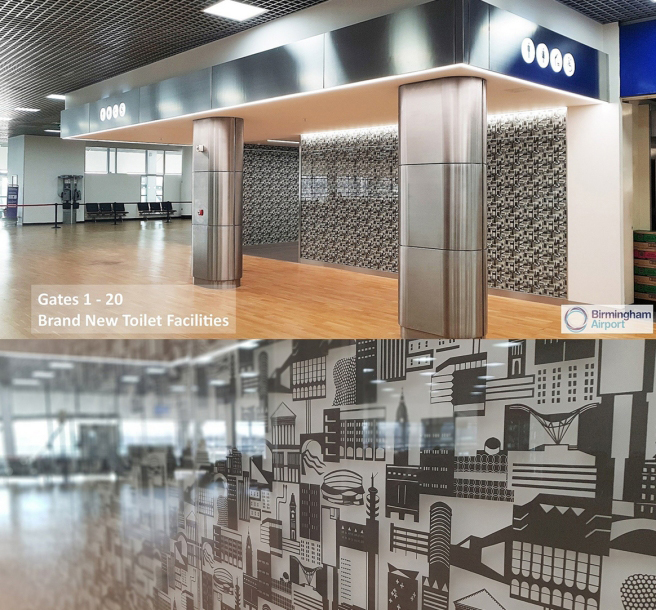
Birmingham Airport commission, fabricated by The Window Film Company

In the last twenty years we have seen the development of ‘smart’ textiles for medical applications, interactive electronic textiles for military and domestic use, bio-materials and colour developed from bacteria and new design opportunities in the digital realm within the simulated environment – the metaverse, an emerging international arena. At the same time, during a global pandemic we see a resurgence in low-tech craft with textile processes such as crochet and knit identified as beneficial activities for our wellbeing, and a fightback against the consumer culture. 

The breadth of opportunity available across the discipline of textile design today is exciting, and fast evolving. Revisiting craft practices for contemporary markets is not new. The Arts and Crafts movement spearheaded by William Morris, advocating for handicrafts and naturally dyed yarn and cloth, was an attempt to battle against technological innovation and the resulting cheap and poor-quality products flooding the market. The current growth of interest in craft practices again connects us to the heritage of making and the close relationship with material and process that nurtures us. Sustainable solutions compete with mass produced problems. Customers are easily overwhelmed by choice and price-points, single use versus something for life – future heirlooms, or landfill. Digital design provides solutions by reducing fabric waste in the fashion industry using 3D digital rendering to identify and fix issues, where previously each garment in each size or colourway would be produced and discarded as products were developed. Craft and technology are not mutually exclusive.

The creative industries we have today were unimaginable to me as a student, and now, I think about the relationship today’s students have with the industry and how far into the future they can imagine. As head of the discipline at my institution I am required to consider the future of textile design, to design an educational experience to not only equip the students and graduates for roles that we know about, but also provide them with the curiosity and creativity to shape the roles we can’t quite define. Ambitious ideas need to be partnered with strong realisation skills, traditional craft and making skills paired with digital competence. Let’s see where the next thirty years takes us!

Construct collection by Kate Farley, in collaboration with Formica

pattern informs the piece: Zandra Rhodes exhibition review

Finding a couple of hours to spare in London last month I took the decision to head across the river to the Fashion and Textile Museum, and specifically, the Zandra Rhodes: 50 years of Fabulous exhibition. It proved to be a perfect visit for where my head was at; juggling fashion and textile design in both a design commission and my academic life.

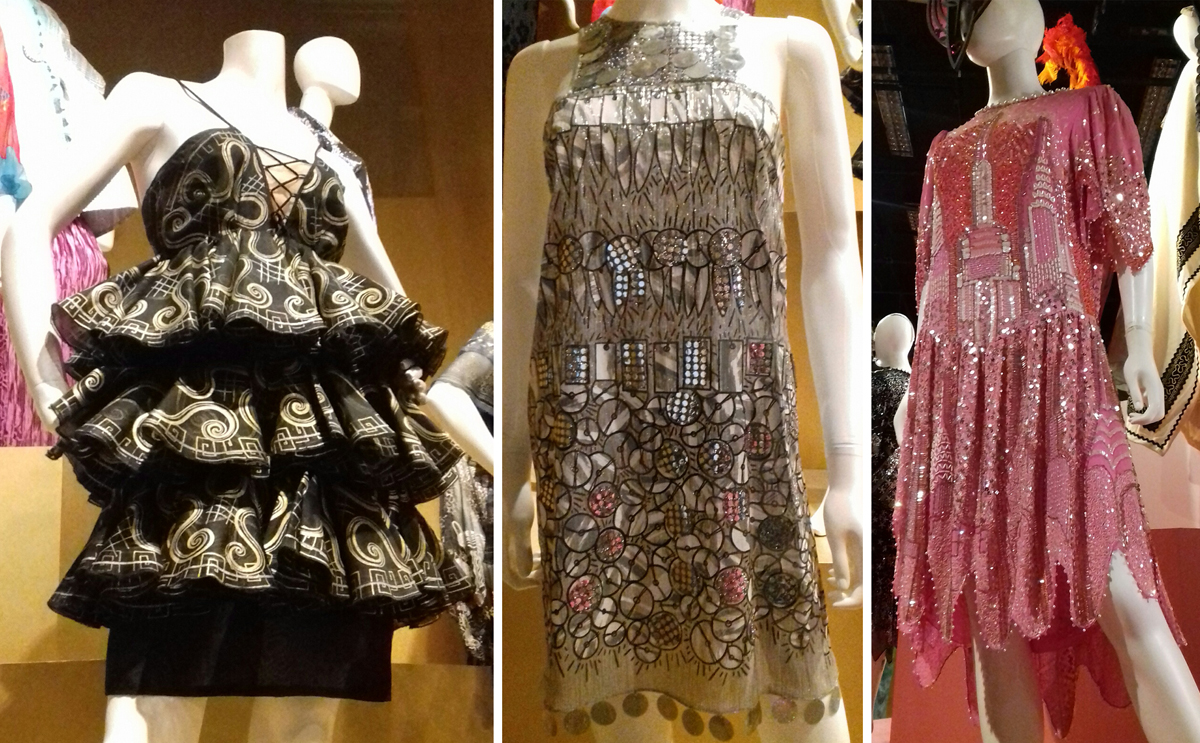
Zandra Rhodes is first and foremost a textile designer although it is her fashion designs that carry the printed and embroidered pattern she is famous for. The silhouettes of the garments, constructed often from multi layered draping fabrics are guided in their execution, in fact dictated by, the pattern design of Zandra’s strong handwriting or pattern, and executed using print processes and surface manipulation.

I’ve included plenty of images of these outfits in university design lectures over the years, discussing how the designer maintains the focused design style and aesthetic but also manages to evolve the work through the decades.

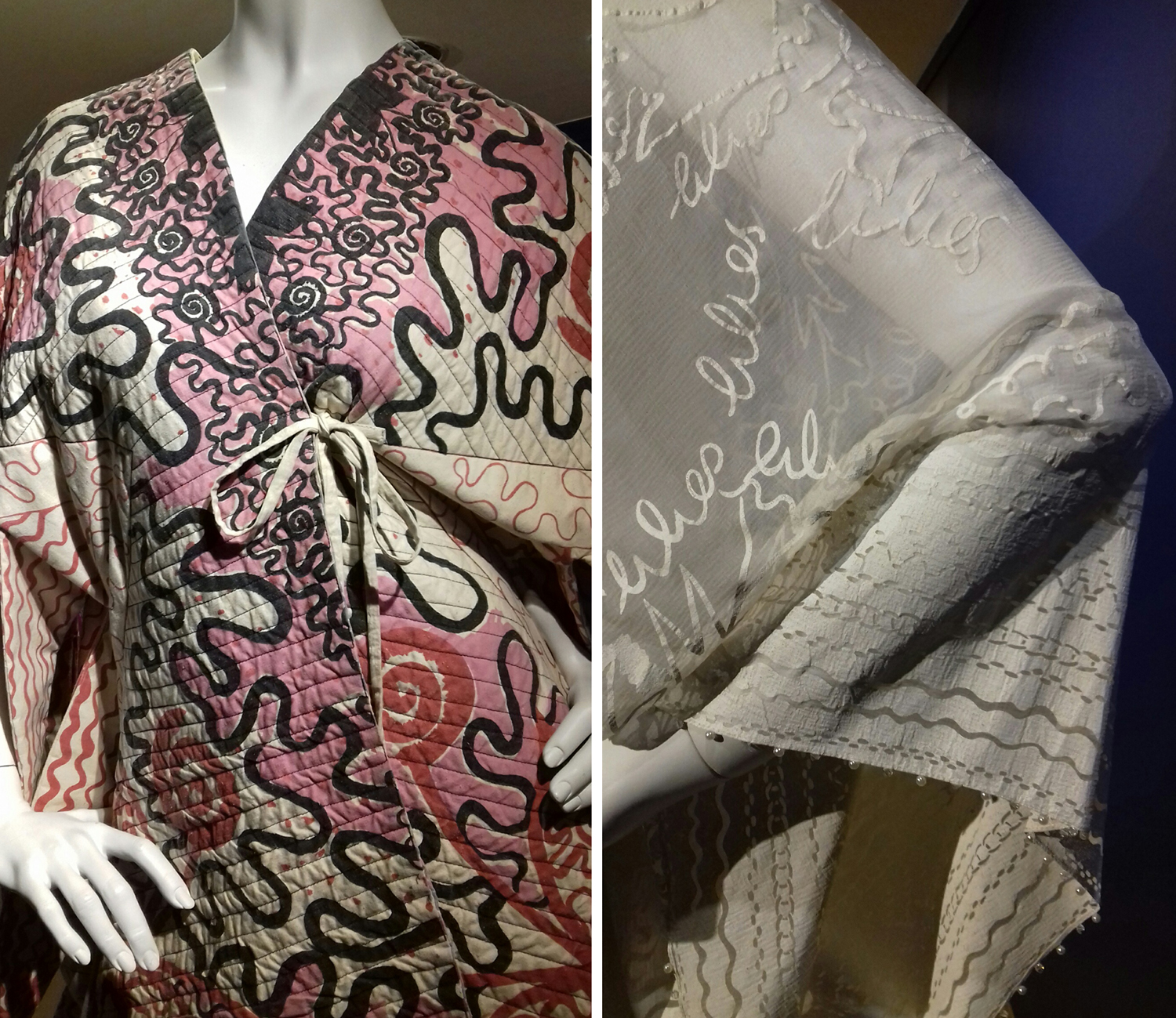
As ever it is very different when you get the chance to see the fabrics in real life. The white printed pigment on chiffon from the ‘Lovely Lilies’ collection (below right) and the quilting over screen printing of her signature swirling motifs as borders and placement prints provides the evidence that Zandra Rhodes is first and foremost exploring fabrics to lead garment design.

ZH_highlights

The variety of fabric manipulation and surface embellishments was fascinating to see, some rather crude and some pieces held their own more than others. The ease in which the textiles worked as one with the garment design is certainly demonstrated throughout the exhibition, and it was useful to see the screens for printing to see the composition of the designs later on in the exhibition.

ZR_patterns

The theatricality of Zandra Rhodes’ work was a perfect match for opera costumes, and upstairs in the gallery a number of interesting examples were showcased. I also enjoyed seeing original sketchbooks alongside a film of the designer talking about how important drawing is to her. I hope many textile design students visit the show and take her advice.

ZR_dresses

There is a significant body of work on exhibition here and it is important to view it as a considerable output of a single designer with a thirst for carnival. Her practice spans fifty years, hence the exhibition title and although her style is not for everyone, her contribution of bravery, exuberance and fabric play should inspire others to take creative risks and find a way to make the work they want to make.

I would also recommend the small showcase of company overview and embroidery work by Norman Hartnell as you enter the gallery – stunning pieces from a different era.

The show is on until the 26th January, 2020.

women designers, lost and found

Sometimes themes seem to rattle around in my head, connecting with other dialogues I have had. Last week I attended a really interesting Study Day at the House of Illustration as part of the Women in Print series organised by Desdemona McCannon on the theme of Enid Marx and contemporaries. The subject of women’s careers, and specifically their profile compared with their male counterpoints was discussed – not a new idea, but as a recurring theme I thought it worth revisiting here. In the same week Stylist magazine featured an article about the price of artwork made by women compared to men. It was such a coincidence I’ll expand some thoughts here.

It’s not a secret that women often have a harder time gaining recognition in many lines of work in comparison to their male peers. I wrote in a previous blog post about Eric Ravilious and friends at Compton Verney that it certainly wasn’t lack of skill that kept the women such as Helen Binyon from comparable public attention, and therefore further opportunities through their careers. There are highly talented women in history who we are only just giving air-time to, but the fact is their careers may not have excelled in the way their male counterparts did, or if they did they may well have been paid less for the work because they were women.

Enid Marx chose not to take issue with gender-bias in her career, and got on with a multi-disciplined design portfolio, with impressive outputs including books, textiles and patterns which were beautifully communicated through the exhibition at the House of Illustration (sorry it’s just ended!) – but you can visit Compton Verney instead. We got to see the exhibition as well as listen to knowledgeable speakers such as Enid Marx expert Lottie Crawford giving a really insightful illustrated paper about the legacy that Enid Marx and her peers have created for us today, as well as Jane Audas taking us through a fascinating journey of clients and sales put in to a broader context of who’s who.

I have heard people wonder why we need to make a point about this being a gender issue, but I would say that this has been said from a male perspective, and not from those being subjected now and in the future to selective opportunities due to gender. As a woman designer, and female academic training mostly women to have design careers where there is a history of undervaluing female contribution, I remain concerned.

EnidMarx_patterns

It is sometimes the case that research can be discovered more easily about men because they were promoted more and as a result have a higher profile, whether through greater self-confidence, the social / commercial networks or marketing material, from family or company archives, past exhibitions or publications. During the study day in London the point was made that there was also a sense that women got on with the designing, often alongside raising a family or carrying out other domestic tasks. Did they lack the opportunity to promote themselves, didn’t see the need, or couldn’t find the time? Working in isolation at home can certainly challenge one’s self-belief compared to working in an office with colleagues who can praise you and your work as and when required. This reminds me of the freelance work of Sheila Bownas, almost accidentally discovered and collected by Chelsea Cefai, and brought to a new appreciative public in the last few years. The family knew little of the extent of her prolific output of designs as a textile designer until Chelsea pieced the jigsaw together, and thank goodness we know of her now!

There is another consideration here. Does the discipline these women are working in make a difference to their profile? Enid Marx worked across illustration and textiles, but her illustrations are better known. Is this because as an illustrator your name is usually on the cover of the book, even if it is on the inside, or on the poster? For freelance textile designers it can be quite different. The name of the company is usually printed as legend details on the selvedge, but historically not always the name of the designer. If this is the case we may never trace the designer. This remains the case today in industry when big name brands buy in freelance patterns and the designer’s name is not carried through.

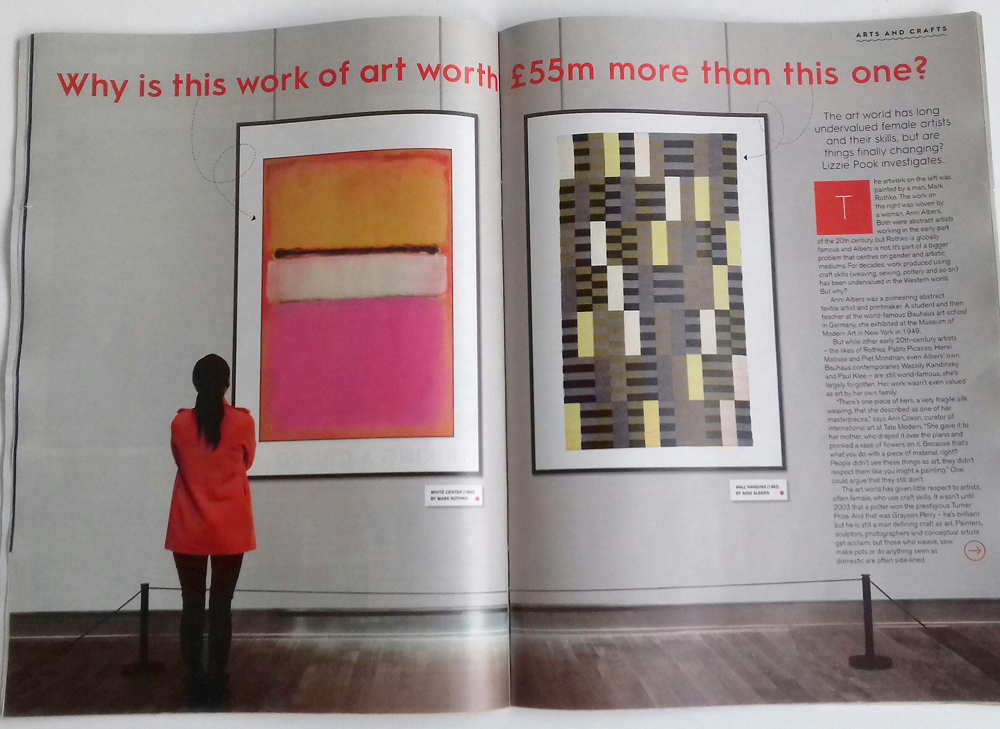
The article in Stylist compares Mark Rothko and his fine art paintings to Anni Albers’ textile practice; the subject of a show coming to Tate this Autumn. When the Bauhaus opened its doors in Germany in the Twentieth century the founder, Walter Gropius, stated anyone could study any discipline, and yet the women were rather heavily steered towards the weaving workshop, considered suitable for women. That was where Anni Albers learned her skill, fell in love with the teacher Josef Albers, took his name on marriage and continued to live in his shadow; he led a fine art practice of painting while she made textiles. I can’t wait to see the Anni Albers show – and for Anni to have the publicity men with lesser creative careers have had before.

stylist_magazine_Sept18

Craft, seen as a second-rate subject to Fine Art is part of the discussion throughout the article in Stylist, and it also makes the point that textiles is seen as a domestic activity, thanks to the increased leisure time during Victorian era. Grayson Perry has made significant strides in opening up the conversation about value of craft, but far more needs to be done to change opinions. As an academic one of my biggest concerns is the lack of respect textile design currently receives as a subject in the education curriculum and agenda. It’s becoming one of my catch phrases but I really mean it – we all wear pants! How can textiles be seen predominantly as a past-time, a hobby – when we all wear textiles, sleep under textiles and protect ourselves with textiles? How dare this government puts at risk the supply chain of future textile designers because it doesn’t see it as important enough to be a GCSE? Fashion is nothing without textiles, and this industry is one of the big ones on the global stage – don’t get me started on that!

Refocusing back on the study day, we also discussed the nature of research carried out by women, and that the particular approach / nature of research writing holds a female voice that may not be considered intellectual enough; often relating to social networks, domestic arrangements and family life. Several female audience members agreed that they doubted their own confidence when finding their research voice alongside the traditional academic tone / content they believed was expected by their male counterparts. Are women undermining themselves and lacking confidence in their own abilities?

I don’t have the answers but this is not a conversation that should stop. More dialogues involving men and women about historical and contemporary design practice, craft and textiles are needed. There is not one way, this is not binary, but we need to make sure the different voices, approaches, strategies and practices in the creative subjects and beyond are given a platform. The diverse ways of being whatever it is we are should be valued, and represented by a diverse community. Wouldn’t it be lovely if talent and opportunity were really the key ingredients for building profiles, gaining opportunities, and writing about it!

Save

Save

a textile archive of a different kind

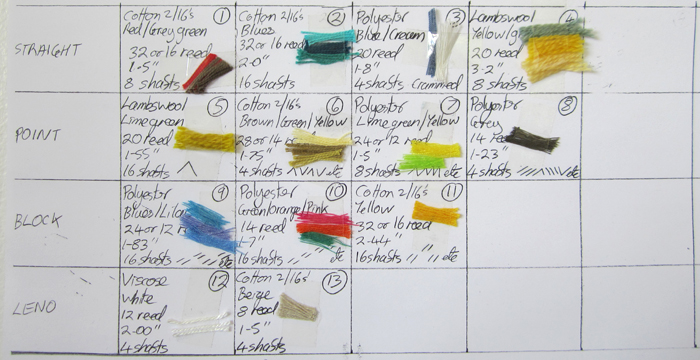
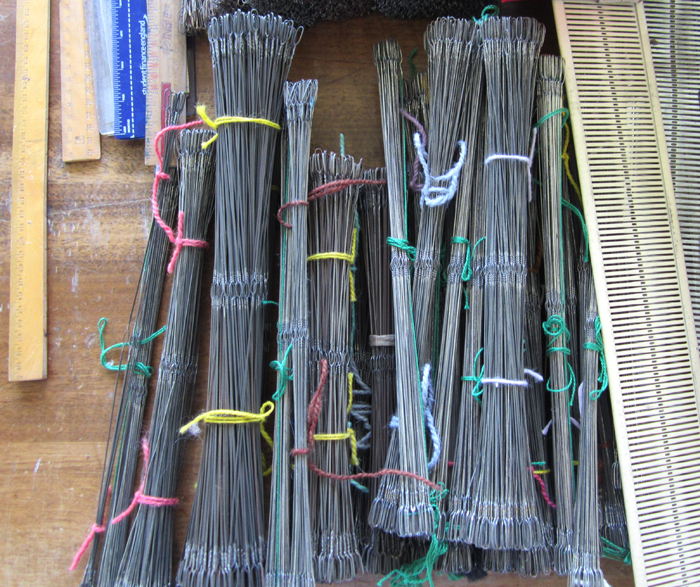
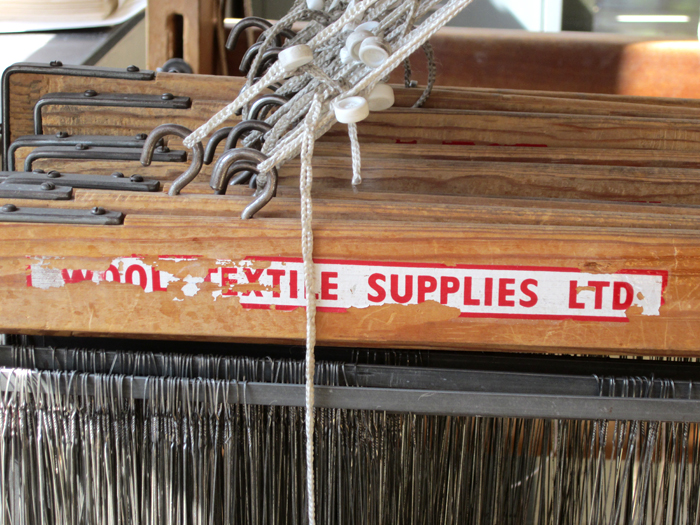
Having worked at Birmingham Institute of Art and Design, BCU at the Gosta Green site for the last few years we are moving to a brand new campus next week. There has been plenty to do packing up the workshops and studios, and during this process the course team have reflected on and recorded the space that has been home to this textile design degree for many years.

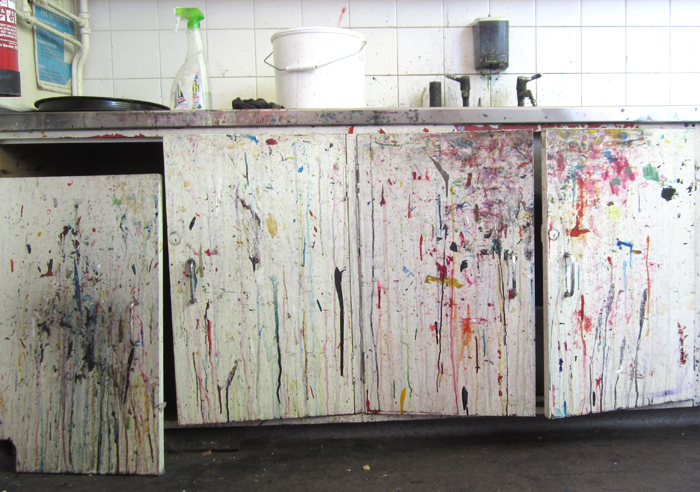
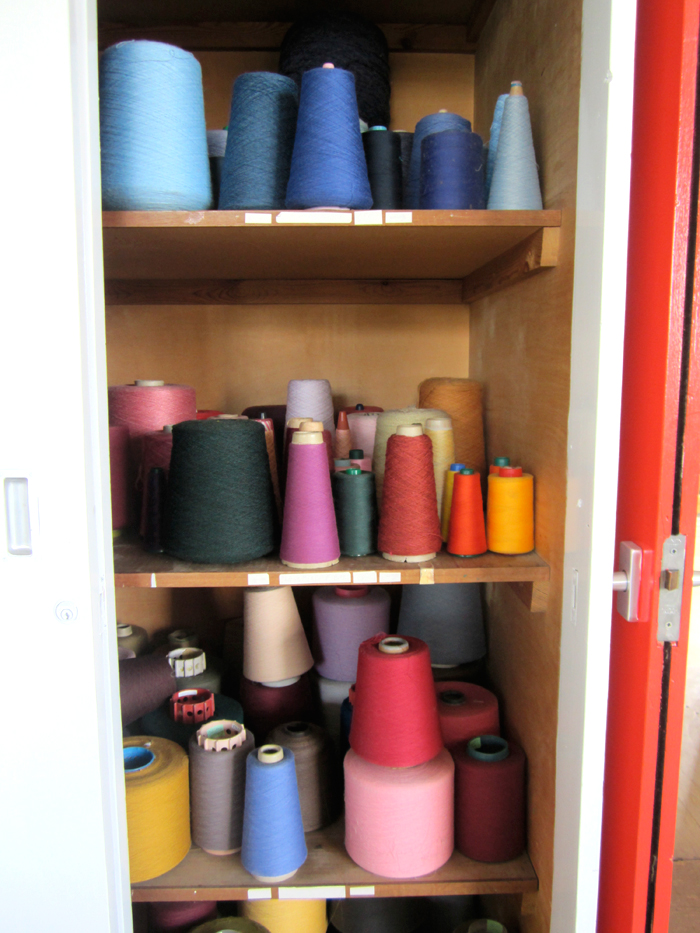
There are so many signs of demonstrations given, lectures delivered, course-work carried out and with the heavy use of the workshops comes a fabulous visual archive of the textile careers that we have helped to initiate and support along the way. We are nostalgic in many ways, but excited by the new and very clean slate that we are about to start writing history on at the Parkside building.

ImageImageImageImageImageImageImageImage