Athens past and present

In May I was lucky enough to have a paper accepted at a conference organised by the Netherlands Institute Athens on the subject of Textiles Production and Representation: From Pre- to Postmodernity. It was an incredible three-day event with truly international delegates and it was fascinating to hear about so many aspects of textiles. From spinning to weaving and knitting, from personal narratives to shared histories, from craft practices to industrial production, I learned so much. Everyone was sharing with their research and supportive of each others. I presented my ongoing practical research and received great interest and feedback too. It is a time I won’t forget easily and I’m sure we will cross paths again.

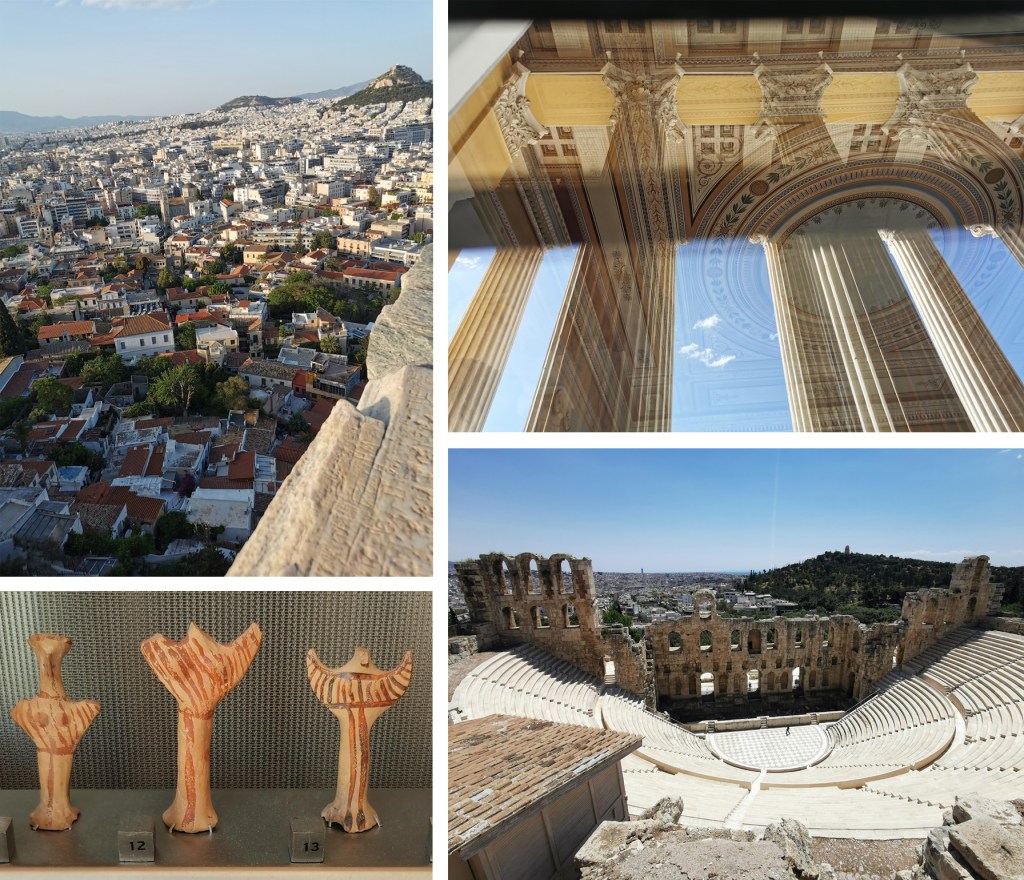
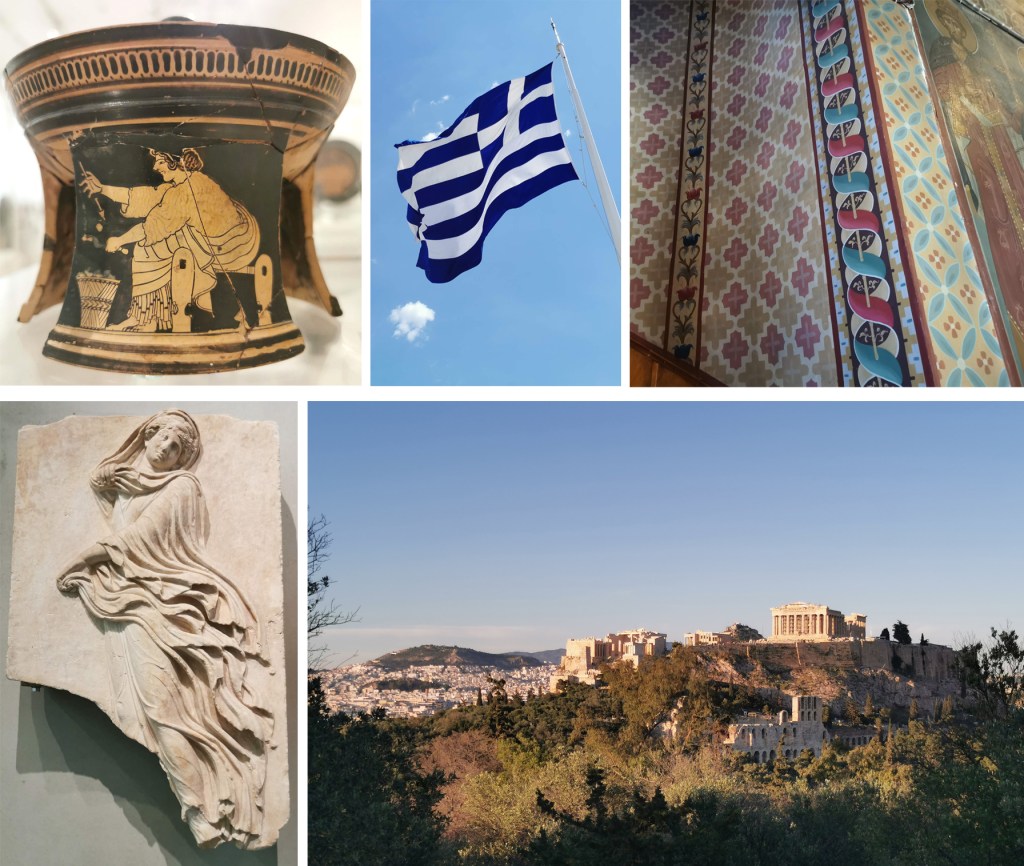
I was able to tag a couple of days of leave on to my trip so there was enough time to explore Athens. I’ve transferred flights over recent years and was last in the city as a young child with memories of intense heat and traffic, but my experience this time was very different. I explored the city on foot, through small alleys and back streets, up and down steps as well as hills. I sat watching sunsets, and took in the sites, including the Acropolis twice! I was completely taken with this city.

I walked miles, visited museums and landmarks, ate wonderful food and took lots of photographs! The dates of some of the artefacts I saw was mind blowing, as was the incredible craftsmanship. I can thoroughly recommend the Benaki museum, the Ghika museum, the Acropolis museum, the Archaeological museum, the stadium, the small squares, the classical ruins, the changing of the guards and botanical gardens, as well as Lycabettus Hill. My photos can only hint at the joyful time I had there – I can’t wait to go back!

sharing my pattern research

I’ve been busy printing and presenting my ongoing pattern research over the last few months, testing the design and print process, and receiving useful feedback – which may explain the lack of blog posts recently!

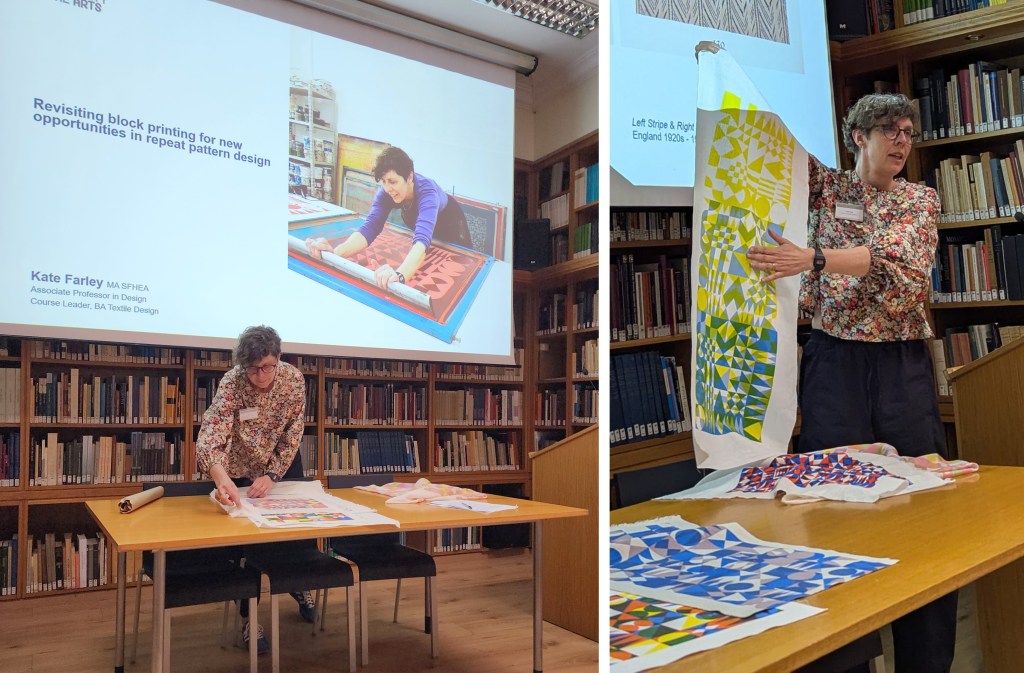
Last September I presented my work at the Fashion and Textiles Courses Association conference, Futurescan 6, held at De Montfort University in Leicester, and had a small exhibition of the work in progress during the conference. It was great to formalise my ongoing work at that time, and receive external feedback from the audience. It was useful to consider how I communicate the research, as the principle is simple but the process complex. I have also discussed this research as part of other presentations over the last few months, for colleagues, for undergraduate students as well as the audience of the Costume and Textiles Association’s programme of Heritage Open Week talks at the Forum in Norwich.

Last week I presented this research to the British Association of Paper Historians as part of their Spring Meeting held at St. Bride Foundation, having been invited to do so by the Wallpaper History Society. My fellow presenters covered wide ranging topics, from paper conservation, Japanese paper as cloth, the College of Arms and the current situation of the paper industry in the global context. It was a fascinating day with lots of common ideas and interests, and I received some very positive feedback to keep me on track.

I have further opportunities to share my research in a couple of months, so more news on that in due course!

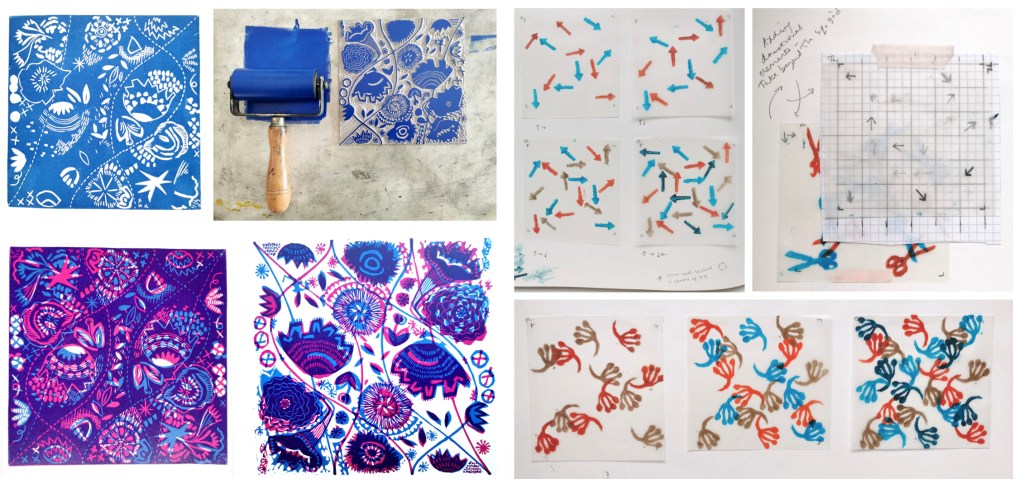
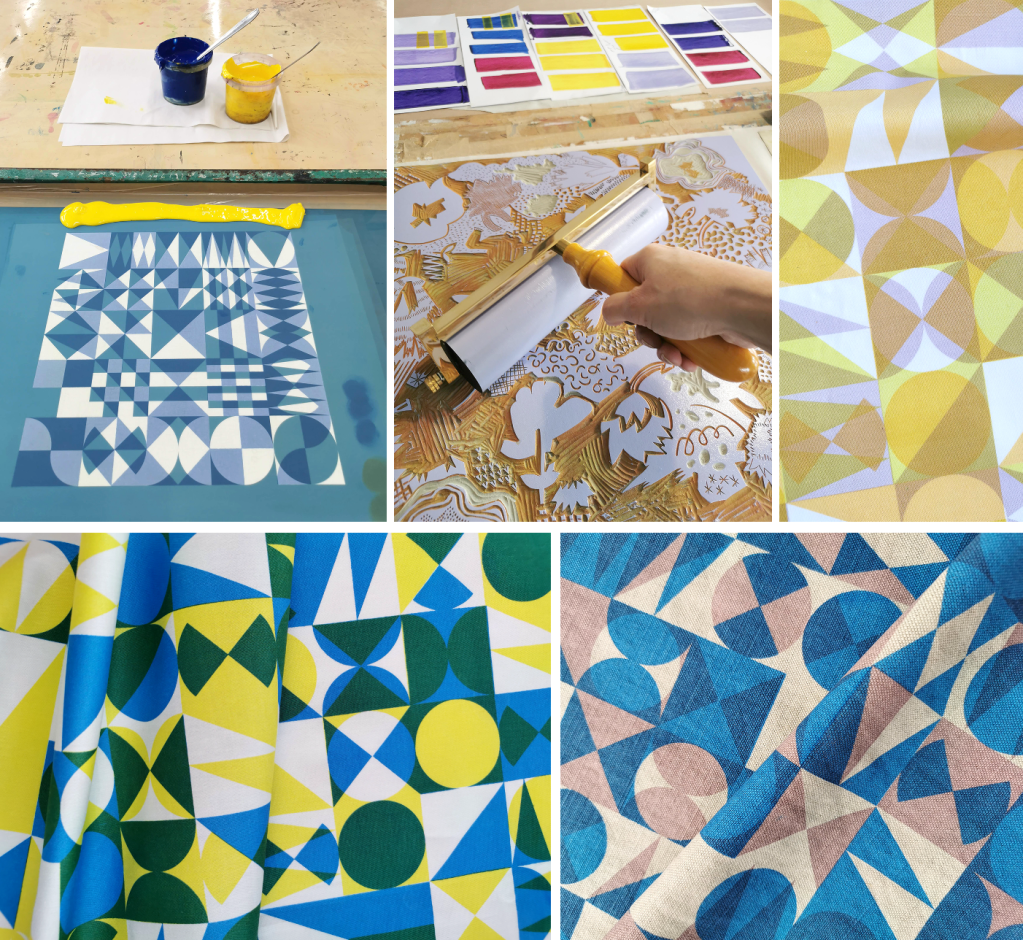
I am continuing to develop both lino blocks as well as artwork for screen printing, which enables me to test different colour handling and substrate options, for wallpaper and cloth. Colour is an important element of this research and particularly the transparency of colour in the overprinting, so the palettes will continue to evolve as I continue the exploration of primary and secondary colours.

As I gear up to making larger work for an upcoming showcase opportunity I look forward to sharing more of the work in progress.

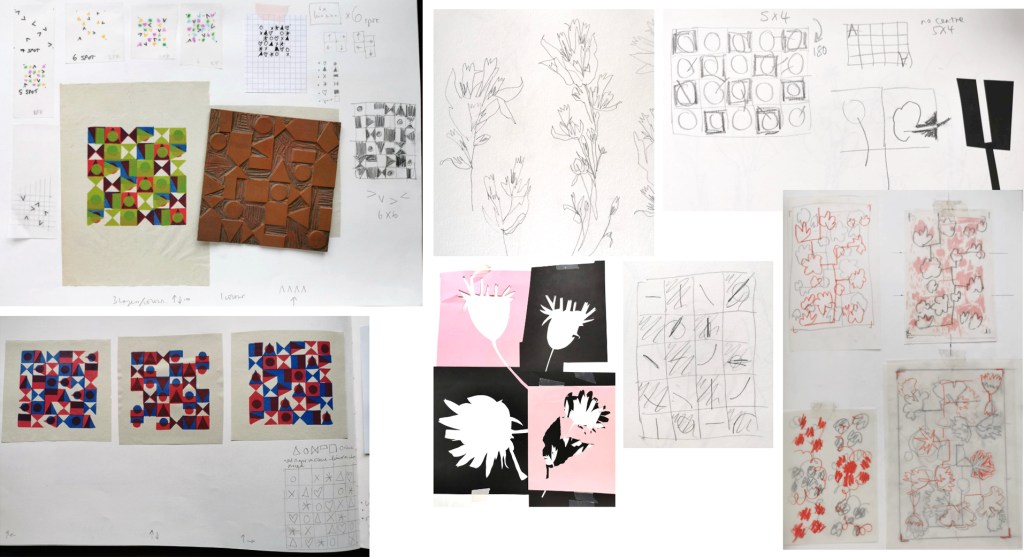
sketchbook development
pattern development

Meeting Marthe Armitage

As a result of my current pattern research practice, I’ve been keen to get out and discuss print production methods with designers and manufacturers, particularly as I was restricted in doing so while writing my book during the pandemic. A couple of weeks ago I had the opportunity to visit designer Marthe Armitage in her showroom in west London, showing her my sketchbook / design work and discussing each of our design and production processes. 

I’m not sure when I first became aware of Marthe’s patterns on wallpaper and cloth, but I’ve used her designs in my university lectures for the last few years to illustrate economic principles of building pattern, using a single block (one colour) to provide flowing and complex patterns, featuring varieties of visual texture within motifs. I bought the book on her life / design career, The Making of Marthe Armitage (published in 2019 by Graphical House) and was impressed by the beautiful drawings that accompany and support the design work I was familiar with. It is a thoughtfully produced book, with some copies available with a hand printed wallpaper wrap cover.

I’ve written before here about the time my ‘phone rang and Marthe was at the other end, ready to discuss her inclusion in my book and we went on to put the process of pattern design to rights. Meeting her more recently and showing her my sketchbook was a wonderful experience. There was straight talking about the current state of patterns available on the market and we agreed with each other about drawing on paper to map out the design on a grid to establish the composition for repeat. She was intrigued by my investigation in to block repeat and rotation of the tile and suggested some of my ideas more fruitful than others – I agree! We were joined by Marthe’s daughter Jo who leads the hand printing and is key to the future direction of the business, as well as Harriet, the Creative Project Manager and Christine, the hand printer who supports Jo in production. I was interested to learn of some new plans in development and gain an understanding of their experiences of print production in the UK.

The showroom in Brentford is a beautifully designed space which includes the printing press for hand printing their wallpapers and plenty of samples to admire, and is open to the public regularly. Tins of ink are displayed alongside samples of designs in progress and colour testing. It was also interesting to see the lino blocks featuring the designs cut by Marthe backed on metal plates ready for the press. Check out the instagram account for up to date news.

As our meeting came to an end, I grabbed the opportunity to ask Marthe for a photograph of her alongside the beautiful designs and to sign the copy of my REPEAT book in which I’m collecting signatures from the contributors. I am very grateful to Marthe and the team for making time to meet with me, thank you!

Research chapter published: pattern evolution

In the first term of arriving at Norwich University of the Arts I was welcomed as a member of the Pattern and Chaos research group. Colleagues from across the university would meet and discuss individual research practices and shared ambitions relating to the themes of the group. During one of those early meetings the idea of a Reader, a book featuring many contributions on the themes related to the research group, was being discussed. I enjoyed being involved in setting out early ambitions and five years on the book, edited by Sarah Horton and Victoria Mitchell, is a reality, having been published by Intellect Books in late 2023. Congratulations to Sarah & Victoria!

I’m delighted to be a contributor alongside many other researchers and practitioners, some I have the pleasure to know, others I shall get to know through their text and images in the book.

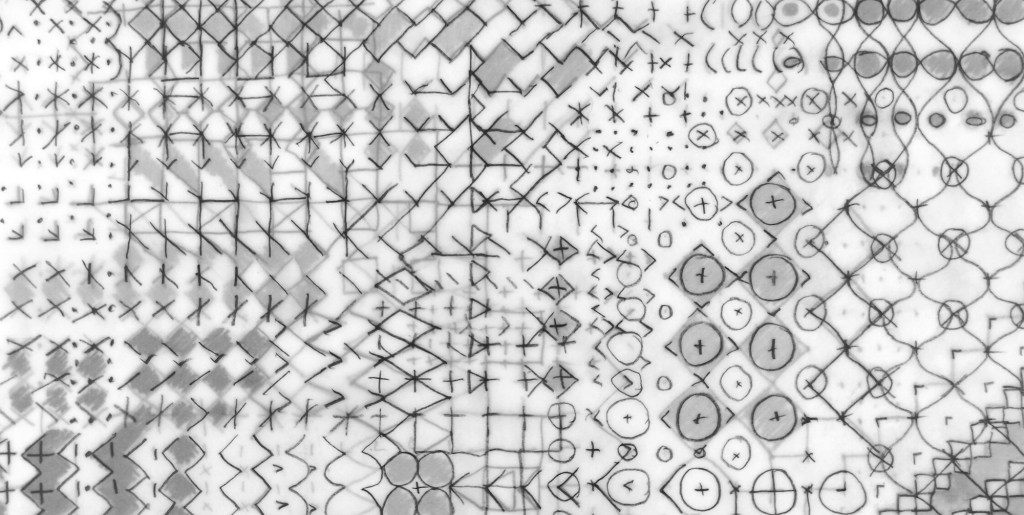
My contribution to the project is chapter ten. In conversation with both Sarah and Victoria several years ago I shared my ideas of pattern evolution, of taking motifs from one to another, an ogee to a diamond for example, through the process of drawing, transforming them from one to another across the sheet of paper. I gave them a quick sketch as part of my proposal and they patiently waited for more as I worked on the larger body of drawings. The link between themes and variations in music was apparent and I played with this idea as I made the drawings, layering tone and form, as a composer would do in building the greater composition.

The chapter explores the practical research process of drawing and evolving the motifs across formal grids structures and across layers of tracing paper. Although the visual language of these drawings are significantly different to my current research the ideas initiated here were the seeds of my current investigation – I’ll share that progress soon!

A huge thank you to Sarah and Victoria for the ongoing support they provide, both to me and my practice. Between the two of them they always ask the pertinent questions and offer sound advice and encouragement.

catching up with pattern

It’s been a while since posting here, but I’ve been busy enjoying summer adventures and developing exciting pattern research alongside getting the academic year underway. I’ve also moved in to a new studio space so I’ll share that in due course.

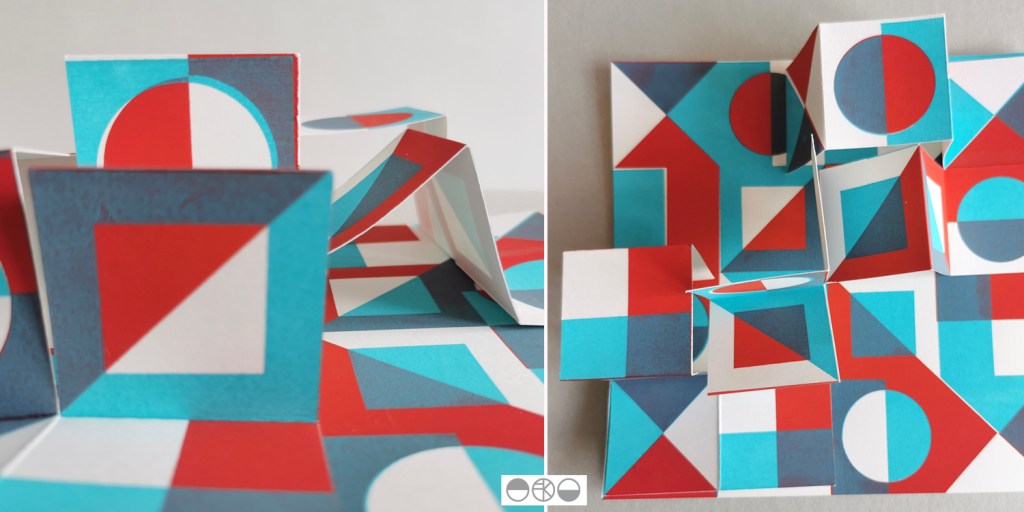
My pattern research focusing on the repeat print block and how it can be used to generate multiple variations to evolve pattern options continues, with sampling with screen and lino printing. I thought I’d share the more structural outcomes here, linking back to my book art practice. I enjoy discovering links that connect the broader practice I’ve developed over the last twenty five years.

As I folded the sheets of printed pattern the forms appeared to suggest a built environment so I explored the idea a little in how I photographed the pieces. Testing scale and contexts is a vital part in developing a pattern, and I enjoy the possibilities.

drawn ideas of pattern

My ongoing research practice of drawing and design regularly explores pattern structures within the family of geometrics. I enjoy testing motifs and rhythms that belong to traditional compositions, and deconstruct the scaffolding to look for new iterations.

In this recent work I am looking to the concept of themes and variations in music to drive the visual investigation. Repeat doesn’t feature, but it’s certainly a consideration for the future.

layers of tracing paper with graphite drawing

With a short break between academic years, and the book in production I hope to find some time to take this project forward over the coming few weeks.

pattern potential

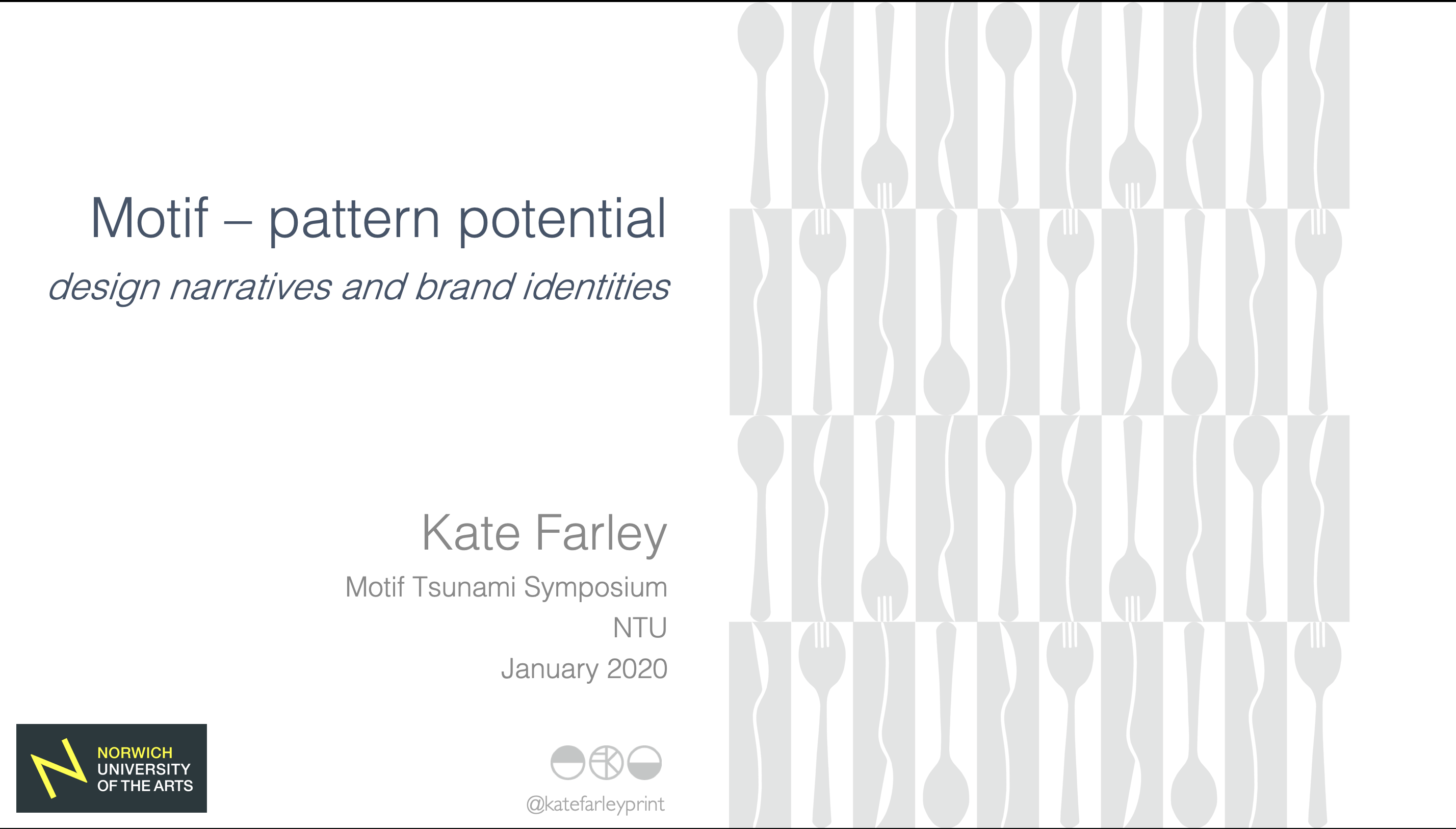
Tomorrow I shall be presenting a keynote paper at a symposium about Motifs at Nottingham Trent University. I’m looking forward to lots of discussions and sharing my own practice-based research including projects with David Mellor Design and Barbican.

Screenshot 2020-01-28 at 11.08.00


pattern informs the piece: Zandra Rhodes exhibition review

Finding a couple of hours to spare in London last month I took the decision to head across the river to the Fashion and Textile Museum, and specifically, the Zandra Rhodes: 50 years of Fabulous exhibition. It proved to be a perfect visit for where my head was at; juggling fashion and textile design in both a design commission and my academic life.

Zandra Rhodes is first and foremost a textile designer although it is her fashion designs that carry the printed and embroidered pattern she is famous for. The silhouettes of the garments, constructed often from multi layered draping fabrics are guided in their execution, in fact dictated by, the pattern design of Zandra’s strong handwriting or pattern, and executed using print processes and surface manipulation.

I’ve included plenty of images of these outfits in university design lectures over the years, discussing how the designer maintains the focused design style and aesthetic but also manages to evolve the work through the decades.

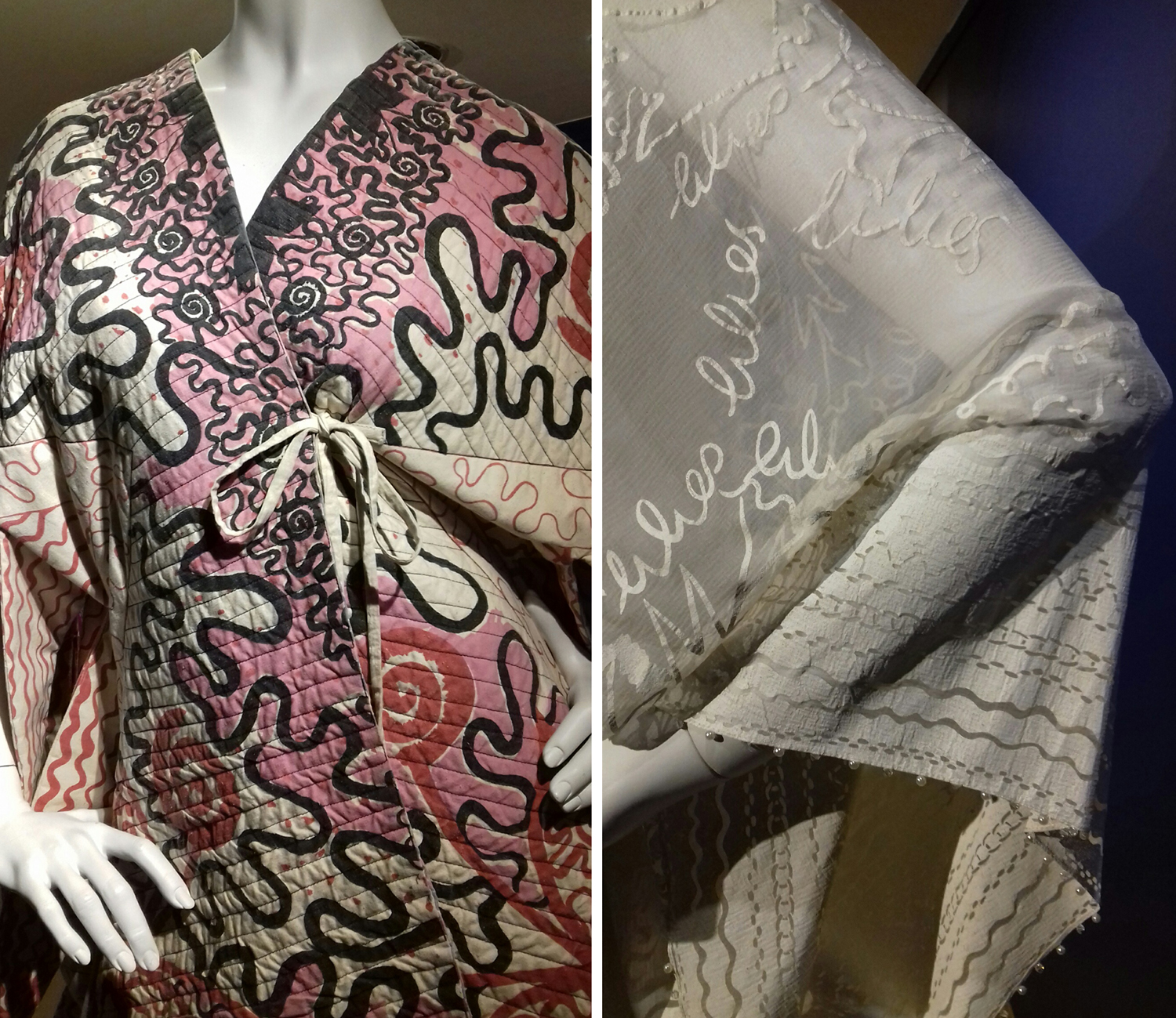
As ever it is very different when you get the chance to see the fabrics in real life. The white printed pigment on chiffon from the ‘Lovely Lilies’ collection (below right) and the quilting over screen printing of her signature swirling motifs as borders and placement prints provides the evidence that Zandra Rhodes is first and foremost exploring fabrics to lead garment design.

ZH_highlights

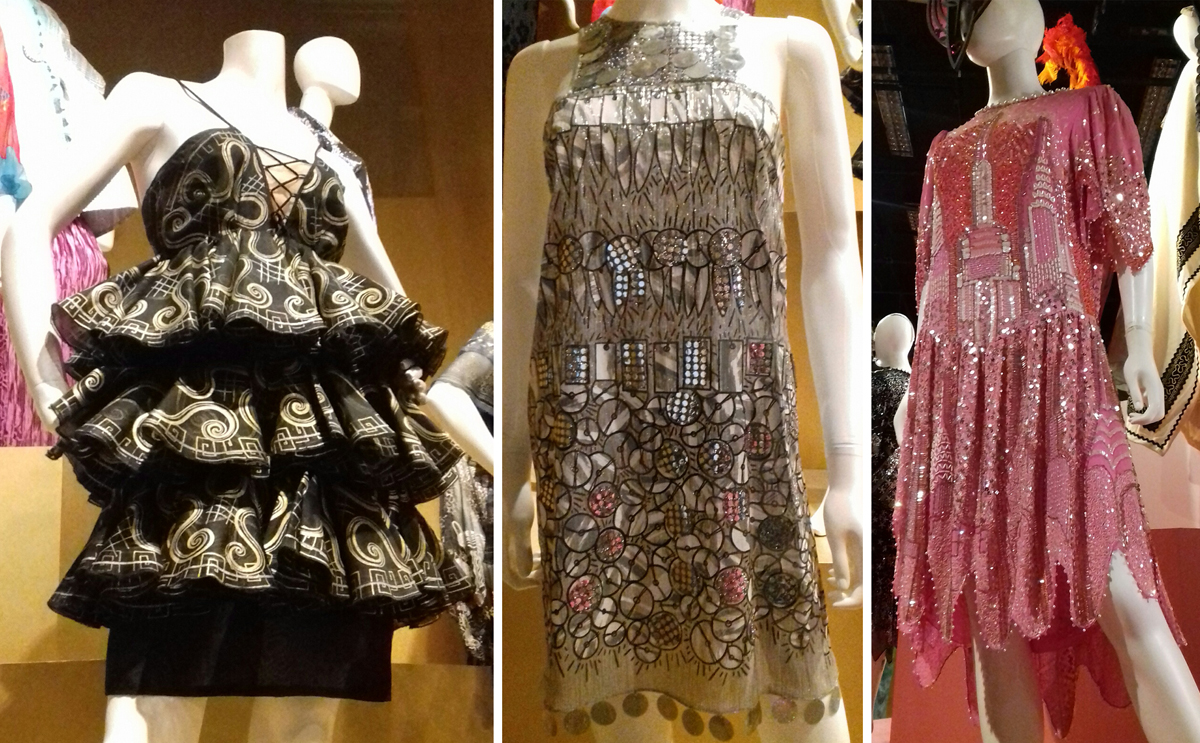
The variety of fabric manipulation and surface embellishments was fascinating to see, some rather crude and some pieces held their own more than others. The ease in which the textiles worked as one with the garment design is certainly demonstrated throughout the exhibition, and it was useful to see the screens for printing to see the composition of the designs later on in the exhibition.

ZR_patterns

The theatricality of Zandra Rhodes’ work was a perfect match for opera costumes, and upstairs in the gallery a number of interesting examples were showcased. I also enjoyed seeing original sketchbooks alongside a film of the designer talking about how important drawing is to her. I hope many textile design students visit the show and take her advice.

ZR_dresses

There is a significant body of work on exhibition here and it is important to view it as a considerable output of a single designer with a thirst for carnival. Her practice spans fifty years, hence the exhibition title and although her style is not for everyone, her contribution of bravery, exuberance and fabric play should inspire others to take creative risks and find a way to make the work they want to make.

I would also recommend the small showcase of company overview and embroidery work by Norman Hartnell as you enter the gallery – stunning pieces from a different era.

The show is on until the 26th January, 2020.

bespoke pattern for Birmingham BHX

Designing bespoke pattern for clients is something that I have made a key professional design interest. Communicating a sense of place, historic reference or activity as pattern is what I really enjoy and over the years I’ve been on many site-visits to interesting places to learn about what the client would like or definitely not like. This visit was no different. I love the anticipation of finding out more, a new project to get to grips with, and all my design experience to apply to the challenge …

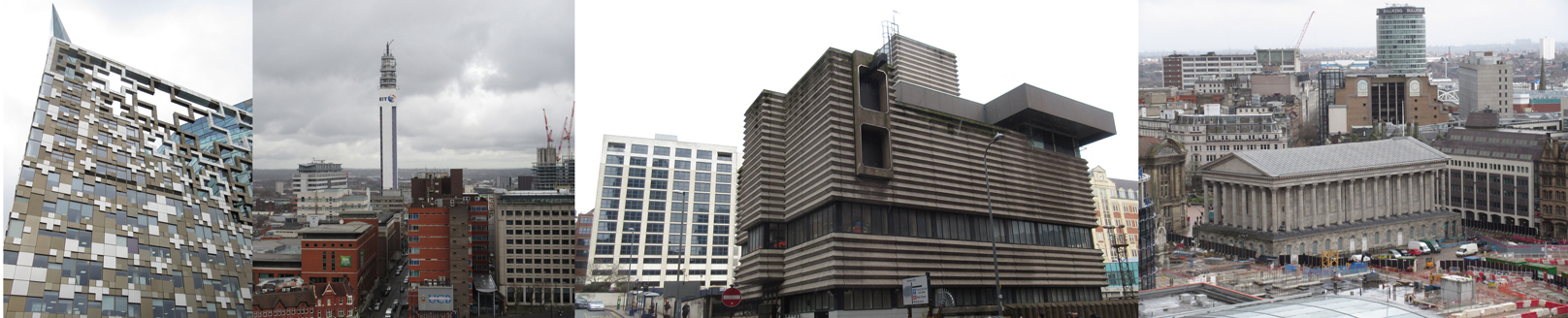
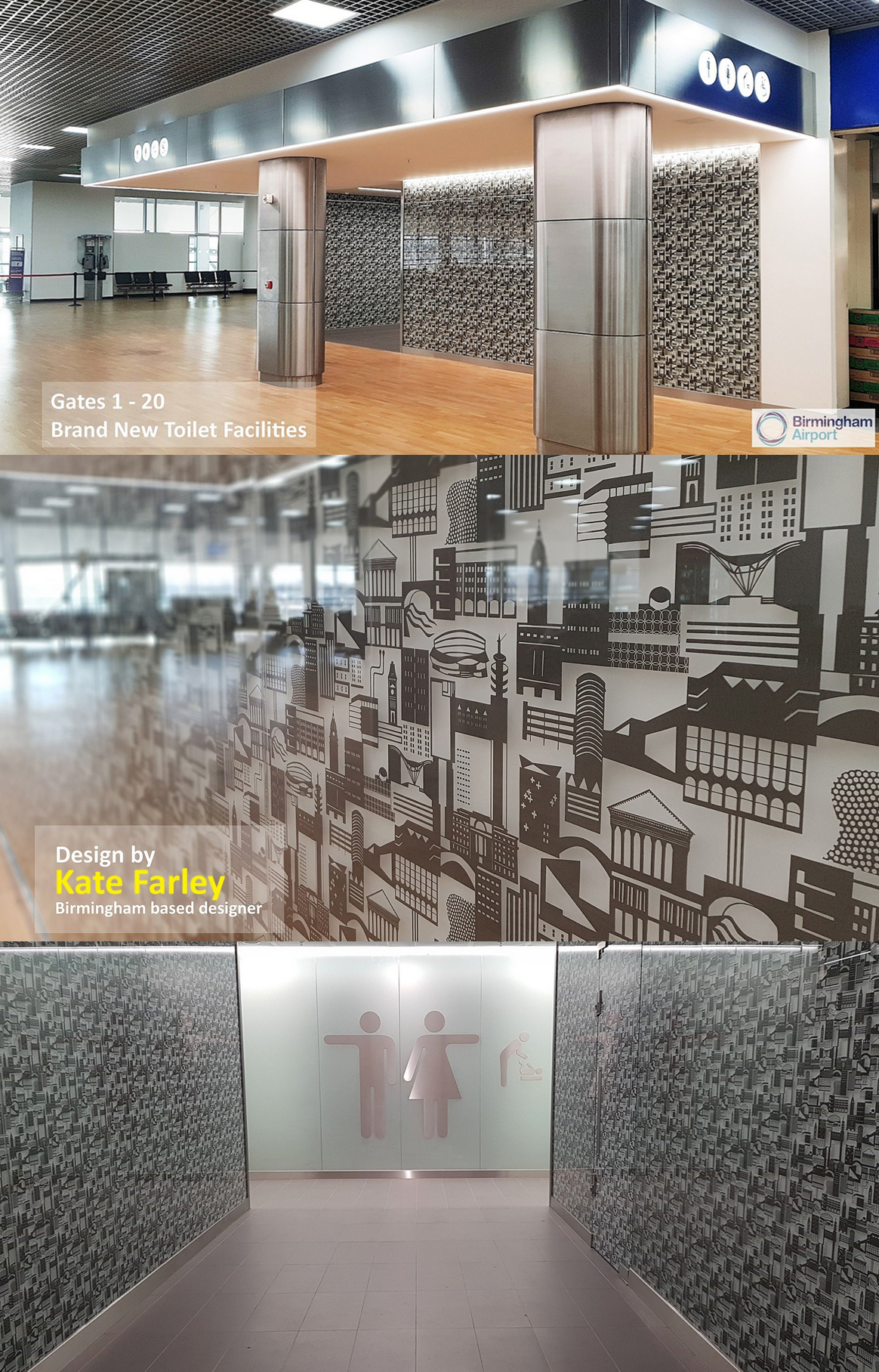
Some of my previous design work was used as a reference for context images by the original architects, proposing my patterns and stating my details – note – never send artwork without your contact details attached! Phone calls were made, samples were sent, bids were accepted and then a call-up. Please come to the airport for a meeting. There’s a tight deadline, a budget, and something the client knows they want. In a nutshell the brief: Celebrate Birmingham’s buildings in a one colour, repeating pattern that works close up in detail and from a distance as a visual rhythm. Buildings need to be identifiable.
katefarley_bhx_brumpic2_100

With any project I carry out research, ask the client lots of questions and evolve a design approach subject to the answers to my questions. Production methods, fabricators, material choices, colours, budgets, time-scales and of course client ambition for the project shape the design language and development of the project. I set off to take photographs of central Birmingham and climbed tall landmarks to get good views. I took photographs, made sketches as well as notes. I had some buildings in my mind I knew needed to be included but I also wanted to use others , less iconic ones, as visual rhythms to play with negative and positive shapes across the composition.
katefarley_bhxairport1_100

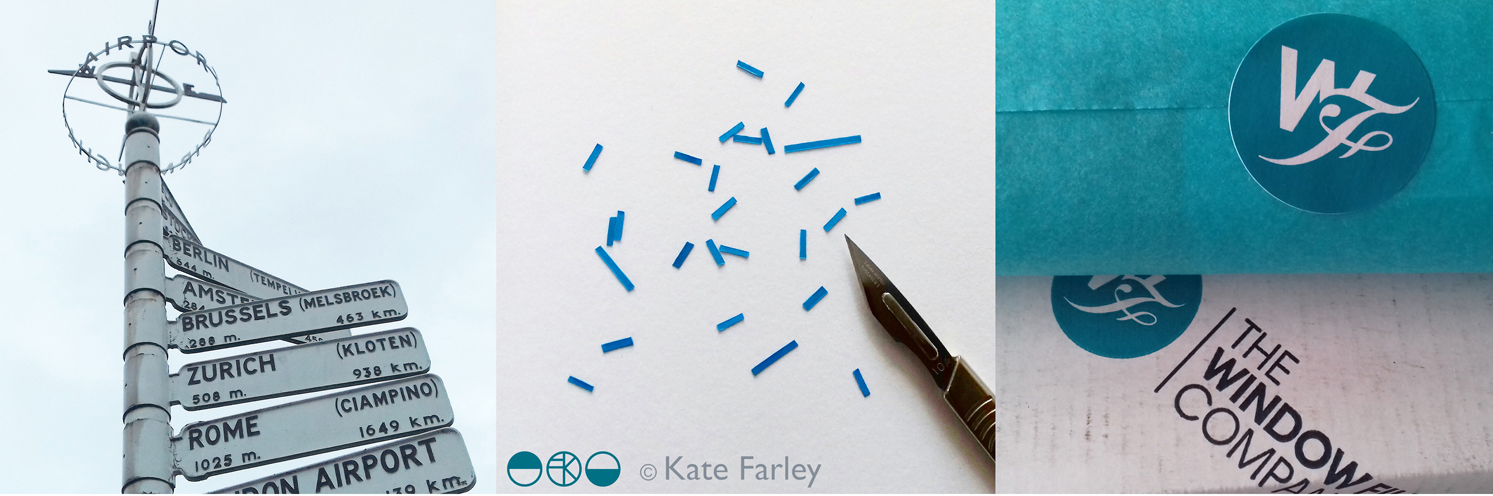
Back in the studio I chose paper cut-outs as a clear graphic way to create the buildings, as I have done for several commissions including for the Barbican and TfL posters. Once the individual buildings were cut out I scanned in the artwork and spent many hours moving everything around in Adobe Illustrator. I was testing rhythms in and out of repeat and shifting scale, proportions and pairings. This can send me back to re-cut something or add new details. To some people those hours of making subtle tweaks and changes wouldn’t even be noticed but to me it’s so important that every inch of the design works the best it can and it can be time-consuming – but it will be worth it. I can’t stress this enough to students embarking on their Final Major Projects at the moment! When you know what scale the final artwork will be produced at you need to check the correct level of detail as working at a computer screen can be very misleading for artwork several metres long!

A concept sheet and initial design piece was sent to the client for approval and at this point I had to label the buildings I’d included. Once approved I was able to continue building the full repeat, adding further buildings, and make test prints with the help of the team at the Window Film Company – who I already have award-winning work with! They really know their stuff and several phone calls later to check small details regarding file specifications and production issues resulted in the excitement of samples to sign off, both by me and the client. A couple more proofs for colour matching and scale of design was checked and then we were good to go. Quality is everything when it as your name on it, and making sure that everything about the design is right BEFORE it gets installed is rather important. Sleepless nights before installation of projects has been known!

katefarley_bhx_3

This project originally came my way almost a year ago with some scoping phone calls and emails, and now I’m able to share photographs with you. I’ve had people let me know they’ve seen work that looks like mine at the airport – hoping I hadn’t been copied – but no, this time it is mine! When Birmingham Airport tweeted the pictures last week I was delighted that I can now share images of this project from 2018 – when I was Birmingham-based as it states, and now it feels rather a fine farewell to the place I called home since 2005.
katefarley_bhx_official1

(onsite pictures – official photographs from Birmingham Airport)

Yes it is by the toilets, yes I have already worked on two commissions for public toilets (Colchester / Dedham many moons ago), and I can’t promise this will be my last!

Save
weaver extraordinaire: Anni Albers

If you are interested in textiles and haven’t heard about the Anni Albers show now on at Tate Modern in London, then a.) where have you been? and b.) get there fast if you can!

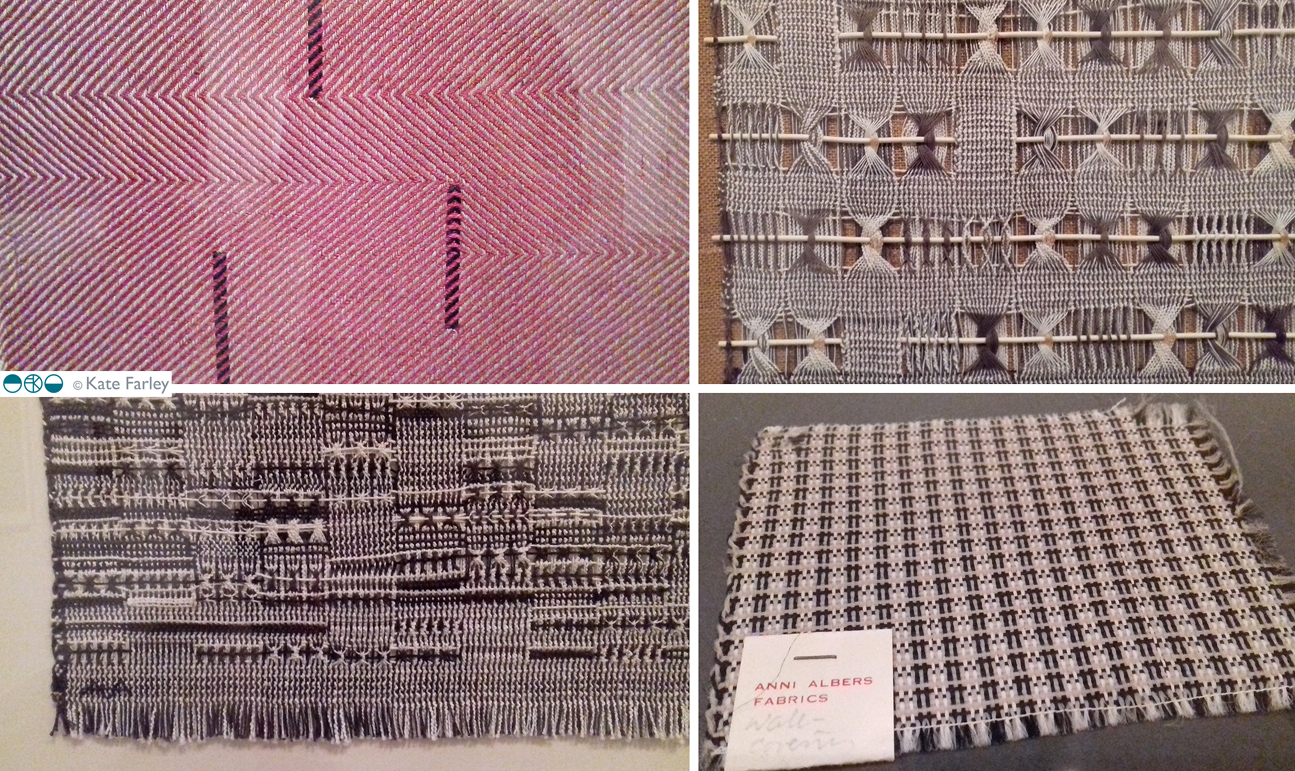
This has been a much anticipated show for me. Having been enjoying many other people’s pictures via Instagram since the exhibition opened I was most excited to get to the show and I’m so glad I did – I went round it several times and breathed in the history I had learned as an art student myself; typewriter patterns from Bauhaus lessons, the infamous diploma piece with sounds absorbing properties in the yarn, and those classic Bauhaus photographs, but there was so much more. Colour, cloth, pattern, rhythms, photographs, works on paper, products … The woven structures and yarns drew everyone in for a closer look – so much so that the alarms kept being set off and the guilty took a sheepish step back! There was a fascinating display of the research of historical textiles from Albers’ own collection that made perfect sense in how she interpreted and worked with the process of weaving.

annialbers_s

Experimental, commercial commissions, religious pieces and jewellery are some of the aspects of this considerable show. As with most well-received shows, the audience conversations themselves were fascinating; lots of discussions about experiences of weaving, hours at the loom as well as working out what she must have done.

It has been the architects, the painters and the product designers, usually men, who have become far more well known from the Bauhaus, including Anni’s husband Josef Albers. The avant-garde German art school’s first director Walter Gropius stated there were equal opportunities for all when it was established in 1919 and yet women were generally encouraged towards the textiles workshop, a place and craft deemed more suitable. Anni never let this distract from her focus despite wanting to be a painter. Her creative output of a lifetime, as edited in this exhibition, goes a long way to demonstrate her will to explore both the context of design and the development of art. She will have no doubt inspired many who have been introduced to her as a result of the show and her legacy will continue to influence far beyond the context of textiles as a craft for women. I came away with many notes and a head filled textile excitement – happy weaving everyone!

Exhibition ends: 27th January 2019