winter palettes

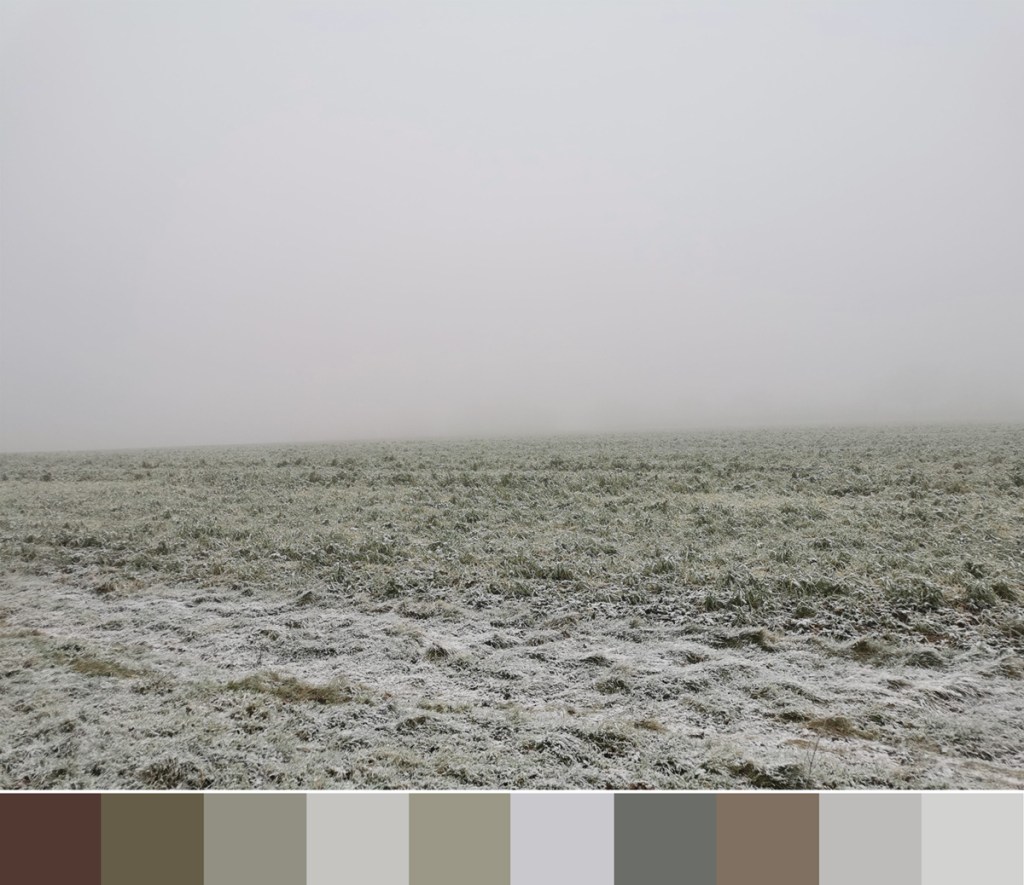
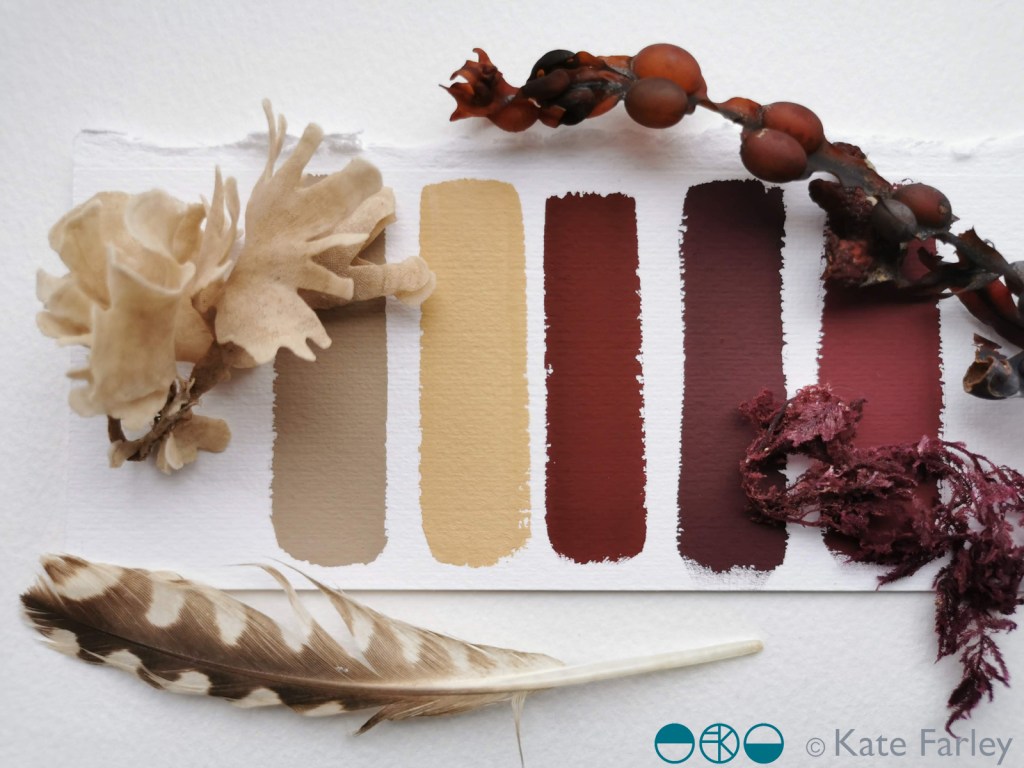
I’ve not had much time for colour mixing with gouache recently but I’ve really enjoyed noticing the contrasts of seasonal colours on our walks so I thought I’d celebrate that here. Some colours are exaggerated by bright sun, while the recent frosty mornings provide a muted coating.

Taking time to notice these small delights are ever more important as we spend few hours outside. I noticed today there was daylight in the sky at 5pm, so that and the first sights of snow drops and daffodils are putting me in the mood for springtime.

Colour Material FINISH

In my line of work CMF is an area of the design / manufacturing industry developing colour, material and finishes in relation to sectors such as automotive design, interiors, products & accessories etc. It involves innovation, design and development of surface and material solutions and is an exciting area of design, including trend research, consumer behaviour, material innovation and sustainability.

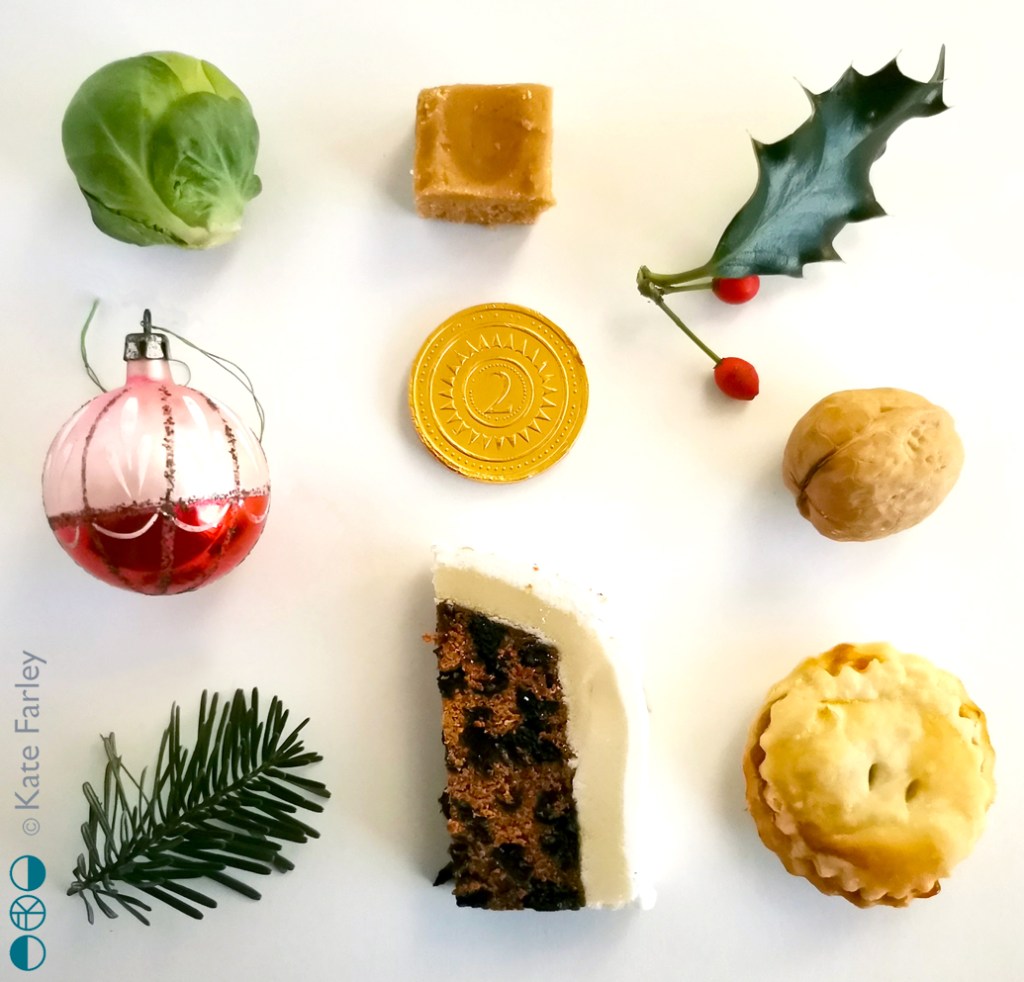
Spending more time sitting in my home celebrating Christmas got me thinking of the specific colours, materials and finishes I relate to Christmas. Home-made fudge, mince pies and Christmas cake, the walnut and chocolate coin in the stockings, obligatory sprout, some holly and fir greenery and a bauble that has been handed down to me, and that has somehow survived decades of Christmases. With the end of the year here, we have another sort of ‘finish’, so I’ve created a CMF board for today – I hope you like it!

CMF of Christmas, 2020. Kate Farley

Autumn colour swatches

I’m not the biggest fan of Autumn, mainly as I hate to accept the end of summer, but every year the colours of the new season are beautiful so it is difficult to stay disappointed for long. Having spent a week in hospital recently I really missed seeing nature so once out again I noticed a heightened awareness; my senses really enjoyed connecting with the outdoors again.

Wheatfen Nature Reserve, Norfolk

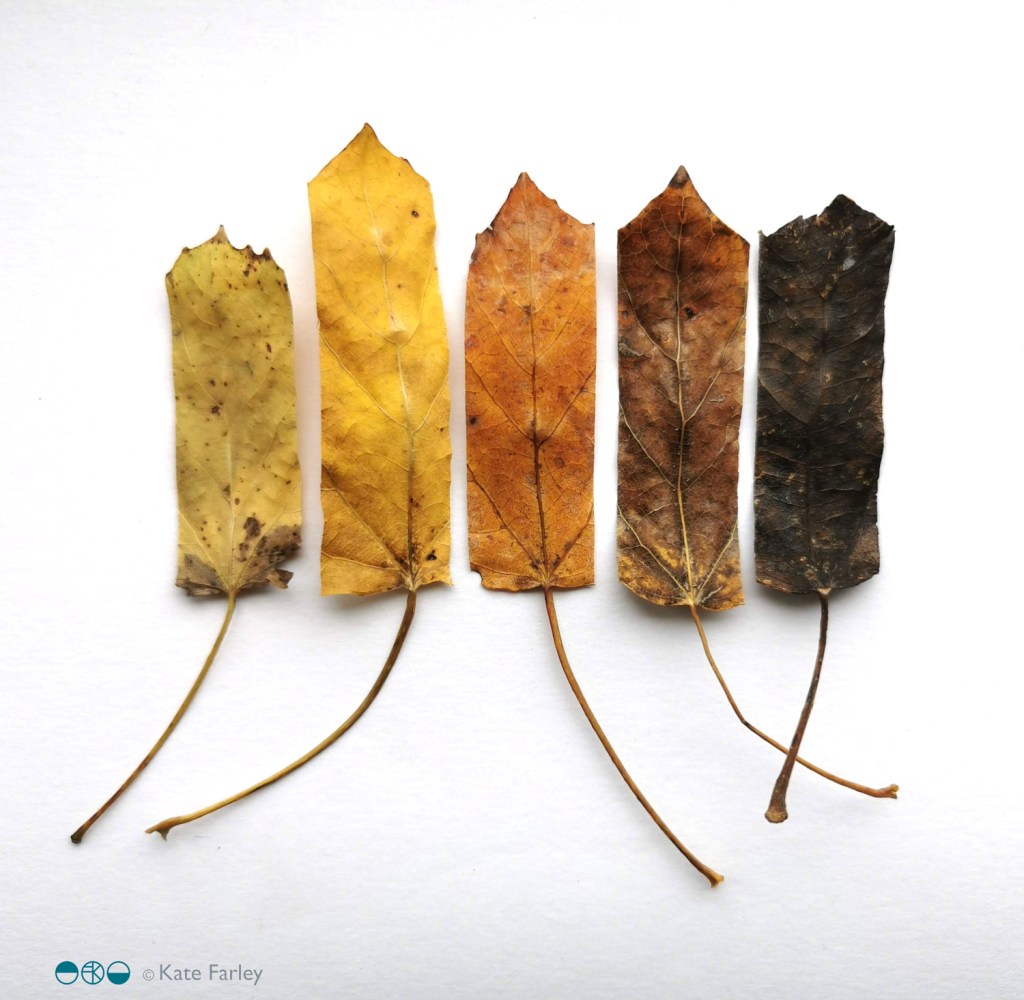
Over the last few months I’ve been paying more attention to colours of nature, gathering plants, feathers, shells etc and mixing the colours using gouache – see previous posts – I find it a wonderfully meditative process and one that brings great results too. The process really makes me look at the colours of the artefact and work out the nuances of hues, tints and shades. I’ve taken some slow recuperative walks in the countryside to rebuild my strength, allowing me to gather colour and appreciate Autumn. The colour chips here were made from the leaves from one tree, arranged in colour order. I wanted the colour to be the main thing to identify rather than them being leaves, so by trimming the edges of the leaves I’ve made them more like swatches.

leaf colour chips

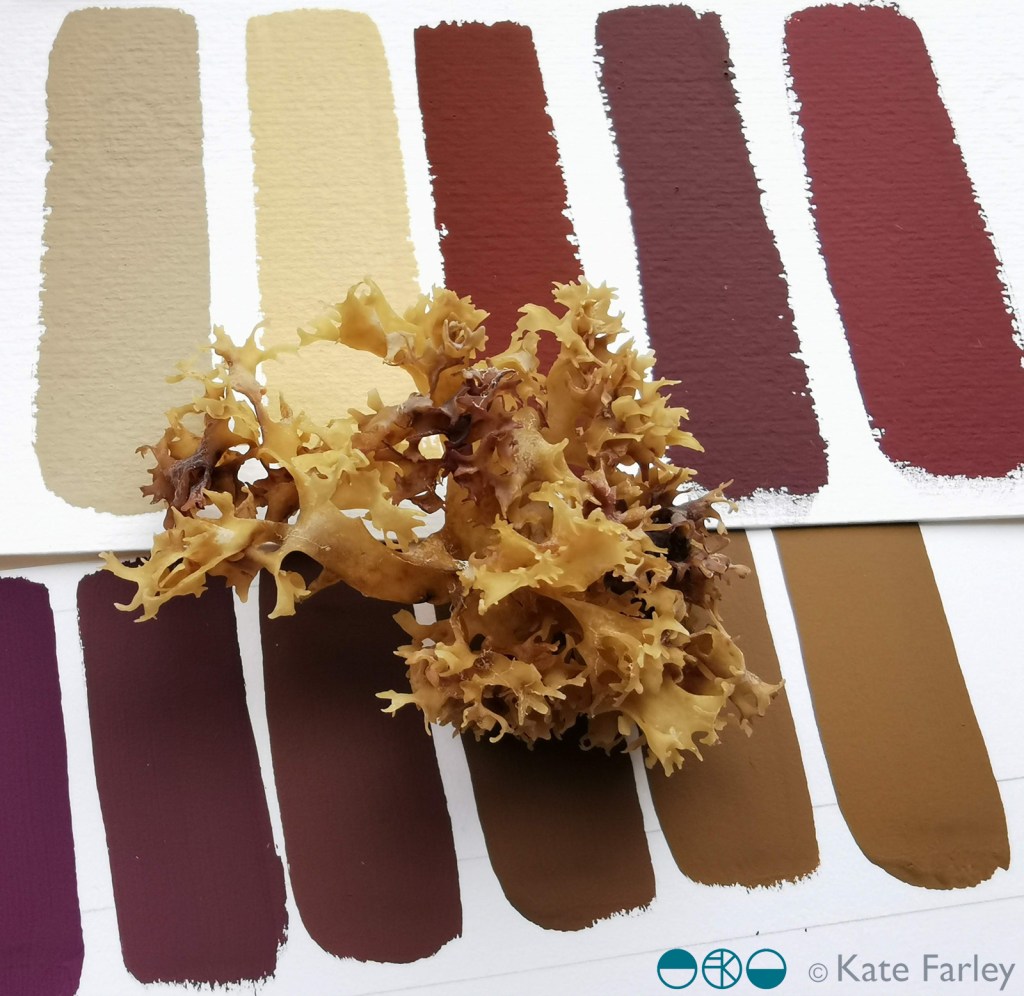
mixing and matching colour from the beach

I’ve been continuing my colour mixing series, this time taking inspiration from the beach and the artefacts I gathered. The gouache works wonderfully to capture the colour, responding to small specks of added colour as I take the starting colour on a journey to and past the colours of the item I am studying.

Some new drawings are taking shape that use these colour chips and I am excited about where they are going – one day I’ll share them. In the meantime I hope you enjoy the colour of the beach of north Norfolk.

colour mixing nature

Back in March I began a new series of colour of works on paper that were simply about mixing and matching colour, evolving hues through the process of painting individual swatches to build the narrative in a sequence, as if a technical exercise at art school. You can read about those pieces here.

KFarley_grass_gouacheI’ve continued to gather pieces from nature on the walks I’ve been on this summer and have continued with the process of mixing colour and so I thought I’d share some here.

KFarley_wheat_gouache

I’m doing this simply as I love to make colour, and really enjoy working with the gouache paint for its colour qualities. The process occupies my mind, suggests potential avenues for future work and connects me with nature through the mementoes I make. The seasons change and the colours alter, but the swatches hold memories in the process of mixing, and I can almost smell the dry heat of the corn, and the cool shade of the wood where I found the Jay feather.

qrf


passion for passi flora pattern

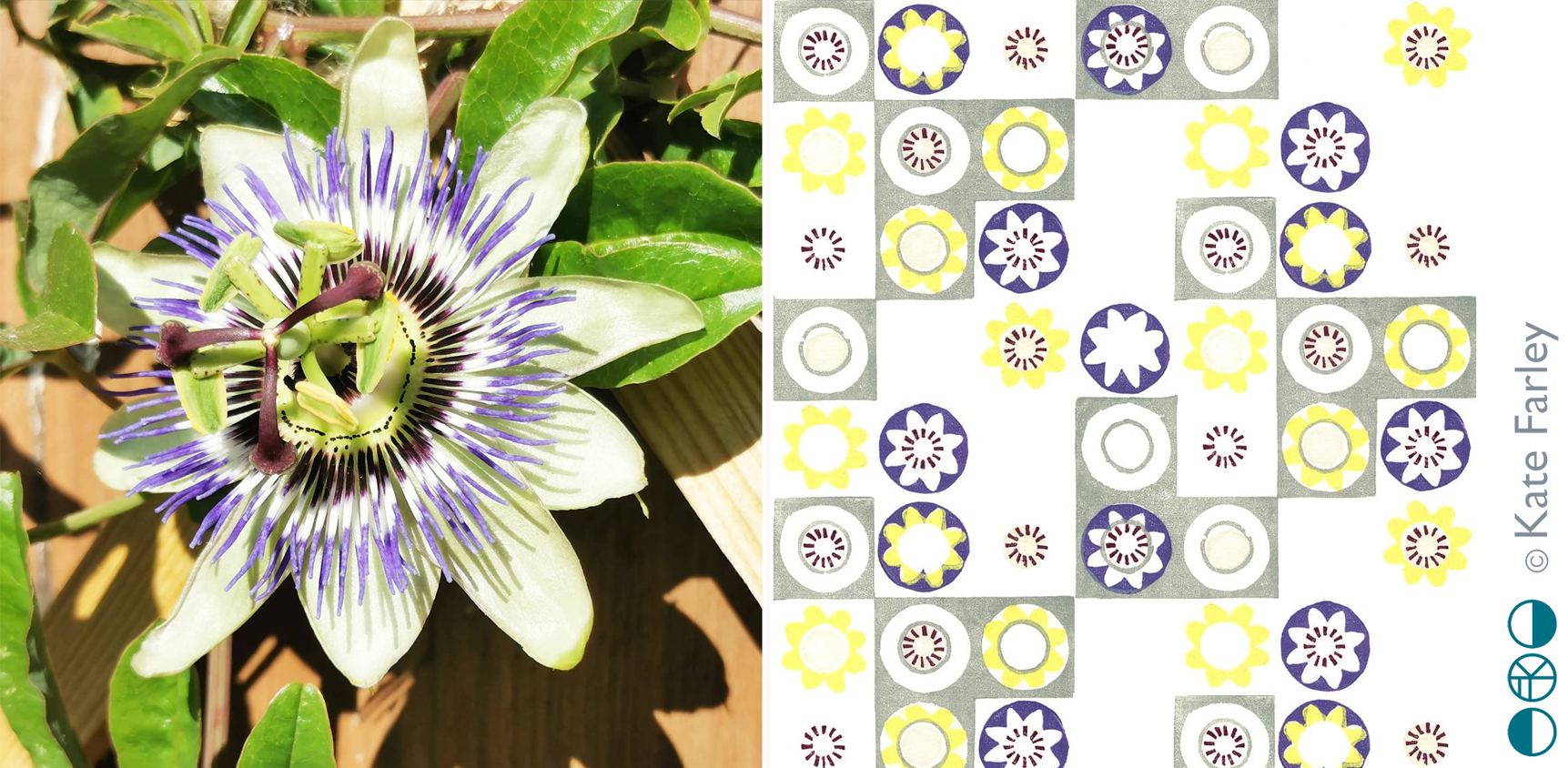
Many years ago my flatmate was given a passion flower plant and when the flowers came we were both in awe of their splendid form; a thing of beauty in our otherwise less than beautiful flat in Camberwell, south London. I made drawings of the flowers and sometime later developed some patterns from it, screen printing it as repeating designs and placement prints. I created the motifs by deconstructing the elements that constitute the flower head.

More years passed and sometime around 2012 I revisited those screen printed patterns, this time interpreting them as lino cuts as part of my Plot to Plate series of editioned lino prints. Last year I planted two passion flower plants in our new garden and last week we had the first bloom. It took me right back to that first flower in the flat in Camberwell, and was reminded of the pattern again.

passiflora_web

Whenever I look back at old work I’m likely to want to make changes, and this is the case here too, but each design also holds a moment, defines a time, and sometimes that makes it what it is. I’d not imagined I’d connect that flower to my practice almost twenty years later…

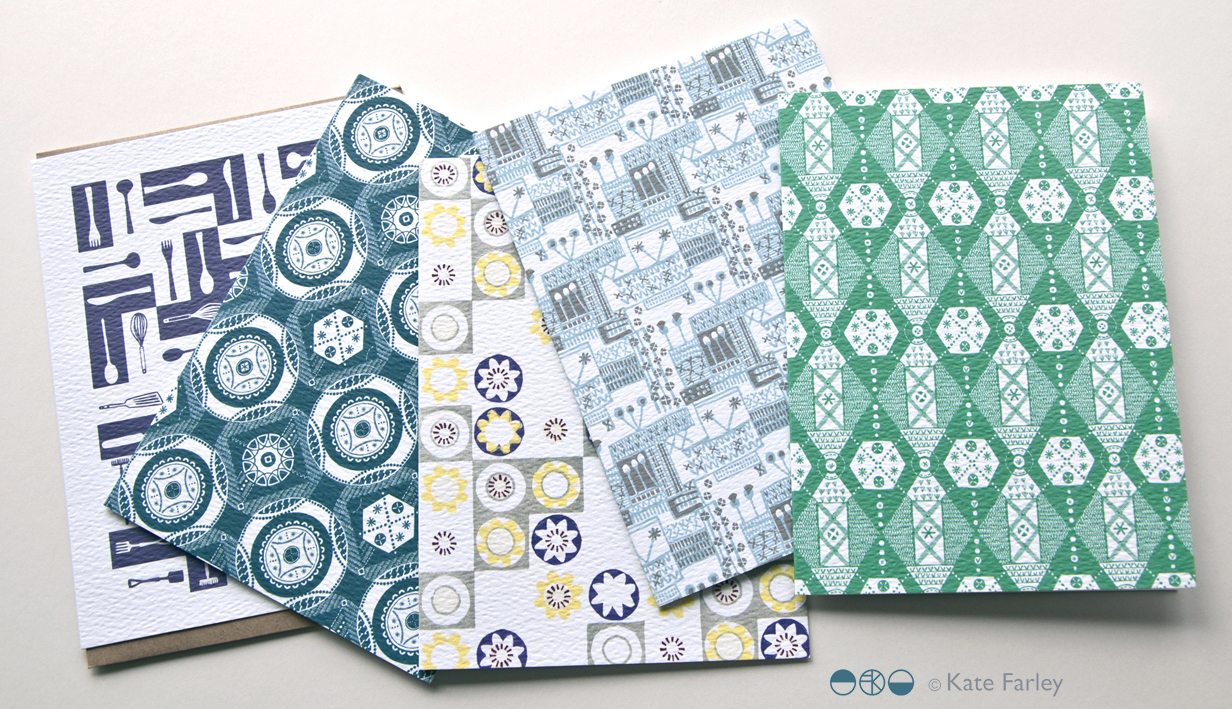
This pattern remains available as a set of patterned Plot to Plate greetings cards.

KateFarley_GC5002_blog

printing pattern progress

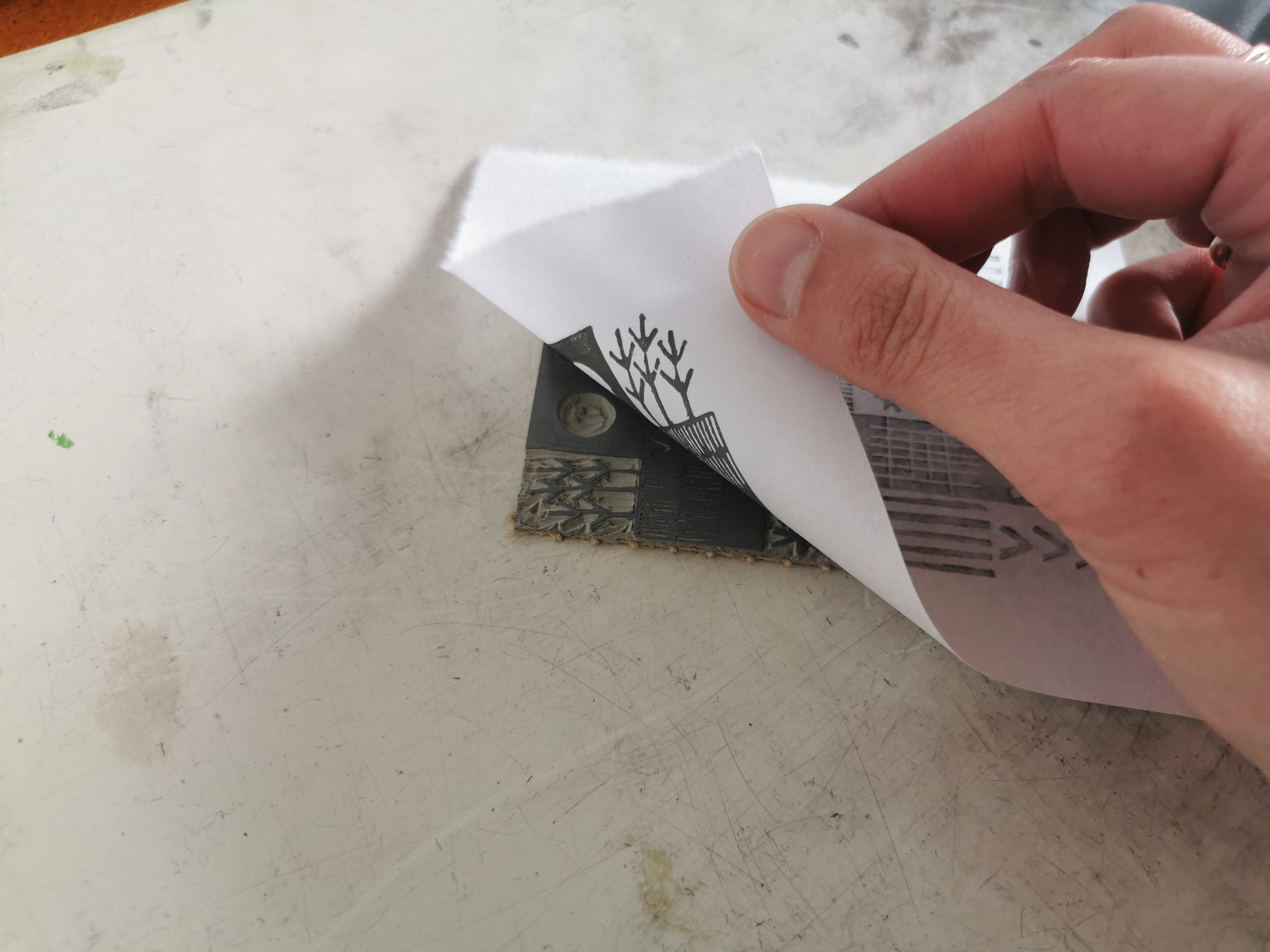
My mind tends to want to be busy and I often develop several ideas in parallel. Pattern making and pattern evolution ideas are shaping up so I went back to the lino block and started to cut – I find it best to make the idea come to life so I can work through the potential and pit falls. Watch this space …

KFarley_linoprint


New drawings for sale

I have made some pencil drawings from my recent trees project (previously featured on the blog) available to buy – there are currently eight still available.

They measure approximately 28 x 19cm, on heavy weight paper, £55 each, with 30% going to Cancer Research UK.

Do take a look over on instagram where they are all listed, & message me if you are interested in reserving one. Feel free to spread the news – I don’t often sell my original drawings ….

Here’s drawing 1, 2, & 3 …

KF_drawing1KF_drawing2KF_Drawing3

drawing evolution – perspective and mapping

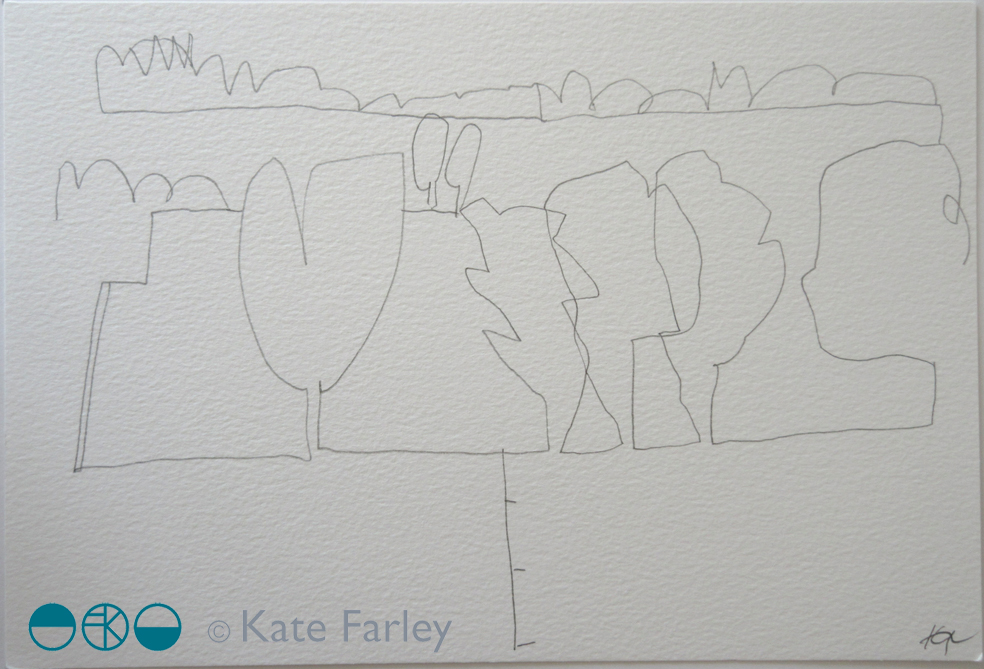
Several weeks ago I started, with no other intention other than to pass the time, making drawings of the trees across the fields I could see as we waited our turn at the farm shop. This was simply about making time for me to clear my head of all the other stuff and pressures of this new routine we find ourselves in. Drawing is such a key part of what makes me tick, whether it’s for rest or work.

Week 2 came so I took my sketchbook and made new drawings that naturally evolved from the first week’s observations. In the second week I also took scissors to capture the shapes as paper cutouts in contrast to the lines I had focussed on in pencil. Each week I’ve made these drawings and over time I’ve noticed the growth of leaves, making it harder to focus on the tree structures, but I’ve also moved the drawing on as a familiarity of my subject is developing. I wrote a blog post on those first weeks here.

I’ve spent the last quarter century drawing landscapes with trees and remember a significant moment as a student of design, when I discovered the water colours by Crome and Cotman in the gallery in Leeds – particularly strange given they were from the Norwich School and I’d left Norwich to study in Yorkshire, but maybe that was the initial pull. I studied the way they divided the landscape with brushed areas of paint and they helped me to see that I too could explore ways to stylise the way I saw the landscape.

The drawings included in this post are all from week 5. I’ve added hints of fields containing the trees and those lines of containment are the edges holding the paths of trees. I’ve used the horizons from both a vertical and horizontal viewpoint and continued to stylise the tree forms throughout the five weeks. It’s getting harder as the trees flesh out their forms and we lost the details of the branches. I’m also suggesting depth of field with the scale of the trees near and far although I’m pulling the composition down to stretch out and extend the foreshortened landscape.
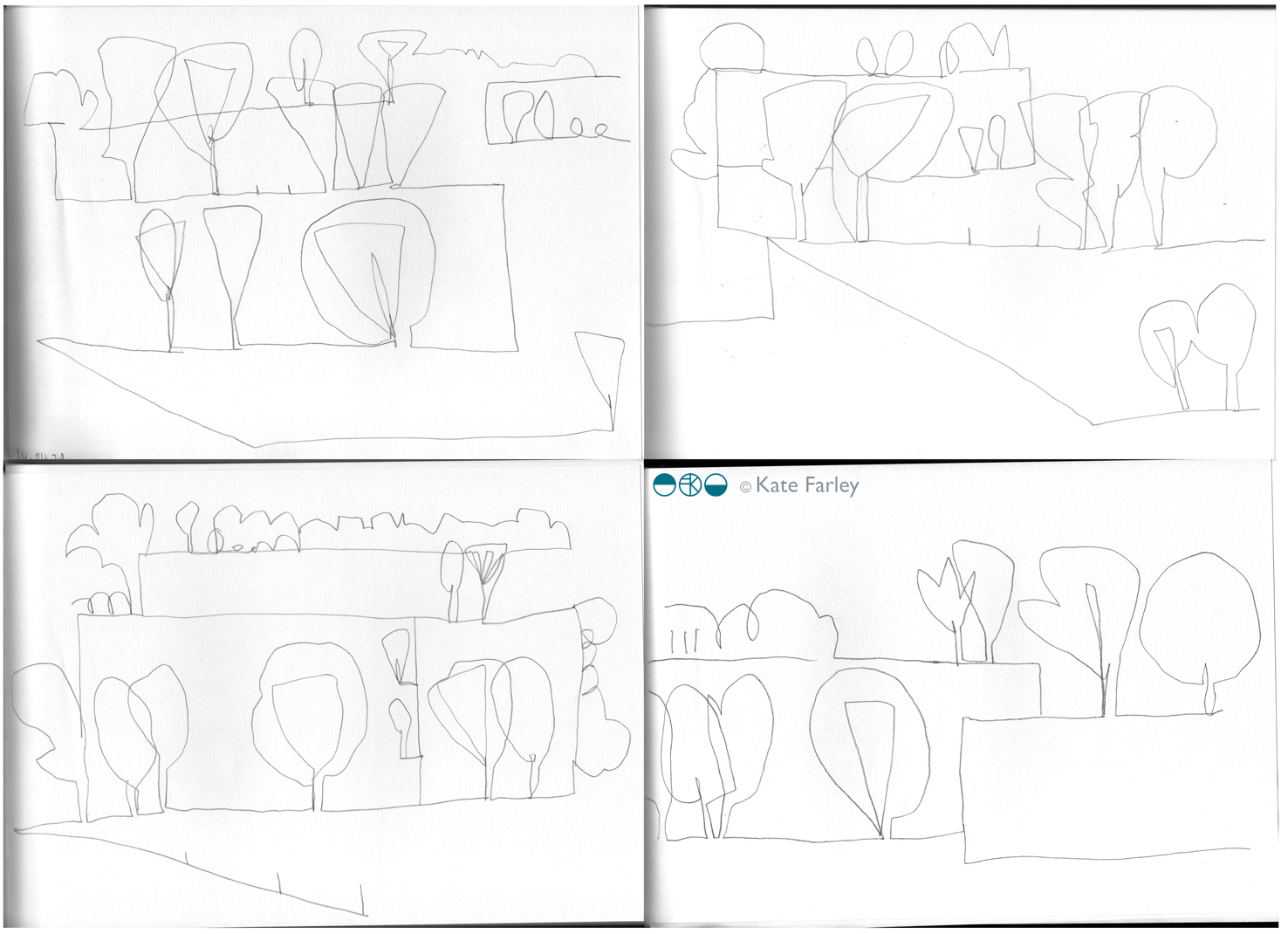
KFarley_Wk5_1_4

Throughout my career I’ve toyed with ways to map the perspective of landscape and use diagrammatic language, perspective and distorted elevations to represent viewpoints of 3D in 2D. The intention of the arcs was to suggest the sweeping viewpoint but in fact I think it hints at hillsides, and that really isn’t the case here in Norfolk. An undulating landscape maybe, but certainly not rolling hills – still, we can’t get it all right!
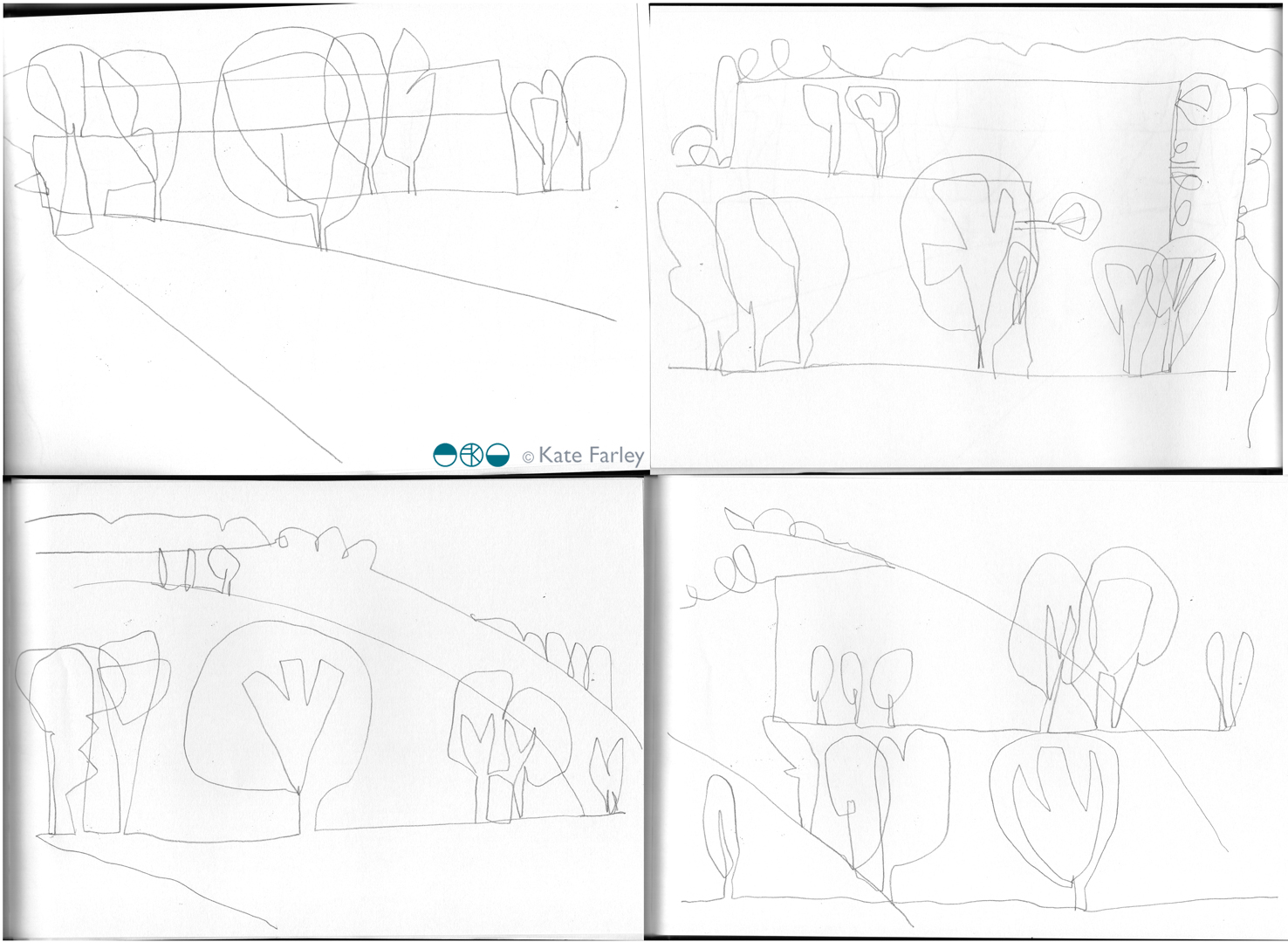
KFarley_wk5pics_4-8

I’ve thoroughly enjoyed this drawing exercise so far and look forward to week 6 and what the drawings will discover next time. I’m also, rather naturally I suppose thinking about pattern evolution and how these may become design work. I have lots of ideas to mull over and be excited by … but there’s no rush.

Having posted some of the drawings on instagram over the weeks I’ve received lovely comments and messages from people enjoying the drawings and I’m so grateful for the votes of confidence in what I am doing, I really appreciate that. Many thanks, I hope you continue to enjoy the drawing! ….

Save

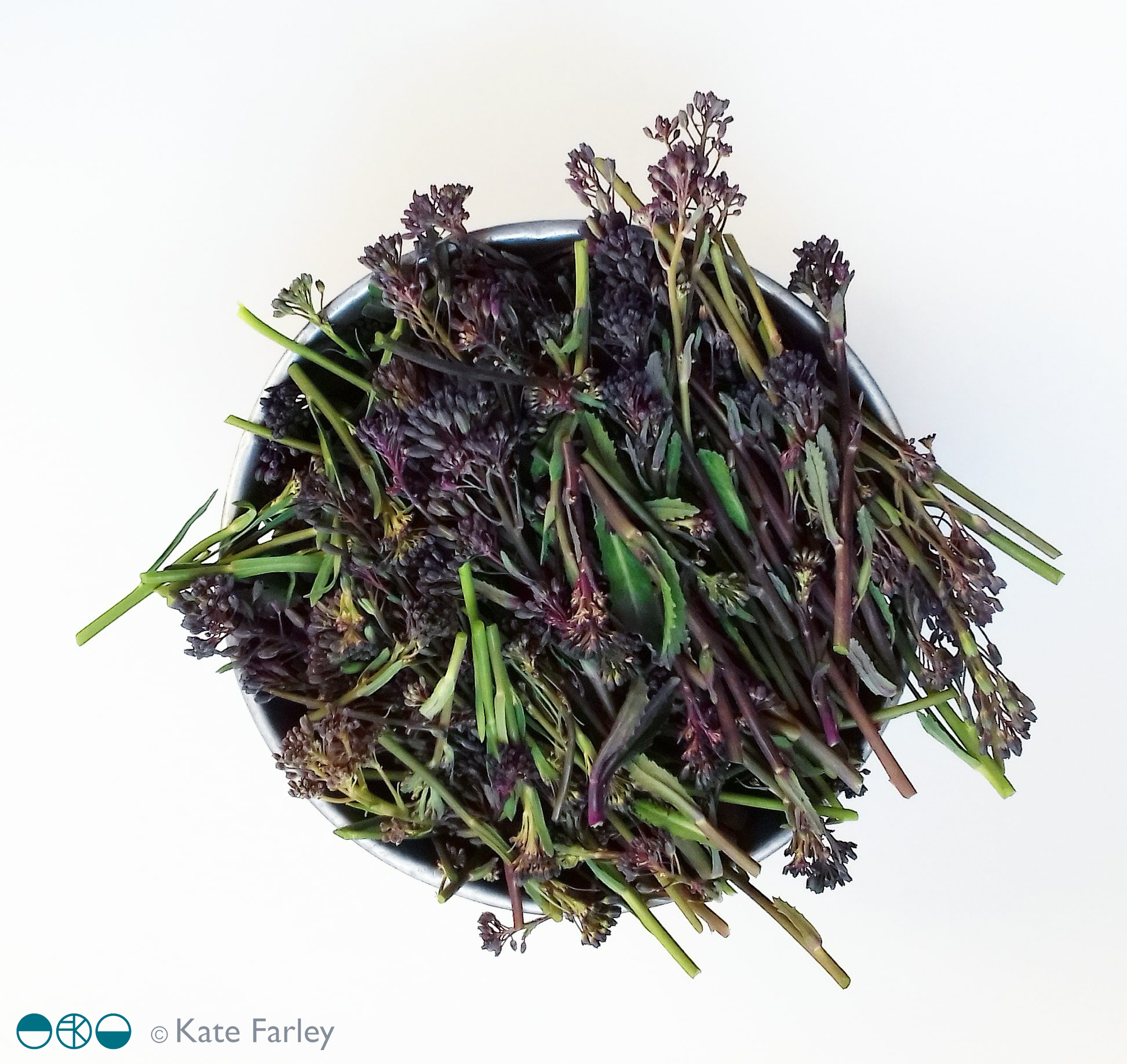
Brassica purple, harvest time

Having sown the seeds for purple sprouting last summer it has been the usual long wait until harvest time, but we have been picking it for the last few weeks. It always feels good to pick the brassica because the new season of crops are a while off harvesting.

KFarley_Brassica1a

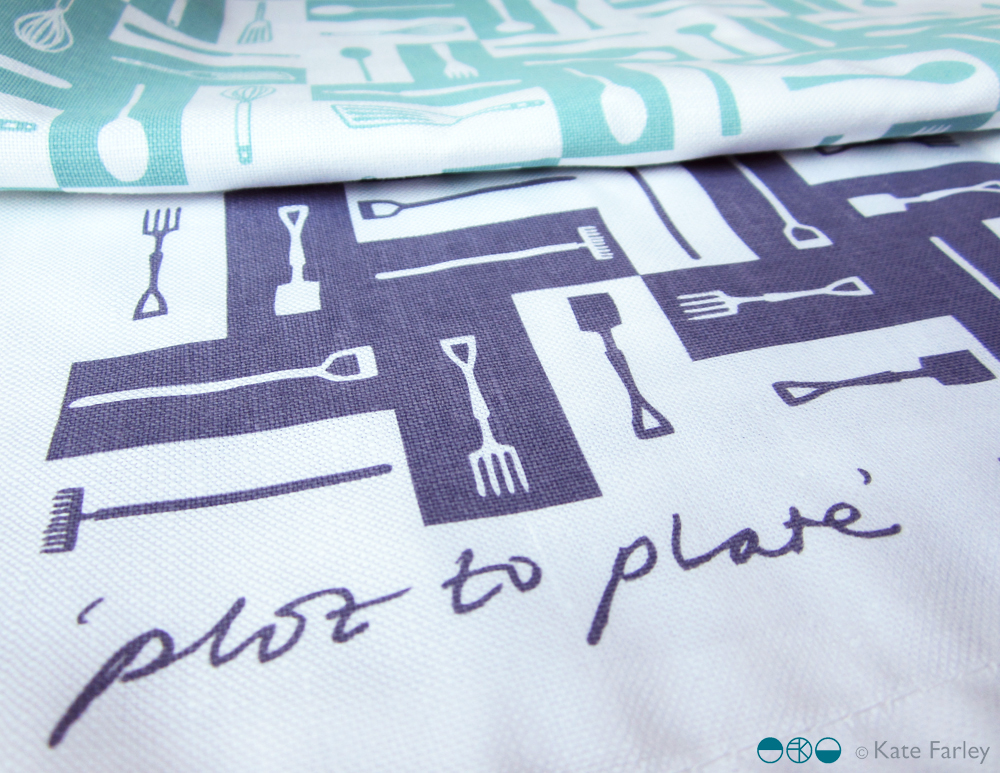
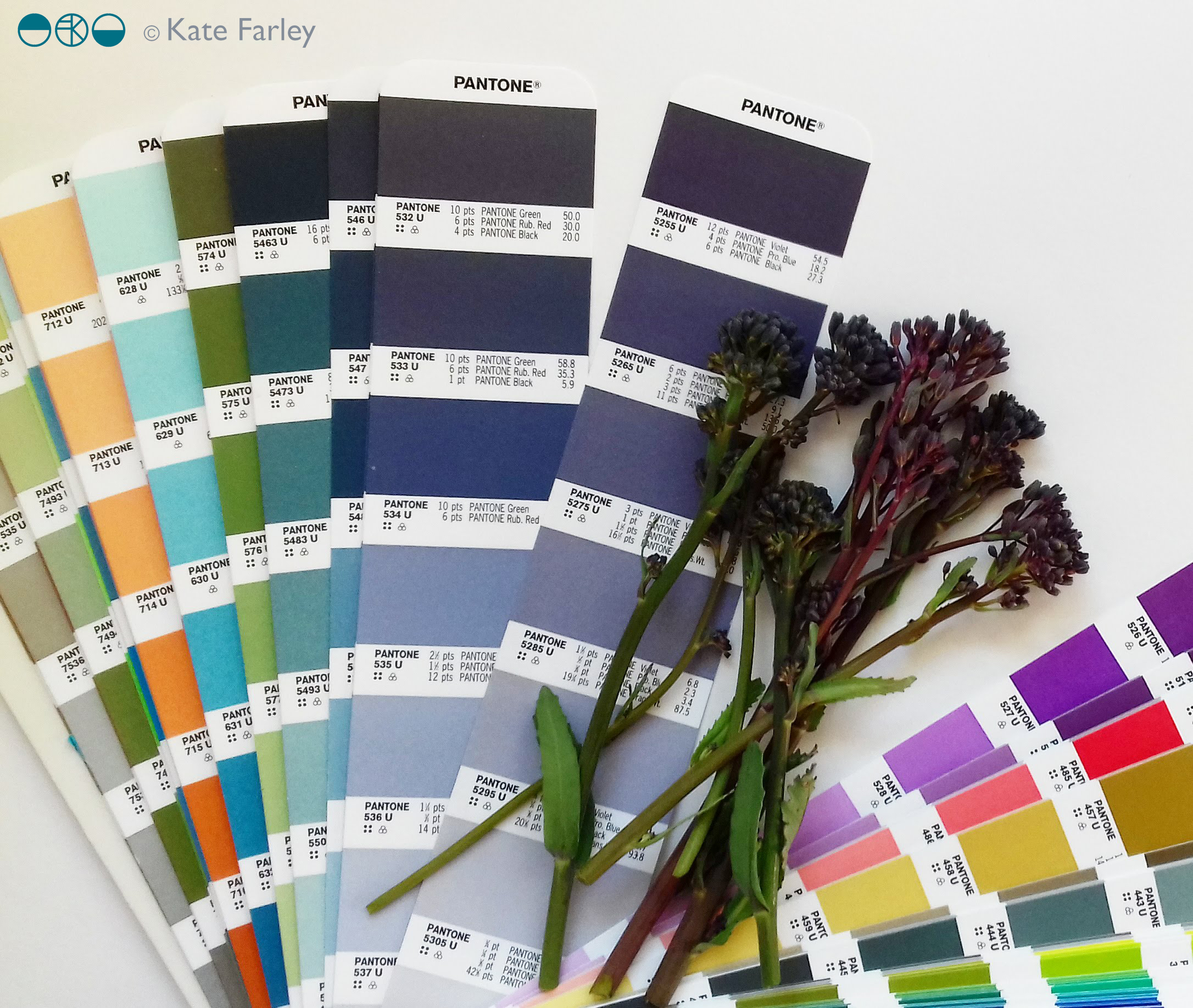
The purple of the sprouting inspired my colour palette for the Plot to Plate tea towels.

plottoplate_brassica_KF

I can’t resist colour matching, so here we are again …

KFarley_brassica1