winter palettes

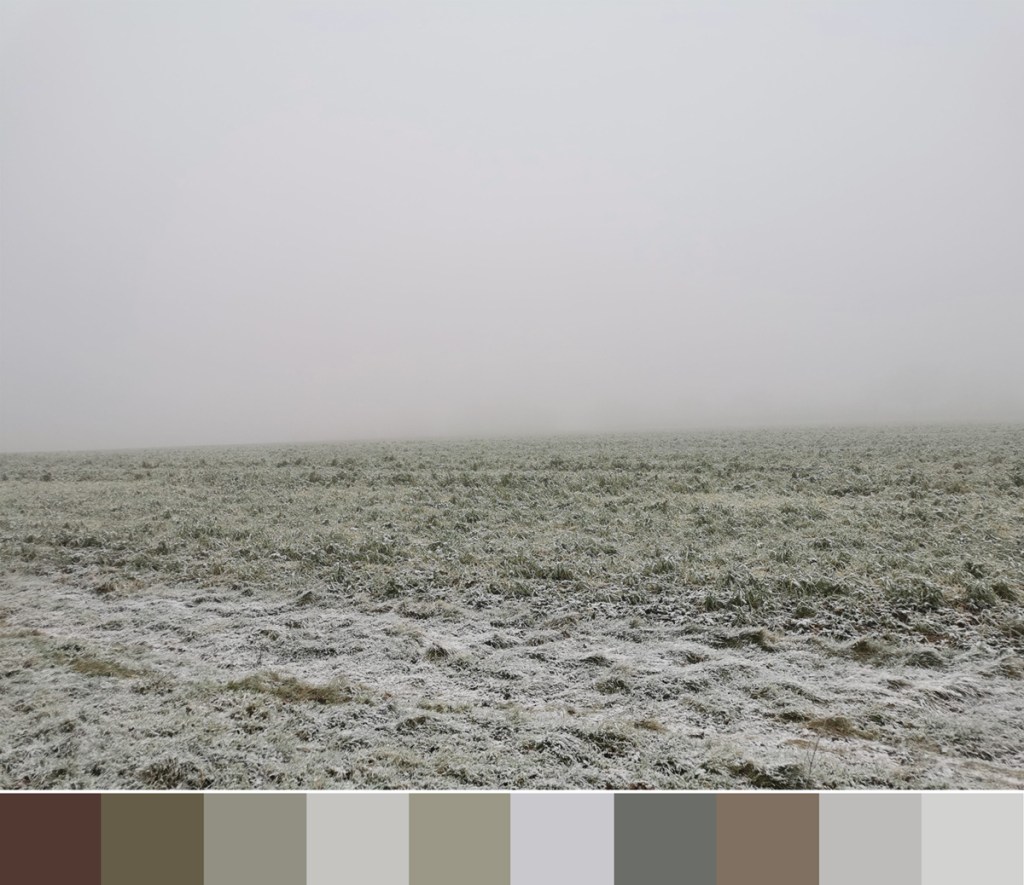
I’ve not had much time for colour mixing with gouache recently but I’ve really enjoyed noticing the contrasts of seasonal colours on our walks so I thought I’d celebrate that here. Some colours are exaggerated by bright sun, while the recent frosty mornings provide a muted coating.

Taking time to notice these small delights are ever more important as we spend few hours outside. I noticed today there was daylight in the sky at 5pm, so that and the first sights of snow drops and daffodils are putting me in the mood for springtime.

Colour Material FINISH

In my line of work CMF is an area of the design / manufacturing industry developing colour, material and finishes in relation to sectors such as automotive design, interiors, products & accessories etc. It involves innovation, design and development of surface and material solutions and is an exciting area of design, including trend research, consumer behaviour, material innovation and sustainability.

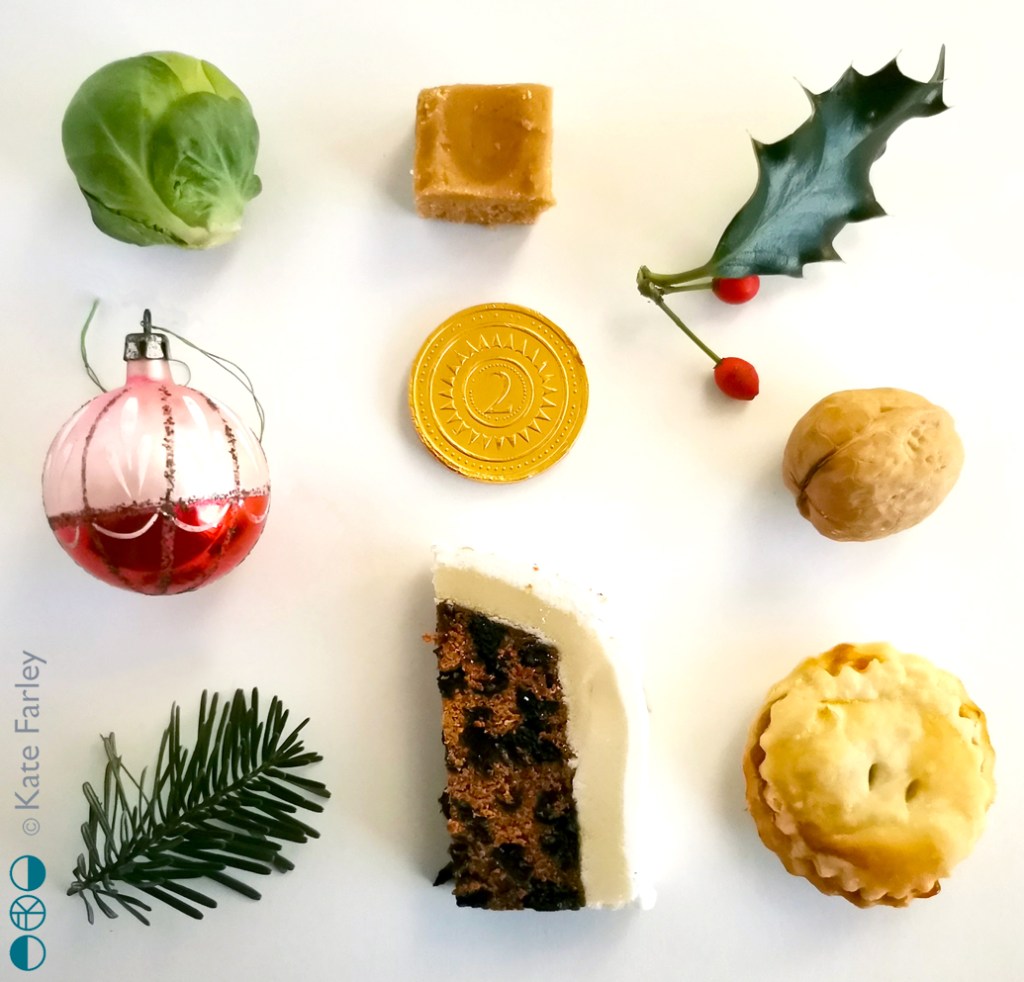
Spending more time sitting in my home celebrating Christmas got me thinking of the specific colours, materials and finishes I relate to Christmas. Home-made fudge, mince pies and Christmas cake, the walnut and chocolate coin in the stockings, obligatory sprout, some holly and fir greenery and a bauble that has been handed down to me, and that has somehow survived decades of Christmases. With the end of the year here, we have another sort of ‘finish’, so I’ve created a CMF board for today – I hope you like it!

CMF of Christmas, 2020. Kate Farley

Autumn colour swatches

I’m not the biggest fan of Autumn, mainly as I hate to accept the end of summer, but every year the colours of the new season are beautiful so it is difficult to stay disappointed for long. Having spent a week in hospital recently I really missed seeing nature so once out again I noticed a heightened awareness; my senses really enjoyed connecting with the outdoors again.

Wheatfen Nature Reserve, Norfolk

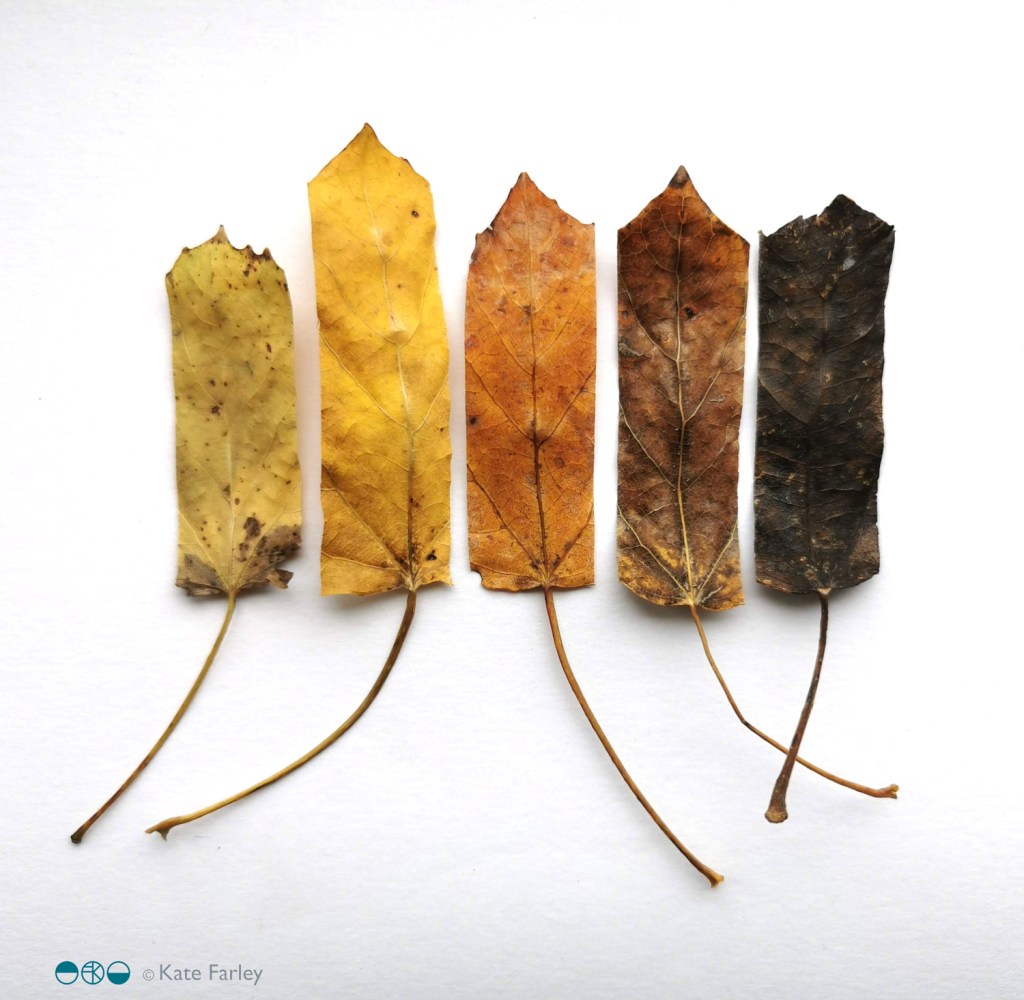
Over the last few months I’ve been paying more attention to colours of nature, gathering plants, feathers, shells etc and mixing the colours using gouache – see previous posts – I find it a wonderfully meditative process and one that brings great results too. The process really makes me look at the colours of the artefact and work out the nuances of hues, tints and shades. I’ve taken some slow recuperative walks in the countryside to rebuild my strength, allowing me to gather colour and appreciate Autumn. The colour chips here were made from the leaves from one tree, arranged in colour order. I wanted the colour to be the main thing to identify rather than them being leaves, so by trimming the edges of the leaves I’ve made them more like swatches.

leaf colour chips

on the mend: thoughts of healthcare settings

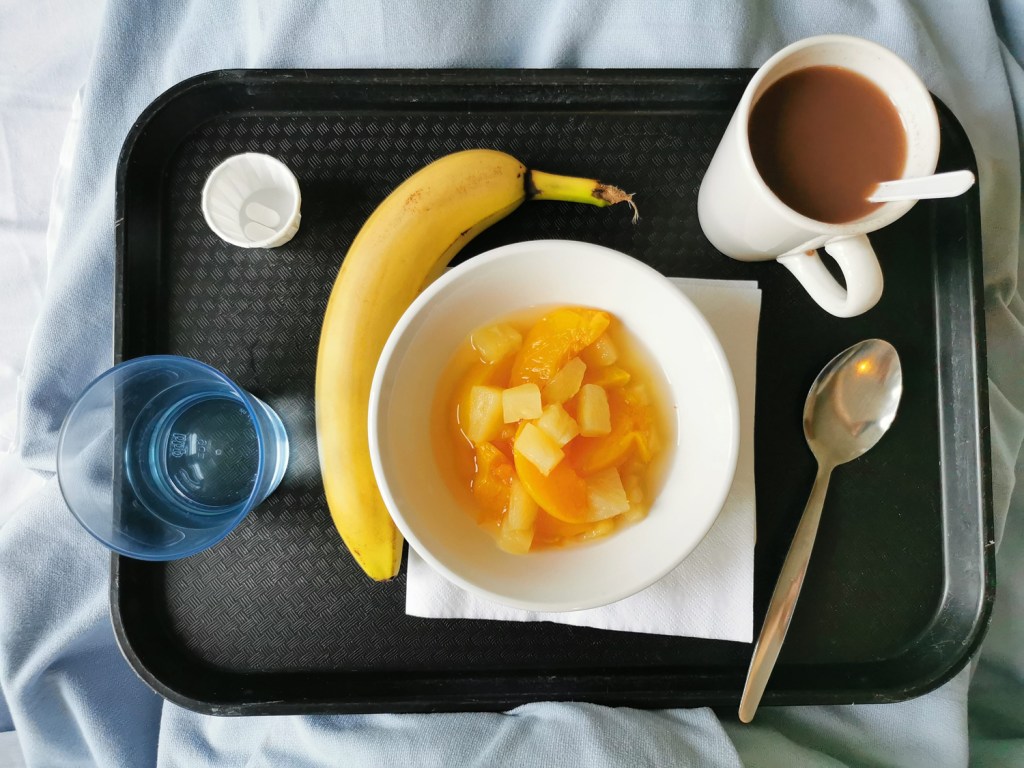
I’ve had an interruption to normal services as a result of some general surgery, added complications and time to heal. I’m not one to sit idle so it’s been a challenge to be patient, giving myself time to recover and gain strength. The time in hospital – a week – was an ordeal despite wonderful ward staff, and it gave me time to think about how important our surrounding environments can be, for our wellbeing and sanity.

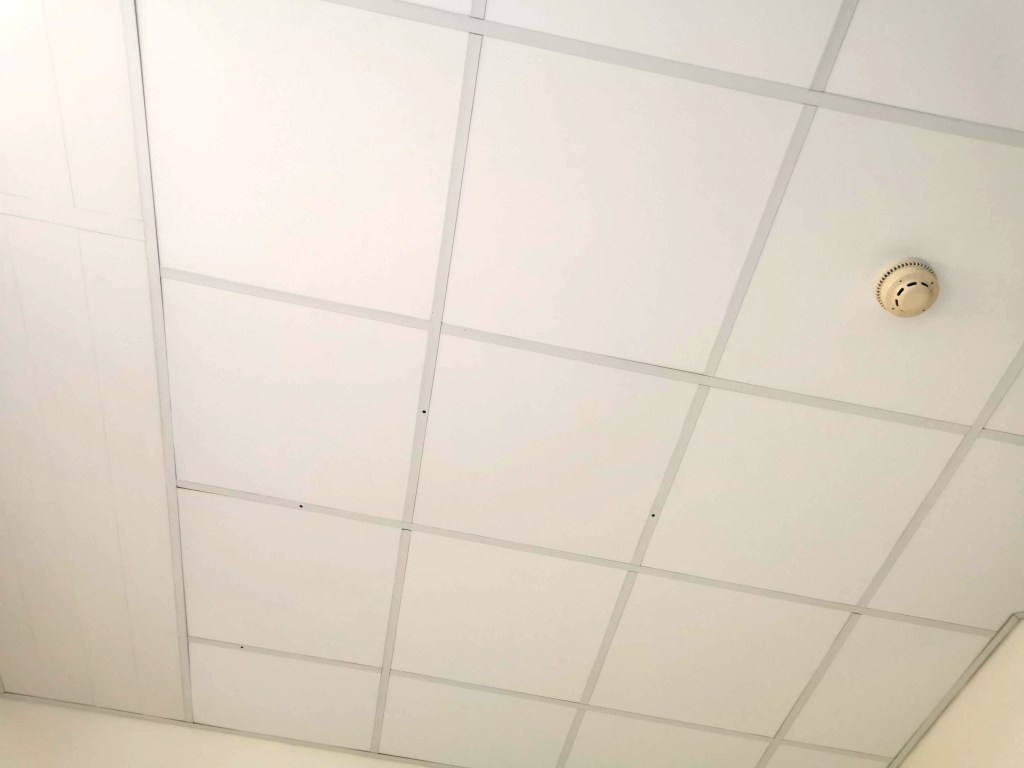
I got to know the walls and particularly the ceiling of the room very well. In my hazy mind I toyed with the grid of ceiling panels being a response to the Dutch De Stijl design by Theo van Doesburg, or a drawing by Agnes Martin. The four holes in the ceiling were also a stark reminder of the surgeon’s cuts. The prints on the curtains were so poor I refused to capture them, but they were insipid, uninspiring, and frankly poor design – I remember analysing their weakness with one of the staff late one night – I think she said I was crazy!

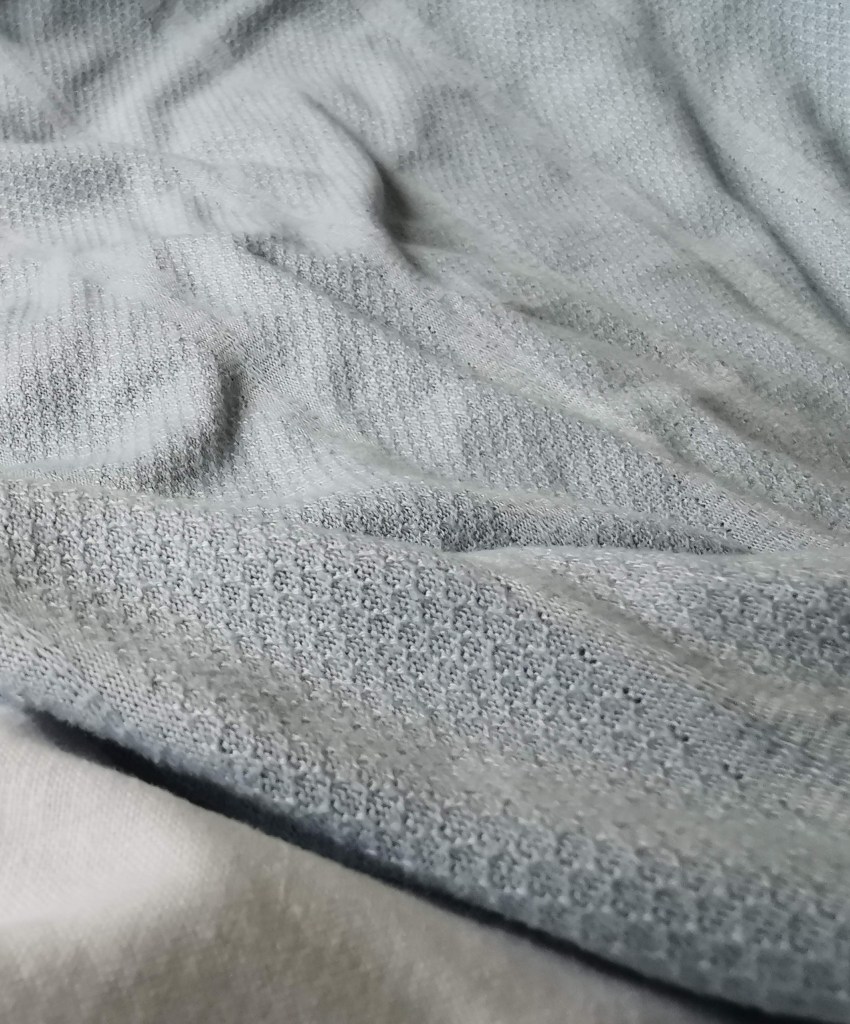
I vividly remember the power of the textiles surrounding me – I had a scarf which was a huge comfort to me – a familiar texture and smell of home. The fresh sheet and hospital blanket were also providing a strange comfort in the utilitarian room.

Twenty years ago I attended Arts in Health lectures including discussions on the subject of hospital environments aiding recovery and wellbeing, and I remember seeing incredibly exciting and positive schemes across the world where designers were embracing colour, nature, pattern and material to drive rehabilitation. I had hoped things had moved on from the institutional walls of hospitals. We now have the interior design buzz word biophilia, using nature for our wellbeing as an integral component in the design solutions, linking humans to other life forms, but it has yet to arrive here. The space in which I coped was bland, institutional and bleak. Such a missed opportunity – and particularly when the hospital ‘art’ is so often shoved out front in the public foyer, and not where the patients spend hours on end, day after day – don’t get me started on public art commissions at hospitals!

The relief to be home, surrounded by colour and pattern – and my family – was intense. Those first breaths of fresh air, the sight of a bright autumn day was incredibly uplifting. I still hold a heightened sense of this awareness of nature, even now a week on, as I recover and appreciate my health returning to business as usual.

mixing and matching colour from the beach

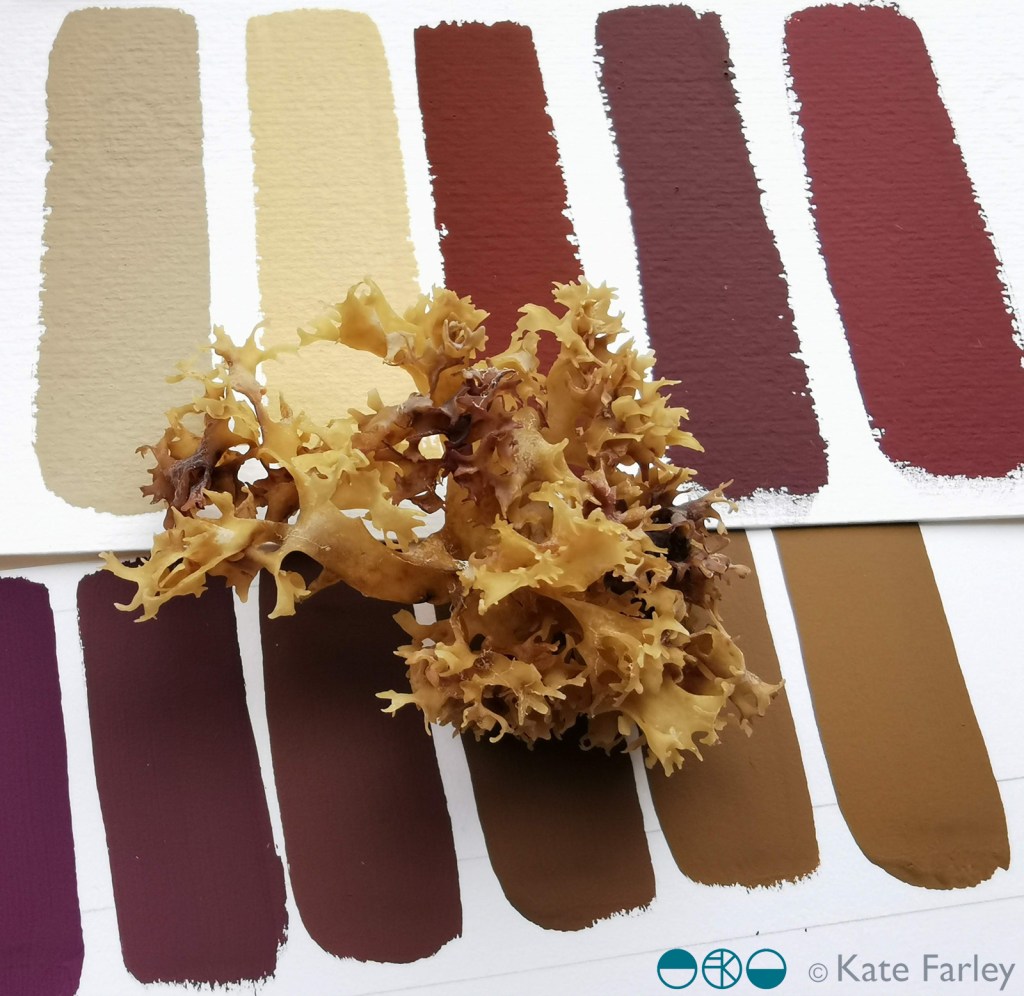
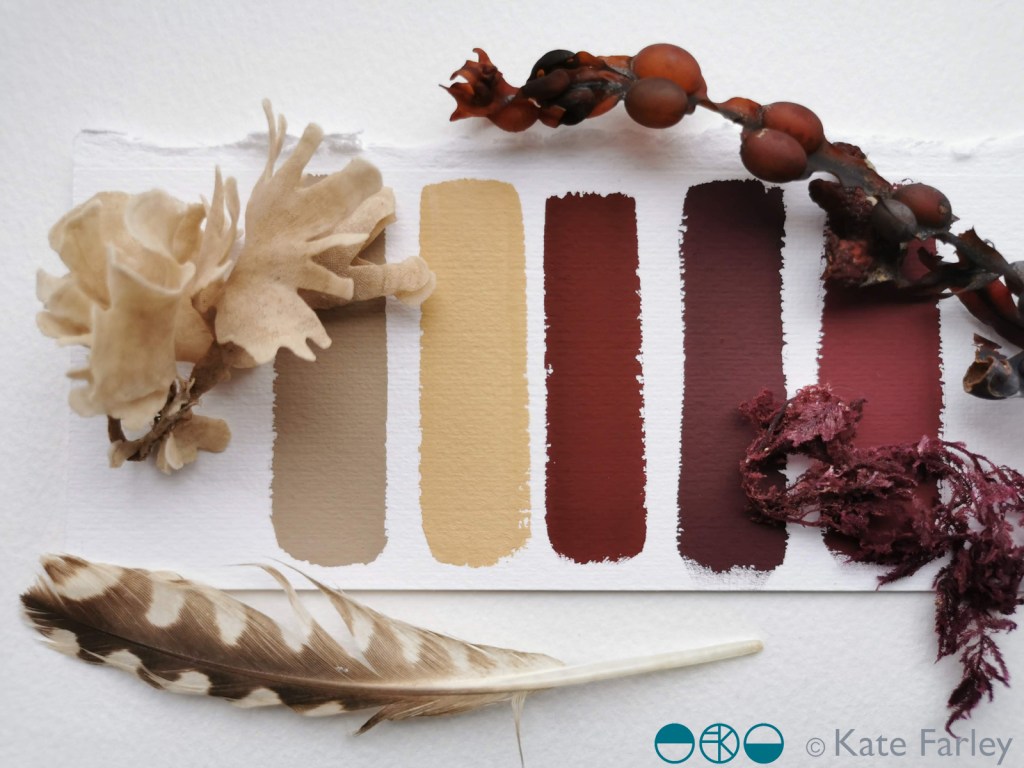
I’ve been continuing my colour mixing series, this time taking inspiration from the beach and the artefacts I gathered. The gouache works wonderfully to capture the colour, responding to small specks of added colour as I take the starting colour on a journey to and past the colours of the item I am studying.

Some new drawings are taking shape that use these colour chips and I am excited about where they are going – one day I’ll share them. In the meantime I hope you enjoy the colour of the beach of north Norfolk.

colour mixing nature

Back in March I began a new series of colour of works on paper that were simply about mixing and matching colour, evolving hues through the process of painting individual swatches to build the narrative in a sequence, as if a technical exercise at art school. You can read about those pieces here.

KFarley_grass_gouacheI’ve continued to gather pieces from nature on the walks I’ve been on this summer and have continued with the process of mixing colour and so I thought I’d share some here.

KFarley_wheat_gouache

I’m doing this simply as I love to make colour, and really enjoy working with the gouache paint for its colour qualities. The process occupies my mind, suggests potential avenues for future work and connects me with nature through the mementoes I make. The seasons change and the colours alter, but the swatches hold memories in the process of mixing, and I can almost smell the dry heat of the corn, and the cool shade of the wood where I found the Jay feather.

qrf


passion for passi flora pattern

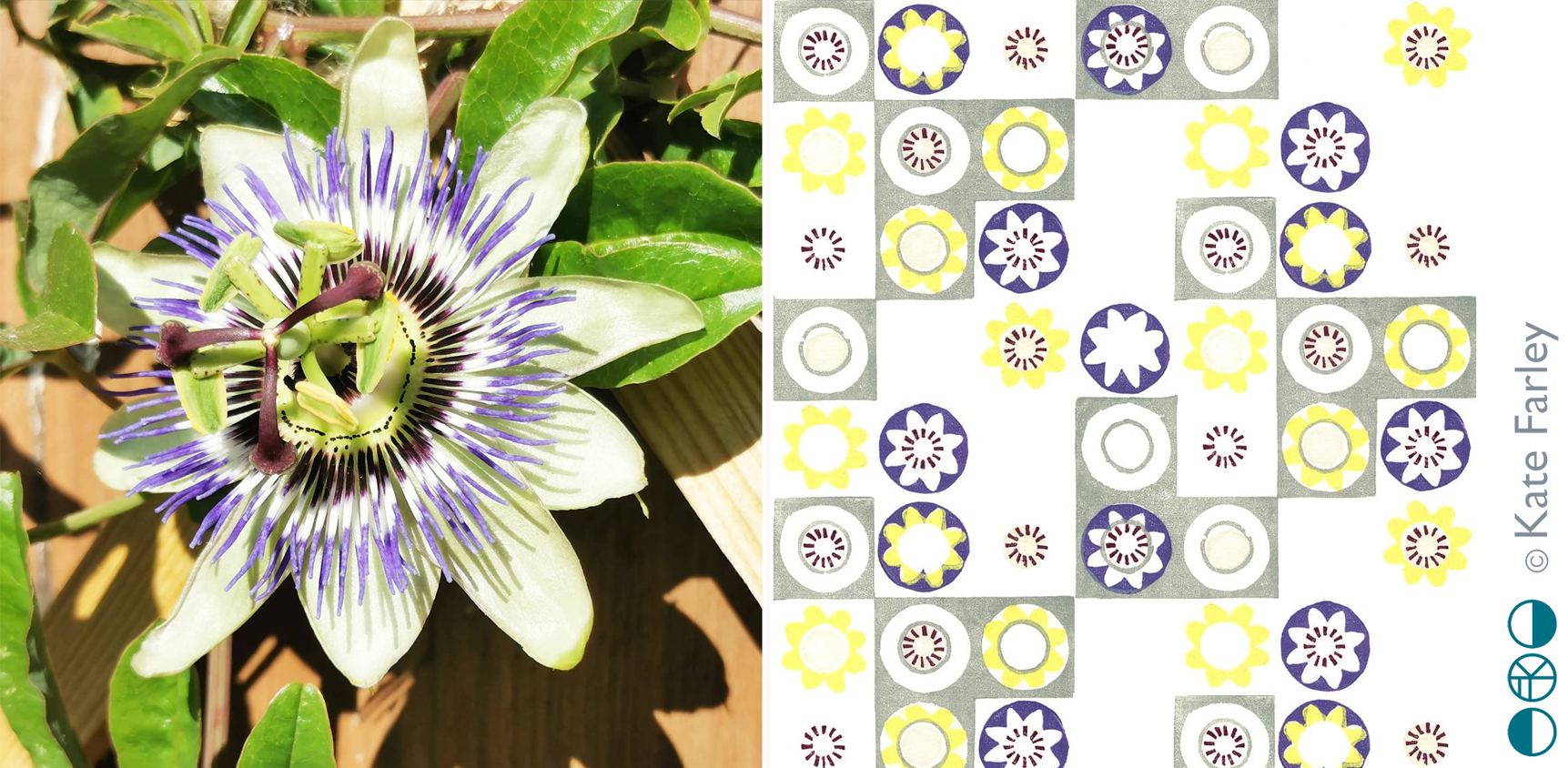
Many years ago my flatmate was given a passion flower plant and when the flowers came we were both in awe of their splendid form; a thing of beauty in our otherwise less than beautiful flat in Camberwell, south London. I made drawings of the flowers and sometime later developed some patterns from it, screen printing it as repeating designs and placement prints. I created the motifs by deconstructing the elements that constitute the flower head.

More years passed and sometime around 2012 I revisited those screen printed patterns, this time interpreting them as lino cuts as part of my Plot to Plate series of editioned lino prints. Last year I planted two passion flower plants in our new garden and last week we had the first bloom. It took me right back to that first flower in the flat in Camberwell, and was reminded of the pattern again.

passiflora_web

Whenever I look back at old work I’m likely to want to make changes, and this is the case here too, but each design also holds a moment, defines a time, and sometimes that makes it what it is. I’d not imagined I’d connect that flower to my practice almost twenty years later…

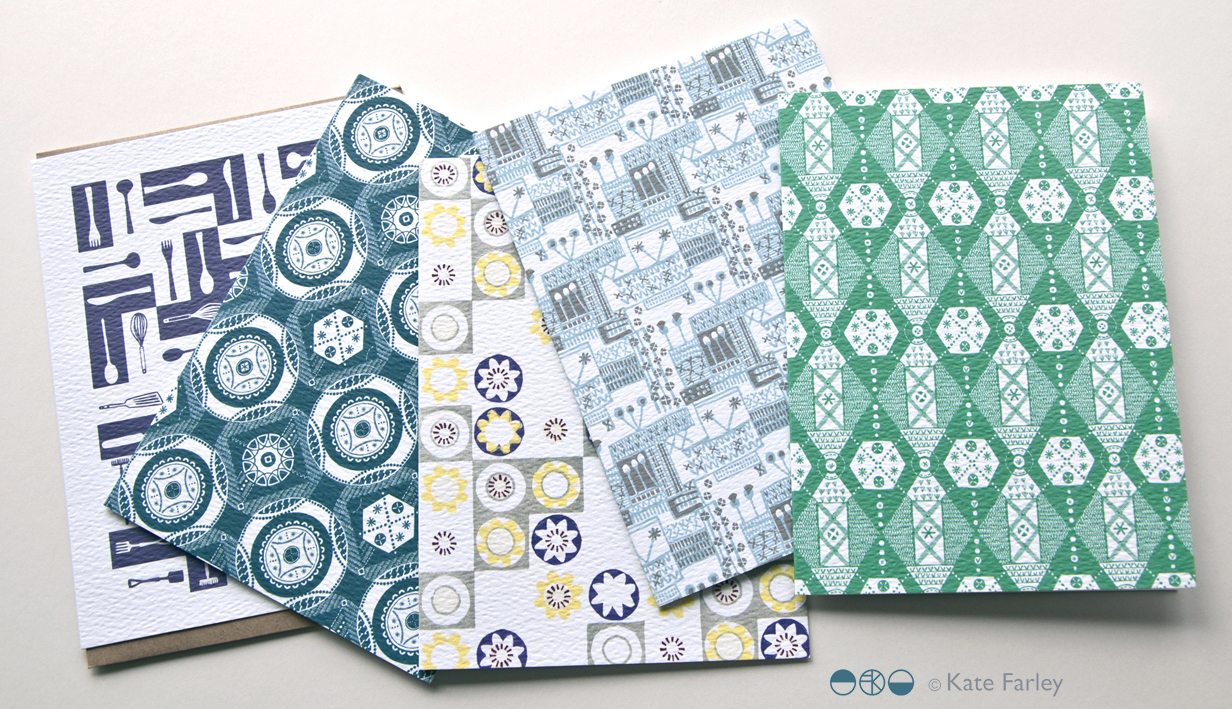
This pattern remains available as a set of patterned Plot to Plate greetings cards.

KateFarley_GC5002_blog

Brassica purple, harvest time

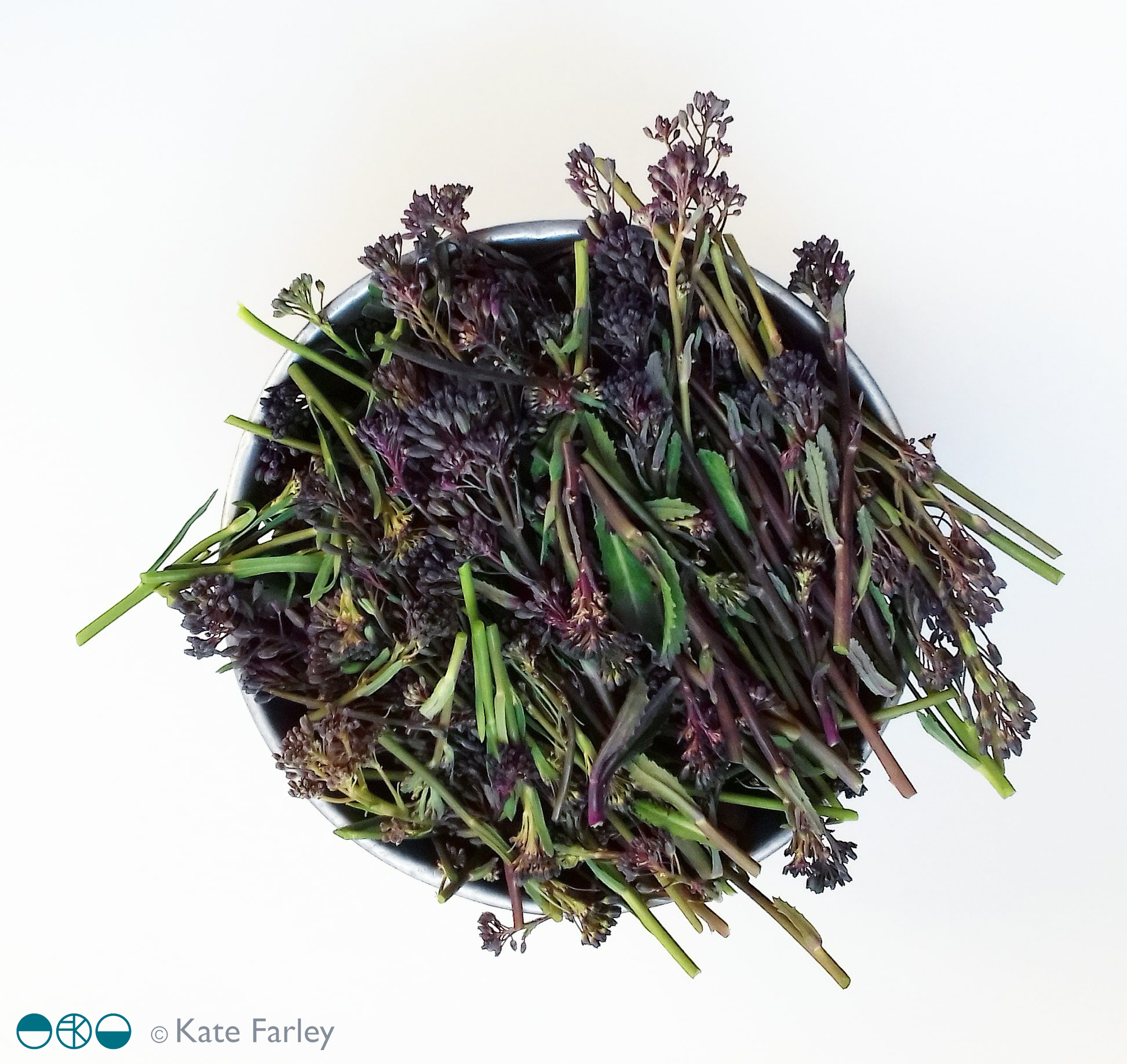
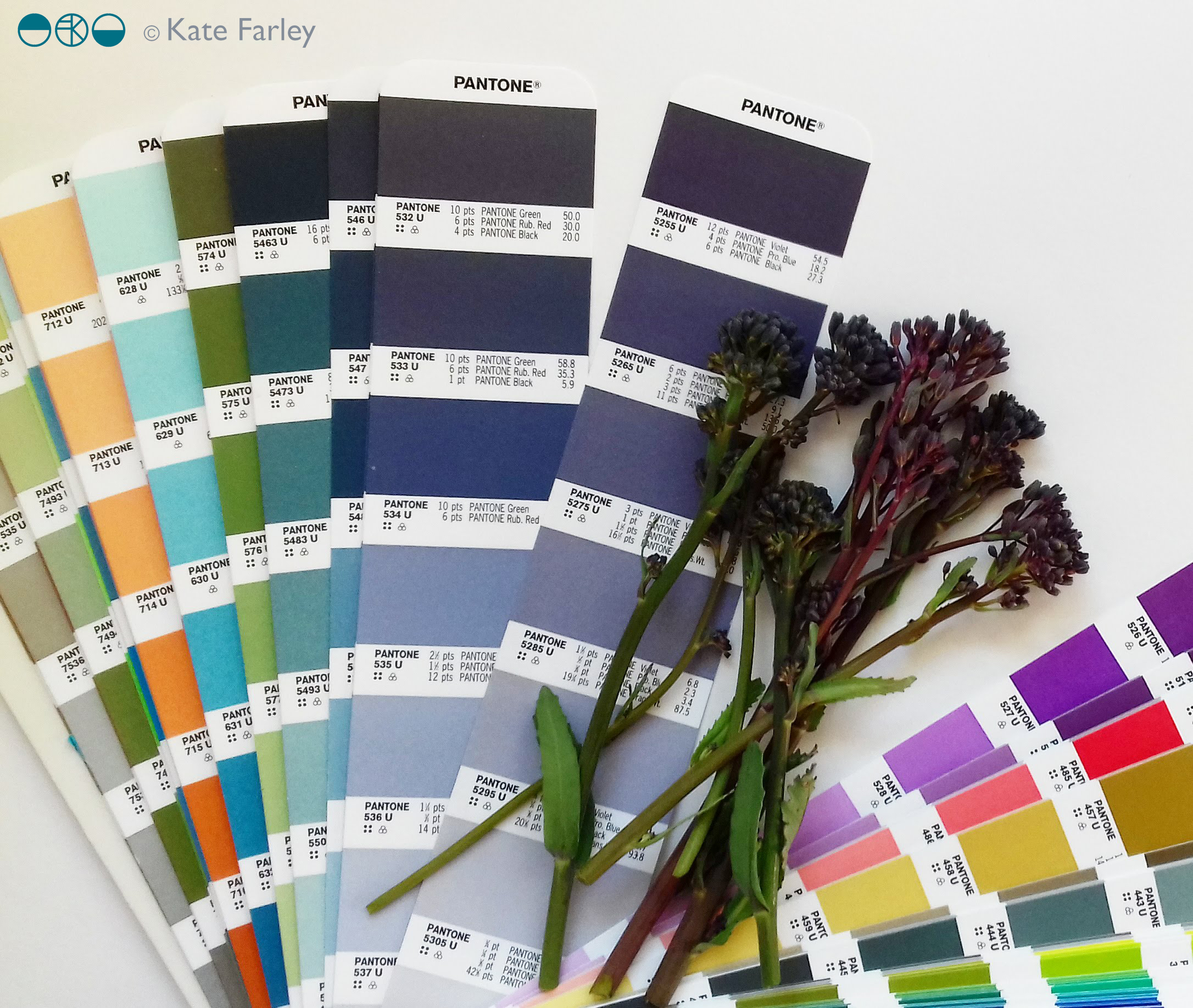
Having sown the seeds for purple sprouting last summer it has been the usual long wait until harvest time, but we have been picking it for the last few weeks. It always feels good to pick the brassica because the new season of crops are a while off harvesting.

KFarley_Brassica1a

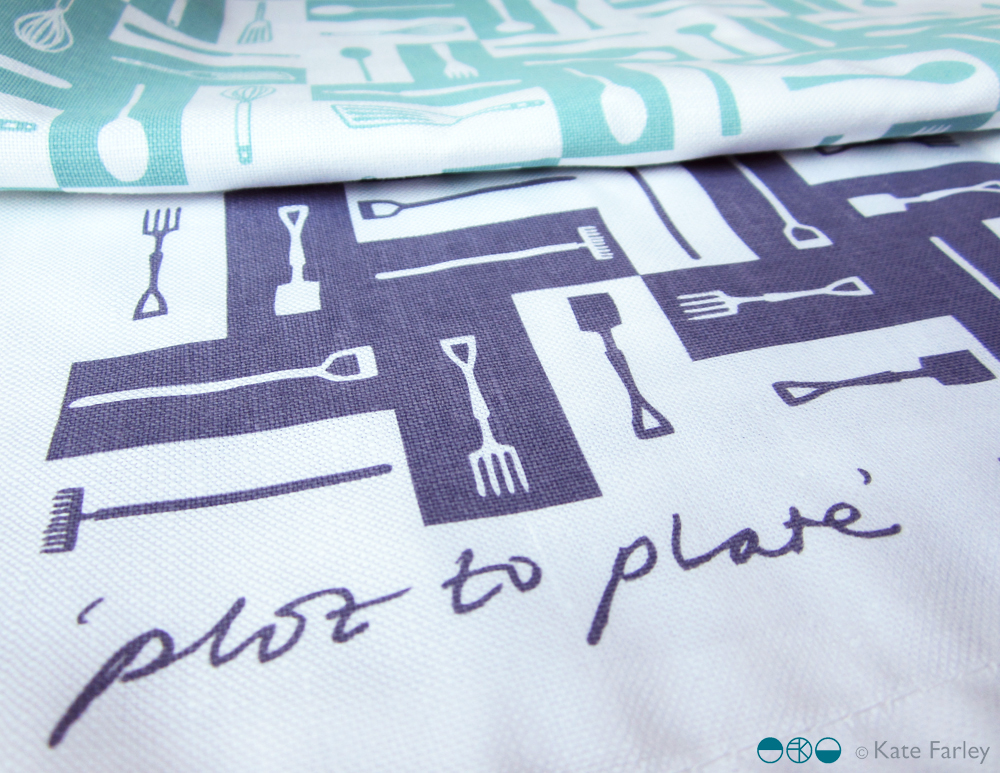
The purple of the sprouting inspired my colour palette for the Plot to Plate tea towels.

plottoplate_brassica_KF

I can’t resist colour matching, so here we are again …

KFarley_brassica1

Flint and feather finds

KFarley_flint_feather1500

Having gathered a few beautiful feathers that had come loose from an unfortunate pheasant we came across this shard of flint on the side of a field that had an uncanny visual similarity to the feather despite the significant differences in material properties of soft versus sharp.

evolving colour in the making

A walk in the Spring sunshine gave impetus to a very simple and mindful exercise back in the studio; to make the colour of the landscape. A sprig of willow contains so many different colours. Those colour qualities will alter as the clouds skud across the sky casting shadows, and as the sun ripens the buds.

KFarley_yellow_willow_1500_KF

With paints at the ready I knew it wasn’t about making the one colour, but the narrative of generating colour as my process of journeying from one to the next. I wanted to paint each of the swatches of colour I mixed as I evolved the paint story, observing and recording the subtleties of the change in hues. Selecting a limited number of tubes of gouache to begin made it more interesting. To start I selected the dominant colour I was aiming for, and had a little piece of nature with me as reference. I developed the swatches of colour, selecting one, and then another hue to achieve, step by step, slowly and patiently filling the page.

KFarley_ycolourpalette_1500_KF

Gouache is a beautiful paint and this exercise reminded me of a wonderful morning teaching colour mixing to BA1 Textile Design students earlier this year. Getting the right amount of water, ensuring the colours are cleanly mixed, and then making that one painted line flat and even – it all takes practice.

KFarley_ytubes_colour_1500_KFI was lucky enough to have excellent colour teaching during my time at art school and consider myself strong at seeing and achieving the right colour mix. At uni I remembering saying to the print technician “it’s nearly right, I’m happy with it”, and she’d say, “Kate, it’s not what you set out to make, keep going until you get there!” I thank her for teaching me that persistence and these days my students know I’m particular (a preferred word to fussy!) when it comes to colour. Getting the colour right is so important and you may as well enjoy the journey to get it right. Textile products sit alongside fashion and interior items made from other materials, and the colours need to match / coordinate, so quitting before you get the right colour may be a sales / employment disaster too!

Interestingly, some of my current students were discussing my approach to colour recently and one shared that I’m not keen on black outlines around shapes in print designs. Another one commented that they hadn’t heard that, but would keep it in mind. I jumped in to defend the comment I’d originally made – a black outline is too obvious, unquestioning, the default, rather like Times New Roman black typeface when you open Microsoft Word. Too easy. I ask students and designers to think about whether the black line is the best for the design. If you think of all the other colours you can use, I think you may find another and better alternative!

At the end of this colour mixing time I am left with souvenirs of the process, memories of the walk and beautiful colour. This is real colour away from the back lit screen I too often see colour from. I shall do this again.

KFarley_y3xcolourswatches_1500_KF