Wallpaper in the creating…

The process of designing my first commercially available wallpaper has been a long & highly considered journey and one I thought would be interesting to share.

Research: I first made drawings in my sketchbook last summer when I visited the National Trust property Hanbury Hall & Gardens in Worcestershire. I really liked the formal parterre and saw a really close link between garden design and textile design – I wrote about this in a previous blog post: https://katefarley.wordpress.com/2014/05/11/pattern-design-outdoors-and-in/

Composition: Sketches became drawings that became more detailed designs, that were then tested in repeat by scanning them in to the computer and using Photoshop. Edge details, scale of motifs, pattern and textural rhythm all needed to be considered.

Cutting the block: I measured and cut the lino block before taking a really clean print in order to scan the print in to work digitally with the repeat tile.

Editing: Further refinements, several print outs and more alterations took place over several weeks as I got used to seeing and living with the design. Additional lino blocks were cut in order to add different motifs to the design. Additional variations across the larger repeat file create visual interests and a play on the traditional repeat expectations. Some tweaks were so minimal that people unfamiliar to the design wouldn’t be able to spot the changes without having them pointed out, but it’s so important that every dot, dash and space has been considered before the production process is underway, saving time and lots of money.

Production: The digital artwork was sent off to the manufacturers of the roller in order for the design to be printed, and a technical proof was sent back for my approval – exciting and scary times!

Colours: Much thought, research, trying and testing went in to the colour combinations and I painted lots of colour chips using gouache in order to communicate the choice to the printer.

Printing: After signing off the colour proof provided by the printer, the wallpaper went in to production, labels were designed and printed, rolls created.

Results: I’m delighted with the results, the efforts by all those involved with the production process, and look forward to launching this at TENT London very soon.
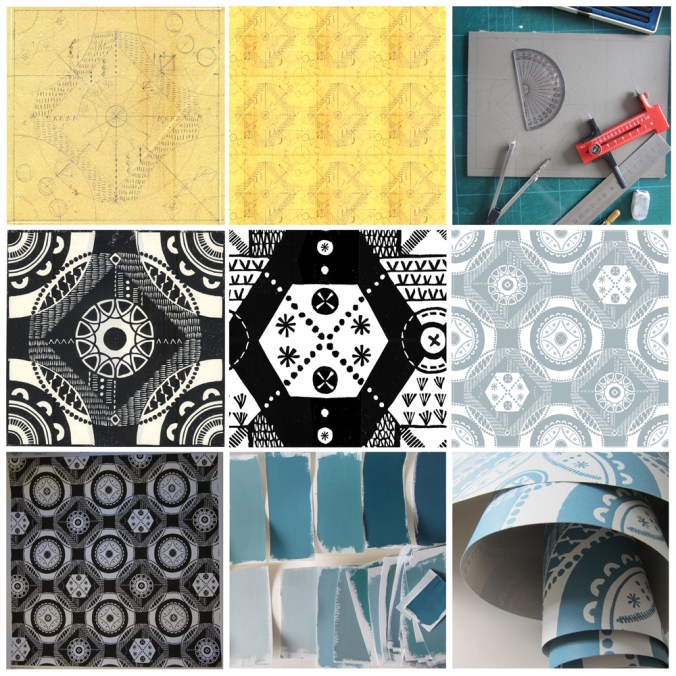
hanbury_BLOGtile1000rolls_100_DSC_0227

Communicating Colour

Evocative, technical, predictive, informative, for matching, mixing, ordering, cataloguing, of materials, surfaces, finishes, whims and traditions…

Working across the fields of surface design, textiles, public art and fine art I have come across many ways to represent colour in order to communicate qualities. Whether it be for perfecting a match for production, or generating an evocative palette for a client, each niche within the industry has its way of doing things. Black for the Northern Line, double yellow for no parking, gold for the winner, and red for wrong. From Global Color, to Farrow & Ball, Pantone to Berisfords the language of colour is key. Some give codes, other names, sometimes a swatch, others a smudge, universal, local, a science and an art!

Seductive, formal, in a book, or on a card, each help to create the colours in the world around us, and while the skills of the individuals choosing, producing and matching will no doubt be overlooked by most, may the colours continue to sing, calm, provoke and much more.

I’ve brought some of the various forms of colour I work with together to brighten up this grey, wet Monday in February.

communicating-colour_web

spring in a vase

Despite us not having had snow yet this winter we have the pleasure of seasonal flowers that are so beautiful and distinctive, its time to celebrate them here, captured today on digital ‘film’.

I’ve drawn both the snow drop and the daffodil so many times over the years (mending from a broken elbow led me to a season of endless daffs drawings as a way to pass time) and yet each year they surprise me in their beauty. Is it too much to expect that spring will be just around the corner, and we can start this year’s digging?

snowdrops_webdaffs_web

micro florals

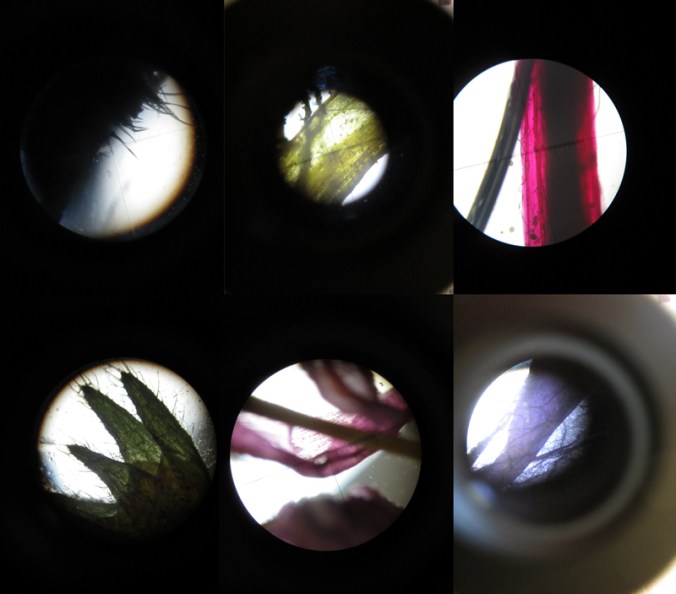
I’m used to gathering flowers and then drawing them over and over in order to learn more about their colours, shapes, forms and structures in order to develop imagery for prints and textile designs. At home this weekend we looked at flowers in a different way. We investigated last years plants that my daughter had pressed safely, and looked at them under the microscope that my son had become rather too keen on discovering inside the utilitarian wooden box it lives in.

We had great excitement as some rather plain plants revealed stunning patterns and textures and were disappointed when something beautiful at full-scale looked rather scary close-up. On trying to capture these images on camera the results were reminiscent of Len Lye animations and got me thinking about other ideas. Here’s a few images to share…

micro_6_web

Norfolk lines

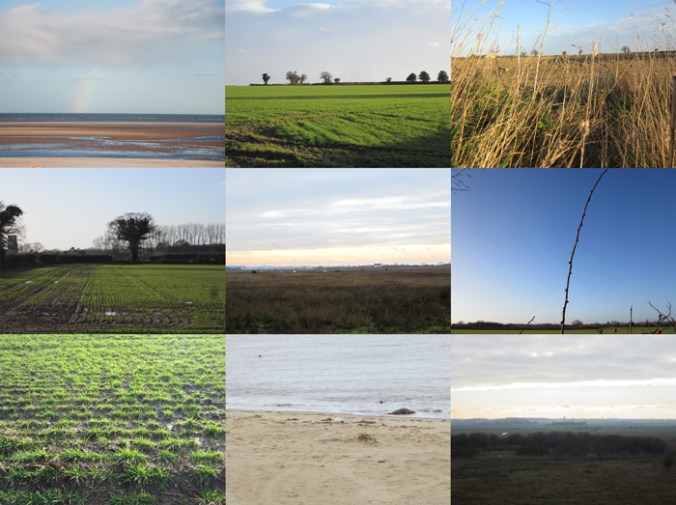
I’m naturally biased when it comes to the Norfolk landscape but seeing as it has shaped my aesthetic, colour preferences and my approach to drawing I am happy to consider it to be inspirational. I don’t spend enough of my time in Norfolk these days but every time I visit I take deep breaths, and big eye-fulls of the vast expanse of open landscape, the ever-changing light qualities and the endless colours of the land, sea and sky. Here’s a medley of Norfolk from this Christmas including sights of seals at Horsey Gap, a rainbow & the beach at Wells-next-the-Sea, and fields near Cawston and Alysham.

Norfolklines_web

solid coated, and rather red!

It’s been rather a long time since I posted a Pantone colour as part of my Twitter project  – here’s a beautiful red.

Kate Farley@katefarleyprint

A solid and striking @pantone 186, Coated obviously – its December! Near Chesham. A damp walk cheered up by these. pic.twitter.com/SnEFnBYvJa

Embedded image permalink
For some previous Pantone colours I’ve gathered check out my Facebook page: Kate Farley Print https://www.facebook.com/photo.php?fbid=517821538247455&set=a.517820928247516.132125.503564866339789&type=1&theater

the true Plot to Plate harvest of 2013

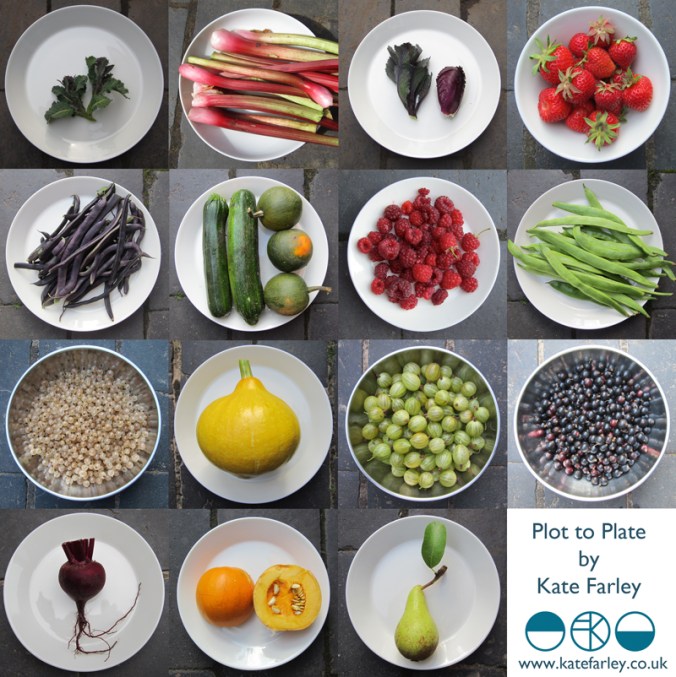
Today I picked the final handful of beans, harvested the last of the squash in case we are surprised by a frost, and noted the pace had slowed on the rain-battered raspberries. We still have courgettes and the last row or two of potatoes, plenty of beetroot, celery… and parsnips – and for those we wait for positive news of the frost before they accompany our Sunday roasts.

I’ve often returned home from the plot to capture in photographs the success of the allotment on our plates and bowls, capturing the beauty of shape and colour of our fruit and veg. Today I thought it appropriate to put together the photos as the harvest comes to a close. I realise its incomplete; no sweetcorn, no cucumbers, no carrots or peas no blackberries or swede. No disrespect – some were a success, some disappointing – but there’s always next year to make amends.

I have to thank this lot for providing me with constant inspiration for my design collection of the same name – and this really is an example of Plot to Plate.

plottoplate_2013

Good feelings at the allotments

Taking care of an allotment plot is never about saving money on food – and Birmingham Council have ensured it could never be, given the huge plot rent increases. Tending a plot gives so much more than the crops that you harvest. Here’s a few good reasons:

  • Growing your own food provides the gardener with opportunities and excuses to go outside and realise that what looked like a grey, cold winter day is actually rather nice.
  • Digging provides an opportunity for head space, for time to mull things over, while also focusing on the amazing tenacity of bindweed and couch grass that really ought to be put to a constructive use rather than taking up all my time!
  • Making good use of time growing food makes you wonder why other people would want to spend each weekend wandering around indoor shopping centres, missing out on the feeling of muddy fingernails despite the gardening gloves and the sight of the first strawberry beginning to blush.
  • The satisfaction felt from a harvest that provides all the food for your family meal takes a lot of beating
  • and in addition to all this, I can thank the plot for the inspiration in my ‘Plot to Plate‘ design collection too.

Its a really good feeling when the crops are bountiful. The hard work of winter has paid off, the patience with the frosts and the protection from the birds has worked out okay and you get great stuff to eat for the commitment you give. With a fully laden bike and a handful of sweet peas to grasp on the handle bars you head home like a hunter gatherer from a previous age.

The thing is, when all goes well its an amazing feeling to be able to pass on the surplus to others who will also enjoy the success. Some years at the site we all have gluts of the same thing, other years we wonder what we did wrong when others are almost complaining about too many onions, and nothing has come of ours. It’s a great thing that there is never resentment to another successful gardener, but pleasure in their success. We share tips and ideas, timings and tools as well as the odd cast-off seedling and you’d be a fool to pass on the offer of parsnip seeds from Tony!

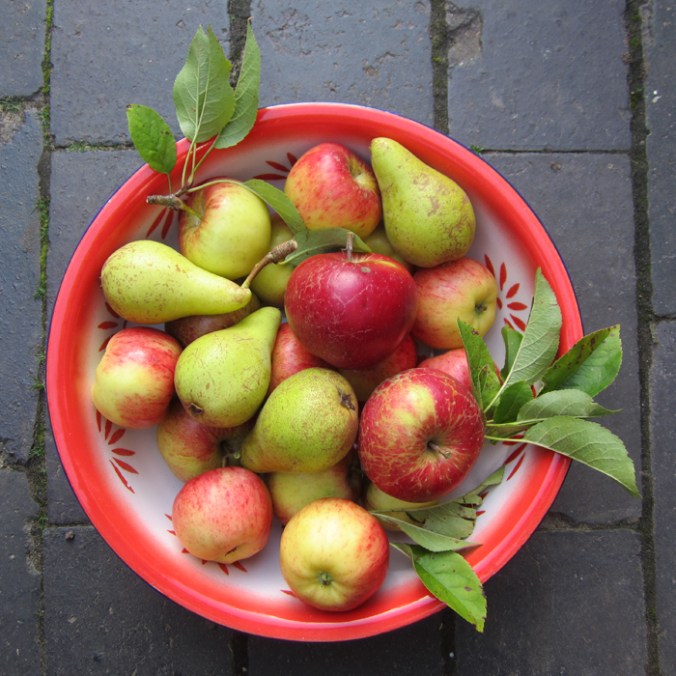
When a fellow plot-holder offered me her excess apples and pears today I politely declined at first, thinking that she would find something else to turn them in to, another apple tart, another crumble – really! too many apples? We have had a poor year in that regard. But there is a great sense of pleasure in offering ‘help’ in accepting the produce. We really are the winners in this hand-me down act, but it also feels as if we are doing a great favour in accepting the gift of free, home-grown food, enabling the grower to experience their own sense of generosity, good-spirit and community mindfulness, and saving them the feeling of not letting down the very fruit that served them so well this year – not bad for a bag of apples and pears – thanks!

applespearsbowl_web


box of colour

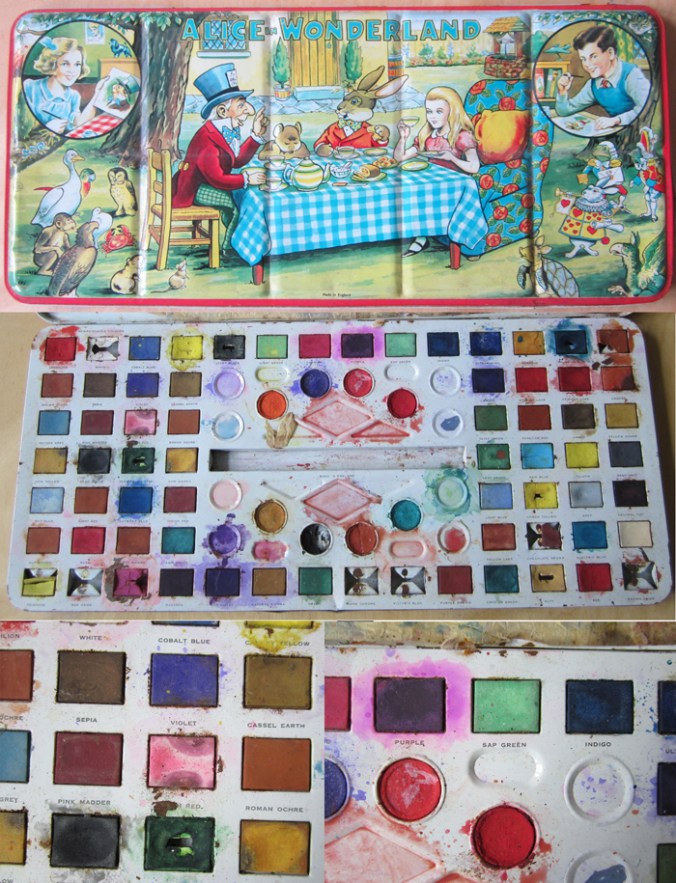
I was shown this wonderful Alice in Wonderland paint box that has been looked after for many years. It is so much nicer than much of the branded, TV themed products of today. I especially like the labeling of the names of the colours. Is sap really that green? I would have been a very happy child to have received a box of such size and potential. Note: Made in England!

alice_paintbox_web


July colours in the garden

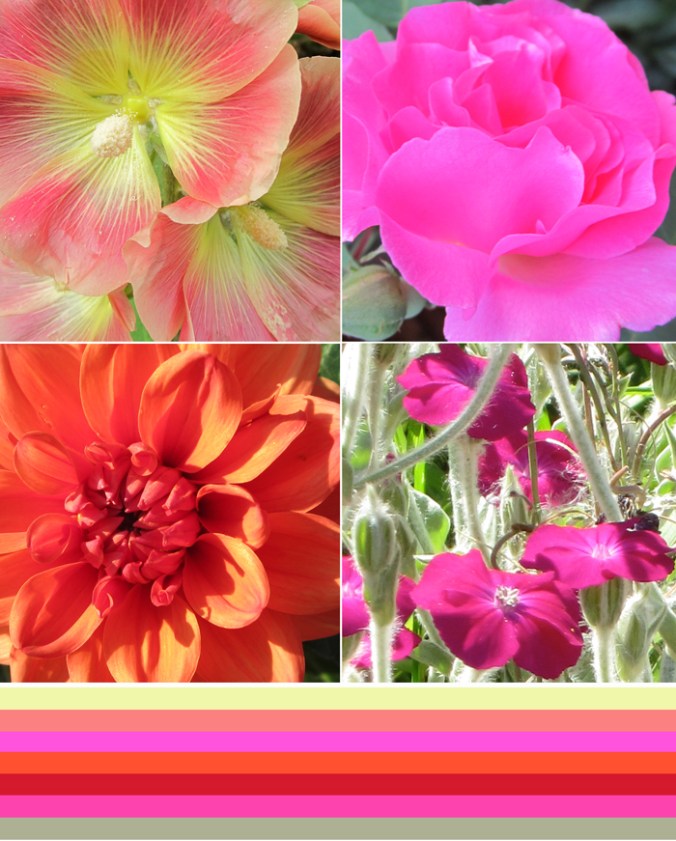
Following on from the last few months of colour charts that I have created documenting colours growing in the garden I have made a July 13 one too. The weather has been hot and dry but somehow the slugs have enjoyed the marigolds so there is a lack of orange in this colour palette this year. The Foxgloves are pretty much over but the Hollyhocks and Dahlias are stunning in their part of the garden relay race through the summer schedule.

july13gardencolours_web