YELLOW April

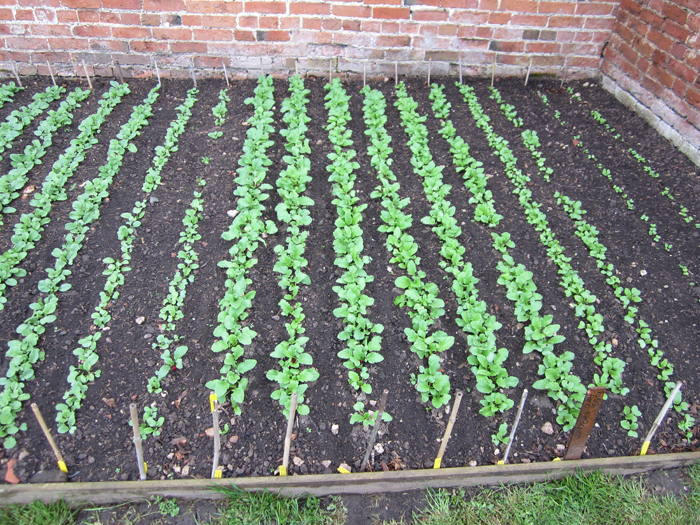
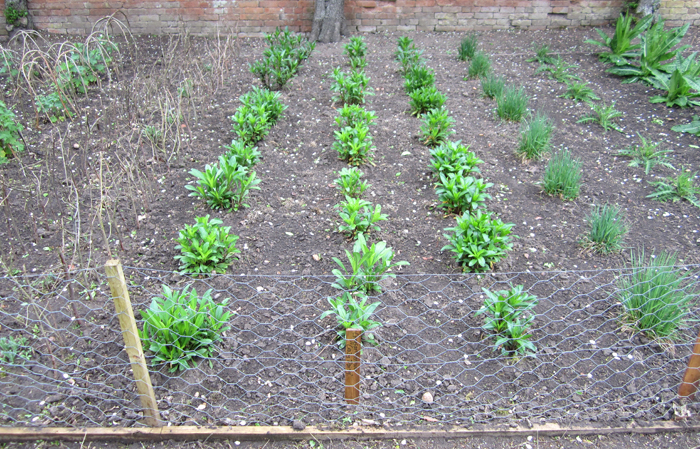
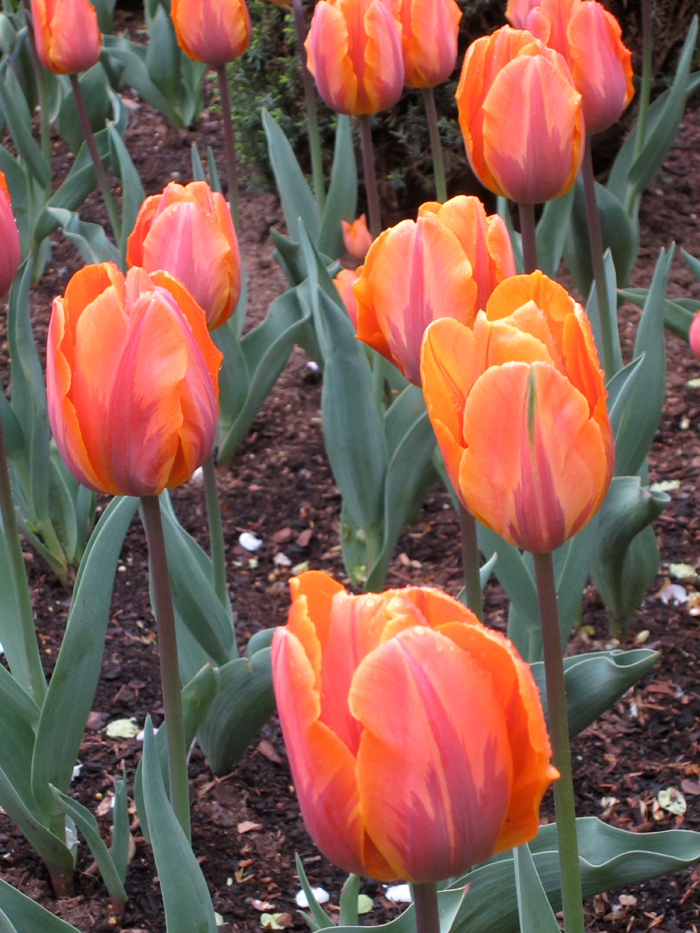
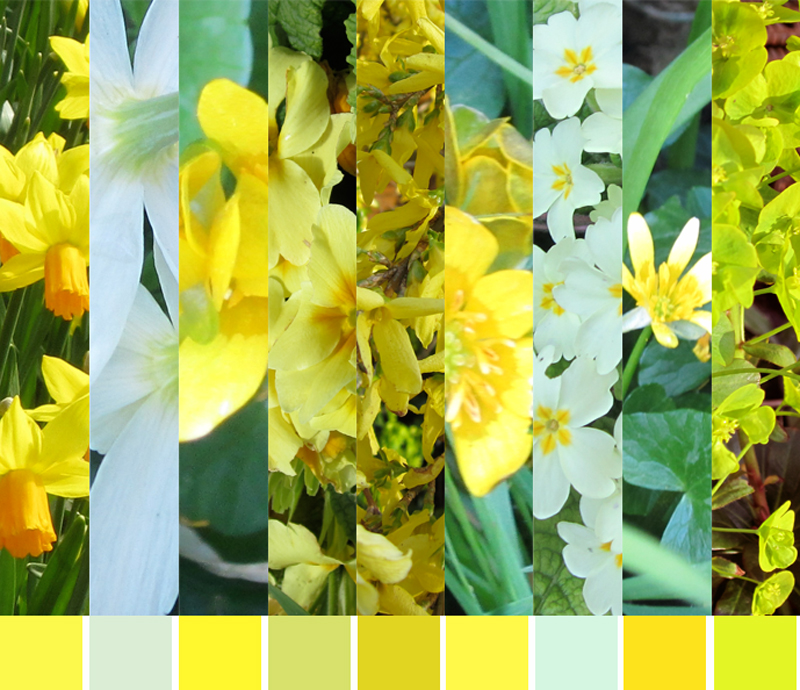
Having noticed this week that the garden has suddenly started to change colour, I set about documenting all the yellow in the garden. Its not surprising at all that the photographs of the same flowers taken at different times of the day varied hugely, but I also recorded the range of yellows in the flowers of this very YELLOW season.

Image

working with nature and nature working with us

One of the things that has inspired and influenced my creative practice is how we work with the land; to farm, build roads, wear the paths where we shouldn’t walk as well as create boundaries. These are signs of man asserting influence over nature, and the natural landscape. Of course the way things were thousands of years ago will never return but modern-day farm machinery and larger field sizes are two things that have shaped our contemporary countryside.

I have never quite understood topiary but am intrigued when I see orchards with heavily structured boughs, turning a natural system in to a geometric diagram. We ask nature to do what it does not naturally want to do. We expect plants to grow in the wrong soils, because we like the look of them despite our climate, and we can be unforgiving if a ‘weed’ dares to grow where we don’t want it to.

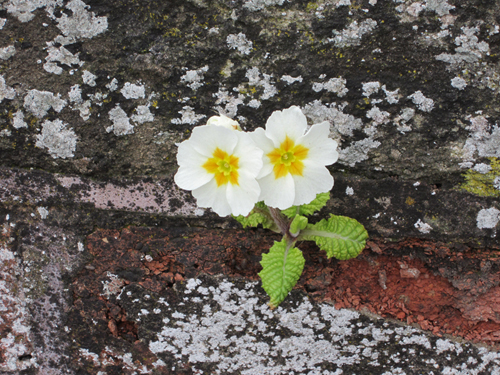
With this in mind I do like to see subversive and anarchic challenges from nature, and nature trying to make its mark where it shouldn’t. Like graffiti on the wrong walls; art in a gallery, vandalism on the streets, plants do sometimes have their own agenda. I found this beautiful plant surviving, flourishing even, in the mortar of a very old wall in Ledbury. It made me laugh. It wasn’t the usual ivy or buddleia, but a beautiful primula, proud as punch of its achievements. Okay, so the leaves are rather small relative to the flower heads but I couldnt help feeling rather pleased for it too.

Image

the end of one season and the start of the new.

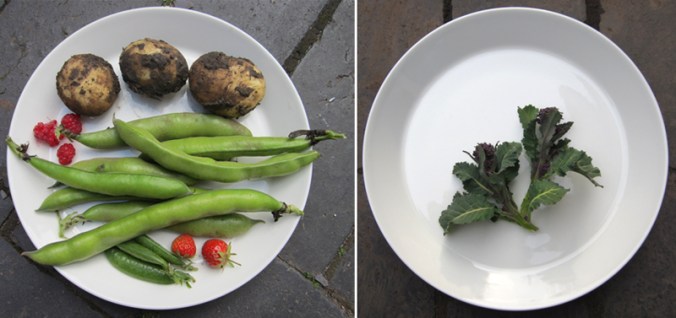
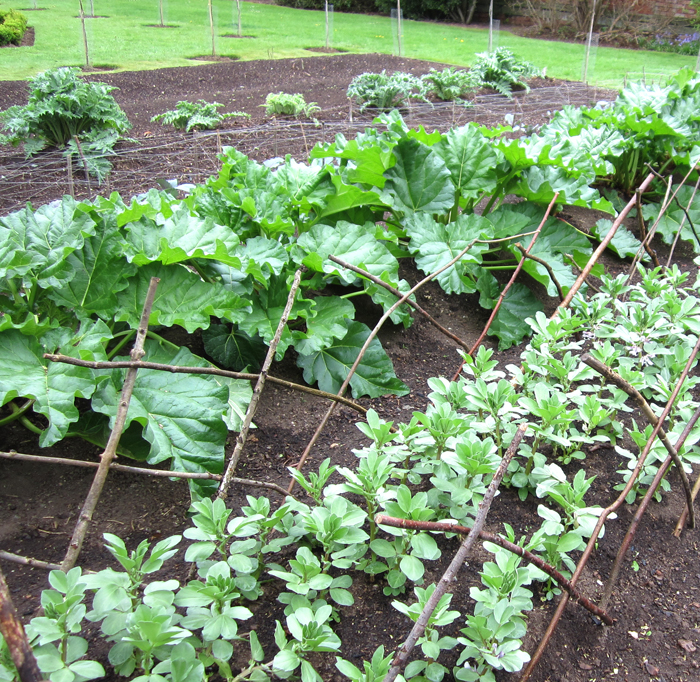
At the start of the harvest time last year I shared with you our first crops of the season. Today I cleared the brassicas that have been under attack from pigeons all winter – much to my distress, and planted in their place the potatoes for the coming year. It was a sign of handing over the baton to another year of potential, involving the weather, our effort, opportunities for head-space and the reward in what we get to eat.

Each year we start with a revised planting plan, more back ache, a new set of gloves and opportunities for me to draw and record the plants to provide further inspiration for my art and design work. As I have also spent the last few days designing, cutting and printing new lino blocks, the creative process of doing so reminds me very much of being a gardener; working with the elements and using knowledge, intuition, skill, time and desire to create something from small beginnings.

I remain positive about the growing season ahead, surely there cant be as many slugs and pigeons this year… can there? And as for cutting lino, I’m in it for the long haul.

plotplates_web

allotments2_web600

holding on to the details…

This photo was taken at Birmingham’s old science museum in its last days before demolition as I was carrying out research for subsequent commissions inspired by the site. It goes some way to sum up how things are in the studio at the moment with many lists and scraps of precious information as I am very busy with making new prints & promoting my upcoming show at Tinsmiths, Ledbury next month as well as coordinating suppliers and working on exciting new design work. All this in the break between Spring and Summer terms of my lecturing job…

staples_web

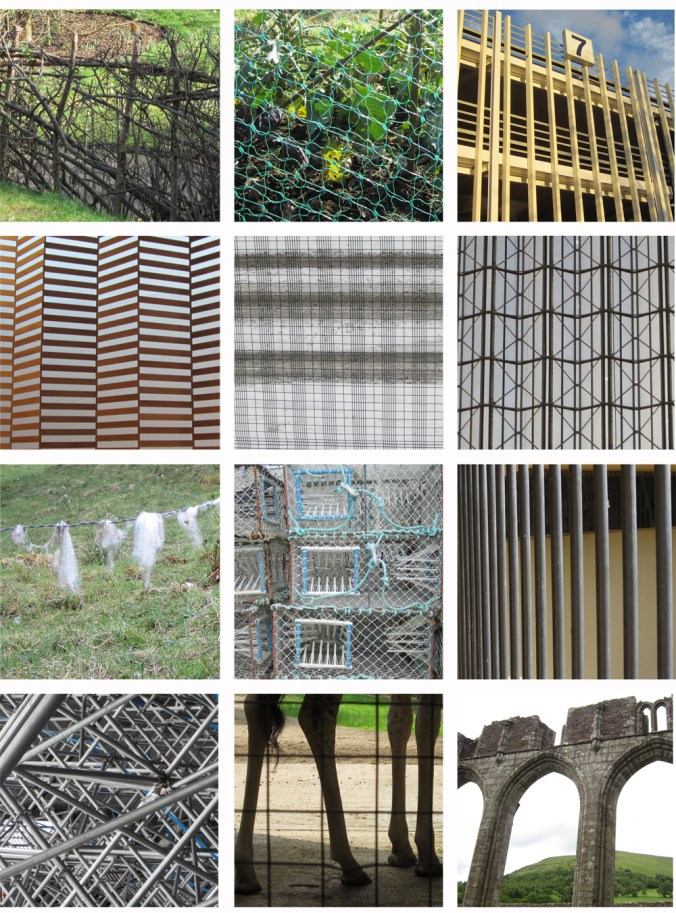
geometrics out and about: PLAIDS

There are particular visual rhythms I seem to collect as photographs when out and about and so I thought it worth while putting them together as collections of patterns. I’ll leave you guessing what might also feature over the coming months but here’s the first: plaids.

Some are more obvious than others, and while you are looking, keep an eye out for the friendly robin. There’s a list of locations below for those who might be interested.

plaids_blog

1a Botanical Gardens, Birmingham
1b Plot 8, our allotment, Birmingham
1c University of Warwick car park

2a Aeneas Wilder, Mead Gallery, University of Warwick
2b Heeley Rd. Birmingham
2c Olympia, London

3a Newtonmore, Scotland
3b Hastings
3c Dudley Zoo

4a Hockey arena, London 2012
4b Dudley Zoo
4c Llanthony Priory, Wales

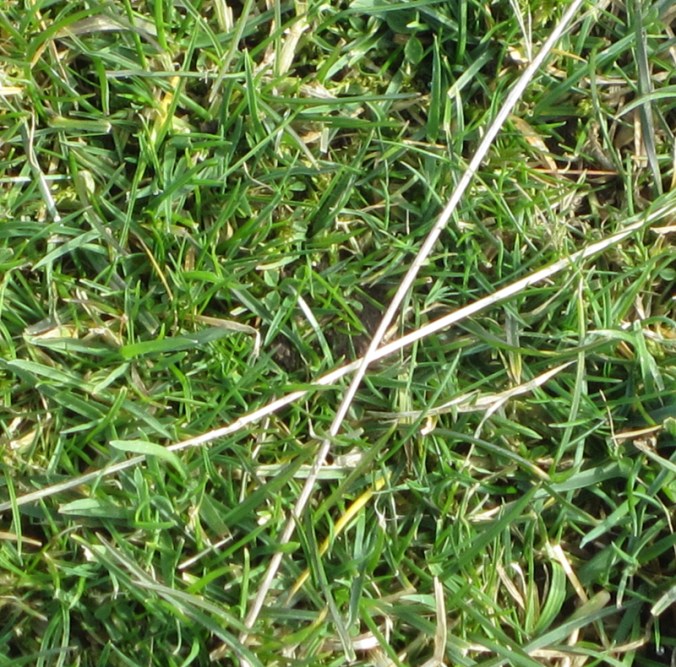
Looking up, looking down – X marks the YSP

We had a fantastic time at the Yorkshire Sculpture Park en route north to friends this weekend catching the penultimate day of Mark Hearld’s show there. Its such a great venue and there’s always something to discover. We managed to walk some of the grounds and the weather was stunning for the time of year. One problem was the saturated ground, particularly on the slopes which had become rather slippery as a result of snow and rain over the last few weeks. (Three out of the four of us fell to the muddy ground – okay for toddlers, rather less stylish for fully-grown adults!)

While exploring the sculptures I noticed the cross being drawn in the sky, then looked down to the ground by my feet to notice the second made in the grass. With X, V & O letters featuring heavily in my current design collection it shouted out to me. X marked a really beautiful spot up there in Yorkshire.

http://www.ysp.co.uk

sky_X_yspgrass_X_ysp

Design inspirations 1: horizon lines

For a while now I’ve been thinking about what has shaped my visual language and informed my art and design tastes. As a result I have planned a few blog entries in which I will evidence some of my thoughts in terms of influence and my art / design practice.

In some recent press interviews I’ve been asked about my inspiration and I tend to consider the formative years as pretty vital in this regard. It makes sense that we develop strong feelings and bonds to what we experience as children, either to reject them or embrace them – either way I believe those early years help to form our adult judgements.

Looking beyond the windows of the house in rural Norfolk where I was brought up is what I consider one of the greatest inspirations to my work. The open fields, the clear horizon lines and sparse distractions across the farmland of Norfolk have stayed with me in relation to my way of seeing, composition and economy of information in much of my work. Why draw ten lines when I can say it with one? I had a particularly horrid visiting tutor in the beginning of my training who felt that I was lazy in my designing, when actually it was he who struggled with some of the simplicity I was aiming for.

Looking back over some of the works I have made in the last fifteen years there are a few key pieces that explain that relationship with the horizon.

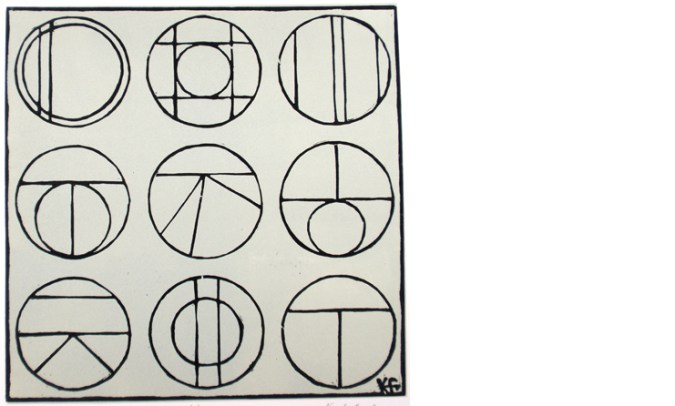
‘Nine Perspectives’, a linocut is made up of diagrams where I explore the land, sea and sky in a variety of ways. I consider the horizon in two-dimensional form, in plan view, elevations and diagrammatic perspectives in order to gain a sense of order.
9perspectives_web

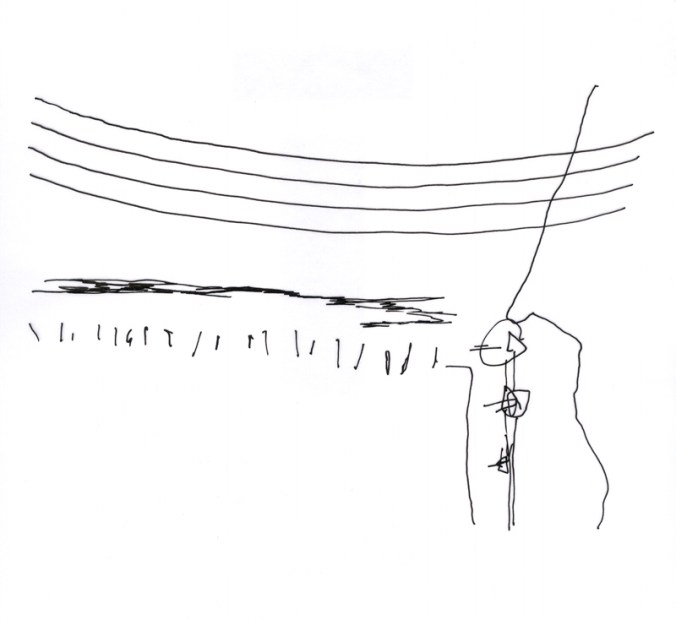
‘Meadows (France)’ is a drawing of a beautifully simple valley near Gourdon. It gave me a perfect view to explore further skewed interpretations of perspectives seen in the landscape. I worked with a sense of the view working round a set square, with two horizons, as I looked in front and to the side of me.
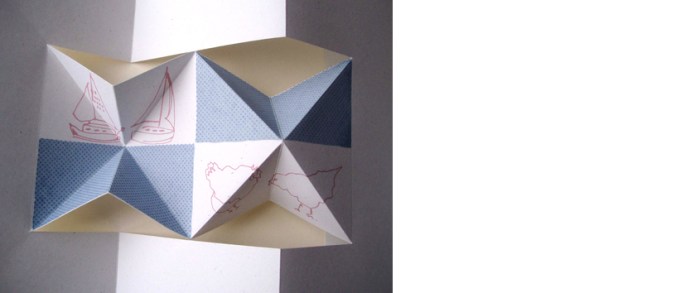
stgermain_webThe final image is from a screen printed artist’s book I made several years ago exploring the idea of ‘half full’ as a state of mind, but also from each side of the horizon line. I have used the blue areas as either half full of water (the Norfolk Broads specifically) or half full of sky above the chickens. The folded structure implies a view through the use of perspective, looking in to the distance or reflecting on oneself.
kf_half-full_web

These three works are very old as far as I’m concerned. I have new creative concerns now but they have helped me to test and explore principles in the way that I see and draw that have been important along the way.

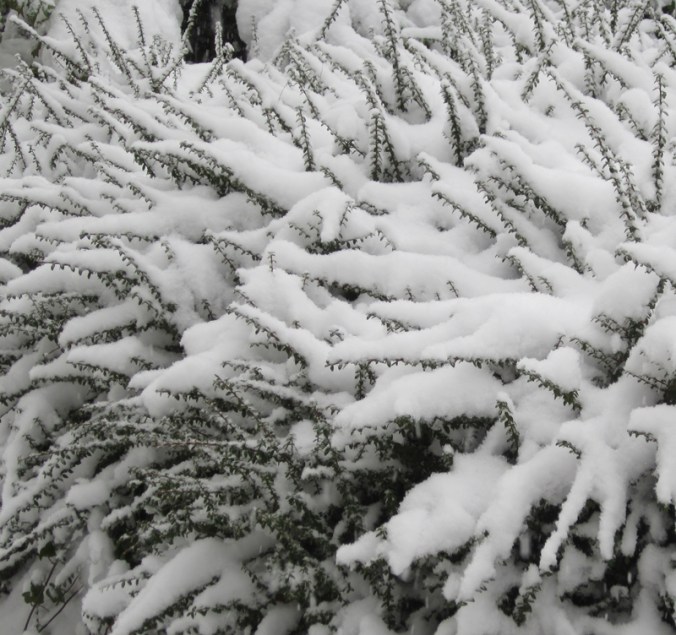
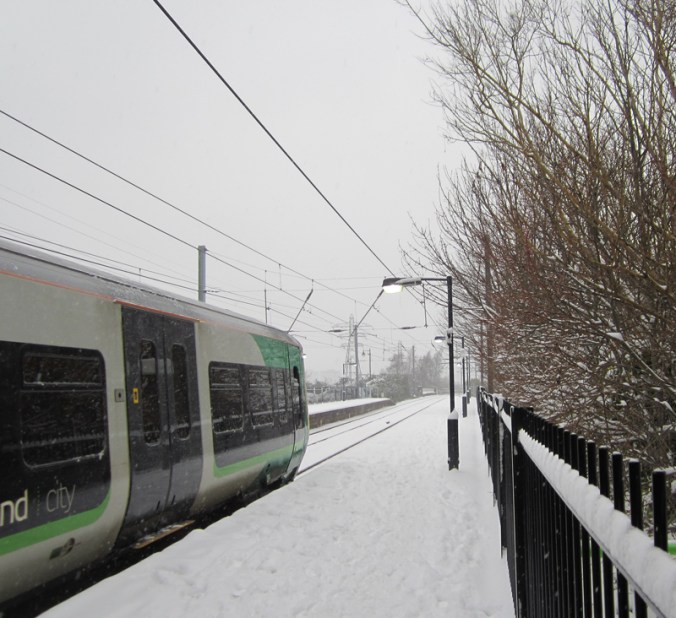
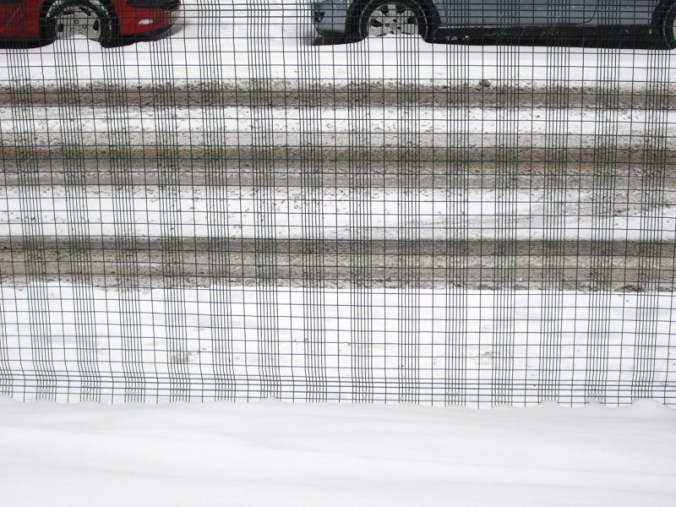
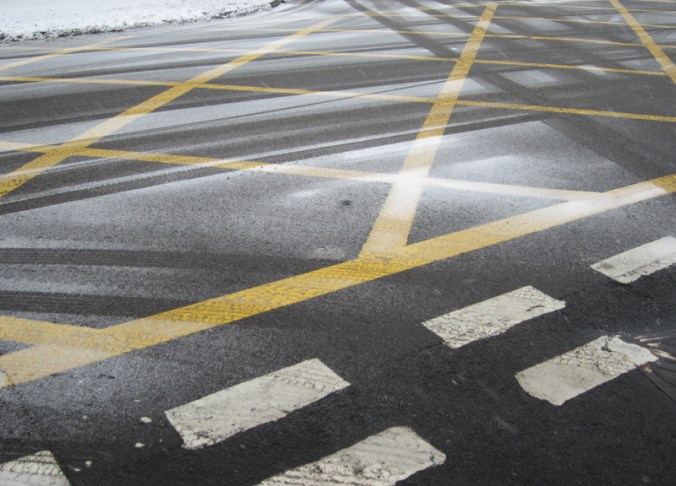
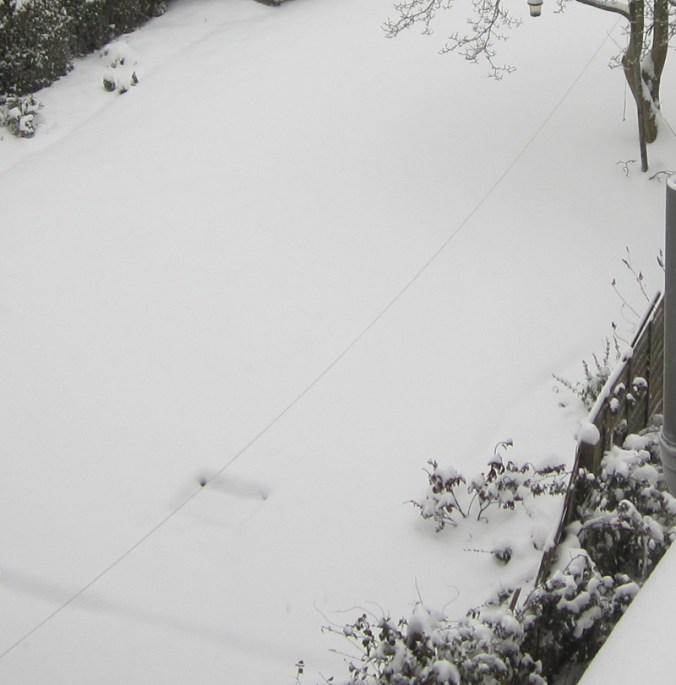
lines in the snow

I took these photographs on my way home from Birmingham yesterday and like the way they show the different interpretations of lines and stripes in the snow I recorded. My last blog post was about colour, and so I like the fact that it is almost absent this time around. I’m sure there can be some design inspiration from these.

branchlines_snow
trainline_snowgrid_snowyellowlines_snow1washingline-snow

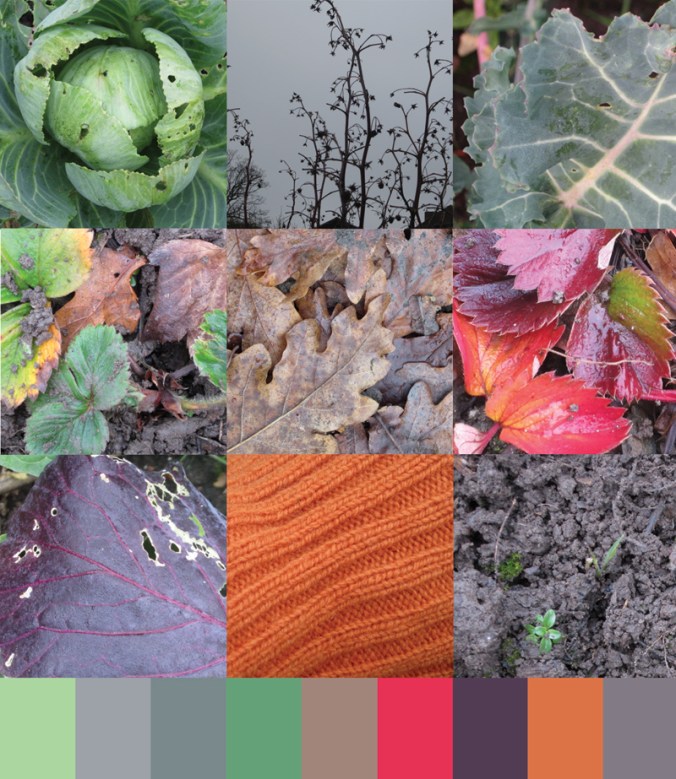
a colour survey of the plot

Today was my first plot visit of the year and I set about digging over the strawberry patch – an important job given the lousy harvest of last year. I also took time to survey the rather heartless cabbages we have managed to grow and this inspired me to record the beautiful colours of the season from all round the plot. This reminded me of my Autumn survey some months ago, recorded on this blog. No doubt these colours will inspire my drawings and prints of the year to come. Sadly I didn’t get a picture of the robin who hopped about glad of the worms I uncovered but he made me smile all the same.

firstplotvisit2013

tribal textiles in the Midlands

Happy New year to you!

Seeing as I work in the professional world of textiles I’m not surprised that I spend more time than most considering our relationship with textiles. To simplify things – I question what relationship we have with fabric, and the inspiration behind our choices of garments and the materials, colours and patterns that we fill our wardrobes with – when we’ve picked the clothes up from the floor!

To celebrate the new year we went to Alvechurch to see the Alvechurch Morris dancers who put on a show each New Year in the pub car park of the Crown Inn at Withybed. As well as their dances they also perform their entertaining politically cheeky response to the past year’s news in the shape of a traditional George and the Dragon style Mummer’s play. They were also joined by several other dance groups from the region, all proudly dressed in variations of what you would expect Morris dancers to be wearing. There were plenty of pairs of beige jumbo corduroy trousers, and of course the bells round the lower leg, but the use of the strips of fabrics on the backs of the jackets and the feathers in hats really made it a spectacle of eccentric British-ness some would be surprised to see still in existence.

Having lectured on the subject of textiles for a number of years and having tried to make the education experience not British-centric the experience of seeing the Morris dancers in Alvechurch are a reminder of our own tribal dress; just as interesting, ceremonial, entertaining and socially telling as some tribal dress from far flung corners of the world a long way from here.

Some outfits appear rather more planned than others and its tricky to see if some are trying to look ‘thrown together’ but are to the contrary. Some groups (is there a collective noun for Morris dancers?) stick to set colours and one group of women were a sort of goth vamp group at Halloween with a dash of silver – I mean that in the nicest way! Personally I prefer the more traditional looking ones with a collection of faded what looks like Laura Ashley prints alongside stripes and spots. They look more like a mood board than a dance outfit.

Of course the sound and movement is lacking in the photographs but I hope they go someway to celebrate the dress code found in one small pub car park in the Midlands today and every New Years Day.

morris1 morris8 morris7 morris6 morris5

morris4morris3  morris2

http://www.alvechurch-morris.org.uk/index.htm

http://www.thecrownalvechurch.co.uk/index.html