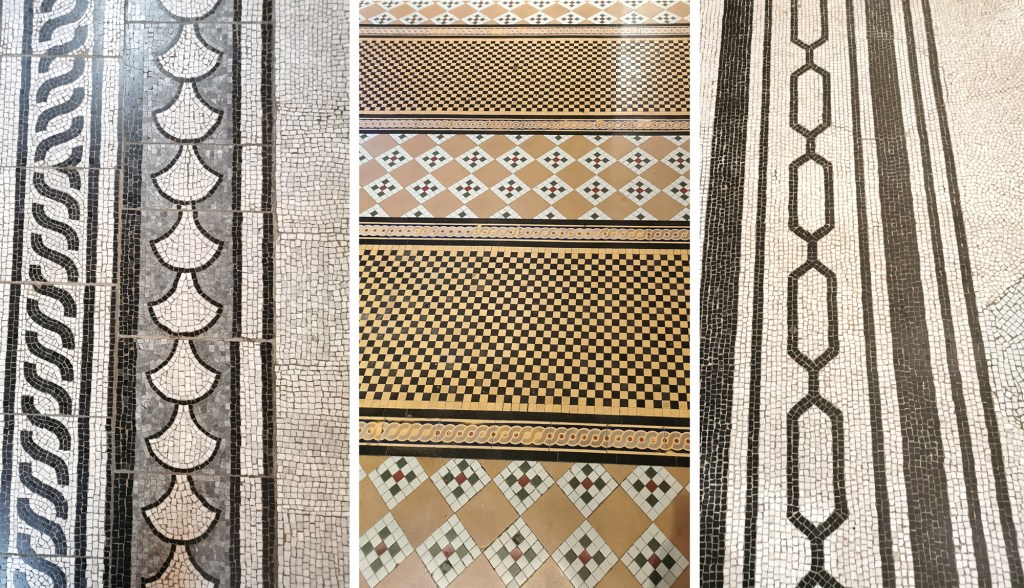
I led a study trip to London with some undergraduate students recently, where I spent several hours in the Victoria and Albert Museum. Having not been there for a while it was fabulous to be back in the company of old friends such as the Arts and Crafts textiles of William Morris and his contemporaries, as well as seeing exhibits new to me. I love the building too and took particular enjoyment in the flooring this time around!
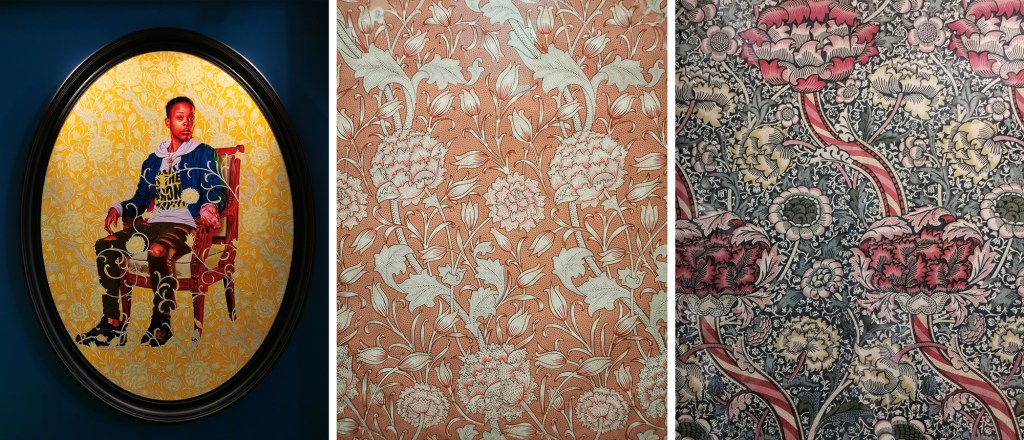
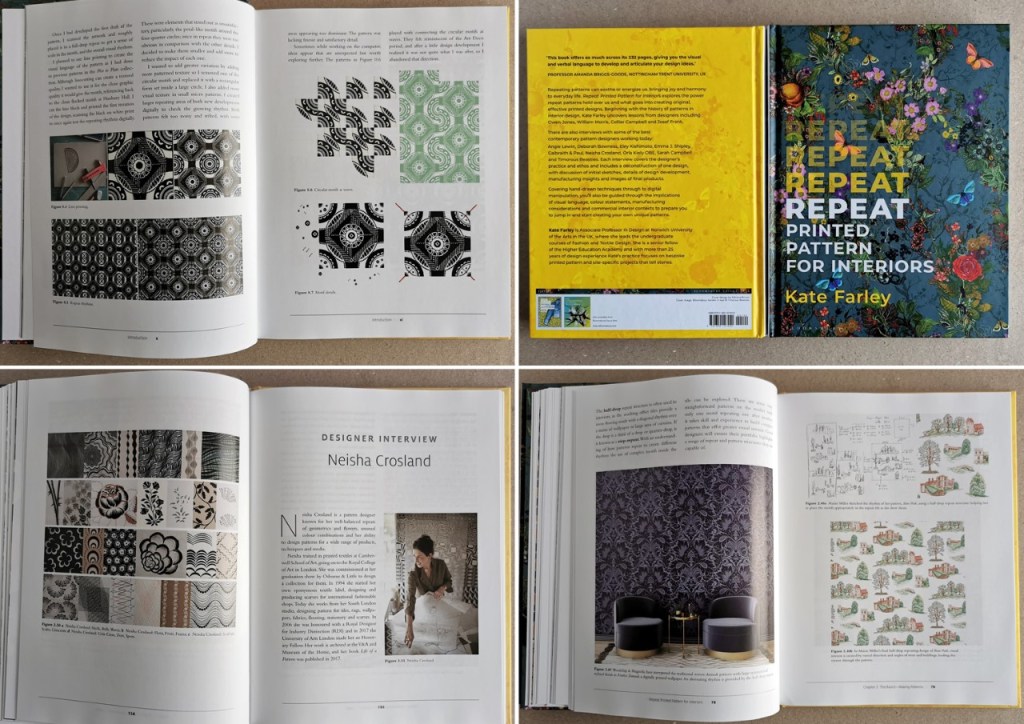
I refer to Arts and Crafts patterns regularly in my teaching and was able to include some fine examples in chapter 1 of the book I’ve written, REPEAT Printed Pattern for Interiors, published by Bloomsbury earlier this year. They tend to show generosity of design, interesting rhythms and motifs working hard with stylised forms that still stand the test of time. Seeing these artefacts in the flesh really made me appreciate how important it is to get off the screen and go to see real things. The scale of the design, the surface and materiality just can’t be appreciated in the same way online. I’d also not seen Portrait of Melissa Thompson, from the series ‘The Yellow Wallpaper’ by Kehinde Wiley. It was stunning and really impactful where it was displayed.
I was there to specifically see the Africa Fashion exhibition which I thoroughly enjoyed. I’ve long known of woven Kente cloth and the Asafo appliquéd flags, but it was wonderful to read and see more of the textiles for fashion, both traditional and new across the exhibition. The textile processes were broad, with fabric manipulation, weaving, printing and embellishments in abundance.
The remaining time I had at the V&A was spent enjoying the international galleries (did I mention the cake break?) where I traveled around the globe by fabric, vessels, garments and objects, enjoying making my own connections between motifs shared by people from centuries and continents apart. To juxtapose a furnishing fabric from 1878 with velvet from Turkey made in 1550, and a tapestry fragment from 400 was rather an enjoyable and fascinating afternoon’s work. I shall try to get back there with less of a lengthy gap next time!
The museum was described by the first Director, Sir Henry Cole as a “a refuge for destitute collections”. I think that’s maybe a little harsh.
Here we are, the book project is complete with publication in the UK and US today. It’s been a journey!
With the first thoughts of writing a book about pattern back in late 2015, the development of some draft scopes, the contract signed with Bloomsbury in early 2019, a first draft of Chapter 1 delivered in late 2019, a global pandemic from 2020, unscheduled health issues requiring hospitalisation & surgery in 20/21, final manuscript submitted in June 2021, and proofreading / layout until June 2022 I have had to be very focused and patient – and all this while leading two degree courses until this Autumn (I now only lead one!).
Writing a design book had never previously been a consideration of mine, but since I’d been reviewing books a few years ago it got me thinking that this was the perfect place to bring together my design practice experience with my academic role. The idea grew on me. I’ve spent years teaching pattern design and as a result tried and tested hundreds of ways to deliver inspiring and informative design workshops. I spend lots of time analysing pattern to support my lectures, and in my spare time … and so in hindsight maybe it was a natural next step.
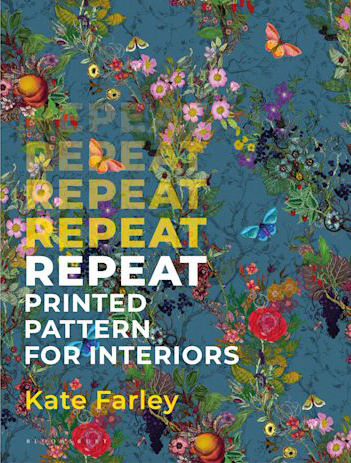
The introduction includes me taking the reader through my journey of designing Hanbury, my wallpaper, as well as my relationship with pattern. The three chapters are very different in nature which helped to focus the research and writing at each stage, and provides the reader with a broad look at the subject of pattern design in relation to history – Chapter 1, how to create pattern – Chapter 2, and how others do, through nine feature interviews in Chapter 3. I have to comment on the cover … I love the cover, so a huge shout out to Paul and Ali of Timorous Beasties and to my publisher Georgia at Bloomsbury who allowed me to have it just as I wanted. In fact I owe so much of this project to Georgia’s belief in me to get this done, and her unwavering support throughout. Who’d be a publisher?
Many years ago a previous boss asked me to take on delivering the design history lectures to first year undergraduates and with panic and fear I embarked on what I can now describe as one of the most overwhelmingly frightening but important career defining undertakings. I was given an opportunity to challenge myself while presenting to a lecture theatre of students on a Friday morning in Birmingham, and the result was empowerment. Without high school History qualifications behind me but a passion and base knowledge of design history I decided to engage students in how history is relevant to us now, what we can learn from, challenge and move on from. I needed it to be immediately relevant to their design projects to help them understand history is important to designers today. It took some years before I felt on top of it, but many years on I comprehend the legacy of those hours of learning in order to teach, and how that substantial investment of time led to the knowledge and experience to write Chapter 1 of this book. I could have written many thousands of words more to cover the history of pattern across the globe, but word limits provided boundaries, and without a deadline I may still be writing!
I enjoy learning. I am hugely grateful to all the students I have had the pleasure to work with over the years, for sharing their creative journeys as we discuss drawing, rhythms, compositions and colour proportions to make the most interesting repeating outcomes. I’ve learned so much along the way, and that’s what keeps me interested and passionate about the discipline of pattern design. Every studio session is an exchanging of ideas, with no single correct answer, but plenty of opportunities – a privilege to be a part of, and the inspiration behind Chapter 2. It explores the practice of repeat pattern making, presenting considerations to build stronger outcomes without stipulating one right answer. I encourage designers to embrace the process of testing variations in pattern construction so the final result has learned from all that has gone before. The designers I include to illustrate the text offer so many styles and approaches and have been so generous in sharing their working practice with me and future readers.
Just as I did with my degree dissertation back in 1996/97 there were times that required drastic measures to get things right in the writing of the book – many sheets of paper were laid out across the floor and I took scissors to the pages, literally cutting and pasting paragraphs in the process of reordering the narrative. Other times I had to diligently input data on a spreadsheet, chase consent forms or simply focus on writing.
Obtaining image permissions was probably the most arduous and stressful process of the project. Keeping to budget while securing the images from archives, individuals, estates and designers I really wished for was difficult, and sometimes I had to admit defeat and find alternatives. My editor and publisher (Faith & Georgia) were both brilliant at talking this over and I’ve been so pleased to include some absolute favourites such as Lucienne Day’s Spectators and Calyx and Josef Frank’s Mirakel – I danced when these came through! It’s also been a pleasure to include a number of works by students I have taught, some in the last five years, but also Emma J Shipley back in 2005/6 – I still remember her tour bus interior for Madonna in BA1 (one of the interviewees in Chapter 3). How time flies!
I’m grateful to all the designers / archivists who have contributed images and details of the patterns throughout the book. Quick check-ins to confirm the number of screens used, or what digital software the designer prefers was all part and parcel of getting details as correct as possible. One memorable highlight on a day of writing was a phone call from the brilliant pattern designer Marthe Armitage to talk through her contributing images for the book. I was so surprised I was rather lost for words initially, but soon we were chatting all things pattern, and I’m delighted to feature her printed wallpaper patterns in the book, as they regularly feature in my teaching presentations. A shout out goes to Sophie at Warner Textile Archive who went above and beyond tolerating last minute requests for photography to get just what I wanted! Much of my clear headed thinking happened late at night as I juggled leading two courses in the day job, and I’m grateful for all who made sense of my communications at this time.
Who knew it took so long and so many people to get a book to be a physical artefact? The proof reader was brilliant as we fired queries and answers to and fro for a frantic few weeks, and then she was gone. Then the layout was taking shape – and I think I must have been a nightmare – sorry Deborah! – I wanted every page to look its best and sent diagrams and descriptions to make that happen. Finally, following last minute queries while I was at New Designers showcase in London with my graduates in late June I had to step away and the book went off for print production.
I’ve been asked several times if there will be a second book, even before I held this one in my hands…! I’m not sure, maybe one day, but today I’m celebrating this one.
I’m grateful to all who have helped make this happen, from my tutors back at art school, to friends and colleagues who have tolerated and supported me in this project. Thanks to the brilliant team and associated individuals from team Bloomsbury and to everyone who buys a copy to share the joy of printed pattern – thank you!
I’d like to dedicate the book to my parents in deepest gratitude for providing an upbringing where experiencing art, design & culture was a given. Thanks to my mum who has survived the ups and downs of raising a creative child, I know it wasn’t always easy. My sorrow remains that I never had the chance to have an adult to adult conversation with my dad about the things we would have no doubt had as common passions, but who inadvertently taught us Farley girls that if you put your mind to something there is no reason why it won’t work out. A lasting legacy & mindset.
On the 12th January 2023 my book for Bloomsbury on the subject of repeat printed pattern for interiors will be published, … finally there’s not long to wait having worked on it for years!
If you want to order a copy at a pre-publication discount you can do that here.
The process of writing a book has been a long one for me, but we are a step closer to publication … January 2023. I can’t quite believe I am an author of a book!
I’ve recently received the pre-publication inspection copies and I’m so excited to be able to share the first glimpse. I’ve been really touched by the initial responses from the contributors who have been receiving their copies, who without them, this project wouldn’t have got off the ground.
I’m waiting patiently till the new year, but here it is, the beautiful cover, featuring the pattern Bloomsbury Garden by Timorous Beasties. The book is designed to inspire and inform people about the complexities of designing pattern for interiors, and is an ideal core text for undergraduate studies. I’m delighted to be featuring the work of students I had the pleasure to teach, as well as more well known names including Angie Lewin, Sarah Campbell, Timorous Beasties, Oral Kiely and Neisha Crosland.
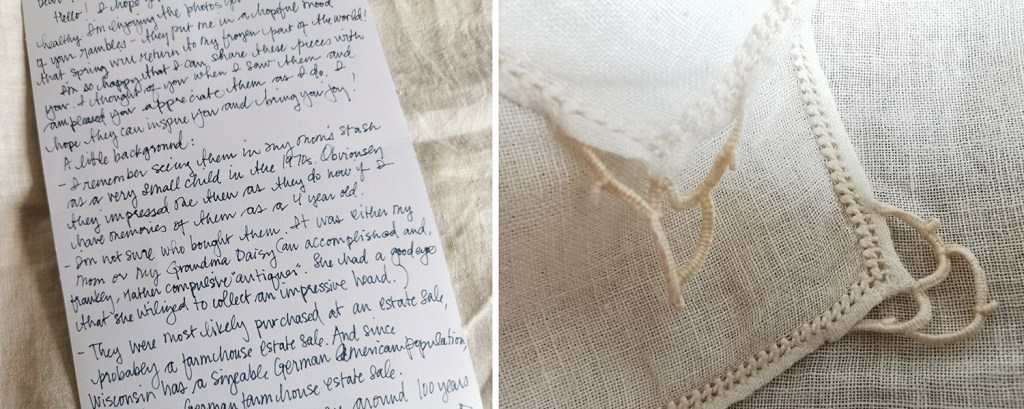
A while ago I received a message from a friend over in America, and knowing of my career and personal interest in textiles, she was writing to see if I’d like to receive some old but special textiles she had spare that made her think of me… I was intrigued what might arrive in the post… How could I refuse!? A few days later two beautiful squares of cloth arrived, one with a woman and the other a man stitched in to the cloth across one corner, with gently ornate decorative edges and corner details.
[details: one piece features a woman, the other a man]
She thinks they are napkins, they are very light weight cloth. Accompanying the two pieces was a note sharing what she knew of the provenance, and how she had acquired them to share with me. Emily remembers them in her mother’s ‘stash’ of things in the 1970s, when she must have been only about 4 years old, so they made an impression on her.
They were possibly bought by her Grandma Daisy (an accomplished and frankly, rather compulsive ‘antiquer’), at an estate sale, maybe a farmhouse estate sale. She had a good eye and built an impressive hoard! Emily told me there is a sizeable German-American population in Wisconsin, so this might be part of the story too.
[the letter and edge details of the pieces]
I’ve consulted my panel of experts as I’m no embroidery expert myself, and they’ve been a great help (thanks particularly to Grainne & Liss) … I think it’s safe to say it’s a combination of techniques, including cut work and stump work. One of my experts suggests stump work is the overarching technique, particularly to create the woven style stitches of the figures. Often more three-dimensional than these examples, stump work can be highly ornate with raised areas, but these squares appear rather low in relief.
We can also see whitework embroidery, a broad term including a number of different techniques, working with white thread, often linen, pulling the warp and weft threads to form motifs. Pulled or drawn thread work are examples of whitework where no cuts are made. Cutwork is a form of whitework where areas of woven cloth are cut away and stitched in new configurations. These samples include cutwork featuring buttonhole stitch & buttonhole bars with detached needlelace. I hope I’ve got all this down correctly!
There is an amazing online Royal School of Needlework resource here for more stitch information – you might be lost for hours!
A detail to note is that the figures have been created on the bias of the cloth, set diagonally on the weave near the corners, rather than the straight line of the weave. This may be a specific approach preferred by a particular maker, region or process, so might help identify the provenance.
The figures are wonderfully stylised as a result of the stitching process, naive and full of character. They remind me of folk art examples I’ve seen before and historic world textile samples at the Pitt Rivers collection in Oxford only a week or so ago. Also the characters are not dissimilar to the figures on the Asafo flags of the Asante in Ghana I’ve written about before. Once again, the process of stylising and representing imagery as motifs is shown to be one of my favourite subjects!
Textiles, although fragile, can survive in the right conditions for centuries, and can hint at stories of society, status, lifestyle and identity. The textile skills required to make these pieces are likely to be far more commonplace at the time these pieces were made too. Lightweight, portable and often with specific uses, textiles have been transported all over the world with people travelling for all manner of reasons. These two pieces have their own history I’d love to know more about, not only to understand where they were made and by whom, but also to understand the journey they have been on since their creation.
Despite not knowing more I shall continue to enjoy them, and in the process of writing this post I’ve learned a bit more about embroidery too… I am grateful to have been sent them to care for. Thanks Emily!
I’m delighted to share the news that after nearly five years in development, we are at the stage of announcing the book I’ve been writing on repeat printed pattern for interiors, with Bloomsbury Publishing is now available for pre-publication order.
The book is a culmination of my design and teaching practice experience over the last two decades and features some historic and contemporary designs and interviews with some leaders in the field including Sarah Campbell, Neisha Crosland, Deborah Bowness and Orla Kiely. It is for anyone who is interested in printed pattern design, including design students. You can read more here.
I’m delighted to be able to feature this beautiful pattern by Timorous Beasties on the cover too.
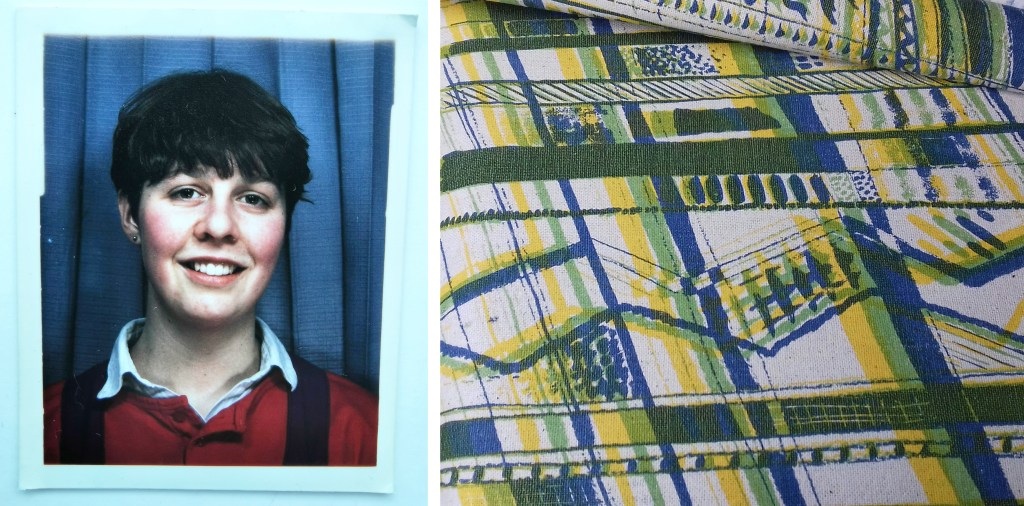
Thirty years ago I began my art school experience studying a diploma in Surface Pattern, a little unsure of what was meant by the course title, but keen to find out more as it involved drawing, printmaking, pattern and textiles. I thrived at art school, building practical skills and theoretical knowledge, growing in confidence in my ability, encouraged to experiment and play with ideas and processes. When I think back to what I understood of careers in textile design at this time, I have little memory of career planning, or job role research. This was the era of the Yellow Pages; I couldn’t Google it! I made decisions about my degree course based on the fact my tutors suggested I was more of a printer than a knitter or weaver.
The art school student and the first screen printed pattern
During my degree I undertook a floral print project in the first year and hated it so much I nearly threw it in for fine art printmaking, but then I gave myself a talking to, and realised I wanted to frame my practice in design, to apply my thinking to scenarios, and to problem solve. This has stood me in good stead, both as a designer and academic. I believe the context in which we work is as important as the role we undertake.
I think back to those days and see a very different textile industry to the one we are experiencing now. I graduated at the dawn of digital design, without the range of composite surface materials for interior applications, or bespoke digital production that enabled me to collaborate with Formica when launching my collections in the mid 20-teens. As a freelance designer in the late 1990s I was posting hand painted textile designs in large cardboard tubes across the country to my agent and sending my portfolio out as slides (transparencies) for exhibition applications, hoping they would be returned to save me money and hassle – they rarely were! Thank goodness for the digital cloud of today, allowing files to be accessed around the globe in an instant. Laser cutting and 3D printing have become the norm (even in schools) since then, and expertise in digital software is a basic requirement in graduate jobs. It is easy to take these developments for granted – but our line of work is transformed.
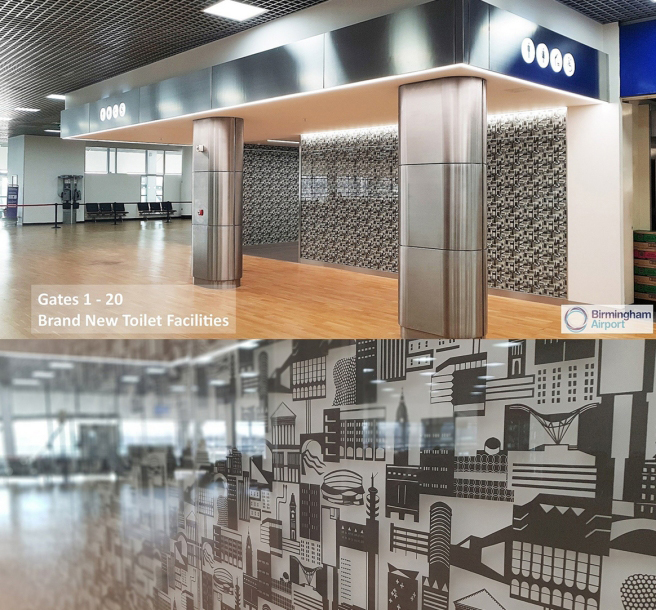
Over the years since that time, I’ve built a career embracing many different opportunities as a designer, artist and designer maker: launching my own brand collections, undertaking illustration or pattern commissions, exhibiting, designing public art (including three large gravel roofscapes and three public toilets!) as well as leading residencies in healthcare settings. I have enjoyed the variety of projects I have completed, building my understanding of several sectors of the industry. Ensuring I remain up to date with industry developments has been key to the relevance I maintain in my academic position.
Birmingham Airport commission, fabricated by The Window Film Company
In the last twenty years we have seen the development of ‘smart’ textiles for medical applications, interactive electronic textiles for military and domestic use, bio-materials and colour developed from bacteria and new design opportunities in the digital realm within the simulated environment – the metaverse, an emerging international arena. At the same time, during a global pandemic we see a resurgence in low-tech craft with textile processes such as crochet and knit identified as beneficial activities for our wellbeing, and a fightback against the consumer culture.
The breadth of opportunity available across the discipline of textile design today is exciting, and fast evolving. Revisiting craft practices for contemporary markets is not new. The Arts and Crafts movement spearheaded by William Morris, advocating for handicrafts and naturally dyed yarn and cloth, was an attempt to battle against technological innovation and the resulting cheap and poor-quality products flooding the market. The current growth of interest in craft practices again connects us to the heritage of making and the close relationship with material and process that nurtures us. Sustainable solutions compete with mass produced problems. Customers are easily overwhelmed by choice and price-points, single use versus something for life – future heirlooms, or landfill. Digital design provides solutions by reducing fabric waste in the fashion industry using 3D digital rendering to identify and fix issues, where previously each garment in each size or colourway would be produced and discarded as products were developed. Craft and technology are not mutually exclusive.
The creative industries we have today were unimaginable to me as a student, and now, I think about the relationship today’s students have with the industry and how far into the future they can imagine. As head of the discipline at my institution I am required to consider the future of textile design, to design an educational experience to not only equip the students and graduates for roles that we know about, but also provide them with the curiosity and creativity to shape the roles we can’t quite define. Ambitious ideas need to be partnered with strong realisation skills, traditional craft and making skills paired with digital competence. Let’s see where the next thirty years takes us!
Construct collection by Kate Farley, in collaboration with Formica
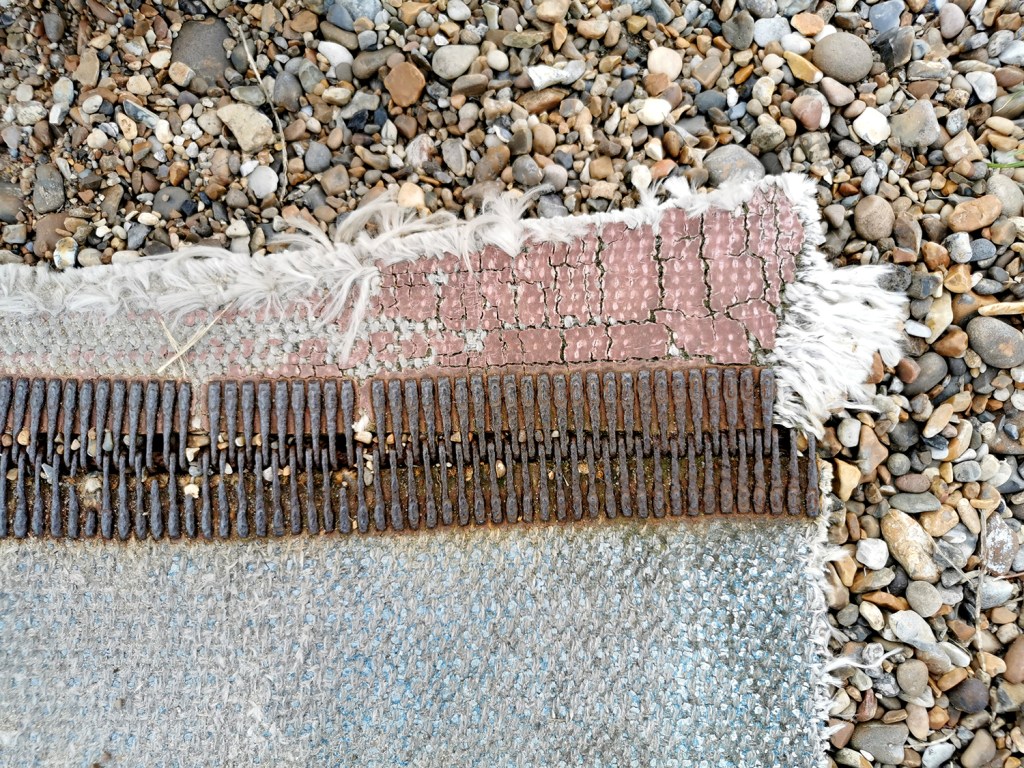
A weekend walk in the search of headspace following a busy week in academia led me to the Suffolk coast and a beautiful 13km walk, down and back, along the beach. Always with an eye on the hunt for pattern, colour and cloth I found all three, relating to the topics of my teaching. Of course I also had a handful of stones and other ‘precious’ detritus.
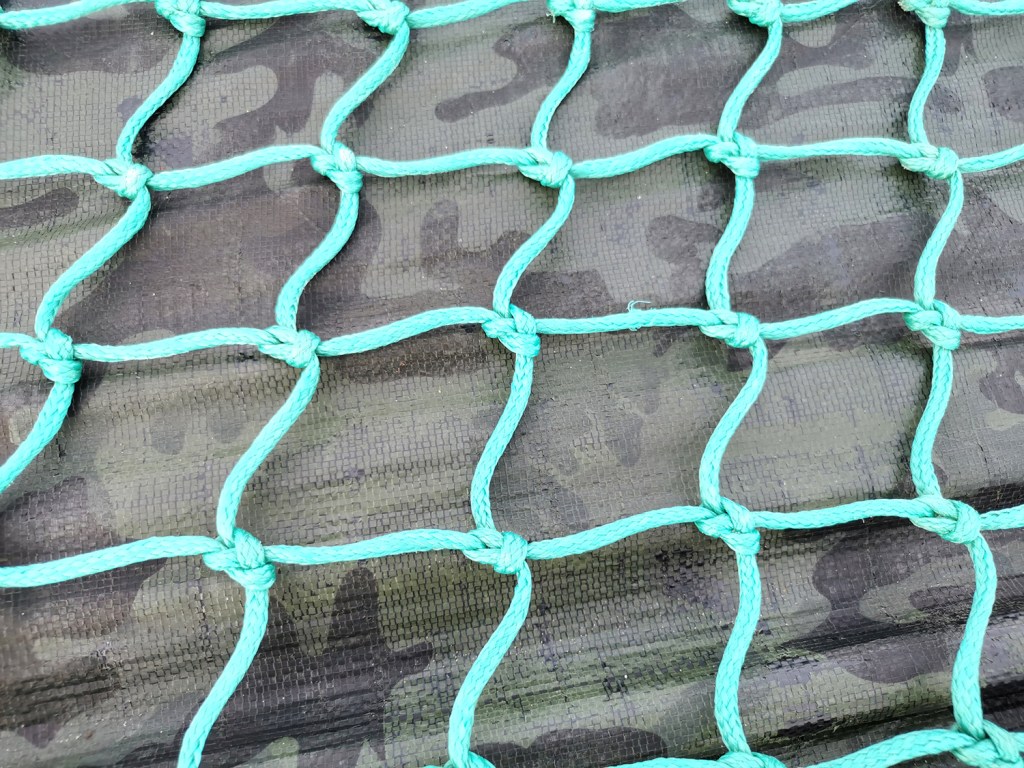
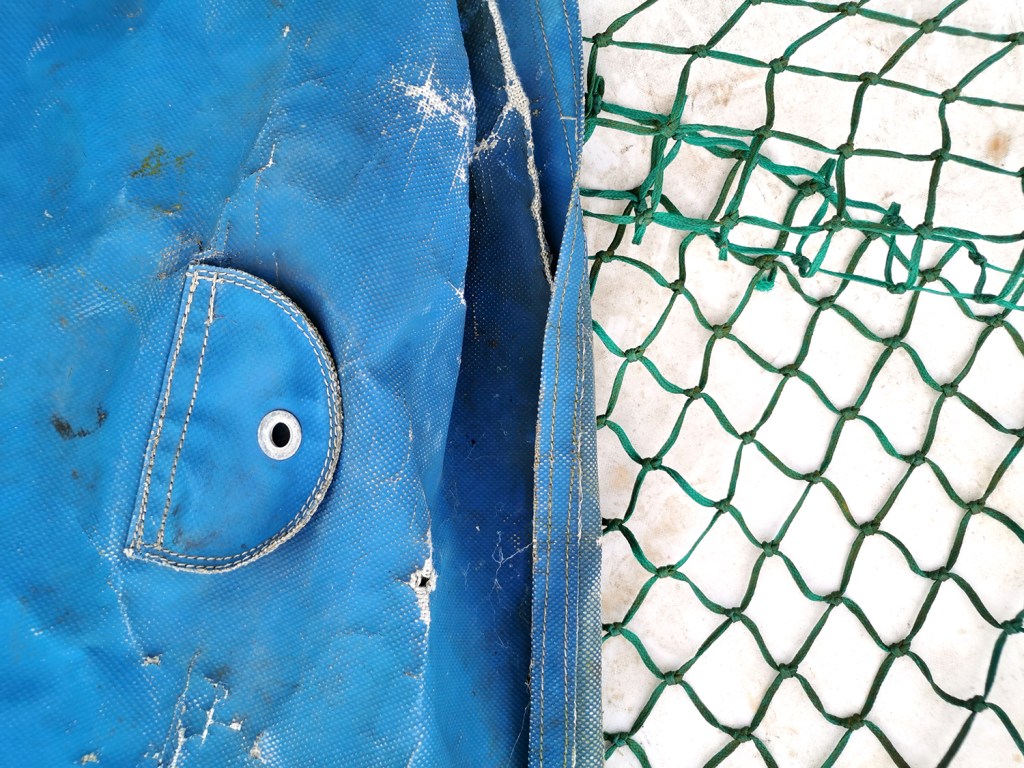
Having spent the week talking textiles, including pattern structures and repeating designs I was amused to connect the patterns on the beach made from the waves running back across the sand being echoed in the fishing nets on the boats higher up the beach.
I have also been discussing with the students the broad application of textiles in the everyday world around us beyond fashion and interior applications and our walk gave me good examples to illustrate my point. We use traditional textile techniques including knitting, crochet, printing or weaving, with the addition of a coating or finish to create materials for practical applications.
As a keen lover of patterns I’m always on the look out for interesting examples to add to my consciousness. I do like a good geometric as well as micro (small scale) repeating patterns so despite being immensely annoyed to find myself back in hospital on a ward for a week I did spot the odd pattern of interest…
I’m interested in small details that make patterns work, and I spend time in my teaching analysing successes and failures of patterns in relation to motifs, pattern structures and repeats to teach the students how to improve their own designs. These NHS designs, printed on fabric for hospital nighties (left), pyjamas (middle) and the surgical gown (right) do demonstrate merit.
Small details on the pyjamas / nighties, such as the spot actually being a hexagon, the less obvious choice, and the squares making up the bigger square block including smaller squares in the darker colour, means they contrast with the larger mid green colour bring visual interest. If the darker squares were the same size they may well appear too dominant. Interestingly, the pyjamas had the green colourway as vertical stripes, and yet the same design in red was placed as horizonal stripes on the nightie. I wonder why this was. Let’s not talk of the fit of these garments! The surgical gown is more simple, but I appreciate the fact that the cross is made up of broken lines, with a small dot in the middle – so much more interesting that if it had been two lines crossing.
These are tiny details that most people will overlook, I know I was probably not the most typical of inpatients, but if you spend any length of time on a ward, nil by mouth for several days your mind wonders. I found there to be a significant challenge in retaining something of myself as a person beyond the sick patient, with all the focus and attention on your health, or lack of. The pattern spotting was a way of still being me.
As I said at the top, I like micro patterns and have shared my collection of envelope insides on the blog before. I like the smaller scale patterns that provide visual rhythms and noise, that get on with doing their job, in a simple utilitarian manner. These patterns on hospital garments also got me thinking about moquette, the hard-wearing fabrics on transport upholstery, and how those patterns signs are there to conceal dirt and wear, whereas these hospital ones with the white background were doing the opposite.
I hope you don’t find yourselves in hospital to have the chance to analyse patterns on your gown, but if you do, I hope you like the ones you’ve got!
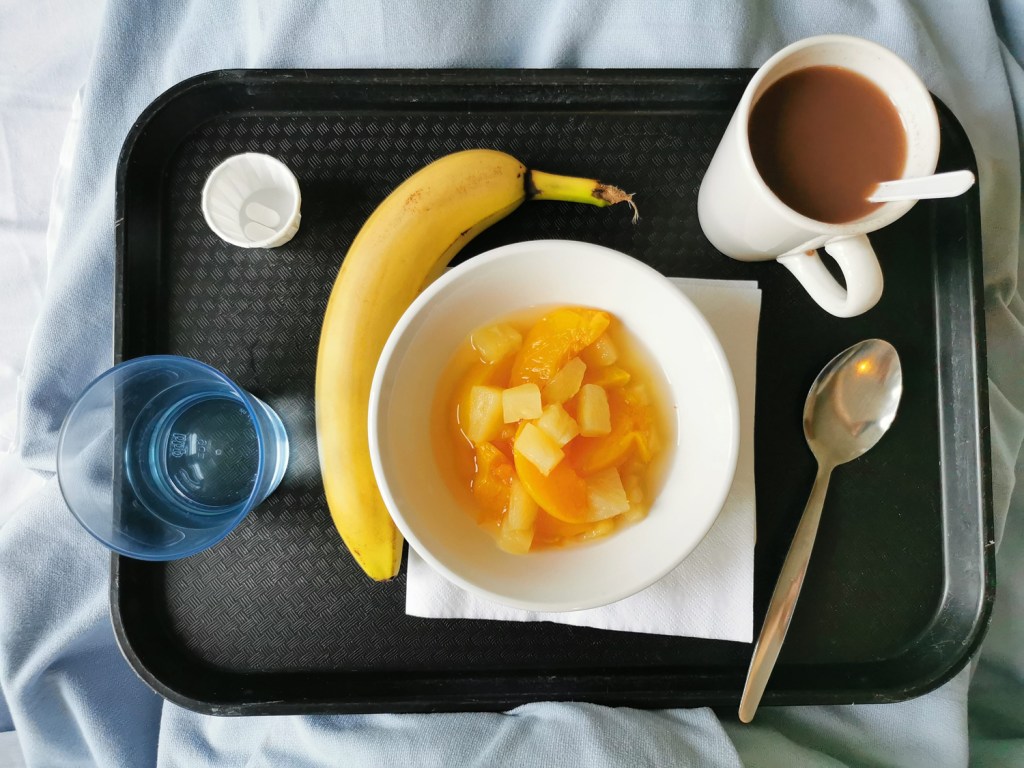
I’ve had an interruption to normal services as a result of some general surgery, added complications and time to heal. I’m not one to sit idle so it’s been a challenge to be patient, giving myself time to recover and gain strength. The time in hospital – a week – was an ordeal despite wonderful ward staff, and it gave me time to think about how important our surrounding environments can be, for our wellbeing and sanity.
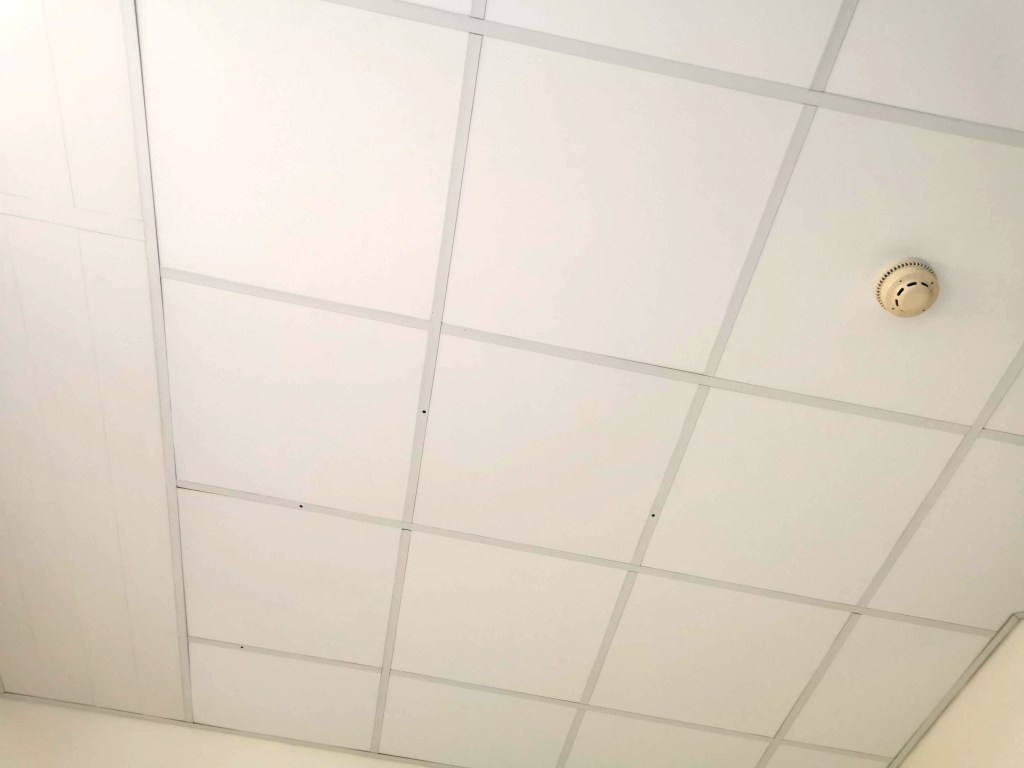
I got to know the walls and particularly the ceiling of the room very well. In my hazy mind I toyed with the grid of ceiling panels being a response to the Dutch De Stijl design by Theo van Doesburg, or a drawing by Agnes Martin. The four holes in the ceiling were also a stark reminder of the surgeon’s cuts. The prints on the curtains were so poor I refused to capture them, but they were insipid, uninspiring, and frankly poor design – I remember analysing their weakness with one of the staff late one night – I think she said I was crazy!
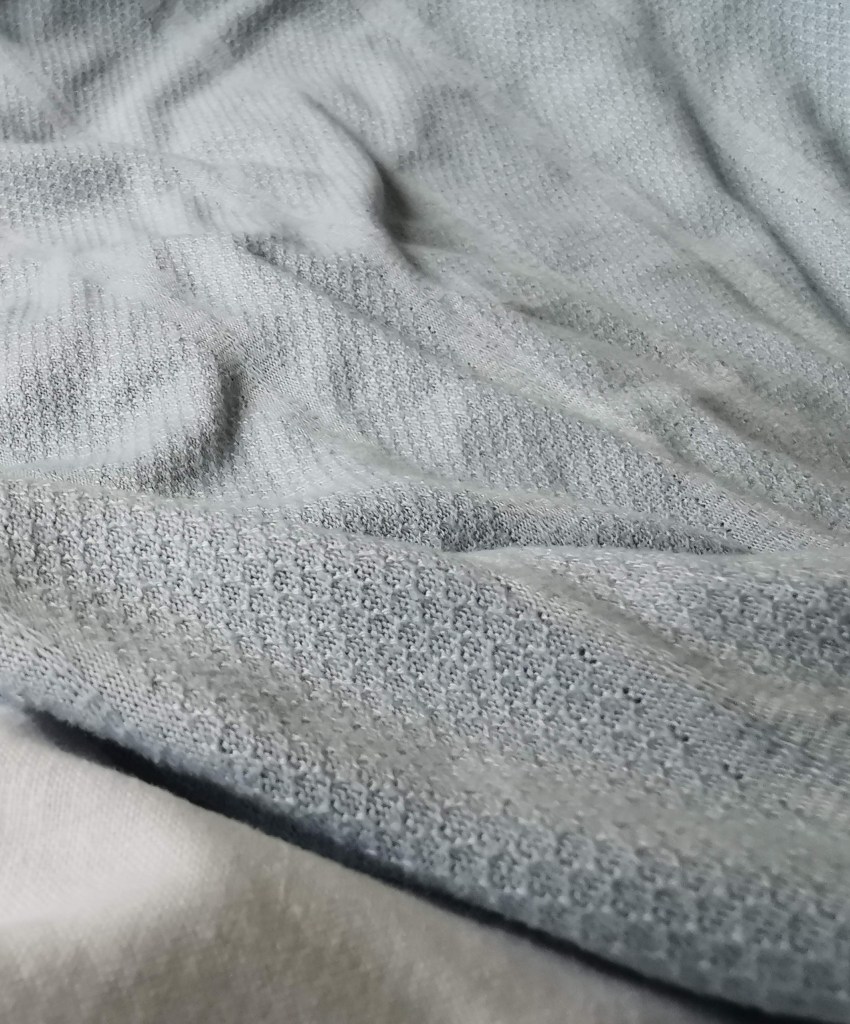
I vividly remember the power of the textiles surrounding me – I had a scarf which was a huge comfort to me – a familiar texture and smell of home. The fresh sheet and hospital blanket were also providing a strange comfort in the utilitarian room.
Twenty years ago I attended Arts in Health lectures including discussions on the subject of hospital environments aiding recovery and wellbeing, and I remember seeing incredibly exciting and positive schemes across the world where designers were embracing colour, nature, pattern and material to drive rehabilitation. I had hoped things had moved on from the institutional walls of hospitals. We now have the interior design buzz word biophilia, using nature for our wellbeing as an integral component in the design solutions, linking humans to other life forms, but it has yet to arrive here. The space in which I coped was bland, institutional and bleak. Such a missed opportunity – and particularly when the hospital ‘art’ is so often shoved out front in the public foyer, and not where the patients spend hours on end, day after day – don’t get me started on public art commissions at hospitals!
The relief to be home, surrounded by colour and pattern – and my family – was intense. Those first breaths of fresh air, the sight of a bright autumn day was incredibly uplifting. I still hold a heightened sense of this awareness of nature, even now a week on, as I recover and appreciate my health returning to business as usual.







 Kate Farley - drawn to design