There is nothing like a change of scene to recharge the batteries – here’s a couple of images of near and far sightings from our recent backpacking / camping trip in France, and I plan to write a longer post in due course.
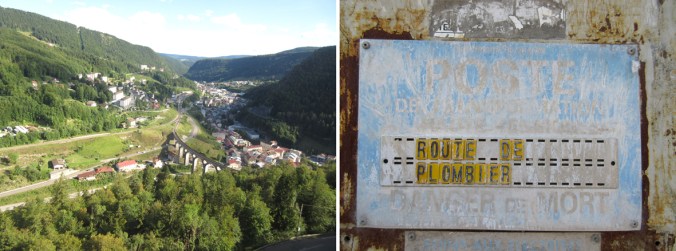
There is nothing like a change of scene to recharge the batteries – here’s a couple of images of near and far sightings from our recent backpacking / camping trip in France, and I plan to write a longer post in due course.
It’s the end of the academic year and I’ve got lots of admin tasks to complete and fortunately some trips to prepare for. The life of an academic is no longer one of summer holidays stretching out ahead of us until leaves turn red with plenty of time to catch up with rediscovering the in-tray, or making time for creative practice. Graduate shows, marking retrievals, timetables and planning new modules are only some of the things have been on my list. Many jobs fight for my attention – including the veg plot! Despite the jobs it’s so important to get out and about, see things and make time for oneself! I’ve got a number of projects planned for the next few months and taking stock is always a good start. Here’s to some time to think, and some time to draw, amongst the admin of the summer!
If you want inspiration and have time to see an exhibition I can suggest the Edward Bawden show at the Dulwich Picture Gallery – it’s brilliant. My daughter and I got chatting to two ladies who were enjoying it as much as us; spotting small details and playful touches in the commercial designs including the London Underground roundel as a pigeon’s eye, and several cats lurking! The versatility of processes and visual language, the playfulness, the draughtsmanship and scope of commercial clients is all there to admire. As ever, seeing the old favourites as well as those works new to me, in the flesh is always better than on a screen … Do go if you can – before September 9th!
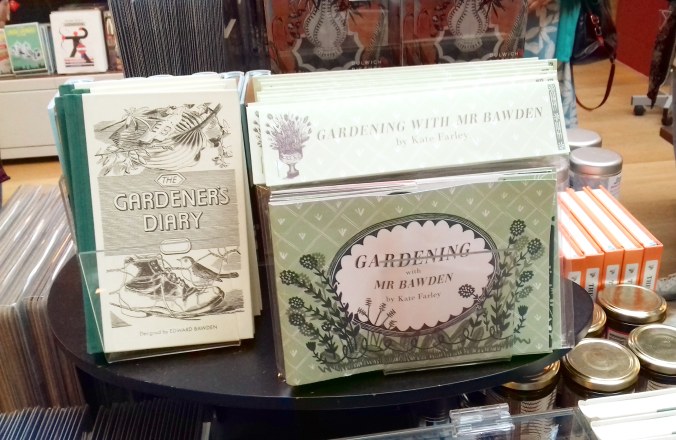
I was very proud to also see my ‘Gardening with Mr Bawden‘ book published by Design For Today in the exhibition shop. The handling copy was a shadow of its former self, so I did my duty and folded it up properly again. The sales assistant commented on how well they are selling, so I’m grateful to those customers too!
There are a flurry of exhibitions on and books out at the moment relating to Eric Ravilious and Edward Bawden, as well as their peers. Since the fabulous Ravilious show at the Imperial War Museum in 2003 / 04 curated by Alan Powers, it seems this really has been their revival. Certainly according to my social media feeds we are all loving this celebration of talent from days gone by, and many contemporary designers are inspired by the styles of these greats.
The exhibition, Ravilious & Co. at Compton Verney explores this network of friends and collaborators in an extensive and beautiful show of art and design pieces, demonstrating their skills, creativity and versatility across products and for varied clients. Having seen this show in Sheffield; a touring show curated by Andy Friend and the Towner Art Gallery, Eastbourne, and previously being familiar with much of the era’s iconic designs it’s nice to see some of the exhibits rather like old friends, as well as others new to me.
 images kindly shared by Compton Verney:
Eric Ravilious, Sussex Church, 1924. Towner Art Gallery, Eastbourne
Eric Ravilious, Portrait of Edward Bawden, 1930. Royal College of Art
There are also new pieces and names to discover. One thing that struck me was the talent of others in the group that have not received quite the same fanfare, but should be rewarded with the recognition – Helen Binyon in particular as a print-maker in my opinion. My notes recall ‘The Wire Fence’, 1935 specifically, such a beautiful interpretation of the subject through pattern and print. I kept returning to admire it!
A section of exhibition text also struck a chord for me. It stated that Paul Nash had “believed a good artist could turn his or her hand to many things – and would need to if they were to earn a living from their talent”. Nash had taught some of this new generation of designers at the Royal College and was also seen to live by this approach of traversing the landscape of art and design. Famous for his paintings both as a War Artist and not, he also carried out commercial design briefs for companies such as Cresta Silks (owned by Patrick Heron’s father) and Edinburgh Weavers (directed by Alastair Morton) and established the rather short-lived Unit One, bringing together artists and designers of the time.
When the individuals such as Bawden and Ravilious turned their creative hands to making drawings and prints, or designing ceramics, book covers, end papers, posters, murals, fabrics and much more, they did so with such confidence and accomplishment – an understanding of each product, the form and audience, each outcome intelligently designed for the specific brief. This isn’t a case of one image translated on to multiple surfaces as so much of today’s designing tends to be – I feel strongly about this when educating my own design students! Don’t do a ‘Cath Kidston’, (not the only company to do this!) and apply any / every pattern to any surface, but consider the requirements and potential of each product, learn from the expert manufacturers about how the production of the image or pattern can work best, and learn from what has gone before while creating something of its time.
 Image details, photographs by Kate Farley from publications: Enid Marx by Alan Powers / Peggy Angus, by James Russell:
Enid Marx, study for ‘Spot and Stripe’ Utility fabric, 1945
Peggy Angus, Tile mural, staircase, Whitefield School, Barnet, 1953/4
Yes a designer can earn a living with their versatile skills, but I also have no doubt that Eric Ravilious, Edward Bawden, Enid Marx, Peggy Angus and others of this time thrived on the creative challenges of the commercial brief alongside their fine art practices. It’s known that Enid Marx liked the confines of designing Utility fabrics for the reason the design restrictions gave her boundaries to challenge. An open brief can be far more stifling! How would you hold the cup, turn the page or approach the wall, and how can pattern relate to the space? I love learning the particulars about each new production method or new application / context I design for.
Returning again to the subject of this particular exhibition at Compton Verney, items on show include drawing studies, proofs, original painting and drawings as well as commercially printed products. The most moving item was a letter from Bawden to Ravilious’ wife Tirzah after hearing news of Eric’s death, lost over Iceland on a mission as a War Artist, that demonstrated the strength of friendship the two men had for each other. Tears filled my eyes. It’s a big show, and it takes time – you will need to be fueled by cake!
My hope as a designer and educator is that this sustained interest in such a talented network of designers whose work reached across the public domain may rub off on the new generations of designers visiting this exhibition as well as on the vision and ambition of those who commission us too! While it’s lovely to see re-issues of these great designers work, I’d like us to move forward and create a new exciting design era built on this intelligence, empathy and skill. In the meantime, see this show if you can! It ends on 10th June – so get moving!
 Image detail, photograph by Kate Farley of plate by Eric Ravilious for Wedgwood
Also check out:
Edward Bawden at Dulwich Picture Gallery, London until 9th September 2018
Enid Marx, House of Illustration, London until 23rd September 2018
Bawden’s Beasts, The Higgins, Bedford until 27th January 2019
I’m fascinated with how artists and designers stylise what they see. It’s a creative journey that drives me in my work too. Look at this image below of a wood engraving ‘Butterflies’ by Enid Marx, 1939. The same sort of leaves have been executed in several different ways to provide visual interest, tonal variation and depth, communicating different information about the leaves.
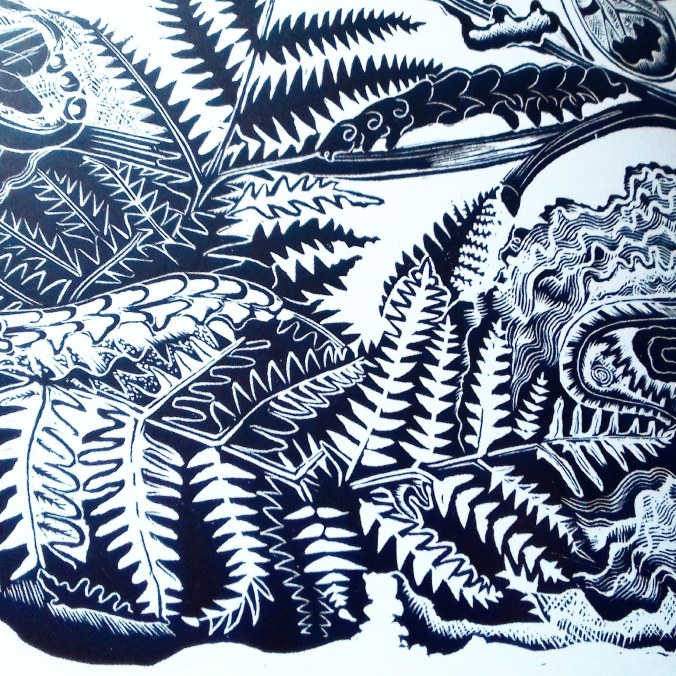
This is also a great example of how to use negative and positive shapes in printmaking / monochrome imagery, again to create visual interest and movement around the elements in the composition. I took this photograph from the fabulous Enid Marx -The Pleasures of Pattern book by Alan Powers published by Lund Humphries – I recommend it!

Also, I’d recommend a trip to Compton Verney to see her design work alongside her Folk Art collection.
I’ve been so pleased to have my Construct pieces in this touring exhibition, positioned alongside such fascinating and varied work of others. It’s interesting to see my own work in new contexts and I wrote about this previously here.
“The installation at Touchstones Rochdale marks the final exhibition in a series of shows displaying work by Rob Anderson, Aimee Bollu, Caroline Broadhead, David Clarke, Nuala Clooney, Rachael Colley, Rosie Deegan, Kate Farley, Daniel Fogarty, Joe Hartley, Kate Haywood, Jasleen Kaur, Julie Mellor, Maria Militsi, Rebecca Ounstead, Matt Rowe, Jonathan Trayte and Abbie Williams.”
https://ambiguous-show.tumblr.com/ExhibitionsEvents
21st April – 30th June
Touchstones Rochdale, The Esplanade, Rochdale OL16 1AQ

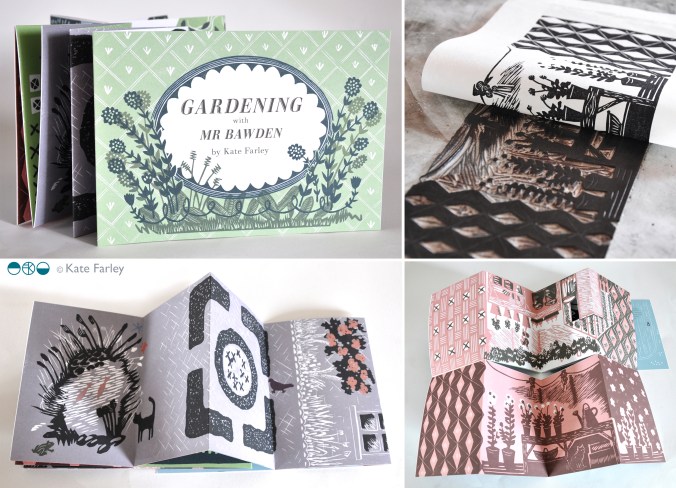
If you follow me or Design for Today on social media you will have seen updates of the book we have collaborated on celebrating artist / designer Edward Bawden’s love of gardening. The book is titled ‘Gardening with Mr Bawden’. It’s been the perfect project for me as I also love gardening, have a background in making artists books and also love lino-printing.
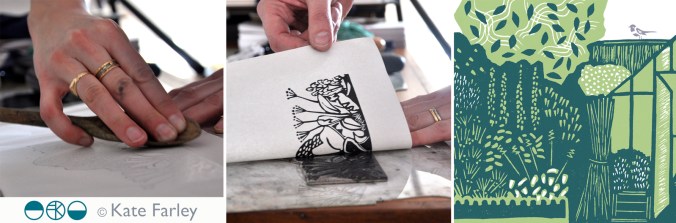
I’ve designed the book taking inspiration from some of the research I’ve found about Bawden, such as his preference for structural plants, his competitive growing of sunflowers, and the ongoing problems with snails. I’ve also made reference to some of the artwork made by Bawden and his dear friend Eric Ravilious, including the view under the tree with the table and tea things, as well as the bench Bawden designed.
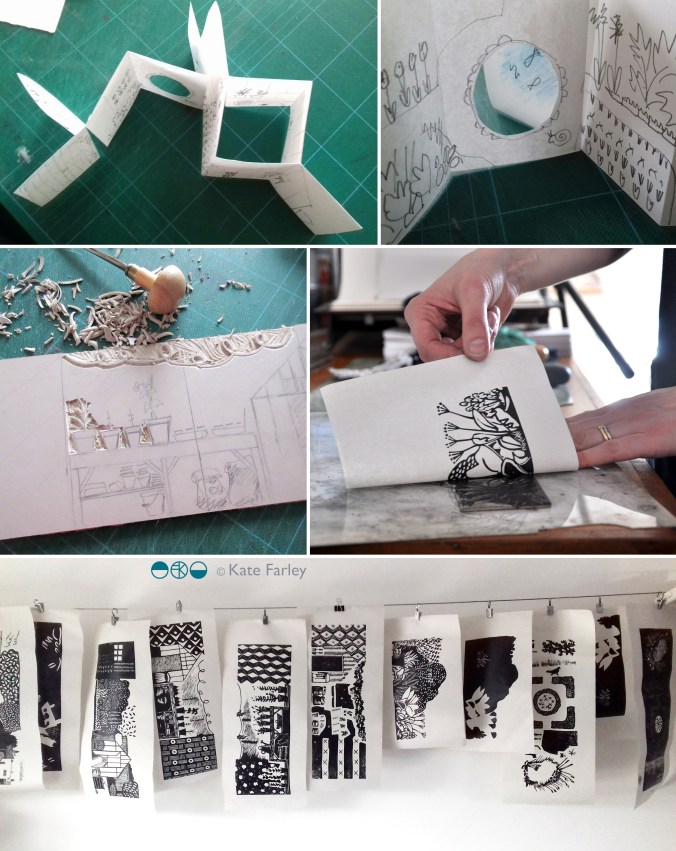
All the motifs are my own but I’ve made reference to the sort of patterns Bawden was designing while living at Brick House, Great Bardfield in Essex. I’ve blended the idea of plants growing in the greenhouse, becoming wallpapers in the house. There is a pull-out greenhouse!
There are limited edition sets available to pre-order now which includes a signed book with four greetings cards and a collectors book explaining the project. Click here to order.

It seems right to me that as someone keen to draw images I chose print as my medium of design rather than weave but I do think there is a strong sense of the spirit of woven cloth in how I see things, and for that I thank my upbringing in Norfolk. The strong horizontal line of the sky meeting the fields interrupted by vertical fence posts or reeds creating visual rhythms can leave me feeling utterly complete. Back in Norfolk this Easter, once again I breathed in the space, the horizontal and vertical of Horsey; one of the most perfect places.
I removed colour from this image as I wanted to clearly show the structure of the stripes, but colour is much of the joy in this landscape – the purples, greens, yellows, varying from minute to minute in the ever-changing light. I add them below. One day I will weave again.


I’ve spent many hours over the last couple of years reflecting on my teaching career that stands at about 18 years, give or take a bit. In order to apply for Senior Fellow of the Higher Education Academy I had to write thousands of words that explain and reflect on the impact I have made on not only the students I have taught but the colleagues and peers across the industry I relate to in my professional practice. It has been a big ask to fit my diverse experiences in to the word count along with the cross referencing required, but I’m delighted to say my hard work over the ‘holidays’ and the work of my colleagues in writing supporting references has meant I achieved Senior Fellow and I’m rather relieved / proud. (I was however disappointed to discover that rather than receiving a fine water-marked, embossed and foil blocked certificate I had to download it! … I digress.)
I’ve written many times about how important it is for me to combine my design practice with my academic career and although it doesn’t make my life easier, it certainly makes it more fulfilling. They really are mutually supportive. The reason I am so driven to support the students in reaching their goals is because I know how rewarding a career in design can be. From having the confidence to draw in a different way, to picking up the phone to a new client, to realising your dream of seeing designs commercially available…, to be paid to do what you love doing… why would I not want to help others to do those things?
It’s also important to hear myself saying these things to students. It’s as if I am telling myself as well as the students! Yes I must chase that lead, make sure I’m paid a fair rate or keep my website up to date! Each creative has different ideas about how and where to move forward with their ambitions and the art of teaching is to work out how to nurture, support, push and challenge positively. Being creative is not easy. You put your sensitivities on the line to be judged, sometimes by those with less creativity than yourself, but who holds the budget. There are certainly pages in my sketchbook I wouldn’t choose to share at a group tutorial, but the process of knowing you are not alone in learning the creative process is so valuable. It’s also the case that it’s often easier to critique someone else other than yourself! Would you listen? Maybe one mis-perception is that once you graduate you stop learning – I plan to keep learning forever! Each project I work on is an excuse to learn more, not only about myself as a creative, but new practical or technical skills to take on board for me, as well as sharing with colleagues and students.
I’m very aware the reality behind social media may be far different than the stories being told online. I make sure students are made to think about that, – use the benefits of social media while considering the stories they read and the stories they create. While I like the way we can find out so much more about what’s going on, and who we need to know (can you imagine only having the yellow pages?!) there are complications with so many aspects of our practice being shared. Copying, audience expectation, peer competition versus mutual support, networking and peer validation are ups and downs of today’s design world. I approach my teaching very much like my designing. Honesty, integrity, and fulfillment…. support, encouragement and creative ambition! Even writing this is like giving myself a tutorial! What’s my homework?
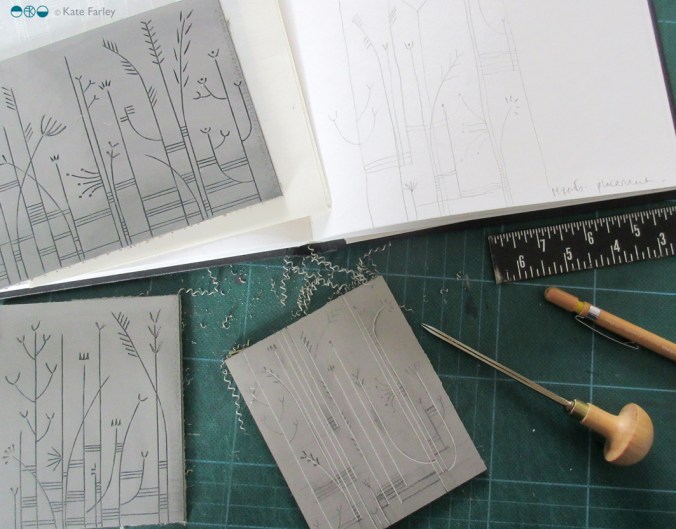
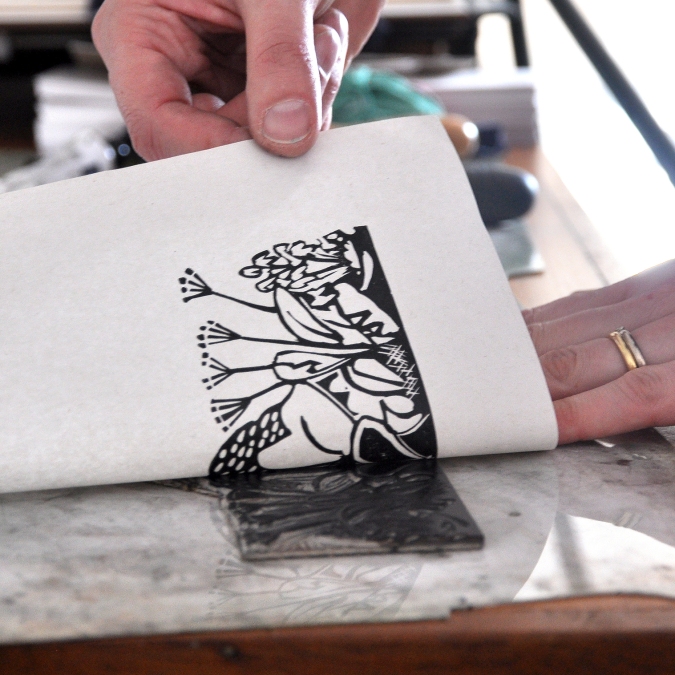
I’ve been working away in the studio on a wonderful project with Joe Pearson of publishing company Design for Today for a while and time has come for us to begin to share the results. It is a book inspired by Edward Bawden and his love of gardening. The content of the book has been informed by my research into his garden at Brick House, Great Bardfield in Essex. Bawden was a very keen gardener and I have researched and worked with anecdotes and visual references to build a picture of what his garden may well have been like and designed the artwork of the fold book with lino prints, a process he used many, many times.
Keep an eye on social media for more updates as we lead up to the official launch in May.

 Kate Farley - drawn to design