pattern at the pitch, up and down

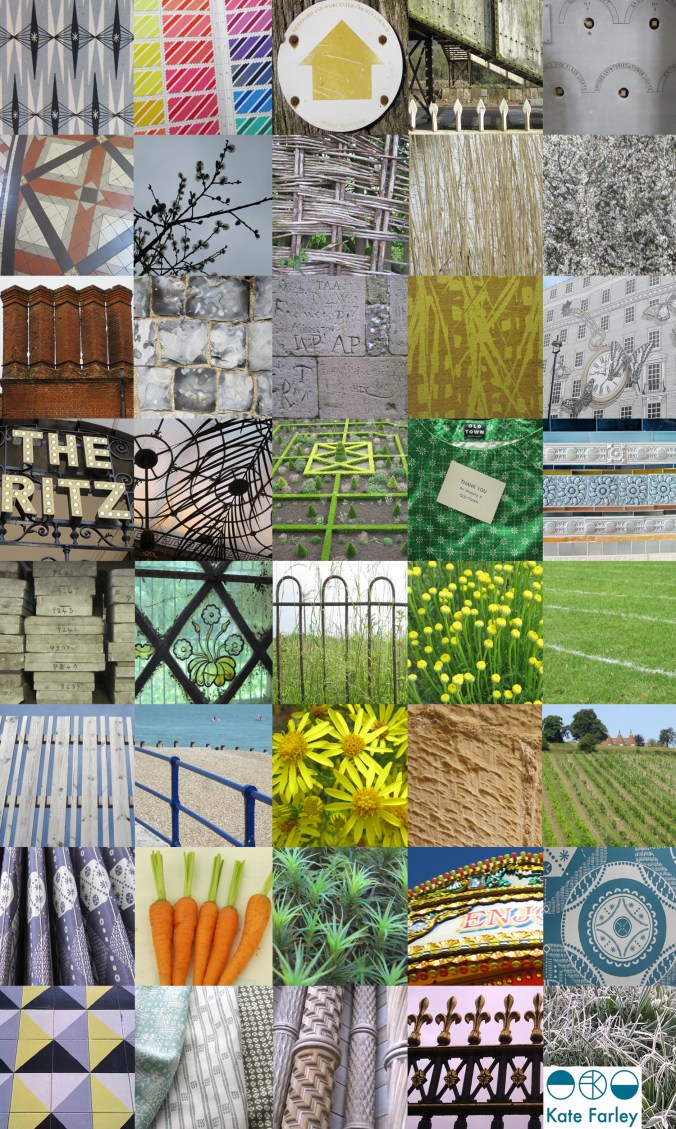
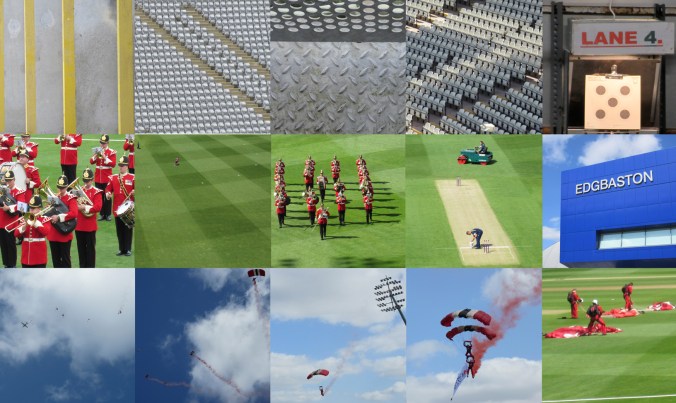
Despite having lived in Headingley, Oval and near Edgbaston I’m not a great fan of cricket but today I spent a number of hours at Edgbaston, the home of Warwickshire County Cricket Club as they hosted a charity community day. The highlight for me was the arrival of the Red Devils, from the skies in the most fantastic spectacle, bringing the ball for the 20-20 match. The marching band looked fabulous in red to the complimentary green of the grass and I also discovered I have a skill in rifle shooting, so there you go, a surprising day.

I gathered lots of images of patterns too. Here’s the day in grey, green & blue pictures…

edgbaston_com_day_100riflecard_100

light and dark, total eclipse

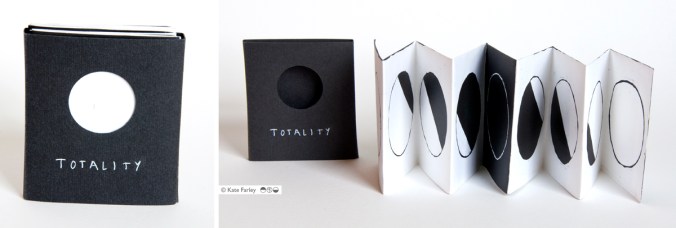
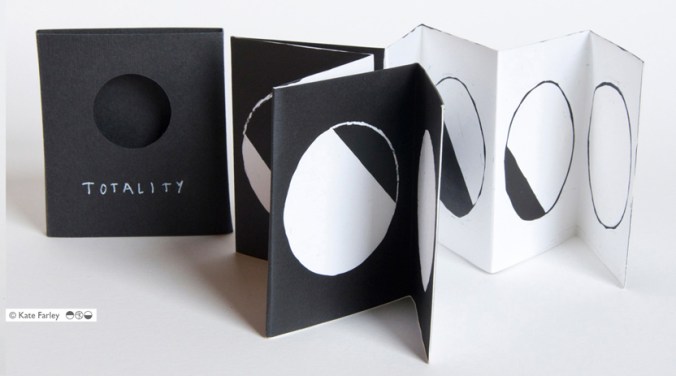
With the eclipse taking place this week, and the process of archiving lots of my old work also underway I’ve been reminded of an artists book I made to celebrate the solar eclipse that took place in 1999 as well as the total lunar eclipse that took place not long after. ‘Totality’ was made as a photogram, a photographic process blocking out areas of the light from an enlarger, on to a piece of light-sensitive paper. I made drawings of the stages of the eclipses as diagrams on to acetate using a chino-graph pencil that sat on top of a Kentmere photographic paper because it was able to fold without tearing or splitting the coating. It’s a great paper.

The process of the making of the images was completely in line with the concept of the book, blocking out light and revealing light. Light was the subject and medium – I like that simplicity. I had to work in the bathroom of my flat in Camberwell in the middle of the night hoping that the neighbour wouldn’t turn a light on which would shine in to the room and ruin the exposure of each sheet of paper. To make an edition of these books it was a production line of carefully timed stages, as I had to fold the sheets of photographic paper when damp for the cleanest fold in to the concertina structure. This was a project of problem solving but I really enjoyed it. The lunar eclipse is on one side and the solar eclipse is on the other. The slipcase included a cut-out circle in order for the reader to create the image of an eclipse when taking the book from the case. The book is pocket sized, as if it is a useful guide.

I have uncovered the last remaining few so get in touch if you are interested in buying one, £20 each, let me know by email in the first instance: kate@katefarley.co.uk

Enjoy the eclipse on Friday – don’t stare at the sun! I’ll be using a pinhole in paper and hoping for a cloudless day…

KateFarley_TOTALITY

KateFarley_Totality1

the colours of 2014

Back in 2012 I started a colour project on Twitter, using Pantone references ( @pantone ) that represent particular colours of the season, place or activity of the day alongside photographs that I have taken. The words relate to the language of colour, seasons and the activities so often word-play is used, particularly in relation to Coated, Uncoated or Process, as used in the Pantone system of colour. Having kept this going for over two years I decided to look back to see the colour swatches of 2014, a record of colour of my year, having recorded pattern of 2014 in my previous post. In chronological order under the swatches are the Tweets to tell you about the images, they read from top L to R, along each row ending with the hyacinth, bottom R.

From this point on we can look forward to 2015…. Happy New Year…
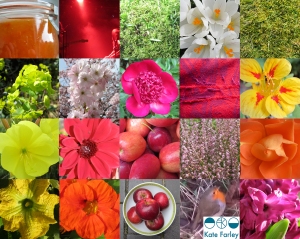
KFarley_colourof2014

Kate Farley @katefarleyprint  ·  Jan 27

ORANGES! A new breakfast treat, from @pantone180 solid to process = marmalade

Kate Farley @katefarleyprint  ·  Feb 12

Brilliant @pantone Red DS 75-1Uncoated; a gig of captured whispers & exploding electric noise @annacalvi Outstanding!

Kate Farley @katefarleyprint  ·  Mar 2

Yesterday: @pantone DS 290-1 Coated, sights of fresh green but otherwise muddy underfoot – Spring has sprung

Kate Farley @katefarleyprint  ·  Mar 9

Crocus delights: @pantone process, heading home, 49-1Uncoated, Spring sun

Kate Farley @katefarleyprint  ·  Mar 15

Malvern moss green @pantone DS 312-1U = process walking & uncoated. A beautiful spring day #Herefordshire

Kate Farley @katefarleyprint  ·  Mar 29

Spring green @pantone 389 Uncoated, on the eve of BST. Euphorbia at its best!

Kate Farley @katefarleyprint  ·  Apr 11

Bored of blossom? Beautiful @pantone 684 PC – Solid optimism to Process – the Spring growing season.

Kate Farley @katefarleyprint  ·  May 21

Okay so it’s not #RHSChelsea but stunning @pantone 806 Solid pink Uncoated. Sadly rain due to spoil it tonight!

Kate Farley @katefarleyprint  ·  Jun 27

A lot of @pantone 207 PC with @tiborreich on behalf of @textilesBCU Every colour under the sun and rain. #textiles

Kate Farley @katefarleyprint  ·  Jul 10

Today = A sunny @pantone yellow 604 Uncoated and optimistic on all fronts! #colour

Kate Farley @katefarleyprint  ·  Jul 21

A stunning yellow @pantone 386 Uncoated, hot & with plants growing in the wrong place across the plot. #weeds

Kate Farley @katefarleyprint  ·  Jul 25

A stunning, loud and proud @pantone Red hot 032 Uncoated and attracting the insects today. #dahlia #colour

Kate Farley @katefarleyprint  ·  Aug 1

RED! Harvest time with these @pantone 200 Coated at the moment crab apples, soon to become jelly! #colour #harvest

Kate Farley @katefarleyprint  ·  Aug 11

Pink @pantone 679 Uncoated, wild and fresh from #Dartmoor #heather #colour

Kate Farley @katefarleyprint  ·  Sep 3

Blooming special rose @pantone 7417 Uncoated & without an umbrella – let’s hope for no rain! #colour #rose #weather

Kate Farley @katefarleyprint  ·  Sep 8

A stunning @pantone 611 Solid Process flower but I’m waiting for the squash! #colour #PlottoPlate #runningoutoftime

Kate Farley @katefarleyprint  ·  Oct 6

It was sunny yesterday, Uncoated with @pantone orange 021 nasturtiums. #colour #autumn #allotment

Kate Farley @katefarleyprint  ·  Oct 20

Happy to receive @pantone Coated 201 red windfall apples from the allotment at the weekend. #harvest #sharing

Kate Farley @katefarleyprint  ·  Dec 7

A stunning @pantone Solid 158 watching me dig at the plot today, Coated of course #colour #allotment #digging #robin

Kate Farley @katefarleyprint  ·  Dec 30

Blooming! We are enjoying the seasonal @pantone 226 Uncoated and indoors #hyacinth
the patterns of 2014

It’s been one of the years I shall remember as particularly busy, continuing to juggle the commitments of family life, my roles as artist, designer, lecturer and of course allotmenteer, and the small matter of a big Birthday. All the time spent doing any one of those things provided opportunities to spy inspiration, food for thought and visual stimuli for me so having looked back over the last twelve months I have enjoyed creating a record of the patterns I’ve seen. The record includes family holidays, research trips, and days out; from the school sports day track, Birthday celebrations, to the rivets in the railway bridge, the stately home and the walk to work, it’s a record of some of what I saw in 2014.

Key themes appear: geometry, stripes and railings and although in a chronological order, there are some great pairings in terms of colours, textures and pattern.

2014tiles_blog

Wallpaper in the creating…

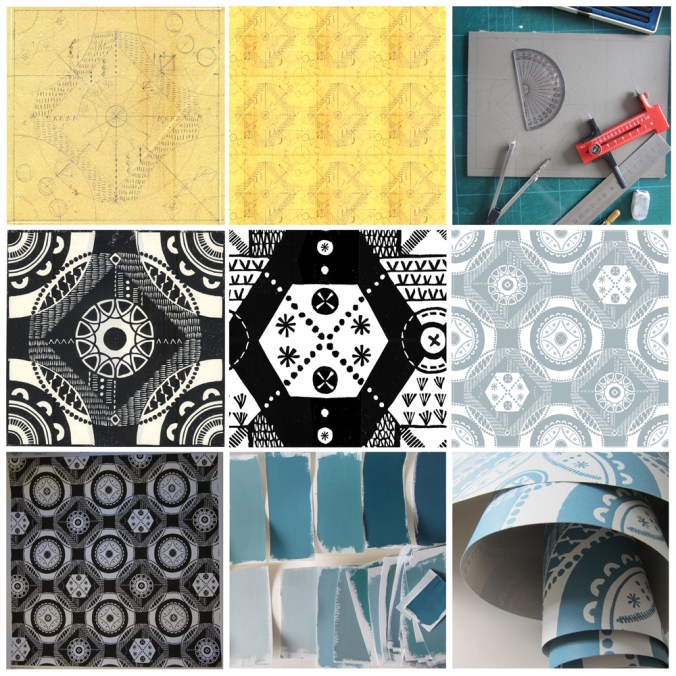
The process of designing my first commercially available wallpaper has been a long & highly considered journey and one I thought would be interesting to share.

Research: I first made drawings in my sketchbook last summer when I visited the National Trust property Hanbury Hall & Gardens in Worcestershire. I really liked the formal parterre and saw a really close link between garden design and textile design – I wrote about this in a previous blog post: https://katefarley.wordpress.com/2014/05/11/pattern-design-outdoors-and-in/

Composition: Sketches became drawings that became more detailed designs, that were then tested in repeat by scanning them in to the computer and using Photoshop. Edge details, scale of motifs, pattern and textural rhythm all needed to be considered.

Cutting the block: I measured and cut the lino block before taking a really clean print in order to scan the print in to work digitally with the repeat tile.

Editing: Further refinements, several print outs and more alterations took place over several weeks as I got used to seeing and living with the design. Additional lino blocks were cut in order to add different motifs to the design. Additional variations across the larger repeat file create visual interests and a play on the traditional repeat expectations. Some tweaks were so minimal that people unfamiliar to the design wouldn’t be able to spot the changes without having them pointed out, but it’s so important that every dot, dash and space has been considered before the production process is underway, saving time and lots of money.

Production: The digital artwork was sent off to the manufacturers of the roller in order for the design to be printed, and a technical proof was sent back for my approval – exciting and scary times!

Colours: Much thought, research, trying and testing went in to the colour combinations and I painted lots of colour chips using gouache in order to communicate the choice to the printer.

Printing: After signing off the colour proof provided by the printer, the wallpaper went in to production, labels were designed and printed, rolls created.

Results: I’m delighted with the results, the efforts by all those involved with the production process, and look forward to launching this at TENT London very soon.

hanbury_BLOGtile1000rolls_100_DSC_0227

black, white and a hint of chocolate

I remember my father turning our bathroom in to a photographic darkroom, not really understanding what was happening, and not being allowed in. A few years later it was my turn to stand in the dark bathroom to transfer the film from the camera to the spool ready for developing the images, eyes wide open – as if that would help! At art college the group of us headed to the beach with the college stock of Pentax K1000s to photograph the fairground, and then returned to fumble our way through the same process. I loved the wet developing; watching the first signs of imagery appear, and then head to the corridor, blinking to the light, to check the exposure required for the ‘portfolio’ piece. I also enjoyed the more experimental side of printing. Photograms, multiple exposures and liquid emulsion kept me captivated during my college days and holidays back home-home meant the use of that bathroom darkroom.

pinhole_flora_web

Years later at the turn of this century I became Print and Photomedia Technician at Central Saint Martins, and then Lecturer in Visual Communication, with the territory of a darkroom. I lost count of how many students I introduced the idea of experimental photography too but one of my tricks was the Pin-hole camera. The students and I turned empty hot-chocolate tins from sweet smelling rubbish to state of the art cameras, and captured the sites of the Back Hill campus. The wonderment experienced by the students, mixed with the realisation that they had made a photograph without using a ‘camera’ was priceless. But why was the photograph upside-down? Why was it a negative?…. Some students took this far further than I had and became rather good at controlling the timings and light readings.

I spent hours leaning out of the window of my flat in Camberwell clutching my hot chocolate tins, photographing the street. It became clear I had attracted attention of the guy opposite who wondered what on earth I was doing! I had to save the exposed papers to develop in the middle of the night so as not to disturb my flatmate, and so the house was dark. At this time I was also experimenting with photograms, and I made a book titled ‘Totality’ about the solar and lunar eclipse that had occurred, and realising that by using light, and obstructing light to make the book, the very concept I was exploring was creating the book. Apart from ‘sun prints’ in the garden with my own children I haven’t had time to use a darkroom, ready-made or not, for a number of years. pinhole_SE5img022web

I was reminded of the joy and simple elements of photography a few days ago. I was in bed, on holiday and happened to look up to find we had our very own camera obscura! Through the smallest gap in the blind was sufficient light to project the curve of distortion and the negative image of the view of the houses, window frames and all, at the end of the garden, on to the ceiling above us, in colour. The magic and the science of seeing was right there. Trying then to capture that image using a digital camera felt rather wrong. Where did I put that collection of drinking chocolate tins?

cameraobscuraKent_web


Pattern design, outdoors and in…

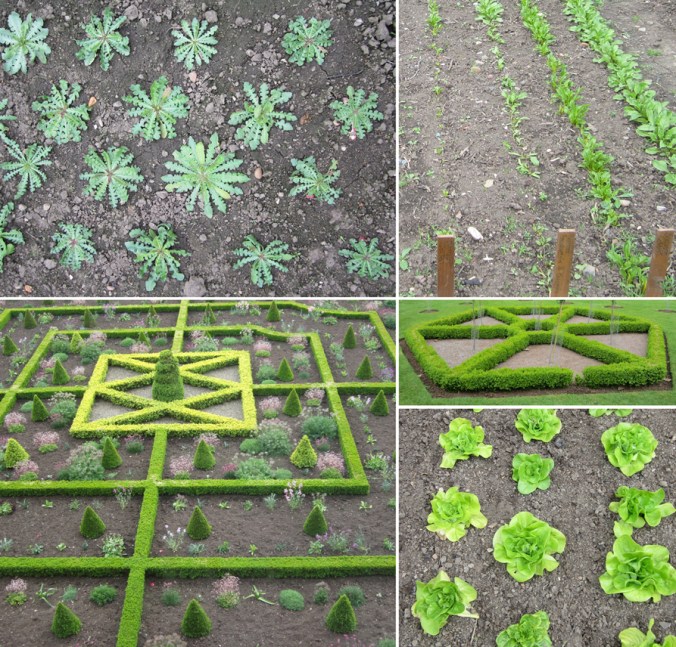
If you are a regular reader of this blog you will already know that for the last few years my personal design practice has been inspired by garden design, and most specifically allotments and kitchen gardens in my ‘Plot to Plate‘ collection, launched in 2012. I have spent many hours walking, almost patrolling, up and down rows of National Trust cabbages and onions, armed with my sketchbook, annotating the patterns, translating them to motifs, documenting the small irregularities, the planting plans, the labeling – fruit and vegetables up and down the country, as well as our allotment, plot 8 in Birmingham. Upton, Packwood, Baddesley Clinton, Blickling, Felbrigg, to name a few National Trust gardens I have surveyed and taken inspiration from. Hanbury is my current favourite garden and I have been working on a number of patterns inspired by this property that will one day be complete, to launch at Tent London this September.

It is with this in mind that I write my thoughts. There are so many similarities between garden design and textile design they seem perfect companions in my practice. Long before Mr W. Morris picked up a pencil the natural world of flora has been a dominant subject of inspiration for pattern in the home. Rather than the bouquets and sprigs, posies and trellis it is the formal gardens, the parterres and kitchen gardens that hold the structure and compositional language that we textile designers and design educators regularly refer to…

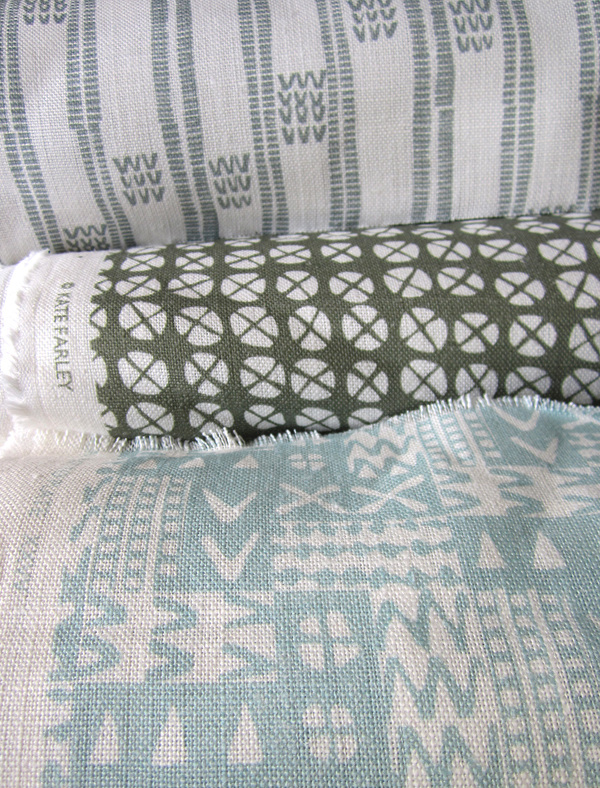
Stripes, spot repeats, all-overs and multi-directionals, geometric grids and diamonds, checks and plaids are all to see. And so it is, that it makes sense that I really have brought two things that I do enjoy together in my creative practice. It’s too early to share artwork for my new ‘Hanbury’ designs but I will share some garden pattern from Hanbury, and my ‘new’ fabrics by the metre, available very soon, in anticipation…

garden_textiles_hanbury_web  fabricrolls1_web

Colours for the arrival of BST

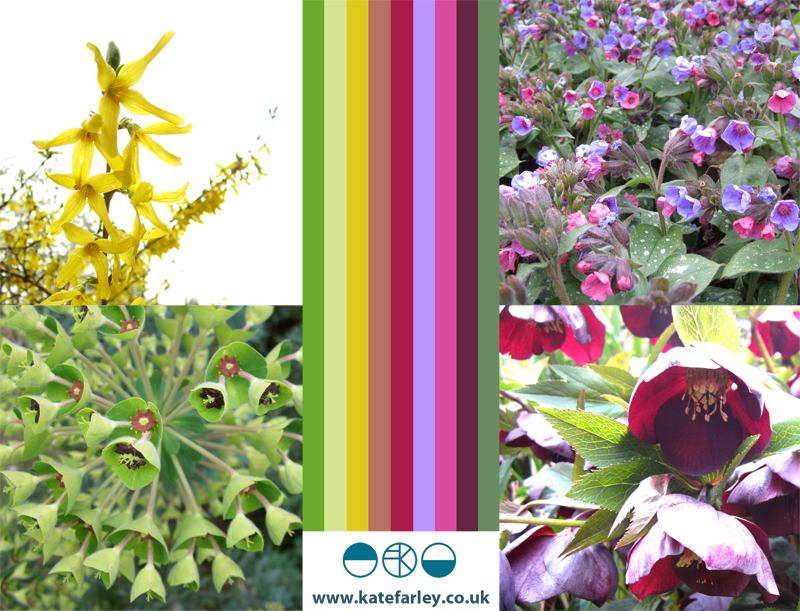
Today we welcome British Summer Time and the weather has been kind. The colours of spring always seem so purposeful after the winter months, with pink trees and purple or yellow blankets of flowers spread across the parks. At the allotment the grass is rearing its greens, and yet the purple sprouting broccoli let us down. Today I celebrate the colours of our garden, noticing the yellows and purples as predominate hues.

Image

spring in a vase

Despite us not having had snow yet this winter we have the pleasure of seasonal flowers that are so beautiful and distinctive, its time to celebrate them here, captured today on digital ‘film’.

I’ve drawn both the snow drop and the daffodil so many times over the years (mending from a broken elbow led me to a season of endless daffs drawings as a way to pass time) and yet each year they surprise me in their beauty. Is it too much to expect that spring will be just around the corner, and we can start this year’s digging?

snowdrops_webdaffs_web

micro florals

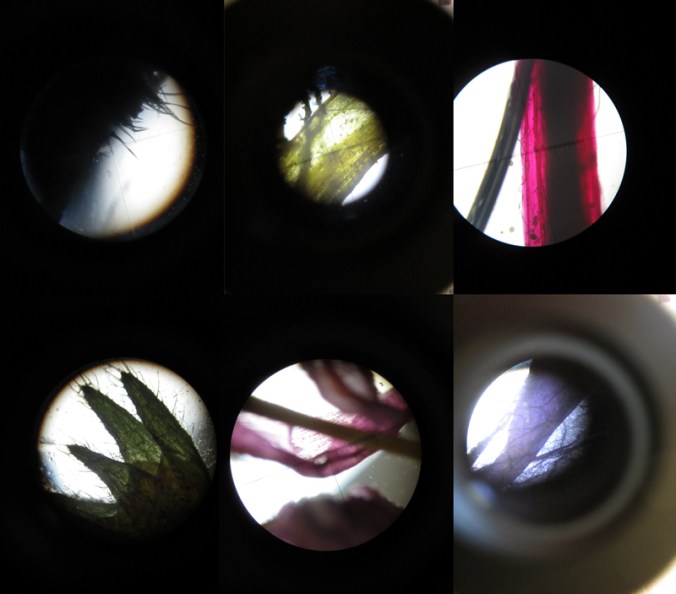
I’m used to gathering flowers and then drawing them over and over in order to learn more about their colours, shapes, forms and structures in order to develop imagery for prints and textile designs. At home this weekend we looked at flowers in a different way. We investigated last years plants that my daughter had pressed safely, and looked at them under the microscope that my son had become rather too keen on discovering inside the utilitarian wooden box it lives in.

We had great excitement as some rather plain plants revealed stunning patterns and textures and were disappointed when something beautiful at full-scale looked rather scary close-up. On trying to capture these images on camera the results were reminiscent of Len Lye animations and got me thinking about other ideas. Here’s a few images to share…

micro_6_web