passing on pattern passion

In my role of academic as well as a designer I am regularly required to enthuse about print and pattern, and to be honest that’s fine, as I love designing and teaching pattern for print. This last week has seen me out and about to pass on my passion for pattern, firstly to Wolverhampton Embroiderers’ Guild where I was invited to talk about my practice. It’s always interesting having to consider what bit of the last twenty years to focus on, requiring reflection and evaluation, and how to tell the most relevant story without missing the bits that might be the most informative to others even if they didn’t seem so to me when living them. The audience were really generous with praise, and were really interested in my creative process, so sharing my sketchbooks, and anecdotes felt very easy to such an interested group of makers.

Tuesday saw me overseeing a morning of filming at Birmingham City University (BCU) with Laurence Llewelyn-Bowen and TV crew, working with our third years and our fabulous Print Technician. It was a morning of celebrating the Arts and Crafts legacy, William Morris in particular, and the importance of understanding the value of drawing to the process of pattern making. It was a pleasure promoting our talented third years, in the closing stages of their time with us.

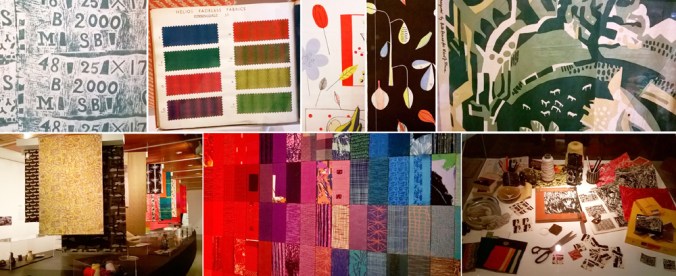
This leads me to yesterday when I and a colleague took a coach of second year Textile Design degree students to Manchester, specifically the Whitworth Art Gallery to see several exhibitions. On walking in to the first gallery and the exhibition ‘Revolutionary Textiles 1910-1939′ I noticed a number of pieces that I had featured in my Historical Textiles lectures when I had taught this group of students as first years, including Barron & Larcher, Josef Hillebrand and Omega Workshops. It was fabulous to see the students’ excitement on recognising patterns and names of designers that had, until then remained theoretical, and not ‘actually real’. Their knowledge meant something tangible, and I think was empowering to them. It was an honour to share that excitement of learning, and understanding.

Having worked on the Tibor Reich show at BCU it was great to be reunited with the collection, also on show at the Whitworth, and to see the different emphasis this exhibition made to an amazing and extensive archive owned by the family. The students really responded to the way Tibor worked to create pattern, and explored pattern through drawing with layers of colour and line. I couldn’t help but point out Tibor’s excellent use of a sketchbook to explore ideas.

Image below: top row from Revolutionary Textiles, bottom row Tibor Reich
KFarley_whitworth_May16_100

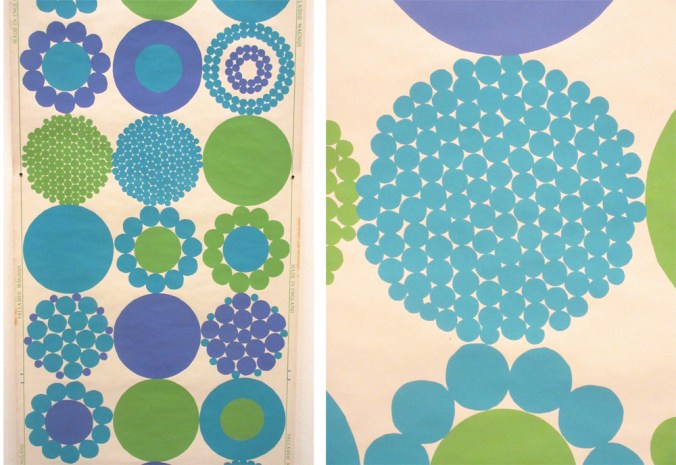
The room that wowed me most was the wallpaper gallery upstairs, and again, this exhibition was exciting and inspiring to the students, leading to some really interesting conversations. There is of course no comparison between seeing metres of wallpaper stretching skywards, to a small screen of Google images. We talked about print production, the scale of motifs useful to a domestic space rather than in relation to a sketchbook page, and why thinking big should be embraced. We admired the Lucienne Day patterns that are so familiar to us, alongside new discoveries, and that is why a curated exhibition, unlike an online search can be so beneficial; the selection provides context. I encouraged the students to question how they would make the marks, the shapes and patterns without computers, and why the variation of hand-made can offer something that digital software excludes. I include an example below to illustrate my point – beauty in the irregular.
KFarley_PalladioMagnus_blog

We did have time to enjoy the beautiful surroundings of the cafe but also took in a quick trip to see the newly opened Fashion & Freedom exhibition at Manchester City Art Gallery, one I really do recommend too.

So, more pattern inspiration for me, and hopefully some more people inspired by pattern too…
building / constructing / space / paper

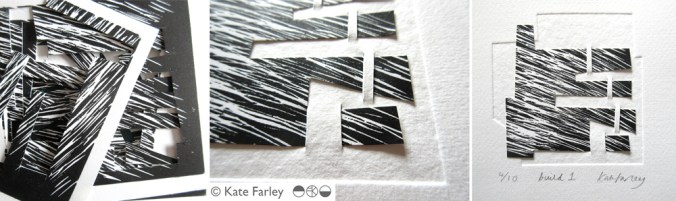
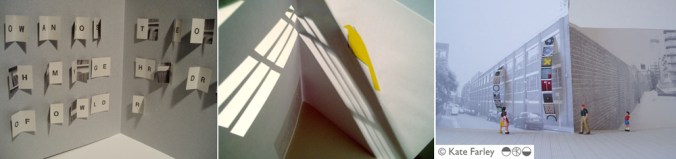
I’ve been working on a new series of works on paper that have evolved from paper cutouts and manipulations I first created over ten years ago. Back then I was experimenting with sculptural paper engineering that aimed to convey meaning through the structural content as well as the printed image. This may sound very much like ‘bookart’ talk, and it is really, as I moved from artists book maker to something different, including public artist and surface pattern designer, see below.

KFpaper_structure1000blog

It’s a strange thing when ideas that had seemed so disparate appear to come together to form a ‘whole’ different idea – and feels right. I’m sharing the first of many new prints evolving along these lines here.

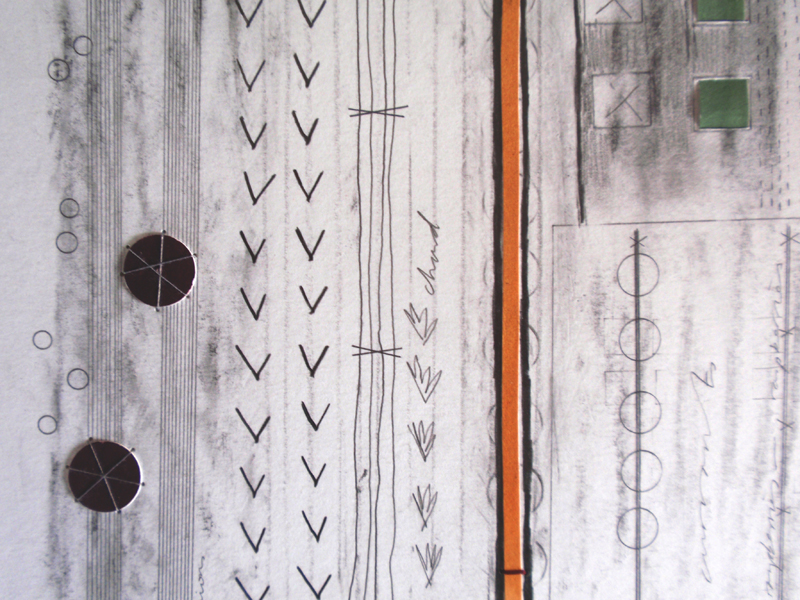
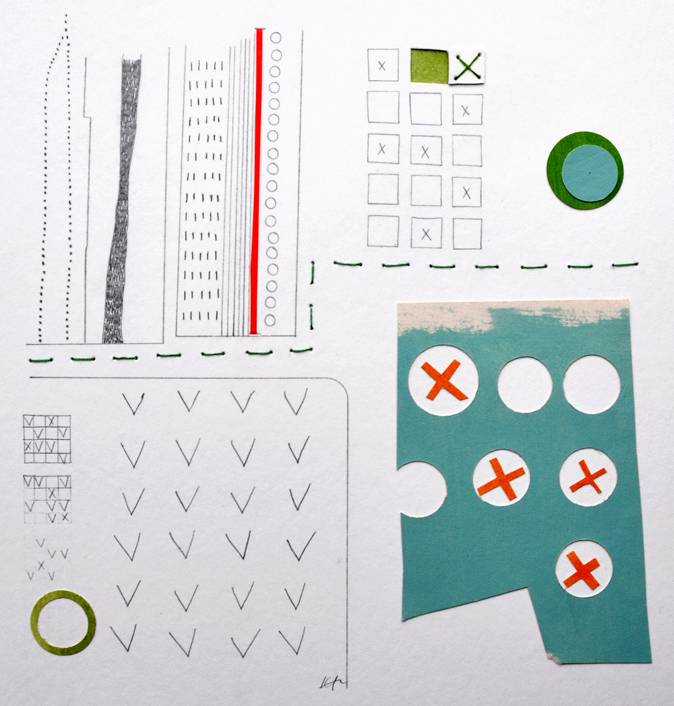
As a result of my design collection ‘construct’ I launched last year I’ve explored the idea of woven threads and constructed surfaces. This led me to explore the space and environment of a page, a sheet of paper, and what could constitute the printed page. I used embossing to create a sense of space and depth, and slotted the ‘print’ to the paper as if floating. I am keeping the ink a neutral Payne’s grey so it doesn’t conflict or distract from the structure. I explored several different printed patterns too, and this, a lino print provided me with sufficient visual noise, but allows the embossing to be seen too.

KF_build_blog1000

So, what do you think? Does it make sense? I’m looking forward to exploring this further over the next few months.

How will these pieces link to the work I shall make in another ten years?

print progress

Recently I have been really busy with a variety of academic duties in Birmingham and further afield, taking me away from studio time, my freelance design practice, and of course blog writing. Also, in my teaching of Textile Design at Birmingham City University I have been leading a module of professional practice, assisting the students in learning about the life of a freelance designer. It’s definitely a double-edged sword, as the discussions between students and staff illustrated: It’s great to be your own boss, but you take all the blame when things don’t work out! You can get up when you want, but nobody pays you for just waking up!

The rhythm of freelance work is varied. Somehow it’s often the way of things that several deadlines coincide, and when you have a schedule to stick to, an urgent press request comes in. On the day you have time to make calls, those people are out of the office, and obviously you don’t get paid when you take a holiday. Yes there can be tough times, but I really like the variety of the weeks’ activities that freelancing gives me, certainly set in tandem with the academic life of very different demands. Each practice informs the other. Obviously there are freelance tasks I prefer and other ones I procrastinate over, lists are created, social media is checked and Radio 4 is listened too!

KFarley_knit1_blog.jpg

With so much to-ing and fro-ing on trains this last month or two and with several commercial projects on slow-cook I decided to give myself time to make, test and resolve some ideas that I have been exploring, with paper and print. The activity of printmaking is a fabulous discipline to work with. I love the excitement of planning a new print, and composing the plate, often taking me back to sketchbooks and previous ideas. The physical process of cutting the block can also be absorbing, and therapeutic and I have to decide the paper stock, the ink colour, and edition size too. It is important to maintain an experimental, inquiring practice and my prints and drawings are the evidence of ideas that have sustained my creative practice for the last twenty years. Between the commercial constraints of projects shaped by clients, costs and repeat patterns, printmaking can seem so free from limitations. This is why I make sure I keep printing – the creative sort, not just the invoices!

both prints featured here are available to buy, at £46 each unframed.

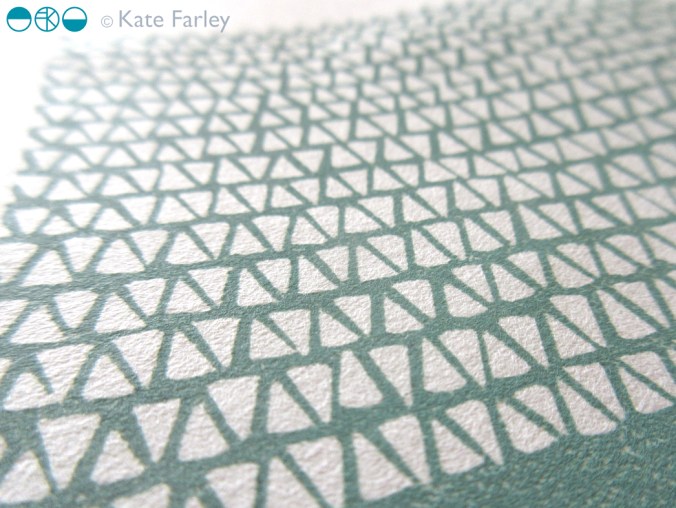
Knit 1, edition of 15, lino print, 9.5 x 9.5 cm print size

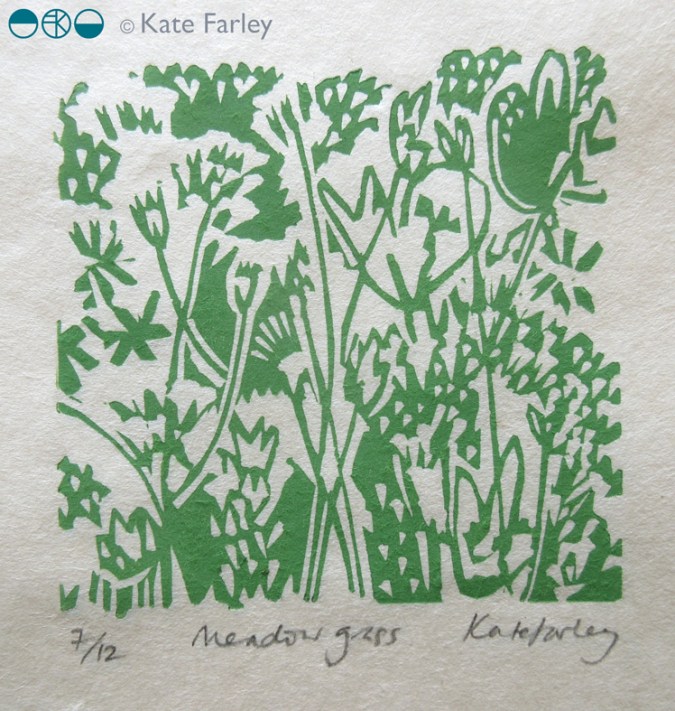
Meadow Grass, edition of 12, lino print, 9.5 x 9.5 cm print size

KFarley_meadowgrass_print_blog


light and dark, total eclipse

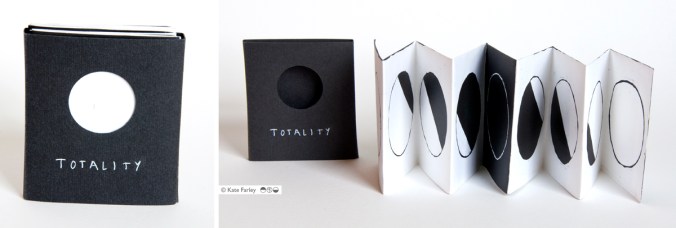
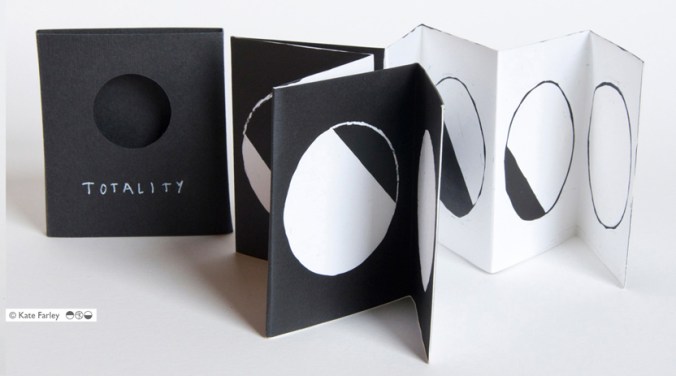
With the eclipse taking place this week, and the process of archiving lots of my old work also underway I’ve been reminded of an artists book I made to celebrate the solar eclipse that took place in 1999 as well as the total lunar eclipse that took place not long after. ‘Totality’ was made as a photogram, a photographic process blocking out areas of the light from an enlarger, on to a piece of light-sensitive paper. I made drawings of the stages of the eclipses as diagrams on to acetate using a chino-graph pencil that sat on top of a Kentmere photographic paper because it was able to fold without tearing or splitting the coating. It’s a great paper.

The process of the making of the images was completely in line with the concept of the book, blocking out light and revealing light. Light was the subject and medium – I like that simplicity. I had to work in the bathroom of my flat in Camberwell in the middle of the night hoping that the neighbour wouldn’t turn a light on which would shine in to the room and ruin the exposure of each sheet of paper. To make an edition of these books it was a production line of carefully timed stages, as I had to fold the sheets of photographic paper when damp for the cleanest fold in to the concertina structure. This was a project of problem solving but I really enjoyed it. The lunar eclipse is on one side and the solar eclipse is on the other. The slipcase included a cut-out circle in order for the reader to create the image of an eclipse when taking the book from the case. The book is pocket sized, as if it is a useful guide.

I have uncovered the last remaining few so get in touch if you are interested in buying one, £20 each, let me know by email in the first instance: kate@katefarley.co.uk

Enjoy the eclipse on Friday – don’t stare at the sun! I’ll be using a pinhole in paper and hoping for a cloudless day…

KateFarley_TOTALITY

KateFarley_Totality1

knowledge of books

I have taught hundreds of people how to make books. Folded, stitched, and even stuck books have been made under my guidance in school rooms, art college studios, village halls, hospital rehab. suites, commercial company meeting rooms, and at dining room tables, at the very least. Every time I teach a bookbinding workshop there is a sense of wonderment from the participants, a proud moment when they hold the completed book for the first time, and realise what they have made. It’s a good feeling being the facilitator of that experience. Books are one of those objects that carries so much potential; an object that can contain private thoughts, or public rule, but is portable and very cheap to make using very few tools. We bond with books.

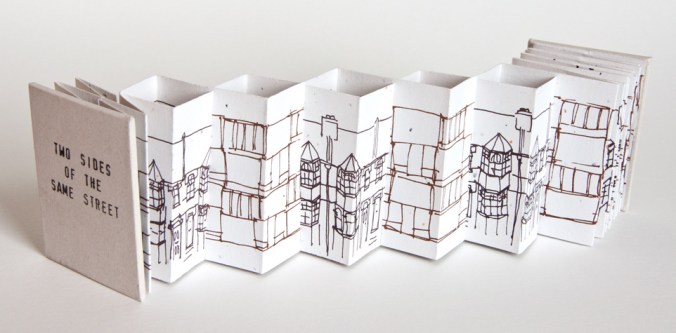
I was first taught about Book Art by Les Bicknell of ‘bookness’ fame. He made a studio full of Norfolk kids studying textiles question our preconceived ideas of what a book can be, and I was unique in that group – I saw a future of work that I wanted to make. On my degree course I was taught more practical bookbinding skills, and eventually wrote a 12000 word dissertation on the subject, researching in key collections at the V&A and Manchester Met. as well as interviewing some leading figures of the genre. Books for me at that time fulfilled learning requirements on my design degree while becoming vessels to explore my ‘fine art’ ideas, and this eventually led me to study for the MA in Book Art at Camberwell College of Arts, London. I spent the year investigating a ‘sense of place’ of south London, driven to create a more personal map of my London in contrast to the A-Z map, exploring cinematic flip books, and architecturally inspired structures.

KF_2sides_web

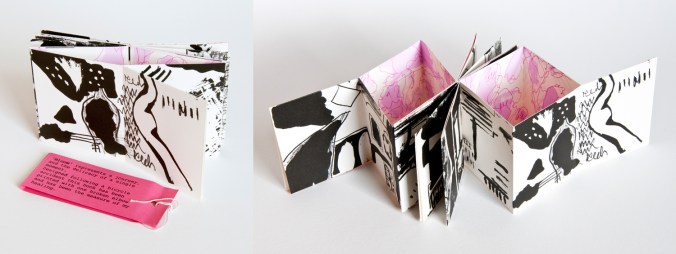
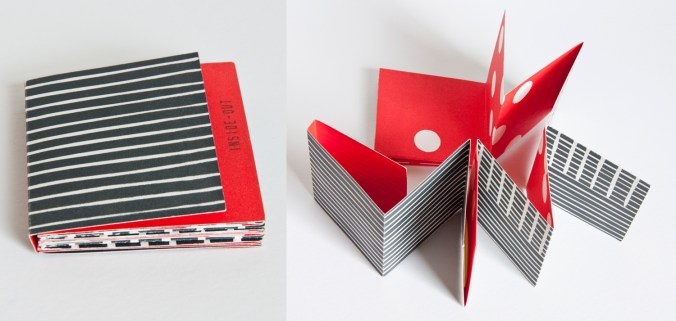
There are tools and skills that are beneficial to know; I was taught by the old boys at London College of Printing, as it was then, how to stitch with curved needles, cover the boards, and press the blocks. More useful to me though was the challenging of how we ‘read’ the book form, how one can be directed by the designer to progress through both visual and structural narratives across pages and along folds. I’ve explored these ideas in many of my limited editions of books I made and exhibited between 1998 and 2008. I’m very proud of this body of work, and I know many people appreciated the pieces. I have work in the Tate collection, the British Library, Manchester Met. to name a few, as well as overseas in collection in America, France and Ireland and within the small world of artists books I became known for the structural book forms I created. Many of my books were inspired by journeys and places I experienced, or events and mindsets I found myself in. A broken elbow falling off a bicycle really did inspire ‘Bloom’ which I describe as the ‘measure of my healing’, as I challenged myself each week to cope with the physical tasks required of printing the book. I have always taken on and enjoyed the challenge of transforming a two-dimensional sheet of paper in to a three-dimensional book structure appropriate for its narrative.

KF_Bloom_web

Sadly not many people make a living selling artists books. It frustrated me that I could sell a print for £80 but once I had folded and stitched it in to a complex structure I couldn’t sell it for £20. So strong is our association with art, that if it can be framed and put on a wall it had greater value. I also got fed up with the ‘I can see how she’s made it’ statements as visitors to shows photographed my work without the courtesy to ask, as if I was a learning resource centre, having paid for the pleasure myself. I see now an increase in awareness of book art and hope things have changed in these regards.

KF_insideout_web

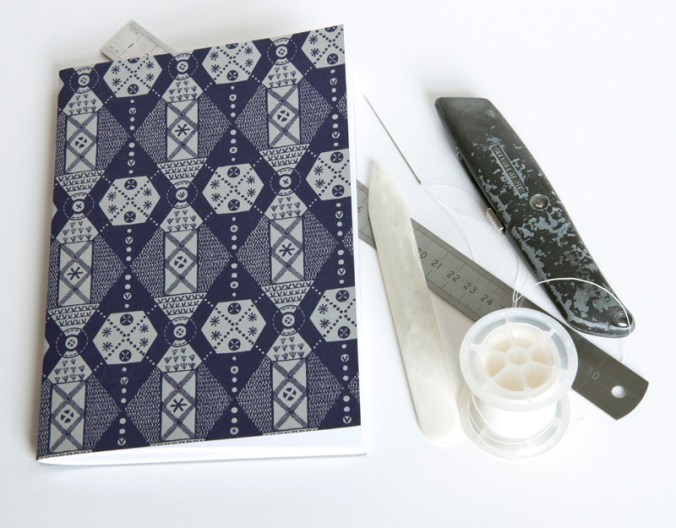
I have continued to use the practical and conceptual skills in my public art commissions, with large-scale visual narratives explored as if pages held in my hand. The sequence of toilet doors in a central Colchester public convenience was just that, a story of passing time. My current design practice benefits from my bookbinding skills and visual communication knowledge, as well as my book art thinking in the design of my marketing material, and sample books. I also continue to produce hand printed and stitched notebooks featuring my patterns – Parterre is the latest.

KF_parterre_toolkit_web

As I pack up my box of tricks ready to teach another fifty students the basics of books let’s hope some of that joy and creative potential is passed on to the next generation, for whatever context they want to think about books in.

Useful links:

http://www.tate.org.uk/research/library/artists-books
http://www.bookarts.uwe.ac.uk/about.htm
http://www.specialcollections.mmu.ac.uk/artists.php
http://www.katefarley.co.uk/gallery/bookworks2.htm

If you haven’t seen the new IKEA video about the book book, check it out: http://www.youtube.com/watch?v=MOXQo7nURs0


holding on to the details…

This photo was taken at Birmingham’s old science museum in its last days before demolition as I was carrying out research for subsequent commissions inspired by the site. It goes some way to sum up how things are in the studio at the moment with many lists and scraps of precious information as I am very busy with making new prints & promoting my upcoming show at Tinsmiths, Ledbury next month as well as coordinating suppliers and working on exciting new design work. All this in the break between Spring and Summer terms of my lecturing job…

staples_web

sharing the design process of Plot to Plate

Given that I am about to take my Plot to Plate collection of designs to Top Drawer this weekend I thought people might be interested in the design journey of ideas that result in such a collection of pattern.

My ideas tend to belong as series of thoughts that I explore in a number of drawings over months, and sometimes years. I challenge myself to explore many ways to represent the same things, often resulting in simplified motifs, some would say scribbles. Drawings are often in rather utilitarian handmade sketchbooks that are not precious so there is no fear of the white blank page before I start. Sometime, in fact quite often, I draw while walking, and trying not to look conspicuous or weird as I track my way round a National Trust kitchen garden, almost creating a diagram, literally a planting plan as I go. Sometimes I make notes in my drawings, of colours, names of plants from the labels in the ground, or note references to research at a later date.

The titles of some of my designs are: xvo, xo, xxvv and these come from the shorthand I created in order to document gardens and allotments as I paced.


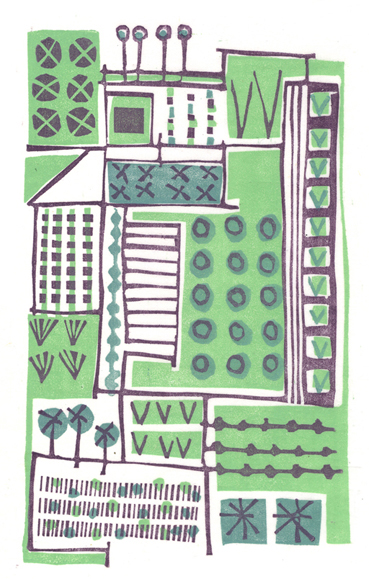
In the studio, and for sometime after I dwell, I study, I revisit the motifs, rhythms and compositions I gathered, I redraw, formalise and create new pieces, as one-off drawings in series to exhibit and sell. Some compositions lend themselves to self-contained lino prints or screenprints and so I spend time developing the designs, cutting the plates, and enjoying the process of editioning. I could never imagine getting bored (my edition sizes are small!) of lifting the paper from an inked block, each time to discover the image. So low-tech, yet engaging.

At this point I notice elements that can be scanned in and reworked in Photoshop or Illustrator software to create repeat designs and colourways for further potential – and this is how I created the design collection of ‘Plot to Plate’.

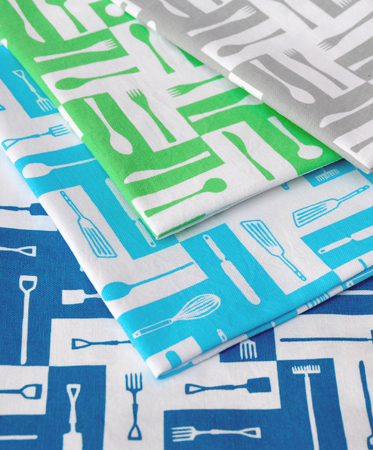
The Plot to Plate signature design of garden, kitchen and dining tools also came from my playing with the dog-tooth check as a classic rhythm, and my keen interest in telling a story as a visual narrative. Pattern can of course be pretty, but I enjoy the challenge of asking it to communicate something beyond itself. In this instance my drawings were made directly for this purpose and I translated them for screen.

I hope the images explain the fun I have had, and the pride that I feel in this collection.


More examples of prints and drawings can be found on my website gallery pages

www.katefarley.co.uk

Save

Thank you Tinsmiths

With a sense of pride I bring news that my ‘Plot to Plate’ collection of textile and paper products are currently stocked at Tinsmiths, Ledbury. This is a beautiful shop of wonderful fabrics and finds in a really interesting building. I have an exhibition there next June (2013) so we have been making plans and discussing new hand-printed textile designs to launch then. I look forward to working with the Tinsmiths team…