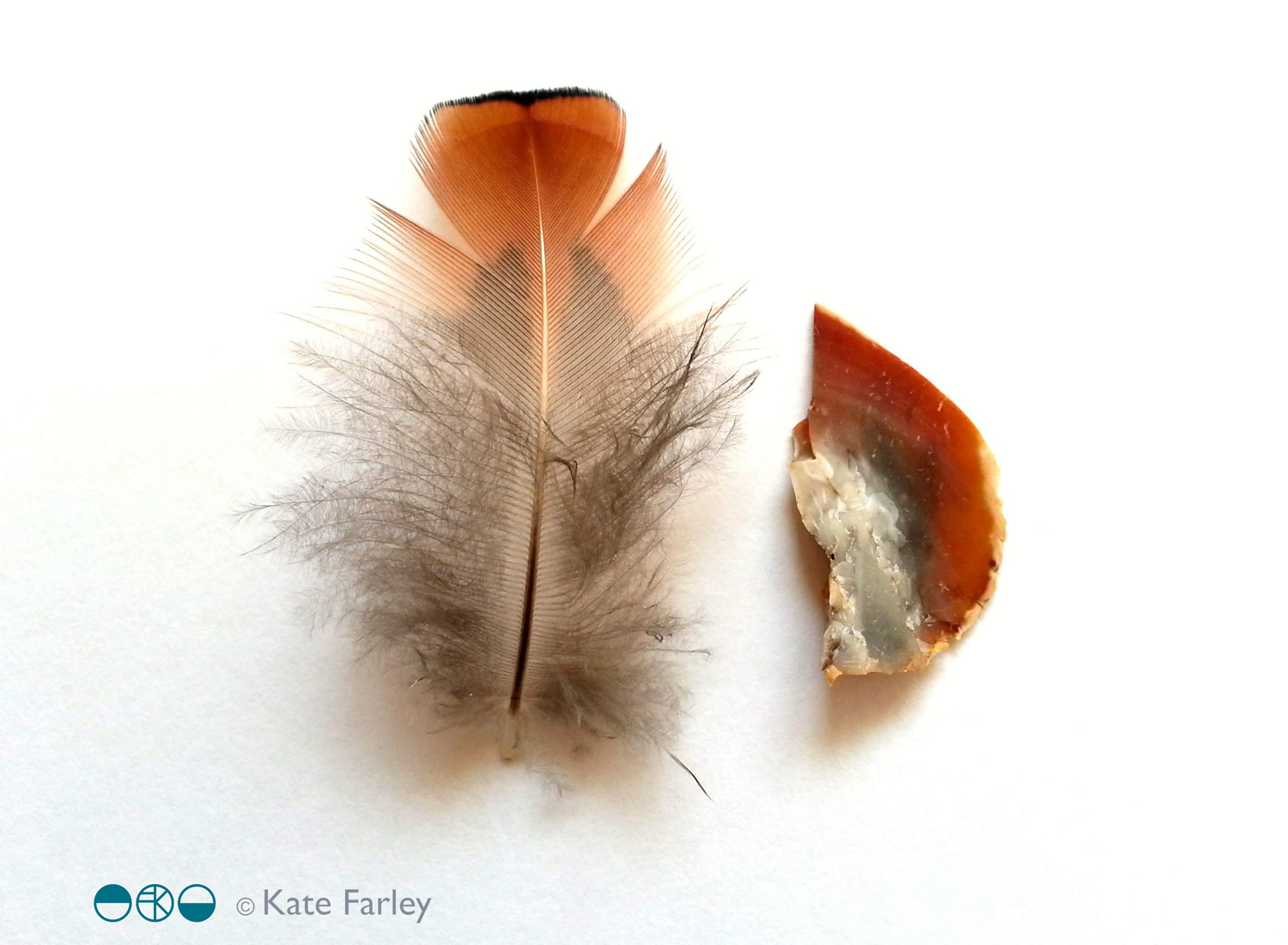
pottery collaboration: form and mark

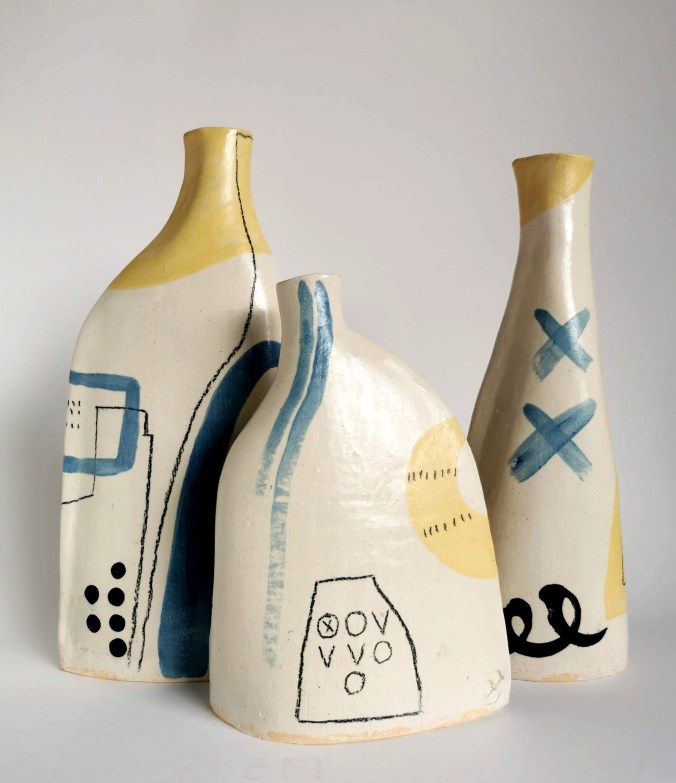
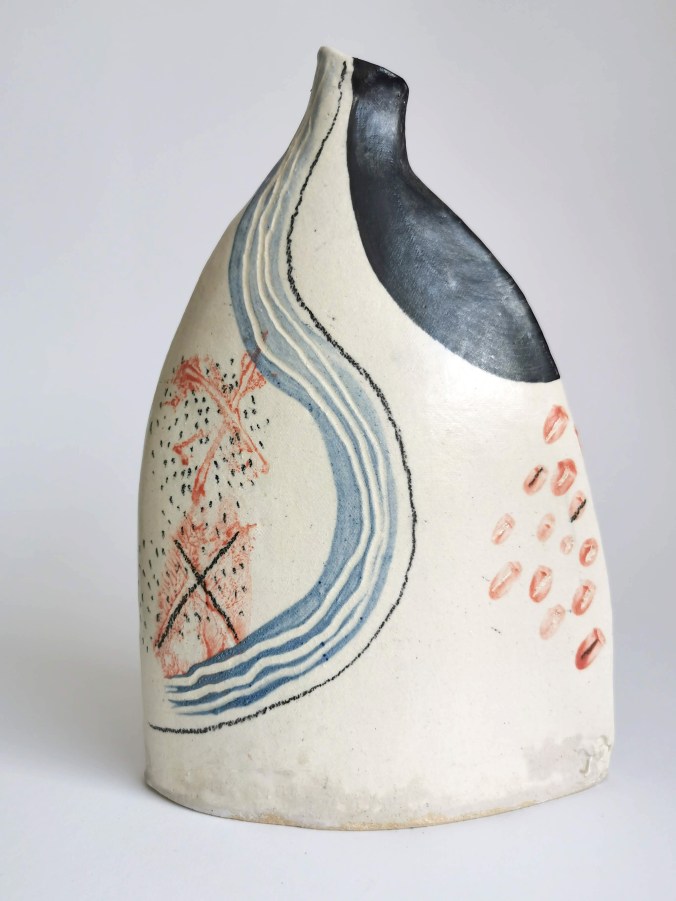
A little over a year ago I started to collaborate with my mum on a very special creative project. My mother has been a potter all of my life and family meals at home would mean eating from hand-thrown stoneware bowls, plates and cups made by her. During the 1970s and early ’80s she exhibited her goods at craft fairs in and around Wymondham, Norfolk and we would hang around watching as mum demonstrated her craft alongside her creative friends. We were lucky enough to have personalised birthday gifts made by mum during our childhood, and when I left home I was given a homemade teapot, cups and bowls that I still have, three decades later! My sister and I used to play at the potter’s wheel and hand build the odd ornament. I vividly remember the smell of burning clay dust on the bar heater and the feeling of dry clay on my hands.

Last winter, as a way to spend time together at a sad time of family loss, I suggested we try collaborating, sharing our skills to see what we could come up with. I made a project sketchbook to outline a few thoughts and approaches to form and visual language, and handed it over for mum to think about what chimed with her. Although I’m a surface pattern designer, I’ve no experience of hand painting on ceramics beyond art school. Mum has switched to hand building her vessels in recent years so this was how we started. After a morning in my studio pressing tools into damp clay, drawing forms and testing colours, the project was underway.
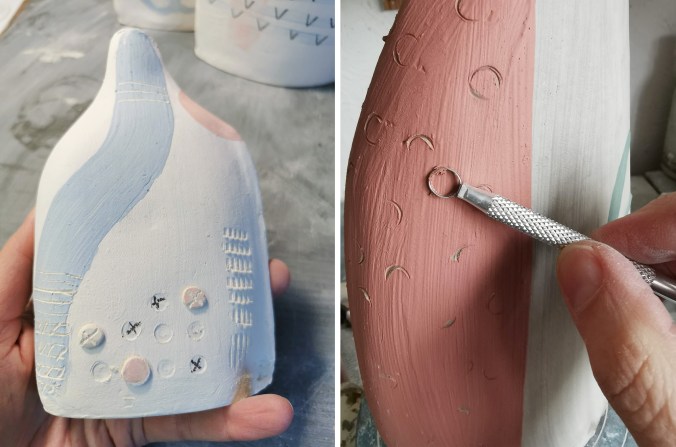
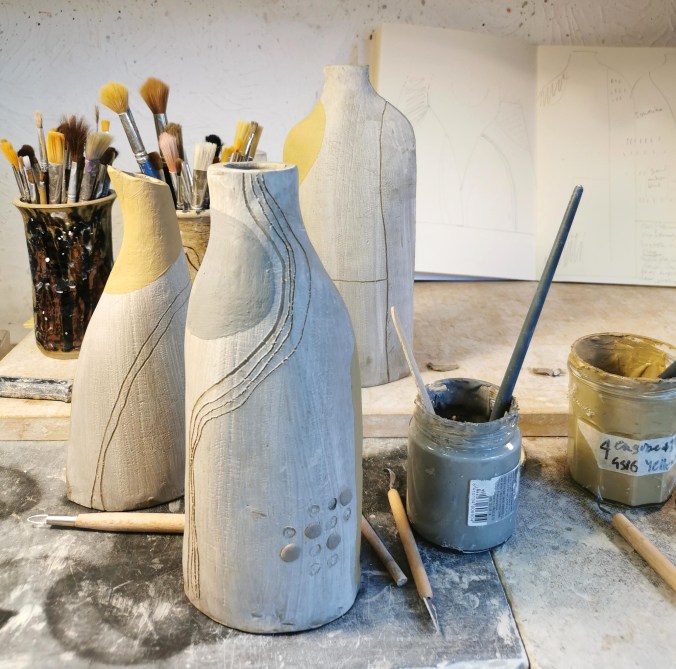
Mum tested a few ways to construct the vessels and I responded to the forms with drawn and painted marks inspired by our mutual appreciation for landscape. I had to learn how to load the brush and use the colour on the clay. I monoprinted texture and marks by painting newspaper with colour then drawing on the back of it on the damp clay. I drew with the ceramics pencil and scratched through shapes of colour with different tools. I’d hold my breath in anticipation as I planned a long line of colour, top to bottom, over the neck and shoulders of the form. We also added buttons as visual and textural interest. We had some gentle discussions about my preference for marks mum was less keen on, and we egged each other on each time we returned to the pottery. I’d receive a message, “Kate darling, I’ve made some more for you!” and soon the weekend arrived and we were nattering away, having our creative fun together again.
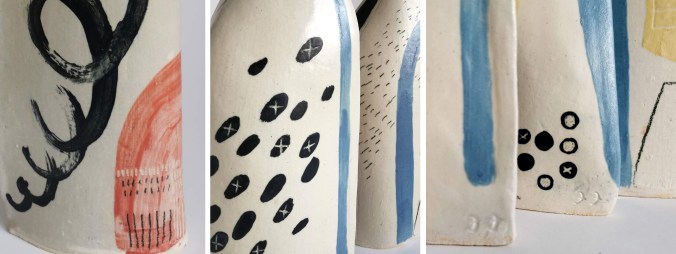
We have learned lots about what we have both wanted with the shapes and surface pattern of the pots, and I’ve tried my best to understand slips, engobes and underglazes. Our techniques have been refined, and standards raised during the year. I’ve definitely got better at drawing on three-dimensional forms – I’m even more in awe of Clarice Cliff! There are three series so far, exploring different forms, colourways and surface decoration, with approximately ten flasks in each.

I’ve thoroughly enjoyed the opportunity to work with mum on this project, it genuinely feels an absolute privilege to be able to work in this way. This collaboration has been one of united adventure, sharing each other’s creative decision making and discipline expertise to guide us, learning to make more than we could individually, sitting beside each other in a conversation between clay form and mark making.

I also think we may not be done yet … we shall see! We are looking at options to exhibit them and would very much like to share them with others.
PLAY prints on show

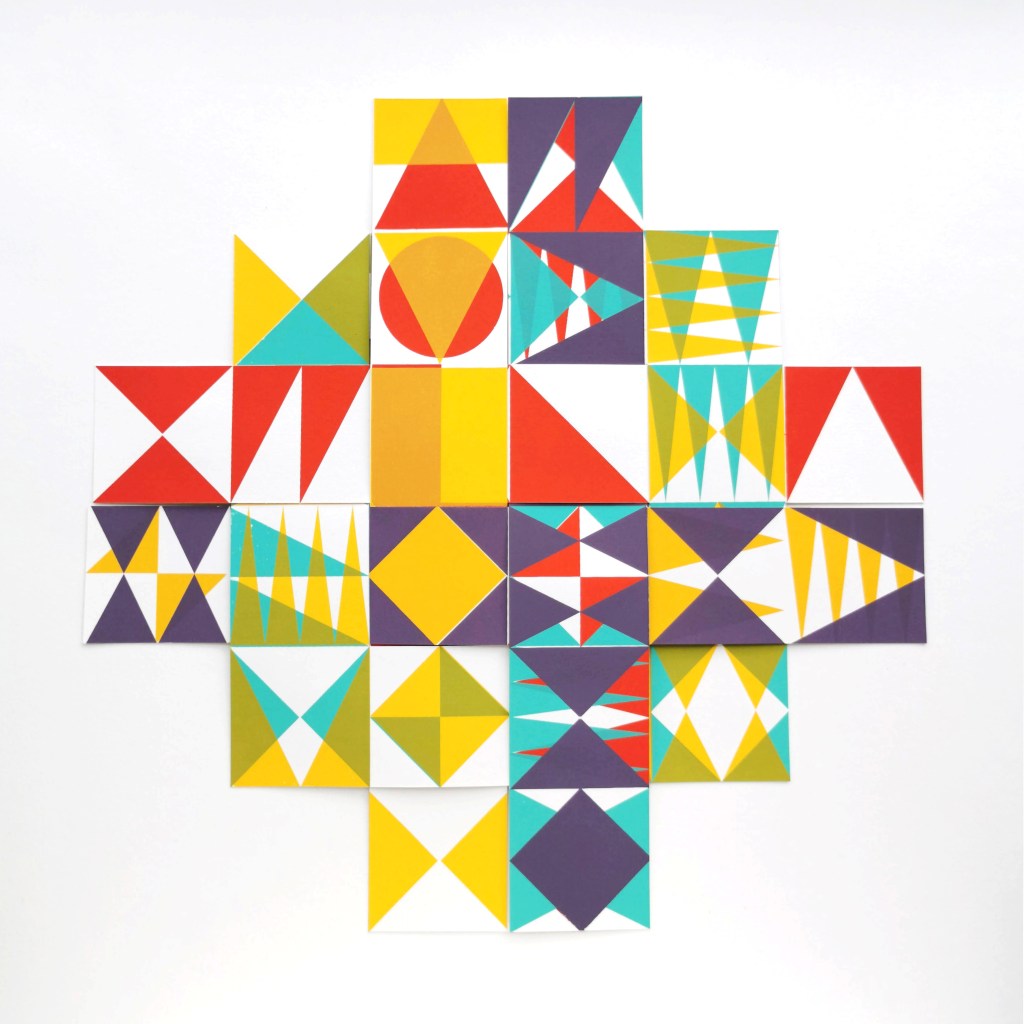
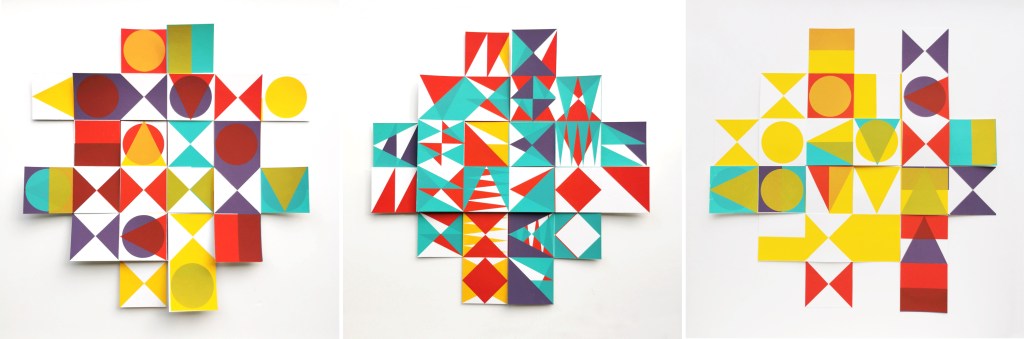
I am really pleased to have had two of my most recent works on paper selected to be included in the Print Cromer exhibition this summer, with the Private View on 19th July. This new body of work has been developed as part of my academic practice at Norwich University of the Arts where I have been exploring pattern structures and repeat blocks. I have explored new pattern iterations by rotating the screens to add additional colours of the same artwork, thereby building greater complexity from limited design information. In an age where digital design and the use of Artificial Intelligence provides limitless opportunities, I want to explore the fundamentals of pattern creation to generate new possibilities that are led by the designer, ensuring the creative path is transparent.

The theme of the exhibition is PLAY, and as a result the palette I created feels full of summer carnivals and fairgrounds. The overprinting of inks with differing levels of transparency provides a building of depth and subtlety of harmonious colour.

I created a number of one, two, three and four-colour prints initially, that featured the screen rotation in adding the colours. I then cut strips of the prints and with further rotation of the strips, interwove them into one base print that had been sliced to enable the slotting. I enjoyed bringing back an element of paper engineering from my book art practice into these new pieces.

In designing each piece, I considered the placement of motifs and relationships of colour. The collection provides variation within a collective identity and belonging. Some pieces feature only triangular motifs, while most incorporate the circular and rectangular elements too. My research utilises design thinking by Lewis Foreman Day, and his distribution of elements. This approach results in scattered focal motifs that work across repeating patterns. Although this is not a feature of my new work, I recognise the placement considerations are also useful in this work too.

A number of these pieces will be for sale during the show.

November colour palette, on the water

I love creating seasonal colour palettes, so here’s one from today, with our Mirror dinghy on the Norfolk Broads. The distinctive red sails stood against the neutral greys and greens of the November day. It’s not entirely proportionally correct but the red grabs the attention so I believe it’s okay to give it some extra width in the palette at the expense of more pale grey!

winter palettes

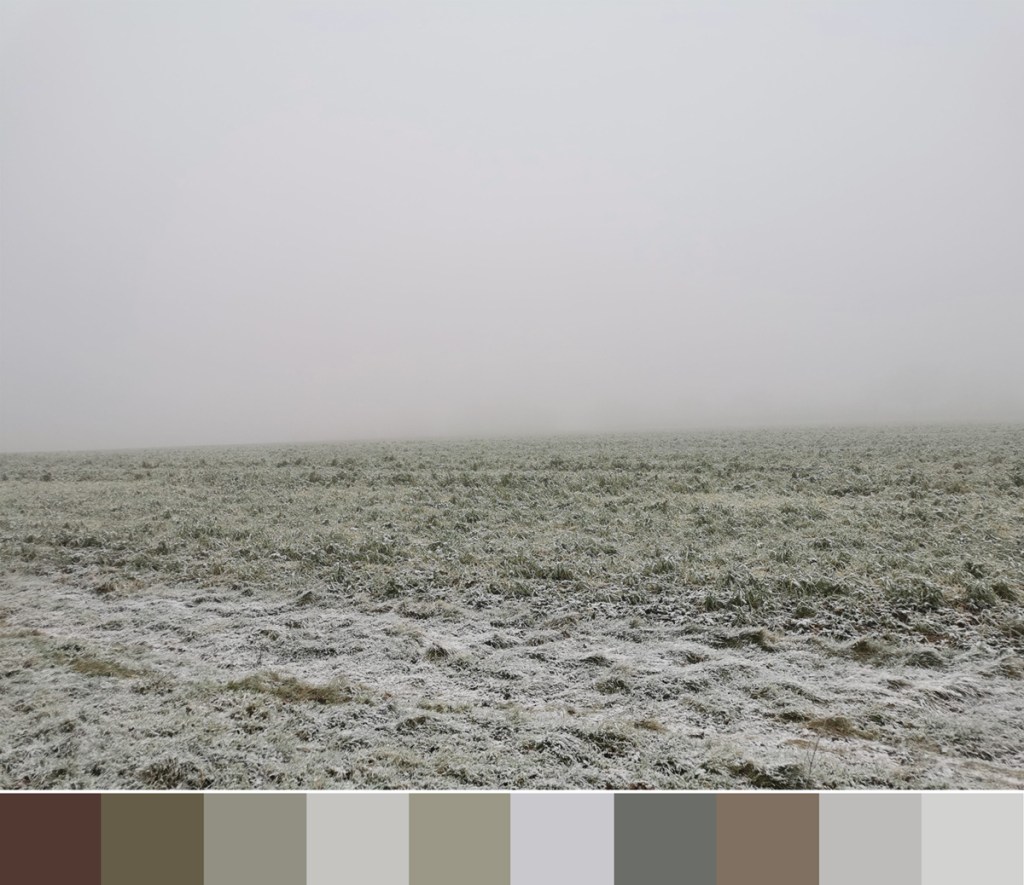
I’ve not had much time for colour mixing with gouache recently but I’ve really enjoyed noticing the contrasts of seasonal colours on our walks so I thought I’d celebrate that here. Some colours are exaggerated by bright sun, while the recent frosty mornings provide a muted coating.

Taking time to notice these small delights are ever more important as we spend few hours outside. I noticed today there was daylight in the sky at 5pm, so that and the first sights of snow drops and daffodils are putting me in the mood for springtime.

mixing and matching colour from the beach

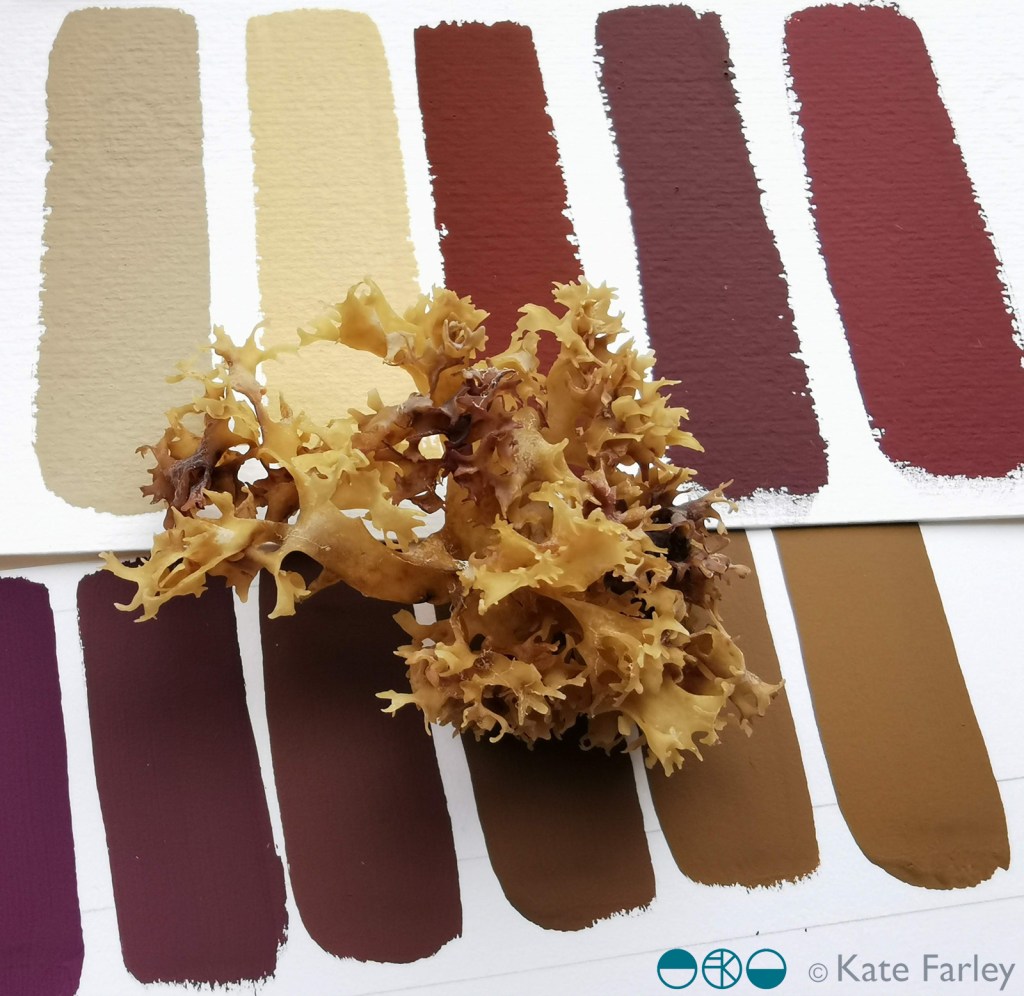
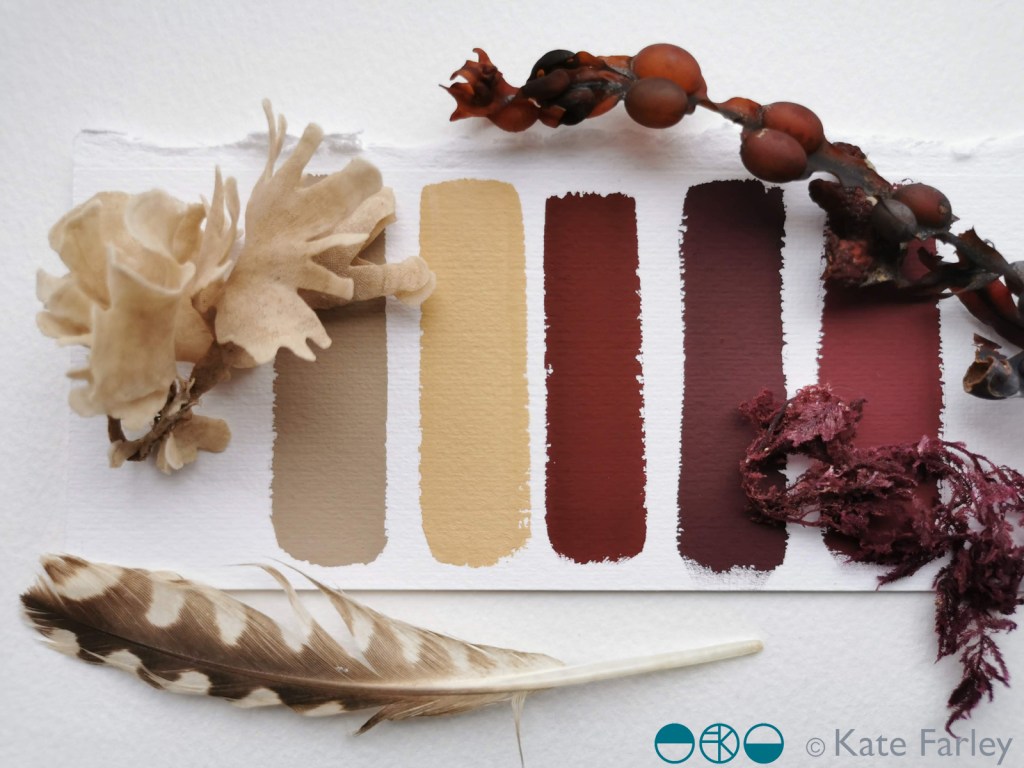
I’ve been continuing my colour mixing series, this time taking inspiration from the beach and the artefacts I gathered. The gouache works wonderfully to capture the colour, responding to small specks of added colour as I take the starting colour on a journey to and past the colours of the item I am studying.

Some new drawings are taking shape that use these colour chips and I am excited about where they are going – one day I’ll share them. In the meantime I hope you enjoy the colour of the beach of north Norfolk.

colour mixing nature

Back in March I began a new series of colour of works on paper that were simply about mixing and matching colour, evolving hues through the process of painting individual swatches to build the narrative in a sequence, as if a technical exercise at art school. You can read about those pieces here.

KFarley_grass_gouacheI’ve continued to gather pieces from nature on the walks I’ve been on this summer and have continued with the process of mixing colour and so I thought I’d share some here.

KFarley_wheat_gouache

I’m doing this simply as I love to make colour, and really enjoy working with the gouache paint for its colour qualities. The process occupies my mind, suggests potential avenues for future work and connects me with nature through the mementoes I make. The seasons change and the colours alter, but the swatches hold memories in the process of mixing, and I can almost smell the dry heat of the corn, and the cool shade of the wood where I found the Jay feather.

qrf


New drawings for sale

I have made some pencil drawings from my recent trees project (previously featured on the blog) available to buy – there are currently eight still available.

They measure approximately 28 x 19cm, on heavy weight paper, £55 each, with 30% going to Cancer Research UK.

Do take a look over on instagram where they are all listed, & message me if you are interested in reserving one. Feel free to spread the news – I don’t often sell my original drawings ….

Here’s drawing 1, 2, & 3 …

KF_drawing1KF_drawing2KF_Drawing3

drawing evolution – perspective and mapping

Several weeks ago I started, with no other intention other than to pass the time, making drawings of the trees across the fields I could see as we waited our turn at the farm shop. This was simply about making time for me to clear my head of all the other stuff and pressures of this new routine we find ourselves in. Drawing is such a key part of what makes me tick, whether it’s for rest or work.

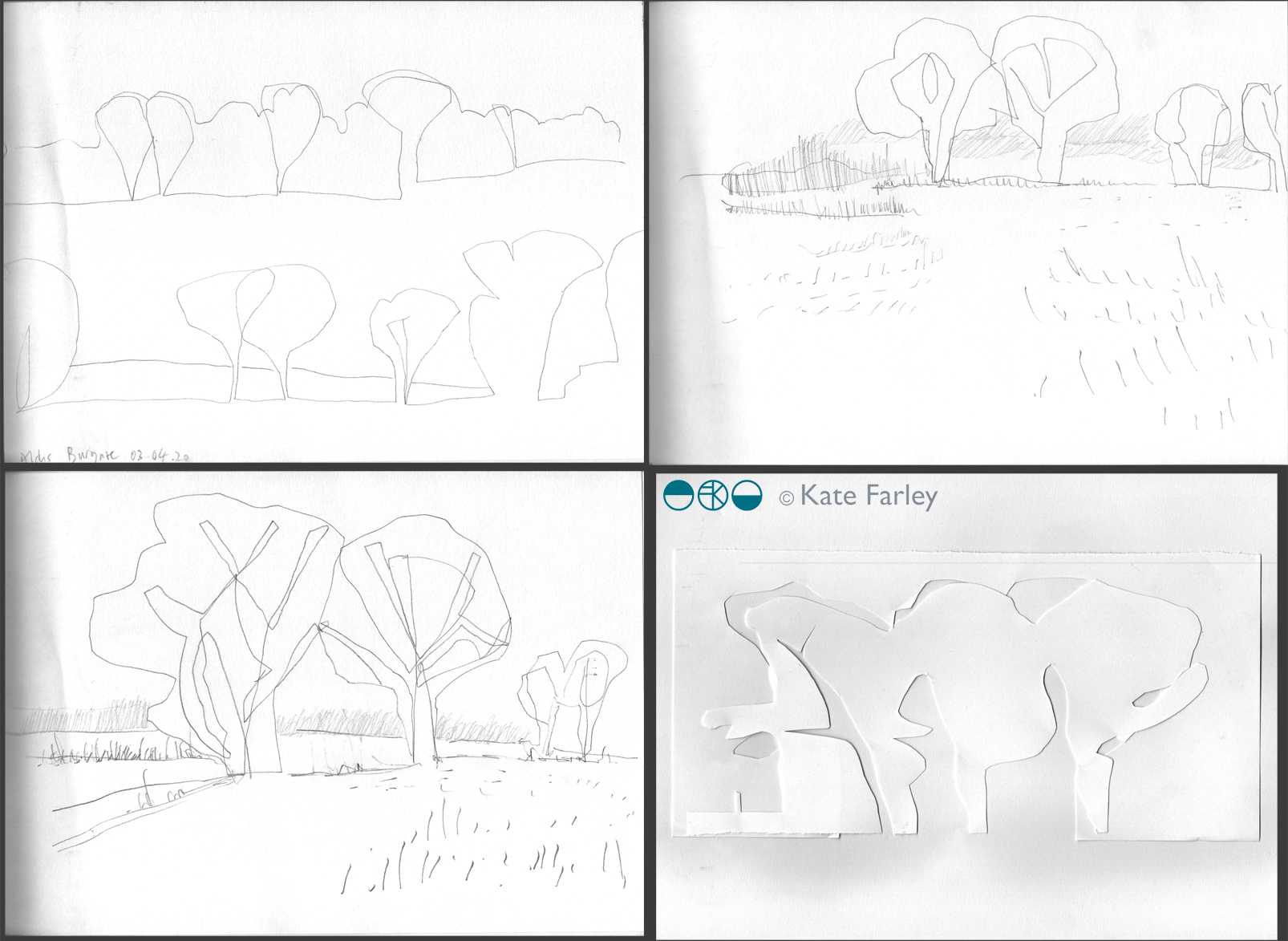
Week 2 came so I took my sketchbook and made new drawings that naturally evolved from the first week’s observations. In the second week I also took scissors to capture the shapes as paper cutouts in contrast to the lines I had focussed on in pencil. Each week I’ve made these drawings and over time I’ve noticed the growth of leaves, making it harder to focus on the tree structures, but I’ve also moved the drawing on as a familiarity of my subject is developing. I wrote a blog post on those first weeks here.

I’ve spent the last quarter century drawing landscapes with trees and remember a significant moment as a student of design, when I discovered the water colours by Crome and Cotman in the gallery in Leeds – particularly strange given they were from the Norwich School and I’d left Norwich to study in Yorkshire, but maybe that was the initial pull. I studied the way they divided the landscape with brushed areas of paint and they helped me to see that I too could explore ways to stylise the way I saw the landscape.

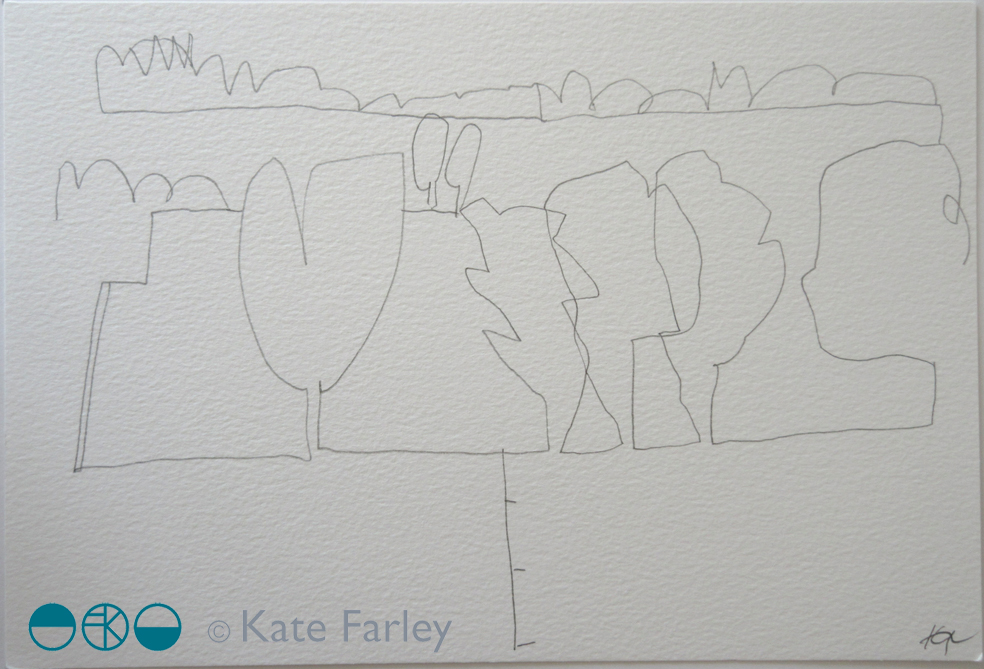
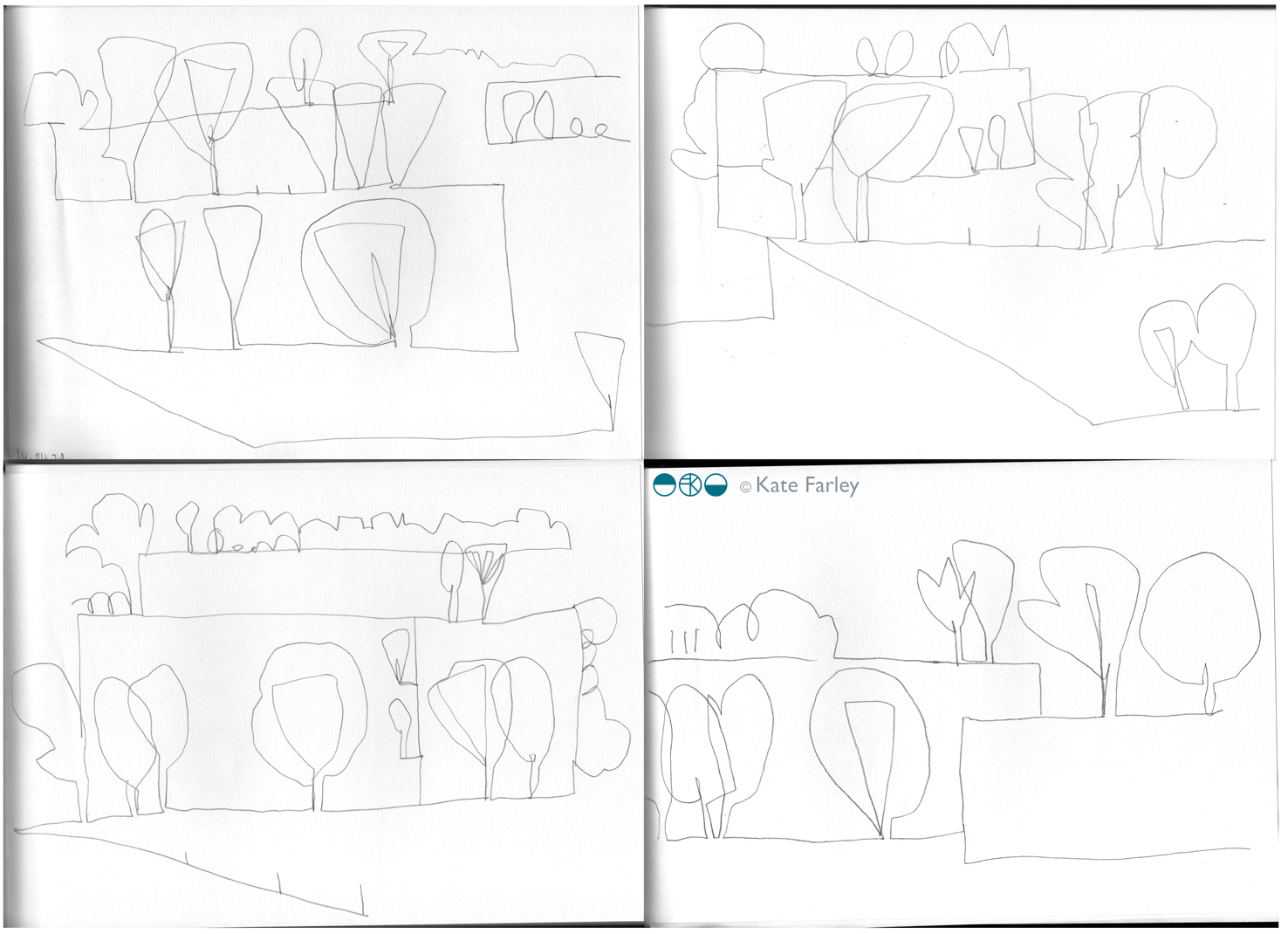
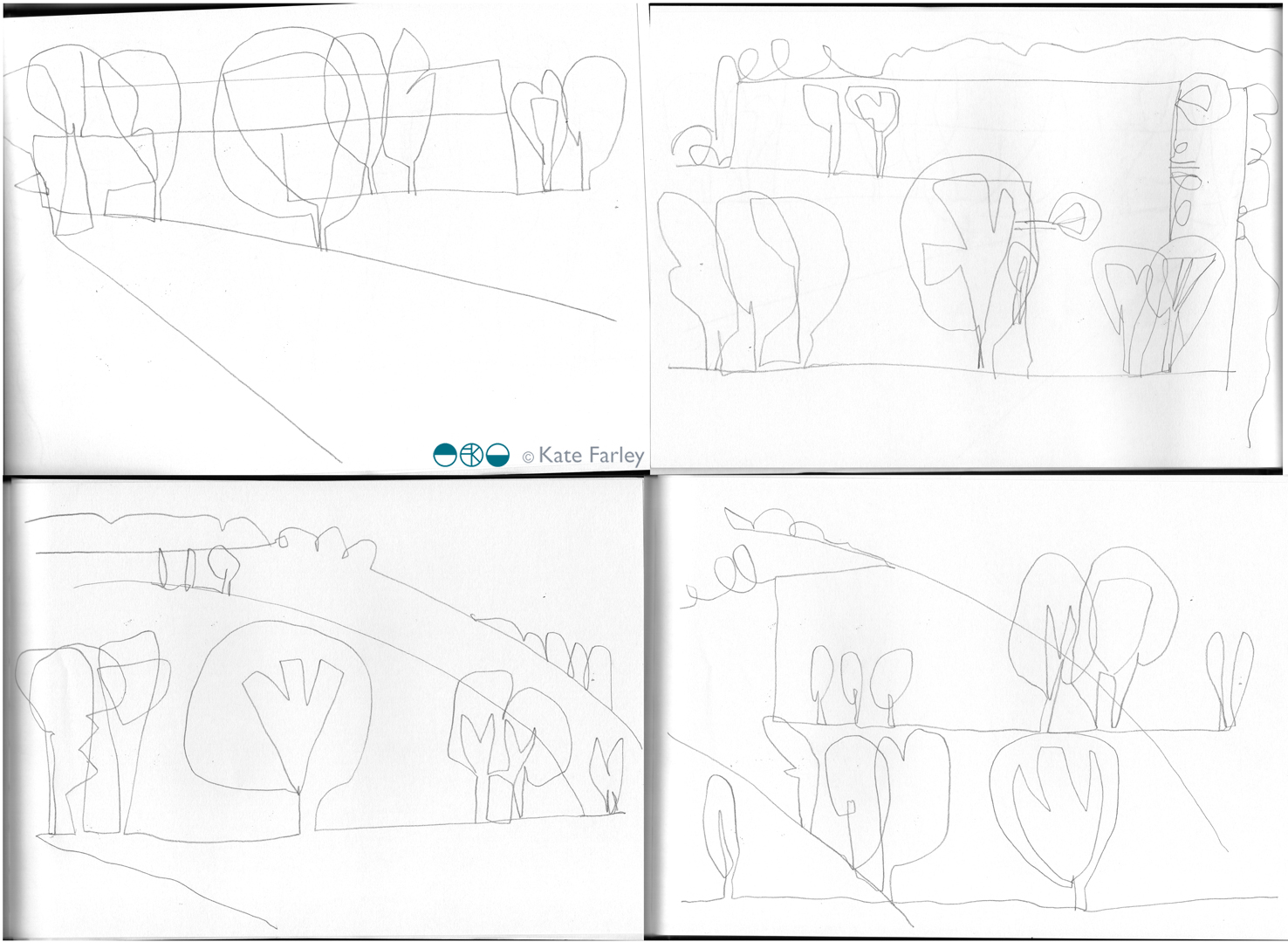
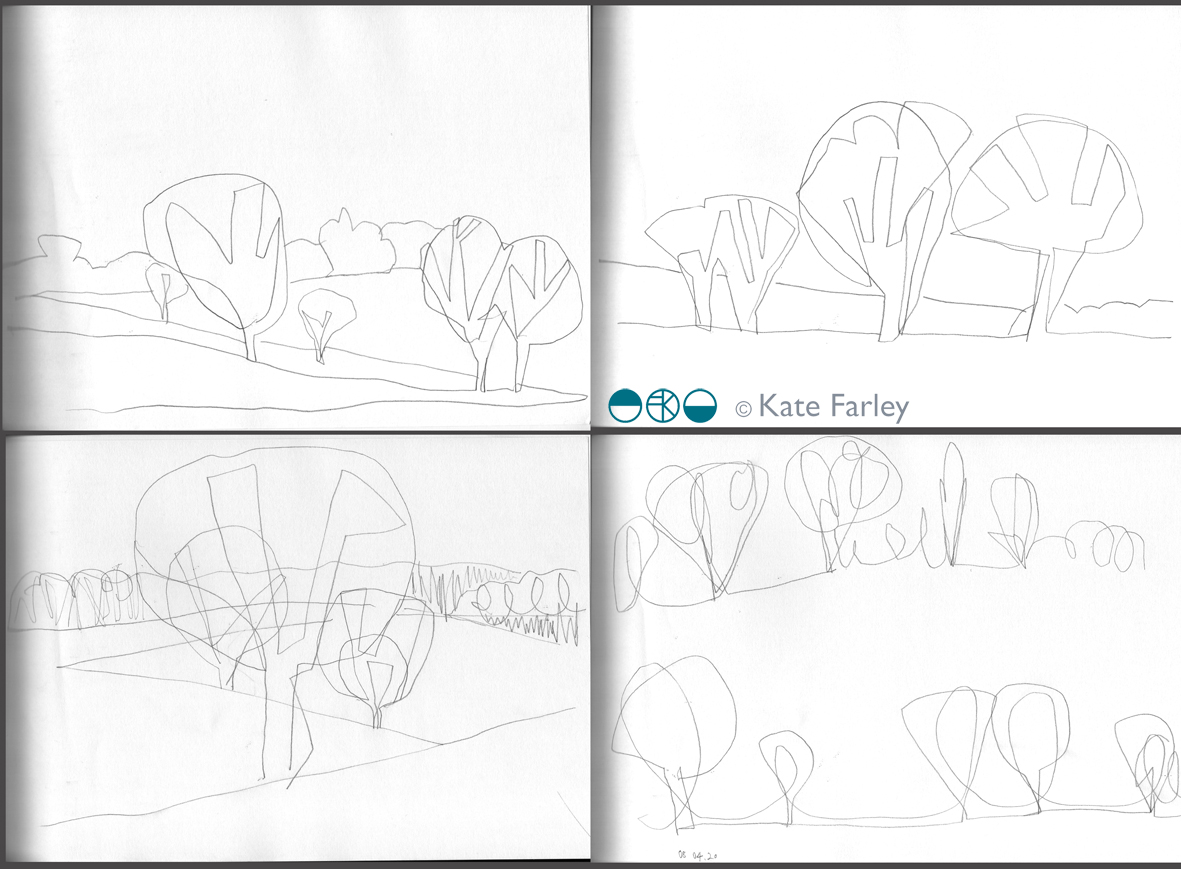
The drawings included in this post are all from week 5. I’ve added hints of fields containing the trees and those lines of containment are the edges holding the paths of trees. I’ve used the horizons from both a vertical and horizontal viewpoint and continued to stylise the tree forms throughout the five weeks. It’s getting harder as the trees flesh out their forms and we lost the details of the branches. I’m also suggesting depth of field with the scale of the trees near and far although I’m pulling the composition down to stretch out and extend the foreshortened landscape.

KFarley_Wk5_1_4

Throughout my career I’ve toyed with ways to map the perspective of landscape and use diagrammatic language, perspective and distorted elevations to represent viewpoints of 3D in 2D. The intention of the arcs was to suggest the sweeping viewpoint but in fact I think it hints at hillsides, and that really isn’t the case here in Norfolk. An undulating landscape maybe, but certainly not rolling hills – still, we can’t get it all right!

KFarley_wk5pics_4-8

I’ve thoroughly enjoyed this drawing exercise so far and look forward to week 6 and what the drawings will discover next time. I’m also, rather naturally I suppose thinking about pattern evolution and how these may become design work. I have lots of ideas to mull over and be excited by … but there’s no rush.

Having posted some of the drawings on instagram over the weeks I’ve received lovely comments and messages from people enjoying the drawings and I’m so grateful for the votes of confidence in what I am doing, I really appreciate that. Many thanks, I hope you continue to enjoy the drawing! ….

Save

drawing to see, drawing to notice.

Drawing has always been a great leveller for me and now is no exception. I make drawings to capture something I like the look of even if I haven’t got a clue how it might be useful at that time. Picked grasses, a homegrown tulip or a fragment of fabric all provide challenges that relax me but also creatively inspire my lifetime of looking to draw – it’s not a coincidence there’s a play on words with drawing in my blog name.

Having some time spare while sat in the car at the local farm shop car park three weeks ago I took a good look around me at the view and with the luxury of time I took out my sketchbook and drew a line. This was a landscape already familiar, but in drawing a subject it is with a closer examination that one can see more.

Firstly I noticed the skyline meeting with the trees in the distance but as I drew that line it was being interrupted by the nearer trees cutting over the fluidity of the horizon. The trees contained strong shapes but not as the summer masses they will hold in full leaf in due course. The branches were clearly defined, but the added haze of smaller branches suggested the fuller form.

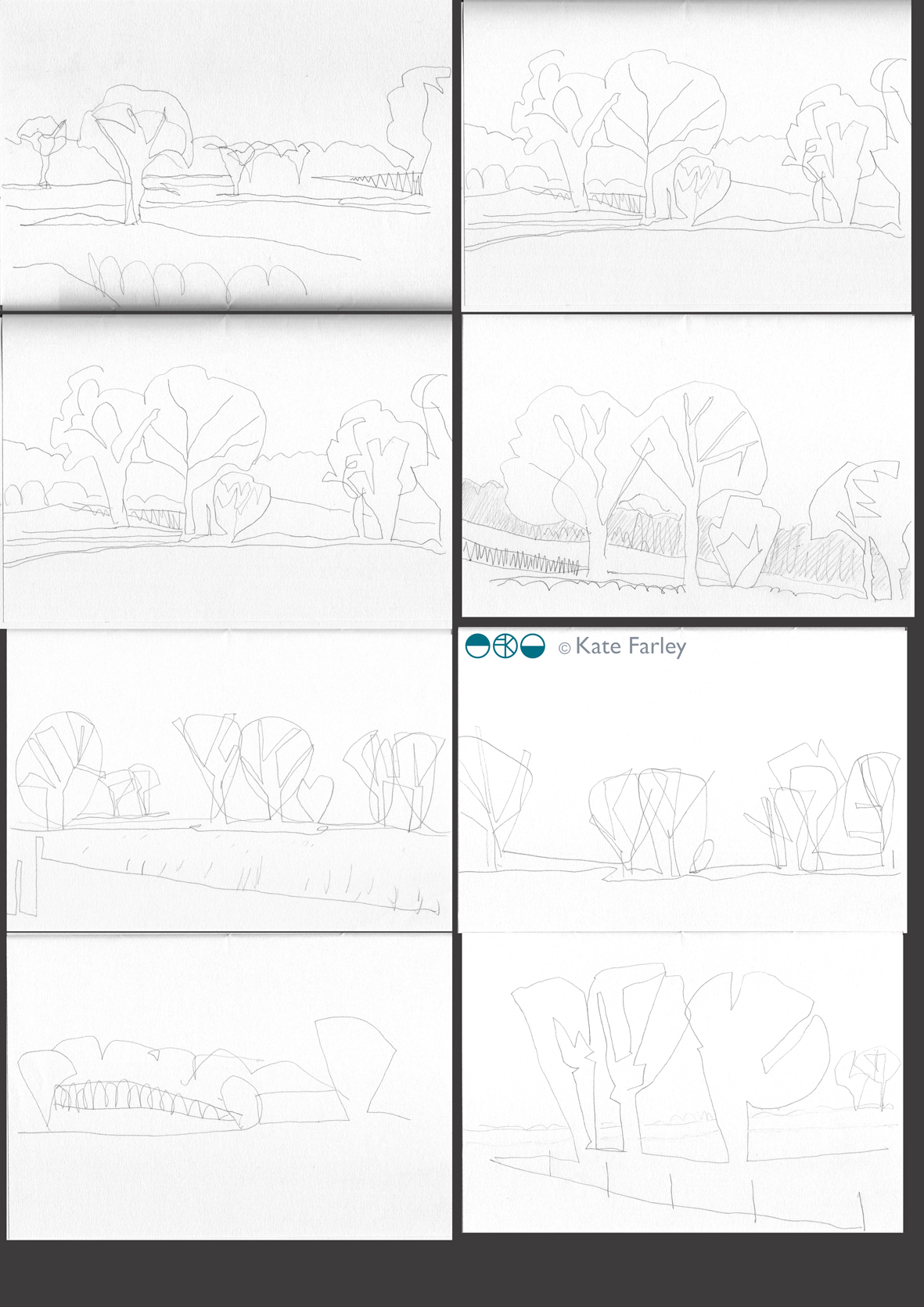
I made reasonably quick sketches of the same view several times, each time starting with a different area as a focus. Sometimes it was the gap between two trees, or a distant field and as I became more familiar with the shapes in front of me I engaged with details of branches to define the structures of the trees. I focused on three clusters of trees that provided different visual qualities but were united by the view.

KFarley_wk1_ALDIS_blog

The process of drawing and re-drawing the same thing is something I love to do – just as Monet would have painted the same cathedral or hay stacks. Where Monet was fascinated with the changing light and what that did to the colour and shadows, for me it is a process of understanding and familiarising in order to stylise and to interpret, usually in line and shape. As I get to know my subject I can edit in and out the information to simplify what I am seeing in working out how to record it.

This blog post shows the same landscape being drawn on three different trips to the farm and I think you can see the familiarity allows for more freedom of the information I saw and captured. In week 2 I also took to scissors to cut out the shapes in pieces of white paper, asking myself to identify the positive and negative shapes within the landscape – see the image below. I cut out the same trio of trees several times and they work well layered, as the interpretations of the same subject matter is similar but evolves too.

KFarley_wk2_ALDIS_blog

This notion of repetition in order to get to know something is a really key part of my practice as a pattern designer and I’ve evolved this relationship in my drawing over the years. As far back as art school I drew and printed in series of works on paper, with the evolution of seeing in order to pare back being the really important part of my process. I teach drawing as a ‘getting to know you’ strategy too. I suggest a student does not spend the first hour asking the really personal questions of the subject sat in front of them, but to make small talk, get to know the subject superficially first of all, then you can be more up close and personal over time. I think I’ve written about this somewhere on the blog before.

I’m really pleased that within a very short time of drawing I have looked, learned and recorded the view, and once again taken away my way of seeing that landscape overlooked by so many of us in our day to day routines. I’ve returned to this task and now have about twenty drawings from three consecutive visits. The trees are hinting at holding more green but the summer fullness is a while away for now. The buzzard circles and the tractor gets to work, I shall be back again, see below for the drawings in week 3.

KFarley_wk3_ALDIS_blog

Flint and feather finds

KFarley_flint_feather1500

Having gathered a few beautiful feathers that had come loose from an unfortunate pheasant we came across this shard of flint on the side of a field that had an uncanny visual similarity to the feather despite the significant differences in material properties of soft versus sharp.