pattern potential

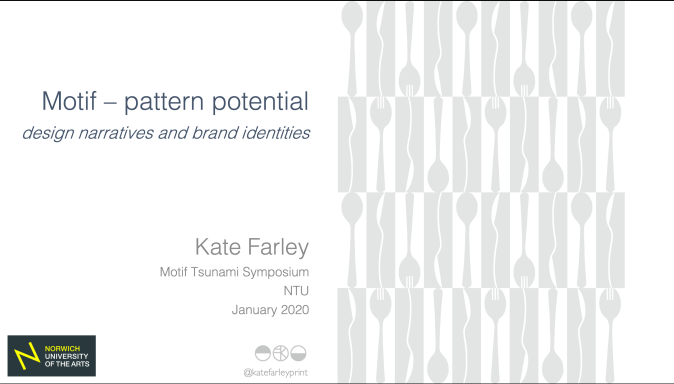
Tomorrow I shall be presenting a keynote paper at a symposium about Motifs at Nottingham Trent University. I’m looking forward to lots of discussions and sharing my own practice-based research including projects with David Mellor Design and Barbican.

Screenshot 2020-01-28 at 11.08.00


textile fragments

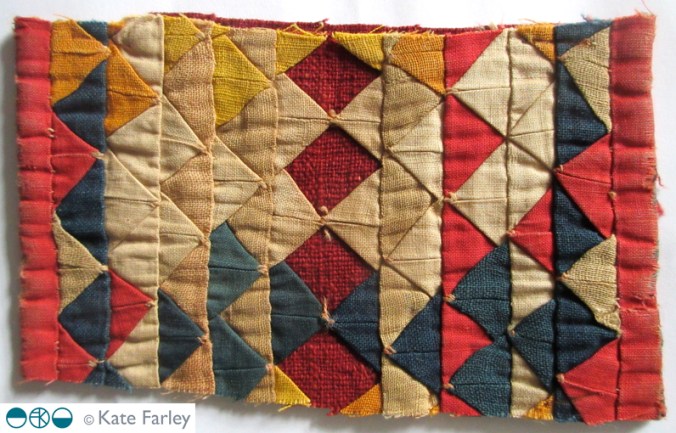
I have this textile ‘fragment’ that I think is beautiful in so many ways; the richness of colour, the manipulated folds of cloth as well as the resulting patterns of the geometric shapes of both the positive and negative folds of the fabric. There is aside to this, so much more connecting me to this old piece of cloth I acquired over twenty years ago, and when I see it, those thoughts come back to me in an instant. This is the power such materials and objects have over us.

I studied at art school, and although the main campus was in Norwich, I was at an outpost in Great Yarmouth. I loved being by the sea, and it was my first time away from home so it was a huge learning curve and time of growing up. I was learning textile and drawing skills and I have fond memories of it all. One day we had a visitor, a lady who had traveled the world collecting textiles, and she brought some of these to show us at the college. I had been interested in the Ghanaian flags of the Asafo, as well as Indian applique so I was fascinated to hear her talk and see the textiles from far-off lands.

KFarley_horsestrap_textile_web

Sadly excitement became upset as the textile pieces were laid out in front of us. I wonder now if I was the only one thinking what I was. When I saw the exquisite fabrics cut in to pieces and crudely stapled to paper with pencil written details of where they had come from I felt so concerned for the apparent brutal way they were being separated from the original whole, their link to their heritage and provenance. It occurred to me then that other nations were losing the heritage that they owned, as the fabrics became souvenirs for others. Had someone chosen to sell them; were they ‘acquired’?

That day holds further sad memories in actual fact. My dear Grandma had died that weekend, and I really wasn’t coping too well away from home, but I got through the day and decided to buy a piece of cloth from the lady as a way of treating my sorry self. I felt torn by the decision to buy it. Would my purchase make sure it was kept safe, or encourage more sourcing of cloth from across the globe? My piece states ‘fragment’ in its description and yet is has clearly been cut from a larger cloth. ‘Fragment’ suggests to me a museum piece, a fragment of history, a clue of a larger object salvaged from ruin rather than proactively separated from its other parts to form the sum – a folded patchwork Kathiawari horse strap from India.

The colours have altered over the years since its time of making no doubt, and the fabric has become worn too. I removed the rusty staples in an act of care and conservation. I also taught myself how to create the folds and layers of fabrics to understand, through making, the construction process. The piece inspired a fabric manipulation project during my time in Great Yarmouth – mostly lost to history and probably for the best! My fabric samples are nothing in comparison to my ‘original’ fragment. The pieces I made lack the authenticity, the ageing, the integrity of originality, but they too serve to remind me of the value of heritage, of belonging and remembering.

With so much talk in the media at the moment of cultural looting across the world both past and present, I am again reminded of this piece of cloth, its heritage and place in the world. The fabric also distinctively reminds me of the loss of my grandma at that time, and yet isn’t it strange that a piece of Kathiawari cloth – not any piece, ONLY this piece, can act as a token of a memory of my Grandma who as far as I know, had no connections with India?!

pride in the pattern of Pride cutlery

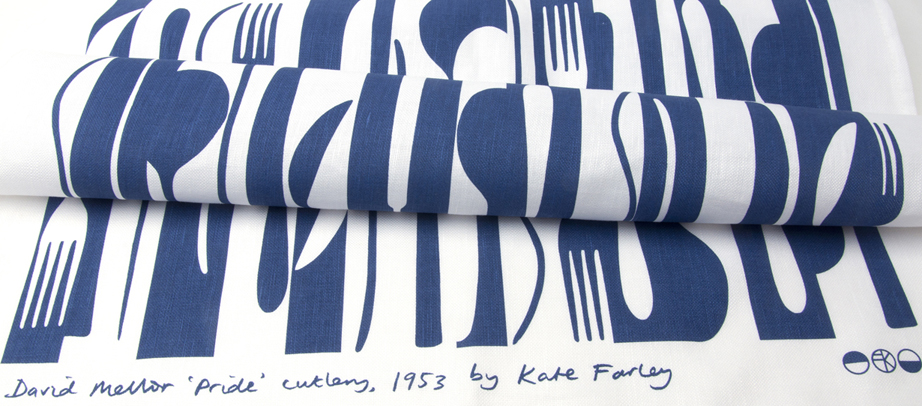
Two years ago I produced a bespoke pattern design for David Mellor Design celebrating the ‘Chelsea‘ salad servers that Creative Director Corin Mellor, (David’s son) had designed. The pattern was screen printed on to tea towels, being a highly appropriate product for the cutlery, and they continue to sell very well through the David Mellor shops and their online store. I took inspiration from the Hathersage factory and the production methods used for the making of the cutlery pieces. I like the fact that Corin sees and appreciates the relevance of the design to his company. Although I can create pattern for pattern’s sake, I am really interested in pattern that belongs to particular brands, to communicate a belonging, of distinctiveness.

This summer I was delighted to be contacted again by Corin as the buying team were keen to add a new pattern. Starting any new commission is exciting as the conversations about the intentions of the artwork, the concepts that need building on, the production methods, colour and material choices, expectations and of course… deadlines!

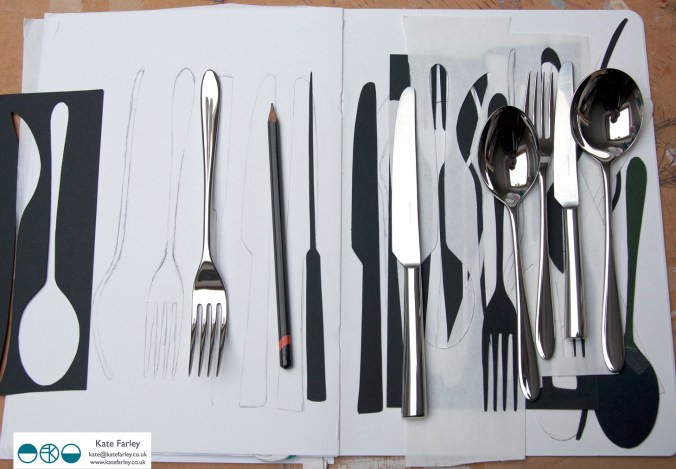
With all of that taken care of I received a beautiful box of cutlery to draw from. Corin had decided he wanted to celebrate his father’s first cutlery, Pride, designed in 1953. It is so elegant, beautiful to hold, and a joy to draw from let alone to eat from! I worked the same way I had done before, developing sketches and informal compositions, working up motifs and rhythms in a sketchbook first before generating final drawings and paper cut outs to scan to digital artwork.
KF_drawingMELLOR_100dpi

I work across a number of software packages depending on what is required, and always bearing in mind the final artwork requirements for production. It matters right from the beginning whether the production method is traditional printing or digital as I will design accordingly, limiting numbers of colours in the design if required, and using colour in the most appropriate way. This summer with several design projects on the go I’ve worked with Pantone references, RAL, NCS, pigment ink swatches and CMYK values. For this project we used British Standard colour relating it to other products that are stocked by David Mellor Design but I had to convert it to modern day language!

Having completed a few different designs I sent them through to Corin and his buying team and was of course really pleased when they got back to me with the same choice as me. I’ve learned never to send anything I’m not quite happy with or proud of, as that will be the one the buyer picks! Sampling and production were the next steps as well as designing the new swing tag to suit both the “Chelsea’ and the Pride tea towels. I screen print these in my studio on to beautiful G.F. Smith paper.

I’ve worked with the same fabulous British company to screen print textile products several times before and it’s always a delight to take a further project to production with them. They understand that it’s not that I’m fussy, but rather ‘particular’ about details, and we work together well. Signing off proofs, forwarding woven designer logo tags to be sewn in and waiting for the order delivery sees the weeks go past, and very soon there will be two patterns of cutlery.
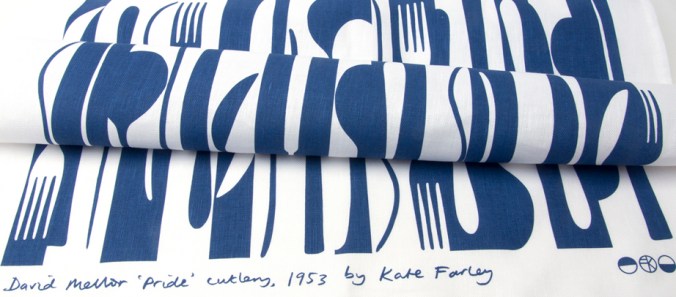
KFarley_mellorPride_tt_roll_150dpi

I’m a cutlery fan any day of the week, and this really has been a fabulous commission to work on. To create a pattern for a client where the design relates to the product it is destined for, and its job is to visually communicate the heritage, culture and ethos of the company is a very fine challenge to take on. Proud of Pride!

Keep an eye out for ‘Pride’ in the David Mellor shops next month…