seasonal colour palettes in the garden

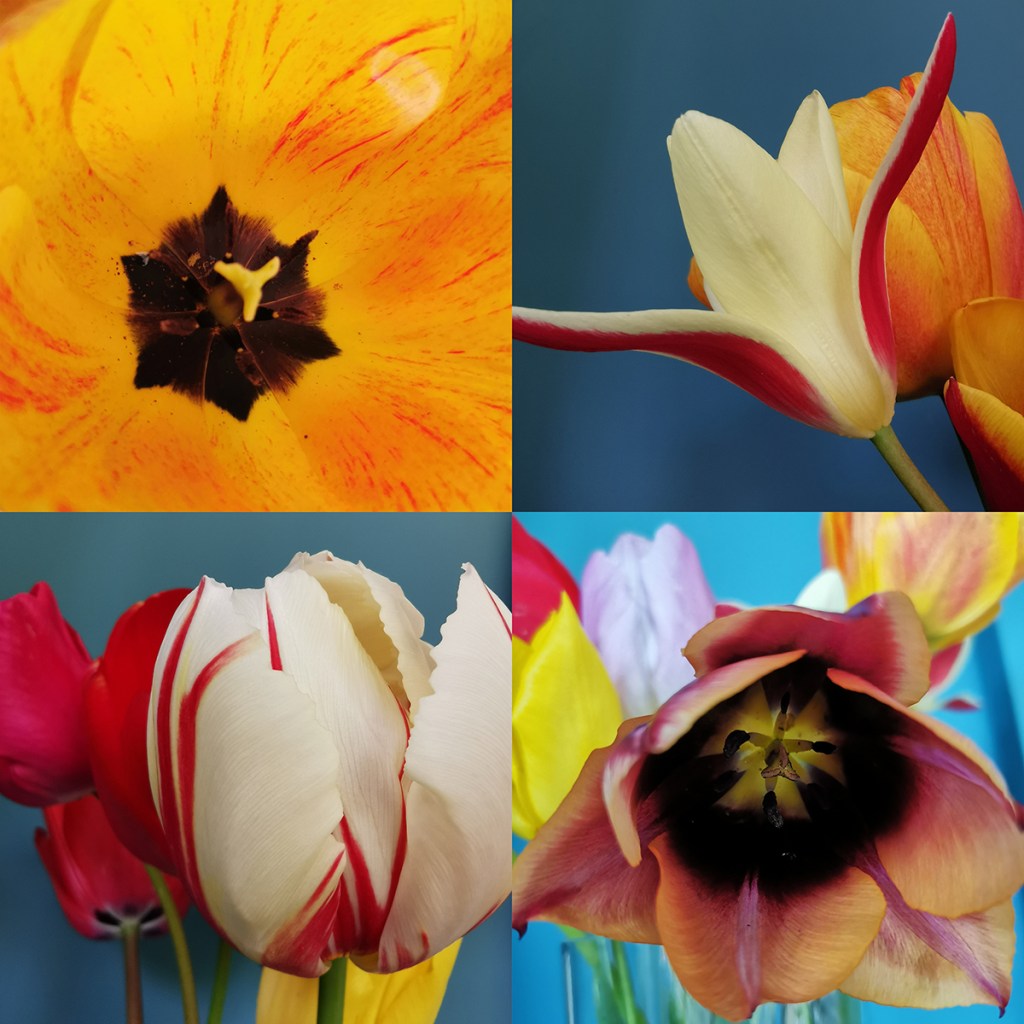
I love the signs of Spring. The yellow of the primroses in the banks, and the brighter yellow of the daffodils. The optimistic pink of the blossom on the fruit trees is here and the fresh green leaves are unfurling in the hedgerows. The garden has transformed in the last two weeks, from the yellows of the daffodils to the shocking pink, orange and red tulips. The rhubarb is in full swing and the purple sprouting continues. The garden is full of activity, with birds building nests, and plants reawakening. We’ve made it through the cold of winter, the days are longer and with any luck, warmer!

In celebration I’ve made two colour palettes from the photographs I took this weekend. Making coloured stripes from photographs was a holiday project we were set before starting art school, but we had to paint the stripes, rather than digitally capture them in pixels. Some things change, but my love of capturing colour continues! I’ve made a few palettes over the years, so check back over the blog posts and you can see more.

A trug of harvest – rhubarb, purple sprouting, tulips and daffodils, and a vase of daffodils and tulips

spring brings colourful joy

I feel as if I’ve dragged myself through the grey, wet and cold British winter, without the delight of deep snow to play in, and finally the signs of growth in the garden and country lanes are undeniably taking us in firmly to the middle of spring. The magnolias are blooming, the blossom of blackthorn has been and gone in Norfolk and the yellow of the daffodils is being overtaken by the yellow of the oilseed rape fields.

Almost without warning, as if overnight, the garden has transformed from bare earth to borders full of colour; clusters of yellow, of orange-red, hot pinks and fussy white frills. The tulips are here, and with them comes the idea summer may follow spring. I’m not rushing the time by, I’m just more appreciative of the brighter, warmer months.

With the threat of heavy rain over the weekend I gathered up some of the tulips for the house – bringing the outside in. They’ve brought with them such joy, I really do feel better with the colour around me. I spent a little while drawing them a couple of evenings ago to absorb the colour and form of each one, thanking them for bothering.

Tulips have featured in art and design for centuries, in drawings, paintings and textile design, but my favourite has to be by the Austrian designer, Josef Frank, in Tulpaner, see below, for Svensk Tennn. The different flower heads of the tulips bursting from the dark background as if the colour is jumping out of winter is just how I feel, as the warm spring sun encourages the garden to enable colour to thrive and for us all to spend more time enjoying it.

colour around the garden

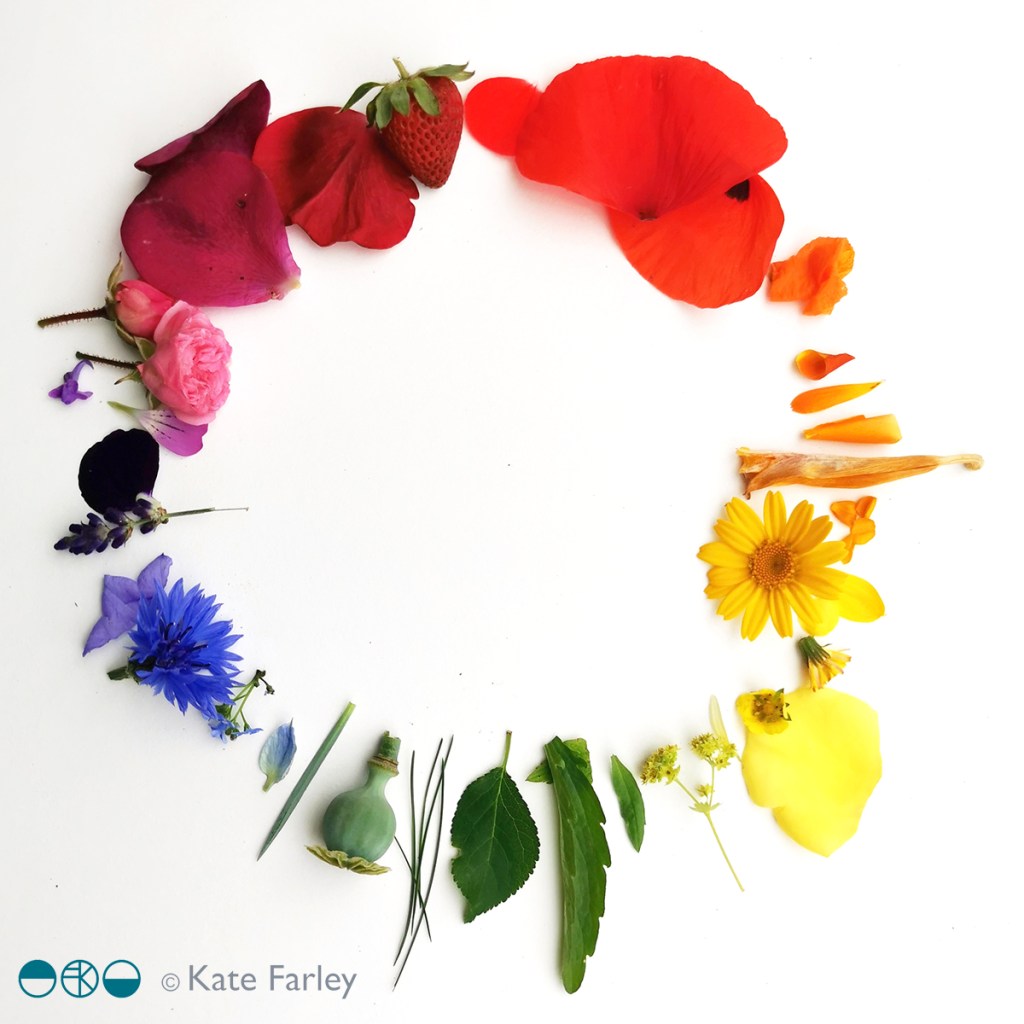
When my children were very young I remember having to occupy them in a park near a hospital and as the time dragged on they were clearly finding the wait too long and boring. I came up with the task of finding colour to entertain them, so they dashed here and there with specs of colour. Sometime later we had little piles of different colour from leaves, petals, grass etc. and we were surprised by how colourful the park was when we first thought it was all green.

Many years on this week I found them doing it again, for fun… as the garden was so full of colour. It was wonderful to see them noticing the extent of some colours such as reds, and difficulties with blue, but with lots of rushing around again they made an impressive rainbow. Me being me I stepped in to organise the colour a little bit more, order some specifics … and then got told off for styling it for social media… oops!

The garden in June

summer colour palettes

Colour inspires me. I love to work with colours; creating pairings and partnerships of colour to build reactions between them, evoking moods and setting a spirit through colour choices. I notice colour relationships every day, and enjoy considering why certain colours thrive alongside others. I love to wear colours too, and like to contrast materials as well as colour to create interesting relationships. I do worry if I find myself in brown trousers and a green top – I don’t want to look like a tree!

Over the last eighteen months I’ve spent time mixing colour using gouache paints, matching colours perfectly with items collected from walks. Little collections of seaweed, shells, catkins, feathers and leaves have sat patiently in the studio while I mix and match. I’m good at matching colours and would be perfectly happy spending hours a week doing just that.

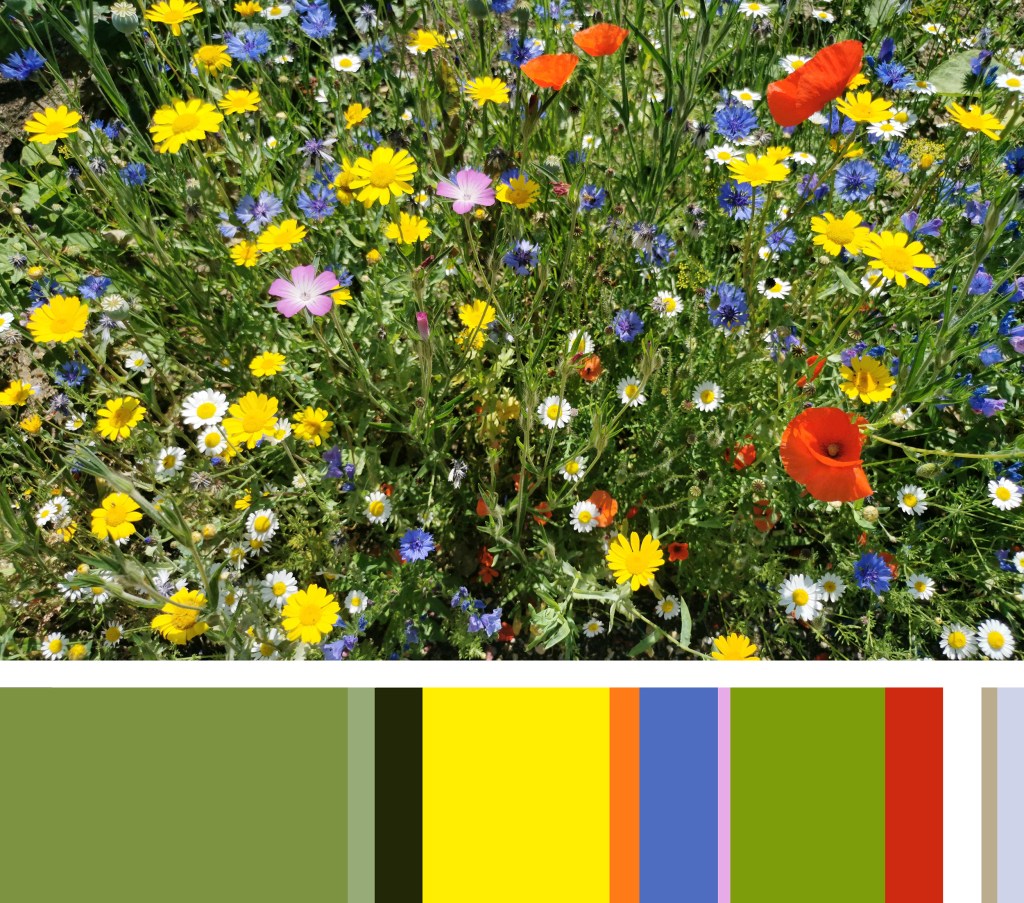
I also enjoy creating colour palettes, sometimes for projects, or my teaching sessions, and sometimes just because what I see around me suggests a perfect palette to explore and create. Our garden has been a bit of a project over the last two years and this summer the new borders are filled with colour that bring such joy to me. My mood is lifted when I see colours working together well. Here are two results from a photograph taken in the garden earlier this month, just because the splashes of colour were pleasing enough to capture.

I like the dominant green that provides the backdrop for the brighter colour accents, and the shapes of the flowers are like splashes of colour dropped in to the soothing green. The pink, red and orange provide the warmth, while the blues are calming and restful. The depths of the border at the bottom of the flower stems are dark, no doubt cool away from the summer sun.

I decided to explore the role proportions of colour play in a palette in the second image. The width of each colour stripe is representative of the area it covers in the image. Back in 1994 this was one of the summer projects I was tasked with as I started my degree in textile design – and all these years on I still enjoy doing it! You can see how the colours perform when dominant, or work as accent colours in thin slithers. There are always main characters and supporting roles in a palette, but it takes all sorts to put on a performance!

When selecting the colours in the image for the palette I worked with the larger areas of colour first, then looked to see how the colours had natural partners to sit next to in the stripe. The accent colours grab the attention of my eyes. Both images reflect the same colour palette, but present themselves quite differently.

Gardening with Mr Bawden

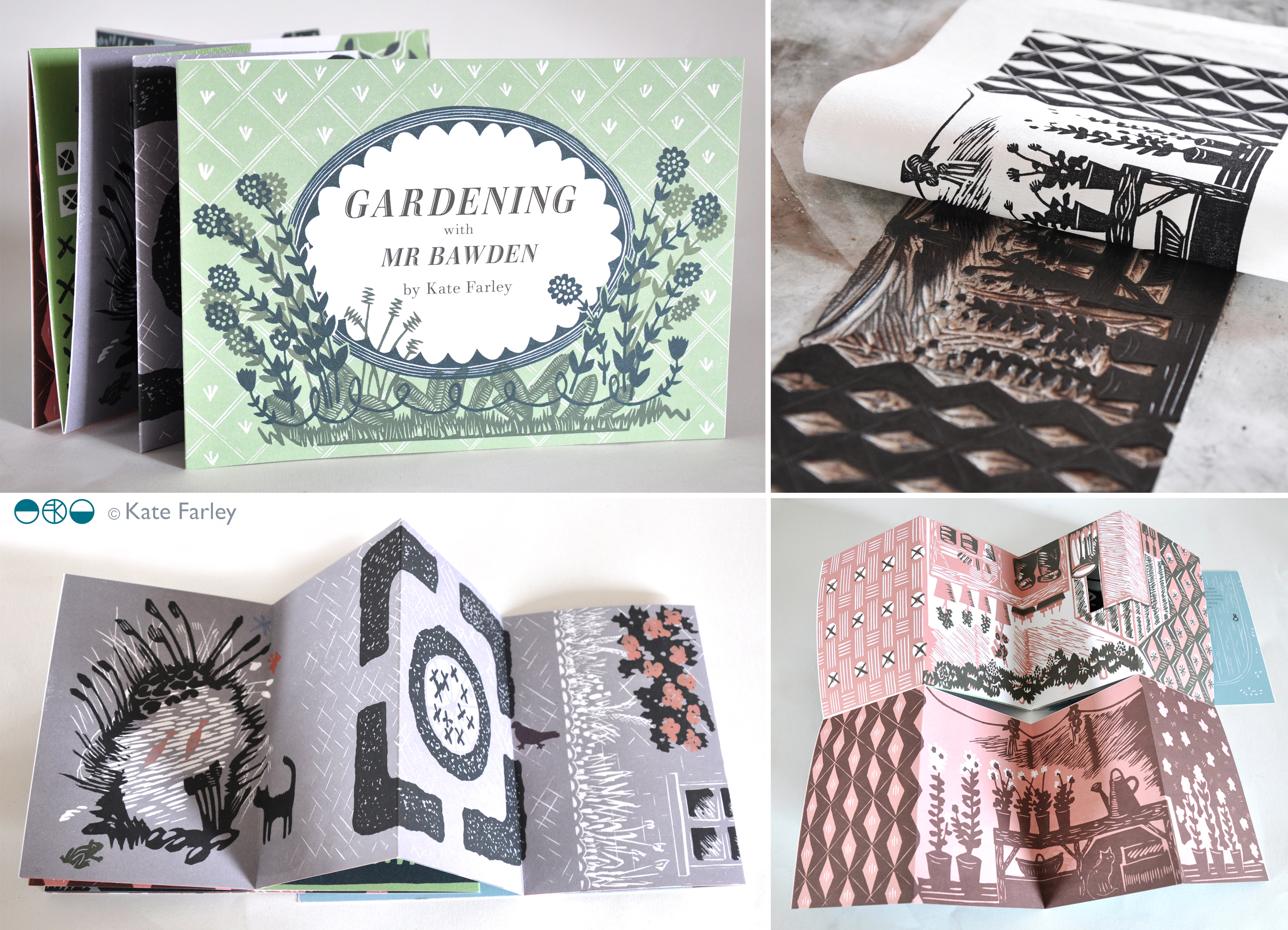
So this is the week my book ‘Gardening with Mr Bawden’ is being published by Design for Today. It’s been many months in the making, so I’m very excited to be able to share the details and for other people to hold the book in their hands.

What began as a project brief for a book with interesting folds that celebrates Edward Bawden’s love of gardening has become a project I am very proud of and have thoroughly enjoyed for lots of different reasons, pushing me creatively along the way. I love a design challenge and returning to the subject of gardens has been a pleasure, having launched my garden-inspired Plot to Plate collection back in 2012 and being a keen allotmenteer. I’ve moved away from my usual diagrammatic visual interpretation of gardens, towards a more illustrative manner, following on from my Parks and Gardens commission for posters for London Underground last year. It has also been a joy going back to paper engineering and book art – having made many editions of artists books over the years following an MA in the subject from Camberwell in 1998.

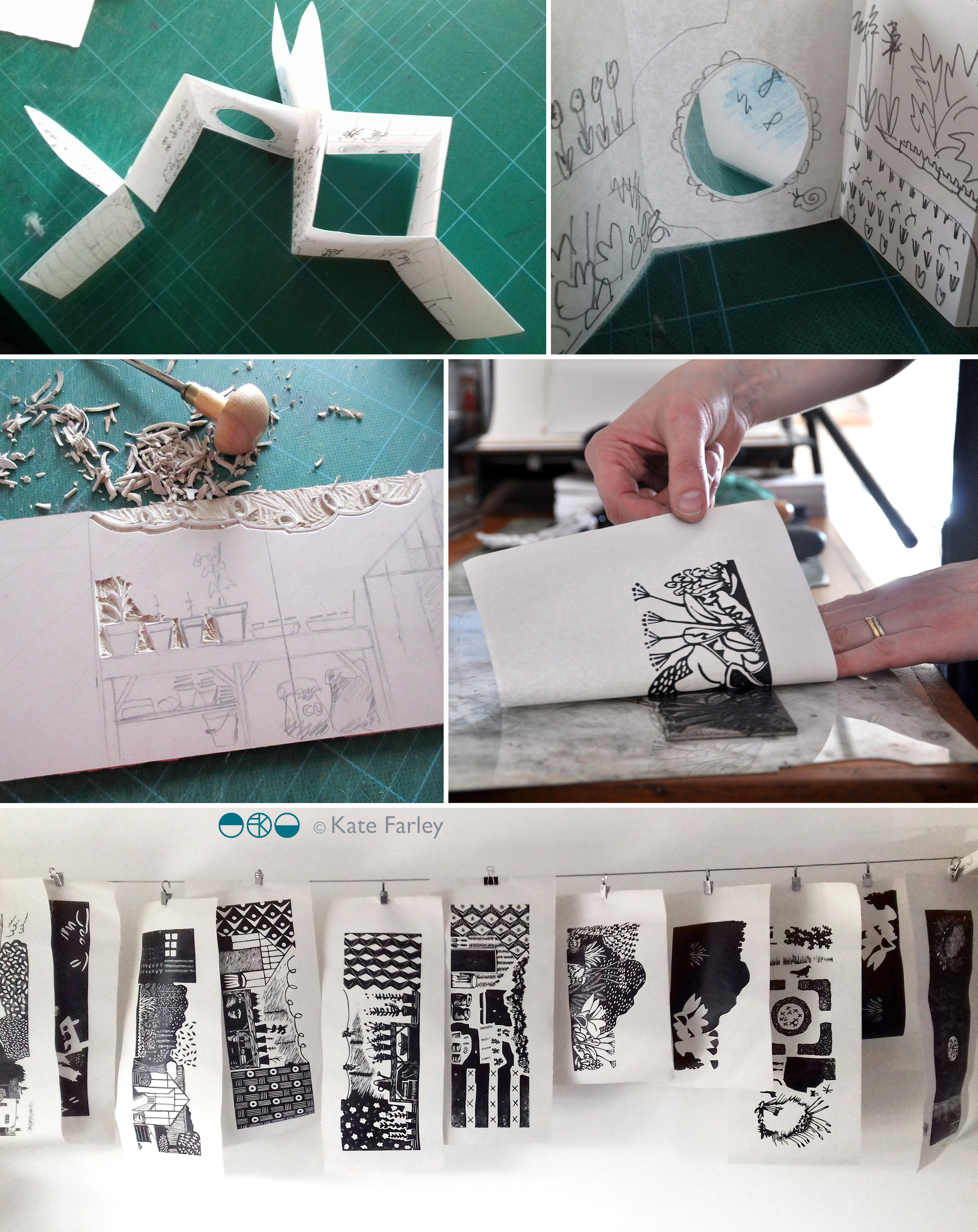
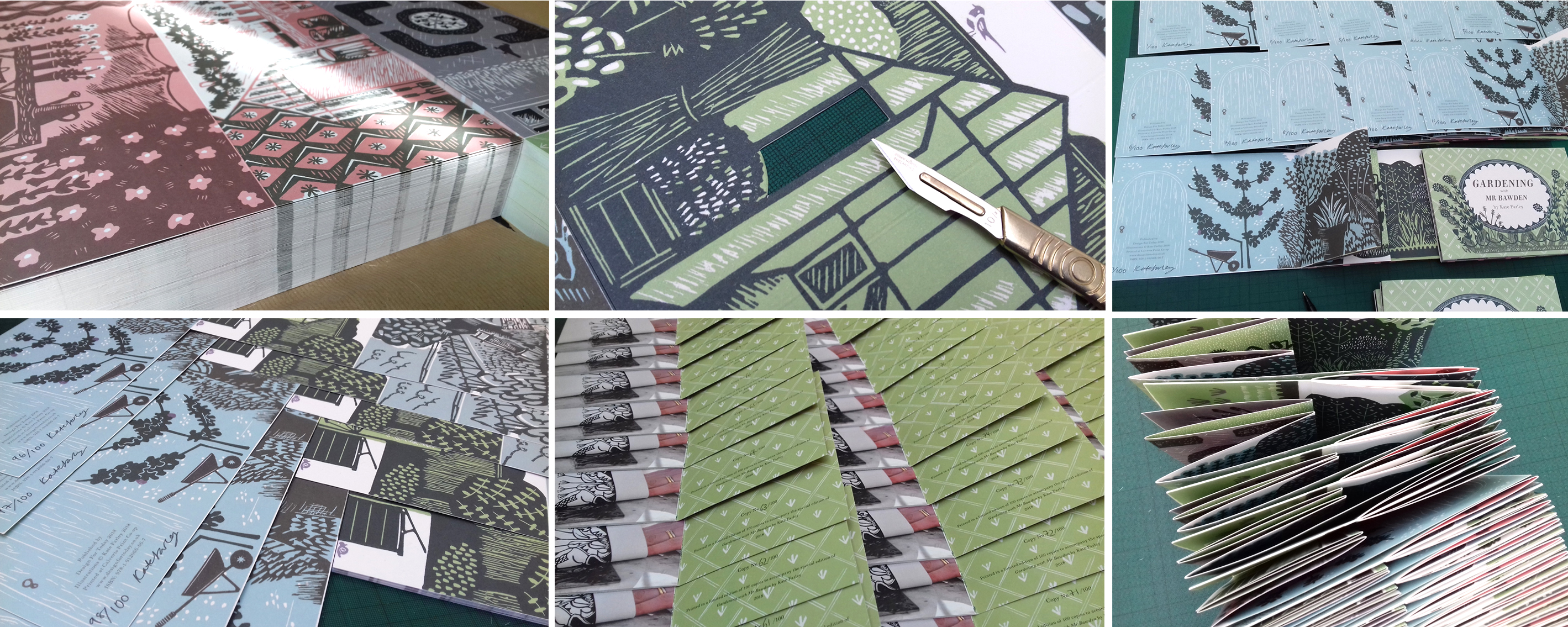
The images below show some design stages of this project with Design for Today. There is an early paper maquette as I worked out the structural narrative in relation to the imagery. Several of these were posted between us to allow for discussion and deliberation. At one point there was a cut-out pond but I was unhappy with how it worked on the back of the page so I left that behind. I cut lots of lino, with each page requiring at least two blocks – one for each colour. Although I had an idea of the key focus and composition for each spread it wasn’t until I was cutting the lino did I tie precise detail down. Only a couple of times I decided to completely abandon a page spread and rework it – and I’m so glad I did! Each block was hand-printed and hung to dry in the studio before being scanned to make a digital file that could be prepared for the lithographic printing process of the final edition at Calverts.

wip_Bawdenbook_flat

Once the final sheets were litho printed and die-cut / creased we have had to fold them one by one, sign the special edition and pack them up. We even decided to hand-cut out a window pane of the greenhouse in the edition of 100. We are delighted that the Special Edition sold out fast, well before the publishing date – thanks all! Those lucky people will receive the book along with a little booklet of the project and greetings cards, any day now!

signing booksMay18_1

This collaboration with Joe has been a really positive experience as we are both passionate about doing a great job. He was always happy for me to tweak something one last time as we signed off proofs, and understood the reasons why I turned sentences inside out in the booklet, to say exactly what I wanted to. Joe and I have discussed page size, paper weight and the folded structure on several occasions as well as how you take inspiration without copying, and the issue of creating something in relation to, but not derivative of.

I am sure people who know my work will recognise my style in there, despite it being a little bit more illustrative. Pattern making relates to both Bawden, and myself, so it made sense to include a nod to wallpaper designs too, inside the greenhouse, as pots of plants become floral wallpaper. I wanted to use lino because both Bawden and I have used the printmaking process. I also wanted to create a light-hearted feel to the imagery, that is so often in Bawden’s commercial illustrations. As I wrote before in a previous post, we researched lots of snippets of information to guide the imagery and are grateful for there to be so much writing and research available at the moment, but it was never intending to be a guide to the garden at Brick House, more to express the pleasure Bawden would have got from his garden, as so many of us do. I also wanted to take the reader on a journey through a garden, rather than show you all in one go, so I hope the reader can navigate their way around!

KFarley_GardeningwithMrBawden1

This book is the outcome of a great collaboration. (Thanks Joe!) So as the book is published today we celebrate this journey of designing and making, and can announce it will be stocked by some great places, including the Dulwich Picture Gallery, where a brand new Bawden show opens this week. Check out the social media accounts of Design for Today for updates. Final thanks ought to go to Mr Bawden himself, who has inspired so many of us, and who gave Joe and I cause to make this book.

telling stories

Each project I create is part of a longer narrative of my practice and as I look back over the years it is easy for me to see common aspects and joined up thinking spanning those projects. As I teach this year’s final year students on the BA programme I lead I am reminded of my own journey starting out in design, and the questioning I did to work out what sort of work I wanted to be represented by in my step beyond graduation. The challenge of the Final Major Project!

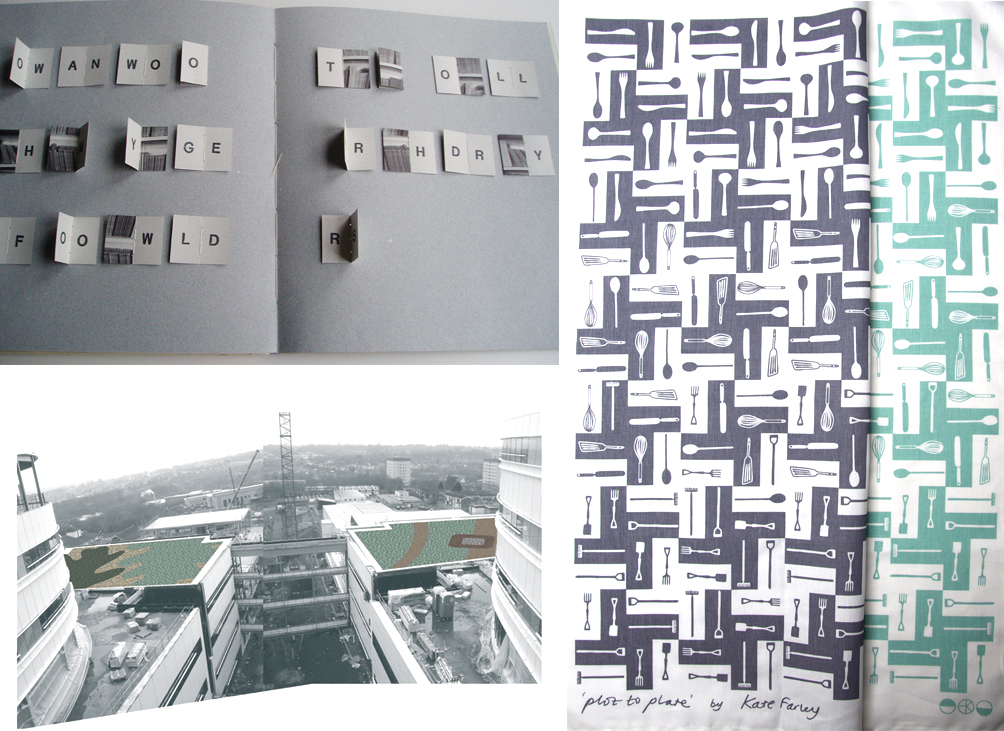
I understand the battle and pressure to work out your own style, the look or handwriting to be yourself, but funnily enough I don’t think that is the thing that holds my practice together anymore – you may disagree, and I’d be interested to know! What has become the common thread holding so many of my projects together has been the story, the narrative within each project. I could never have imagined this all those years ago, even though I was making books! I’ve made many artists books that contain single narratives, but I’ve also worked on large-scale projects that involve public toilet doors that act as pages of the book with a story across them. This is also true for the Queen Elizabeth Hospital in Birmingham where my designs are laid out in gravel across three huge roof-scapes. I’ve also been challenging how to place pattern within single designs, such as in my Plot to Plate tea towel design, telling the tale of growing, cooking and eating food. I’ve made series of prints, and a set of posters, all held together by a narrative. The more I look the more examples I can see.

If only the graduate me back then could have told me that the key aspects of my practice would work themselves out I would have worried less, but then again, it is the search for these answers that take you on the creative journey in the first place. Some people like to know what they are going to design, design it, then be pleased it looks as they planned. As for me, I like learning as I go, push myself that little bit more, find a bit of creative strength to step out of my comfort zone, and then be pleased I got somewhere I didn’t know existed. The creative process is a difficult thing to explain, but it’s all the more interesting for being that way.

KateFarley_narrative_blog

Top left: artists book in collaboration with Wes White for Sherborne House, Dorset, 2004

Bottom left: visualisation for the roof-scape at Queen Elizabeth University Hospital, Birmingham, 2009

Right: Plot to Plate tea towels, 2014

poster proud

Every designer is likely to have a goal or two, a particular ambition to aim for. Last week I reached one of mine… I have designed posters for London Underground. They are up on the system as I write. I’ve been bursting to share the prospect that this may happen for several years, and now it’s real!

The underground poster archive at London Transport Museum is full of great examples of graphic design, with work by my heroes such as Edward McKnight Kauffer and Abram Games. These designers have inspired me in my quest to explore visual communication through print and pattern for as long as I can remember and now my design work is on the network hopefully catching the eyes of commuters in London, as theirs did.

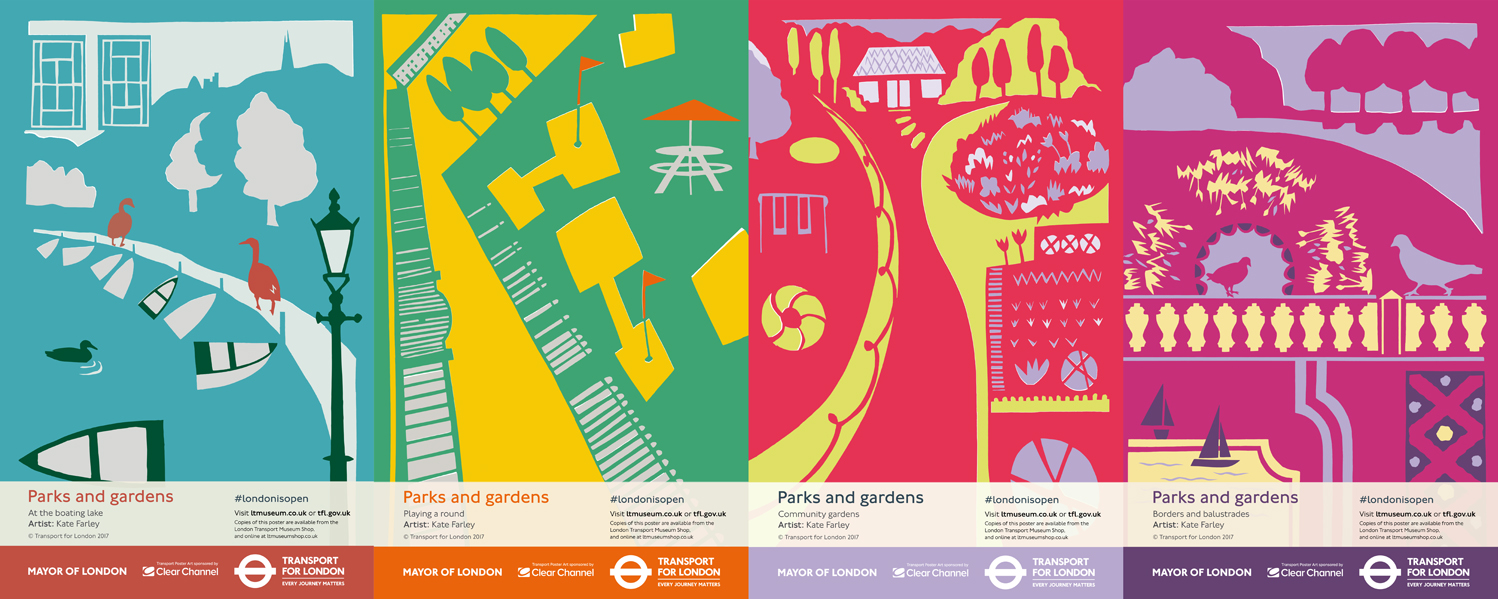
I was pleased to be given the brief of ‘Parks and Gardens’ and was keen to move the visual qualities on from my Plot to Plate collection of kitchen gardens and parterres, although you may recognise in poster 3, ‘Community Gardens’ some of my motifs from that time. I have continued to play with elevations and perspective, while giving a polite nod to one of the other poster giants, Tom Purvis, whose poster I’ve had on a wall in our home for more than a decade, enjoying it every day. His series for LNER, ‘East Coast Joys’ appears to be made from cut out paper, the picture is made from flat colour in bold shapes. Having used this method for my commission for the Barbican last year I was keen to explore this again. You can see in my first cutout sequence I did begin to connect each poster to the next, as Tom Purvis had in his 6 LNER posters but I found this limited the scope for each poster composition in this instance.
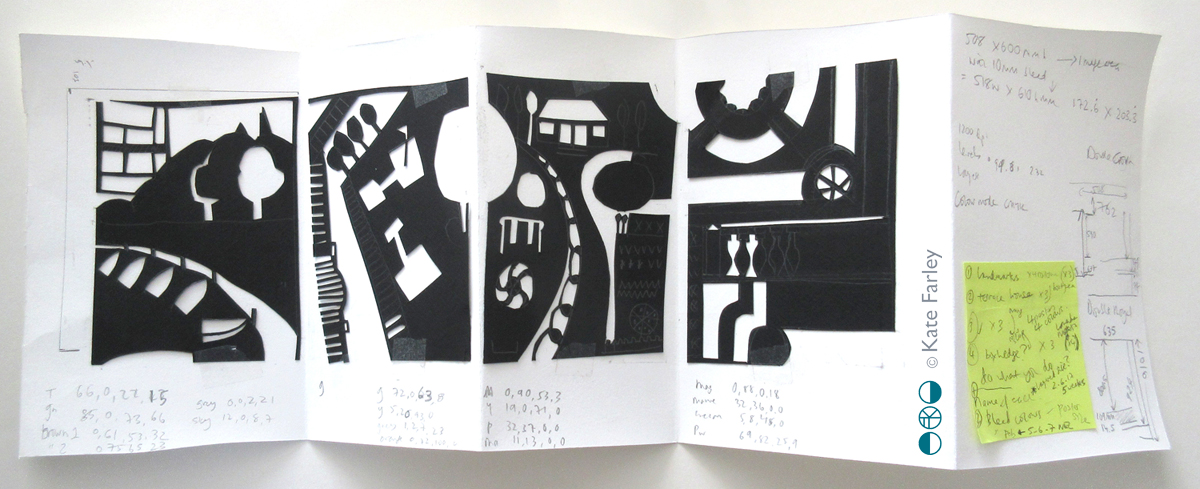
KateFarley_ParksGardens_book_100

I began by gathering lots of imagery by making drawings and taking photographs and considered four different approaches to parks in London, one for each of the posters, from traditional activities such as rowing, to pitch & putt and the formal model boating lake. I wanted to create nostalgic content combined with a contemporary aesthetic. I remembered a hot day rowing on the Serpentine with a friend, I thought of many visits to Brockwell Park and all the different aspects of the ‘rooms’ it has within it. Greenwich was also an obvious one, Clapham Common and Hampstead Heath too. The posters represent lots of different aspects of parks, not four specific ones, and only one suggests a particular skyline looking across at the city.

Once the initial ideas were set I began to cut out the posters as general compositions, as well as single details / motifs to add. I combine both traditional drawing skills and digital manipulation in my practice, and this is how I worked here, scanning in paper drawings (cutouts) and subsequently working in Adobe Illustrator for final compositions / print artwork. I was able to make changes as required, including colour and motif placement options.
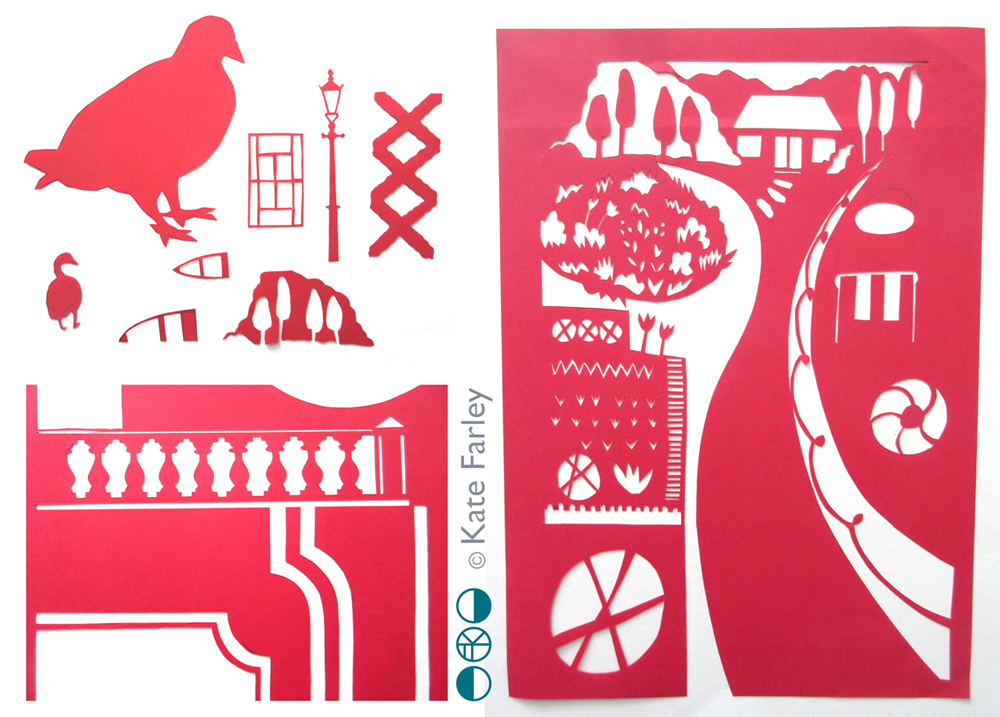
KateFarley_papercutouts_LTM17

As a designer I’ve always loved working across different surfaces and products, working with the industry experts in order to learn the best approaches and pitfalls of each context. Posters are large, but someone may look at it for less than a second… it needs to grab attention without being noisy. Large areas of pale colour might encourage graffiti… edges are as important as the centre, and so on. For people who have known my work for many years the look of the posters might not surprise, but my more recent work has been much more graphic, and understated so maybe some of you may not see these as so clearly of my handwriting. Let me know what you think!

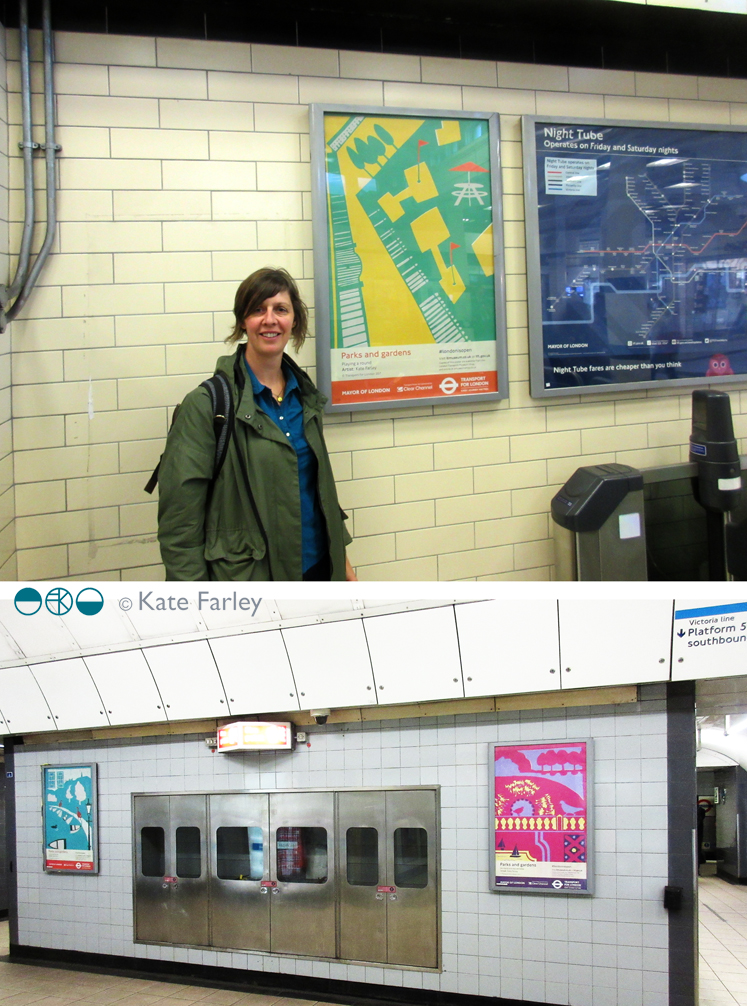
Once I was told the posters were going up I had to go and find one. Luckily I was in London for the Design Festival so with wide-open eyes I took to the system and eventually found my first one at Embankment. I’m not sure I can put in to words what that felt like – I wanted to point and shout they were mine! The ticket barrier chap kindly took a picture of me alongside ‘playing a round’. Later that day I came across two more at Euston, and friends have let me know their sightings too!
KateFarley_ontheunderground_pics100

Design projects can take a long time to get to fruition, it is not unusual for years to pass. This can be frustrating when you want to shout out and tell everyone what you’ve been doing in the studio each week. I am always mindful of what I can share on social media, respecting my clients who might want to have control over a specific product launch. Now the posters are up I’m delighted and proud to shout about it… let me know if you see one on your travels!
parksandgardensPOSTERSseries100

You can also buy them from the London Transport Museum shop.
Sissinghurst in full bloom

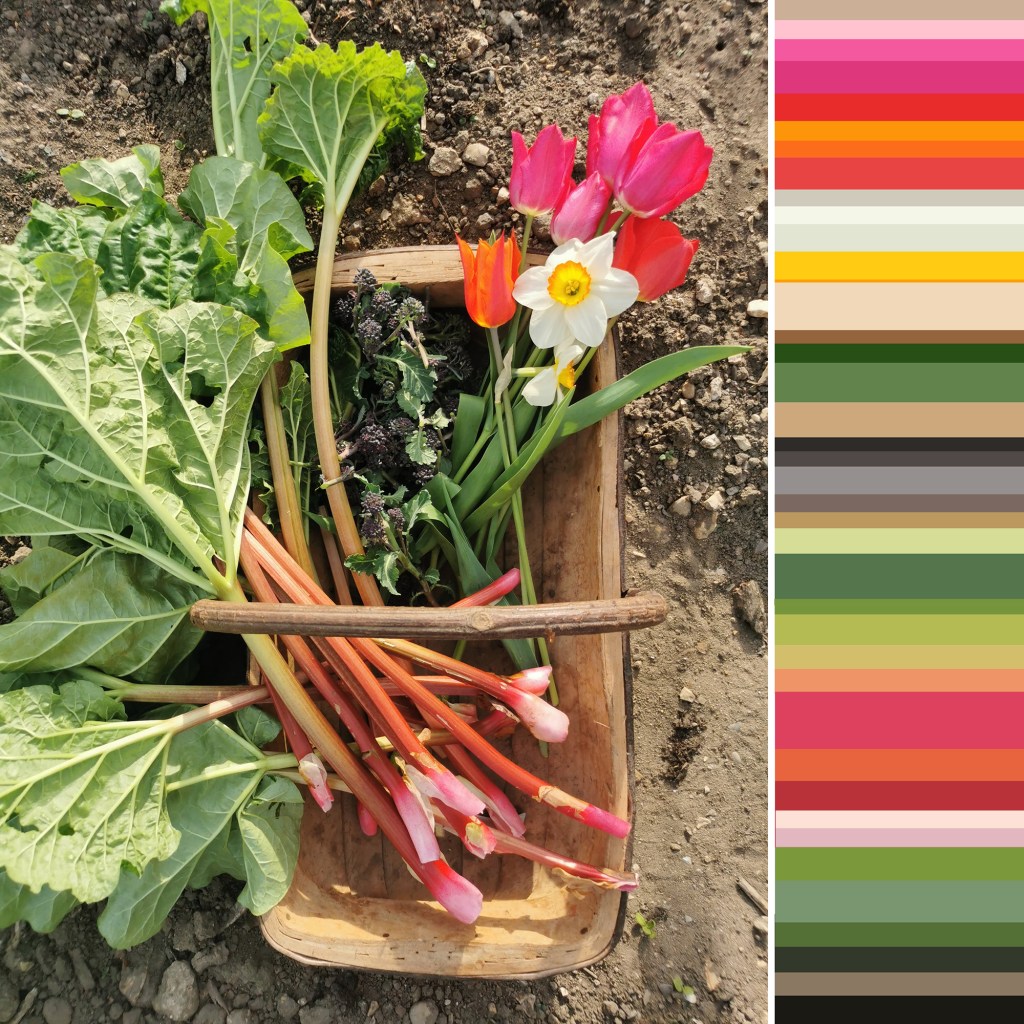
We had a great day out at National Trust’s Sissinghurst gardens in Kent last week even though the weather gave us several seasons in one day. It has been a number of years since my last visit and I’ve spent those years becoming more of a gardener, and launched my Plot to Plate collection of garden inspired patterns in that time so my reasons for observing, taking photographs and drawings have changed. The planting was fantastic; the combinations of colours and textures in particular were stunning. Here’s a few examples:

KFarley_sissinghurst_blogweb

the patterns of 2014

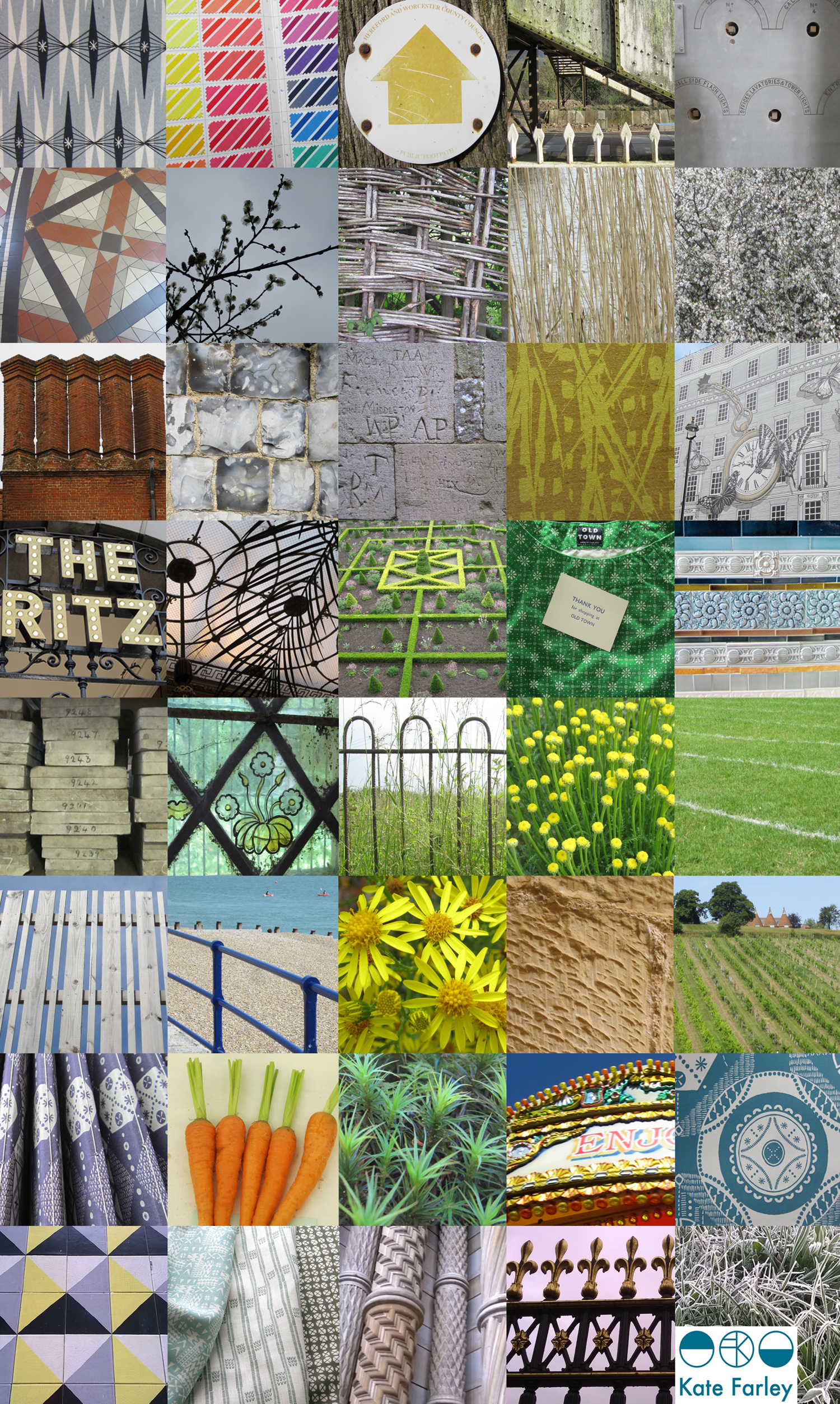
It’s been one of the years I shall remember as particularly busy, continuing to juggle the commitments of family life, my roles as artist, designer, lecturer and of course allotmenteer, and the small matter of a big Birthday. All the time spent doing any one of those things provided opportunities to spy inspiration, food for thought and visual stimuli for me so having looked back over the last twelve months I have enjoyed creating a record of the patterns I’ve seen. The record includes family holidays, research trips, and days out; from the school sports day track, Birthday celebrations, to the rivets in the railway bridge, the stately home and the walk to work, it’s a record of some of what I saw in 2014.

Key themes appear: geometry, stripes and railings and although in a chronological order, there are some great pairings in terms of colours, textures and pattern.

2014tiles_blog

Wallpaper in the creating…

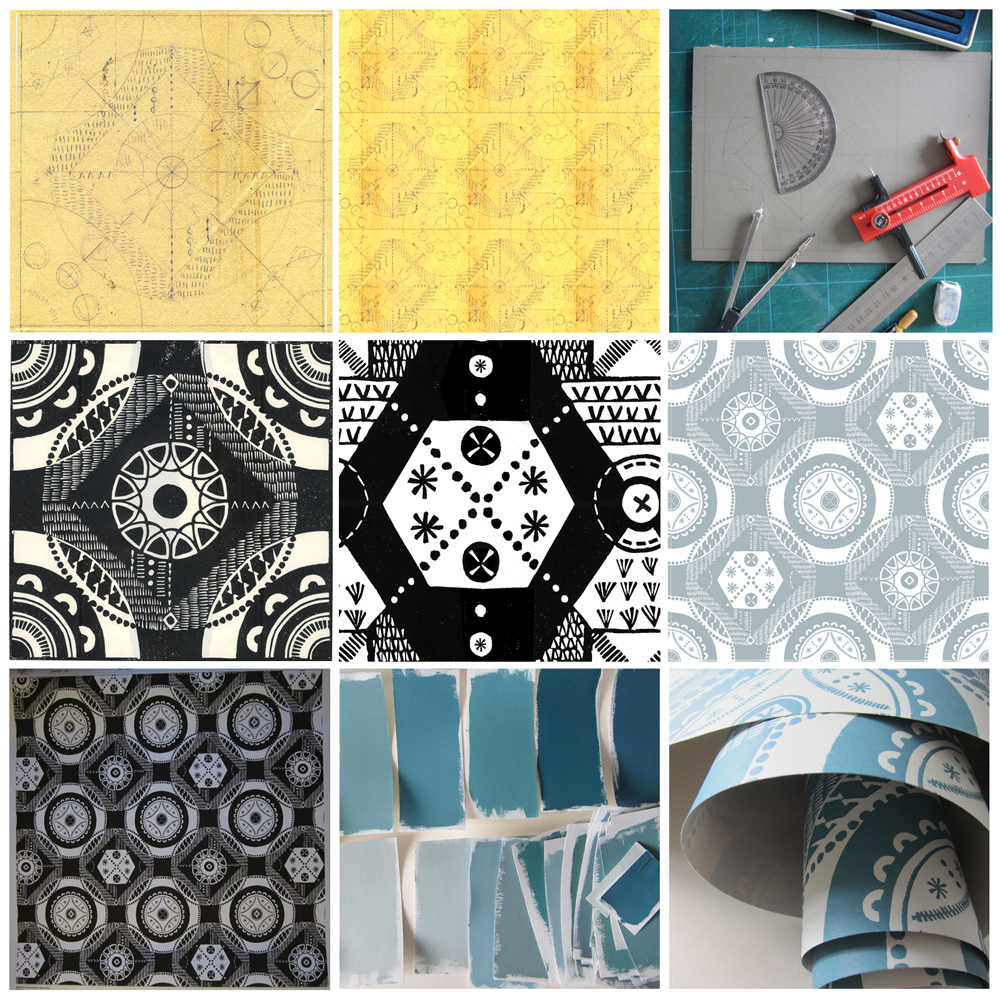
The process of designing my first commercially available wallpaper has been a long & highly considered journey and one I thought would be interesting to share.

Research: I first made drawings in my sketchbook last summer when I visited the National Trust property Hanbury Hall & Gardens in Worcestershire. I really liked the formal parterre and saw a really close link between garden design and textile design – I wrote about this in a previous blog post: https://katefarley.wordpress.com/2014/05/11/pattern-design-outdoors-and-in/

Composition: Sketches became drawings that became more detailed designs, that were then tested in repeat by scanning them in to the computer and using Photoshop. Edge details, scale of motifs, pattern and textural rhythm all needed to be considered.

Cutting the block: I measured and cut the lino block before taking a really clean print in order to scan the print in to work digitally with the repeat tile.

Editing: Further refinements, several print outs and more alterations took place over several weeks as I got used to seeing and living with the design. Additional lino blocks were cut in order to add different motifs to the design. Additional variations across the larger repeat file create visual interests and a play on the traditional repeat expectations. Some tweaks were so minimal that people unfamiliar to the design wouldn’t be able to spot the changes without having them pointed out, but it’s so important that every dot, dash and space has been considered before the production process is underway, saving time and lots of money.

Production: The digital artwork was sent off to the manufacturers of the roller in order for the design to be printed, and a technical proof was sent back for my approval – exciting and scary times!

Colours: Much thought, research, trying and testing went in to the colour combinations and I painted lots of colour chips using gouache in order to communicate the choice to the printer.

Printing: After signing off the colour proof provided by the printer, the wallpaper went in to production, labels were designed and printed, rolls created.

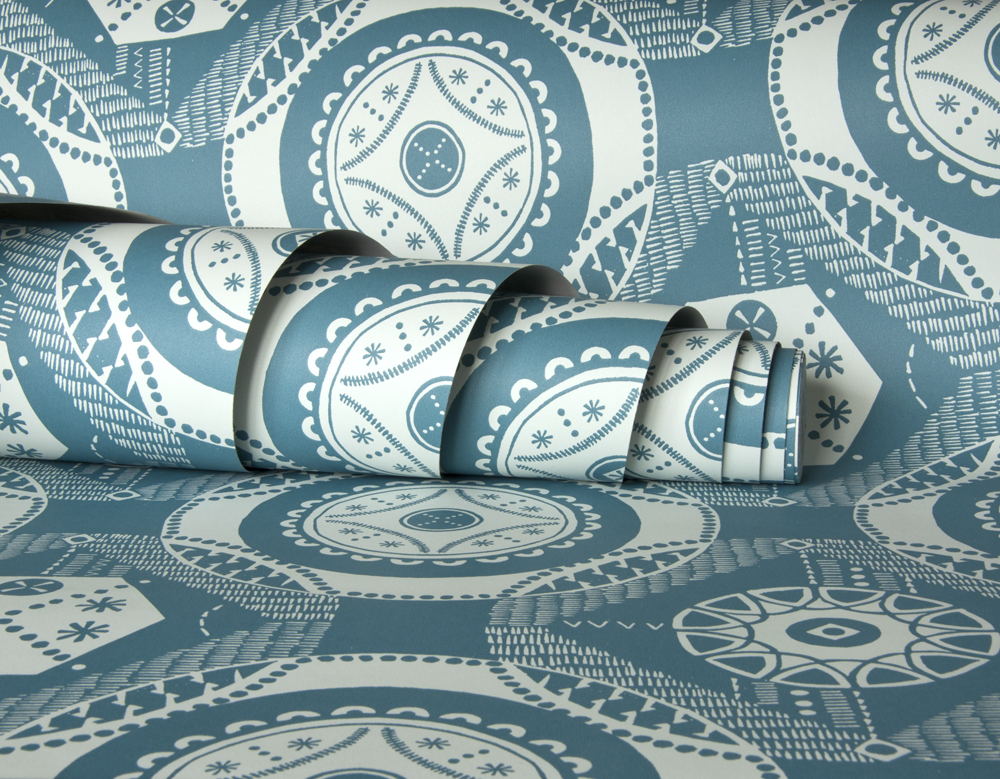
Results: I’m delighted with the results, the efforts by all those involved with the production process, and look forward to launching this at TENT London very soon.

hanbury_BLOGtile1000rolls_100_DSC_0227