weaving the timeline

Dates and anniversaries matter to me, personally and professionally. They record the passing of time, the gaining of experience, the rhythms of life and death. I bemuse my family & friends by remembering apparently irrelevant dates, including the birthday of Roland Rat, (12th March if you are wondering!). 

Seven years ago this week I started working at Norwich University of the Arts as Course Leader of both the Fashion and Textile Design degree courses.  I undertook this role for four years before focusing on the BA Textile Design course for the last three. I am immensely proud of the course and community I lead, with a strong network of colleagues supporting me with the wobbles while celebrating the wins. 

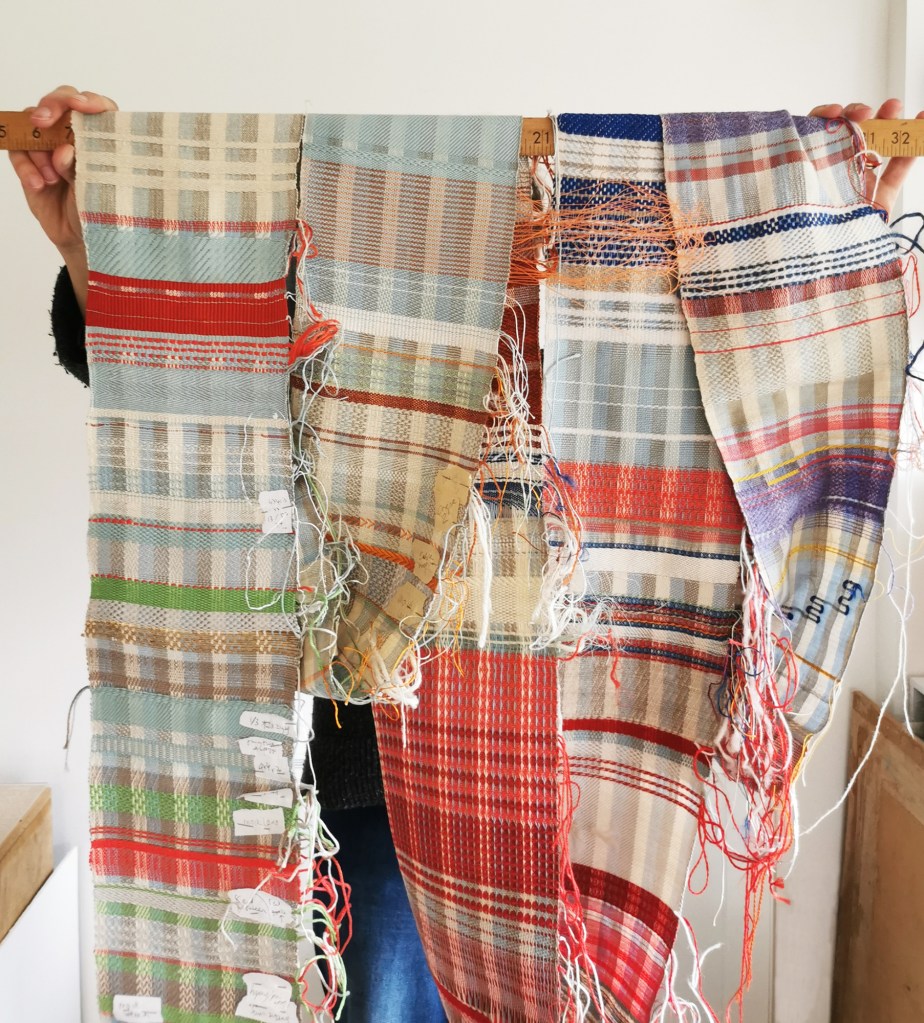
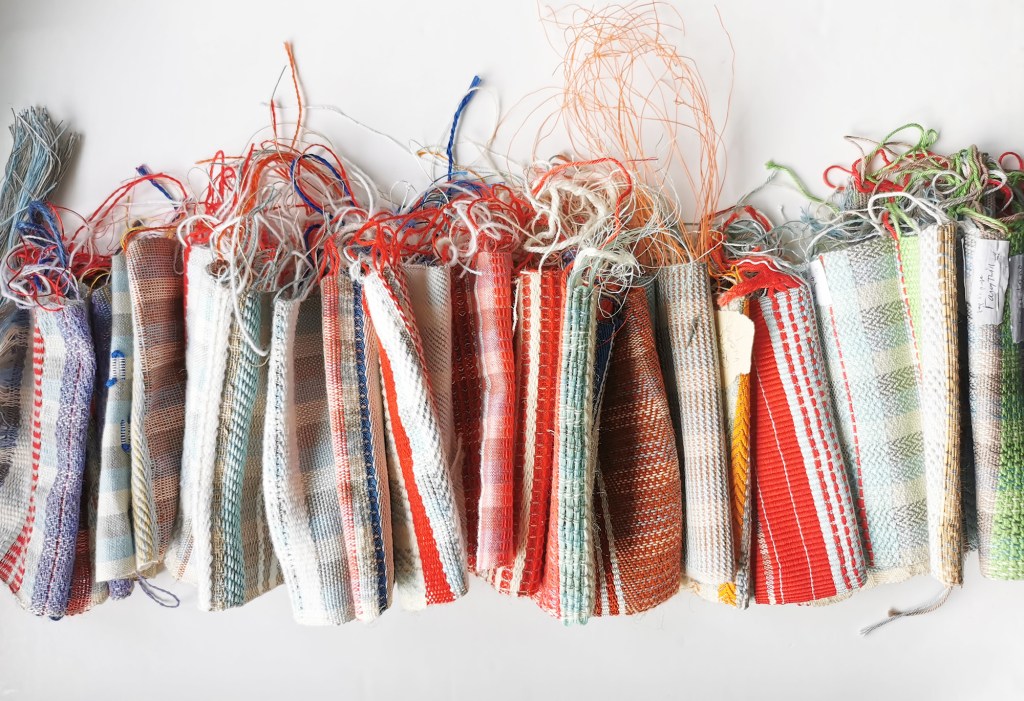
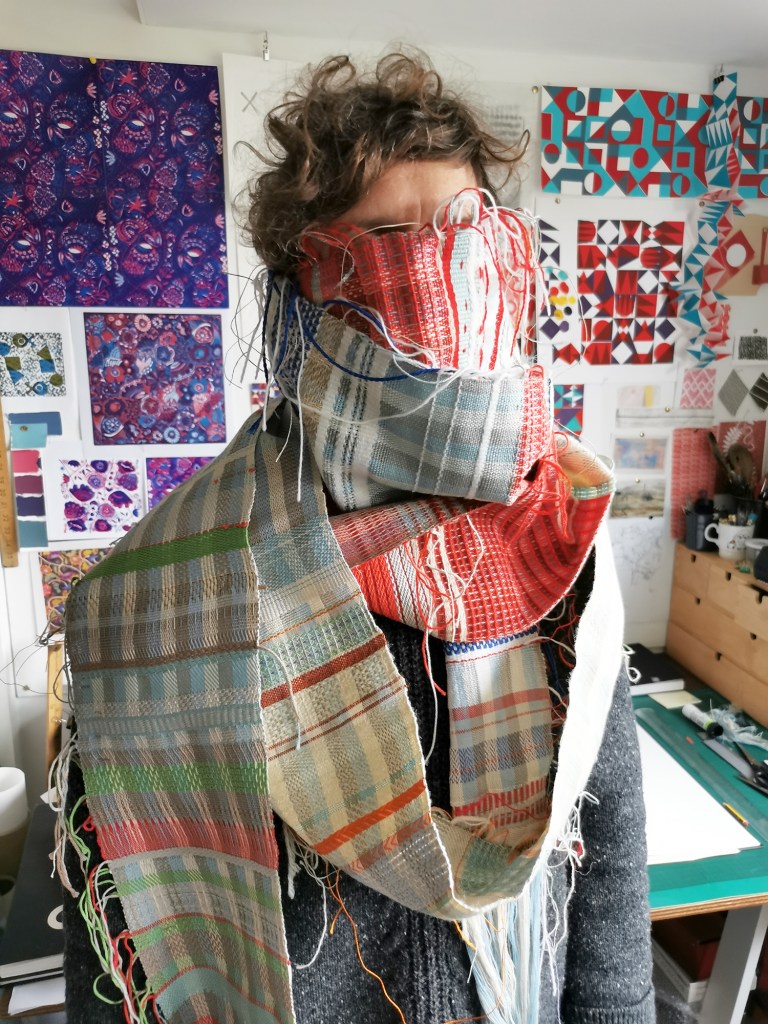
One of my leaving gifts from my colleagues at Birmingham City University back in 2018 was a warped-up 8-shaft Harris loom – it’s important to note I’m a printed textile designer, not a weaver! This week I have finished weaving the warp – over 5 and a half metres of weaving – certainly not a commercially viable rate!  I haven’t committed a huge amount of time, more short bursts over the years when the mood took me. I was surprisingly sad as well as excited that there was no more cloth to weave and I’d be able to see the entirety of the weaving away from the loom.

The completion of the warp coinciding with this work anniversary has made me reflect on these years, there have been highs and lows in both work and life. Learning to weave has given me a process to occupy my head with away from everything else, without any pressure but to play and explore. It has been so helpful for me to have this space and activity. As I cut the warp threads and unwound the length the bands of colour and materials I selected at various times revealed themselves, reminding me of how I was feeling as well as specific experiences. 

In parallel to making this cloth, I’ve developed my role in academia – developing curriculums and strong student experience, achieving the title of Associate Professor in Design, writing a book, and developing my role of advocate for others and the discipline of textiles both in education and industry. It’s nice to have something tangible to mark these years. I’m ready to get stuck into the next chapter of academia but I’ll have to find another hobby or learn how to warp the loom up myself … here’s to the next year of learning and teaching! 

industry and education working together

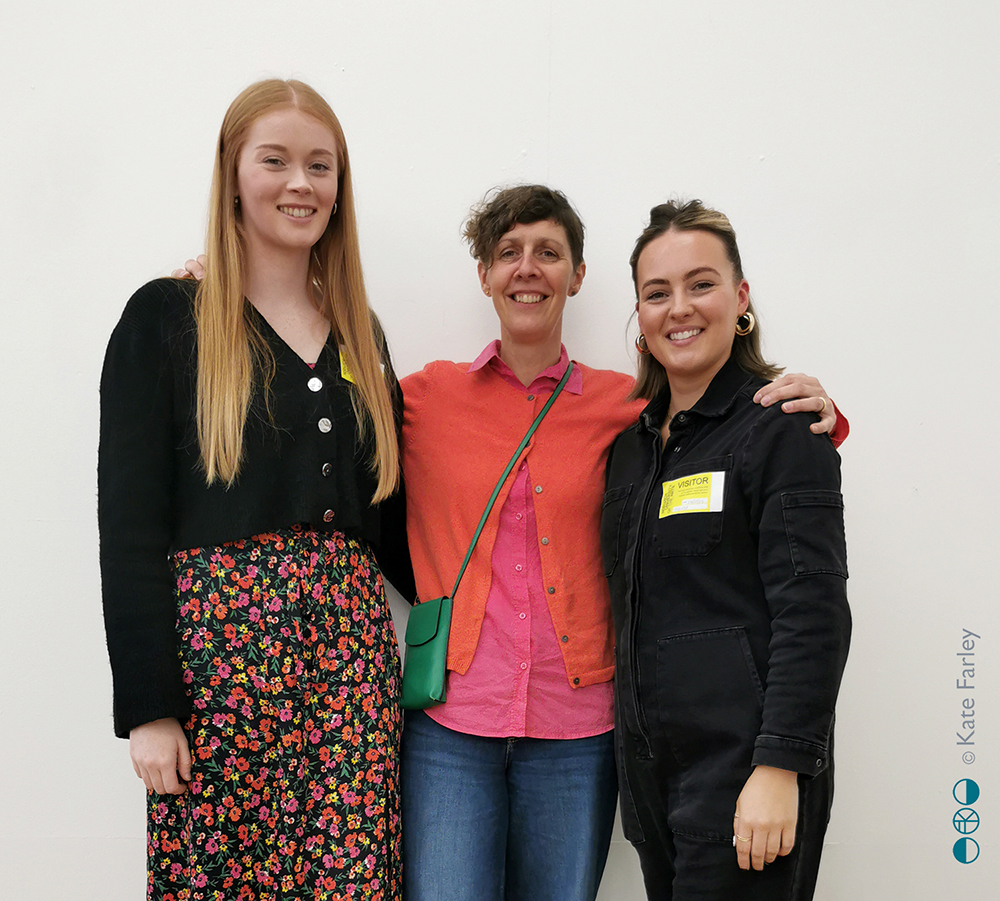
I’ve been busy with lots of teaching activities recently including schools outreach workshops, and a teacher training session alongside my main teaching on the BA Textile Design course at Norwich University of the Arts. Last term was full of varied teaching projects and a highlight for me was to work again with two of my graduates from the last institution I worked at, Birmingham City University, in their design roles at Sainsbury’s / Habitat, leading an industry brief for my current BA3 group. One of my absolute passions is to bring industry together with education, for everyone to learn from each other.

Tasha and Charlotte graduated in 2018 and within a few months secured roles that have led them to where they are now. Having kept in touch with them both over the last few years I applied for the opportunity to participate in this industry project with the brand. Good conversations were had to shape the brief, and ensure it worked for both parties. Habitat were incredibly generous with the project offer, with three visits to Norwich: the briefing, a mid-project review and a judging / awards event. The students worked hard, asked great questions and proved their ability to respond to the briefs, demonstrating keen awareness of sustainable and innovative material solutions and textiles pattern outcomes for kids’ interiors. The students were able to pitch their projects during the seven weeks and gain feedback to consider as they developed ideas and sampling. There was certainly a sense of competition, and everyone wanted to do well in front of the judges. They made us all very proud. 

It was brilliant to see Tasha and Charlotte in their professional roles supporting the students in a kind and compassionate manner, sharing industry insights and recalling their own worries and excitement of the final year, graduation and beyond. The benefit for the students was a consideration of professional opportunity and ambition, passion and skill, and most importantly – industry feedback. They were listened to those who were working in roles they may aspire to have, and to have their work reviewed made this feel more possible.

For the academic staff and Habitat designers it was humbling to see the commitment the students made, and how valuable the journey of personal growth is at any stage of a career. I’m sure Tasha and Charlotte had no idea they would, five years on, be leading a design project with degree students, and I am delighted to be able to participate in this experience with them, reminding them of how unsure they had been back during their final year of degree study, but how far they’ve come since then. I was reminded how valuable these opportunities are. They take a lot of organising and planning, but the pay off will be long-lasting. A huge thank you to Tasha and Charlotte!

There is a university blog post here for more information, pictures and feedback.

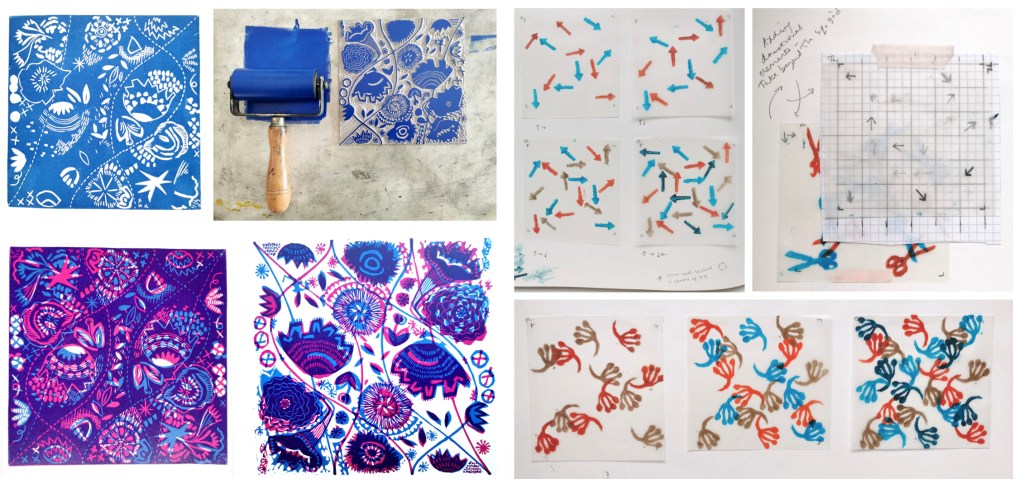
publication day: REPEAT printed pattern for interiors

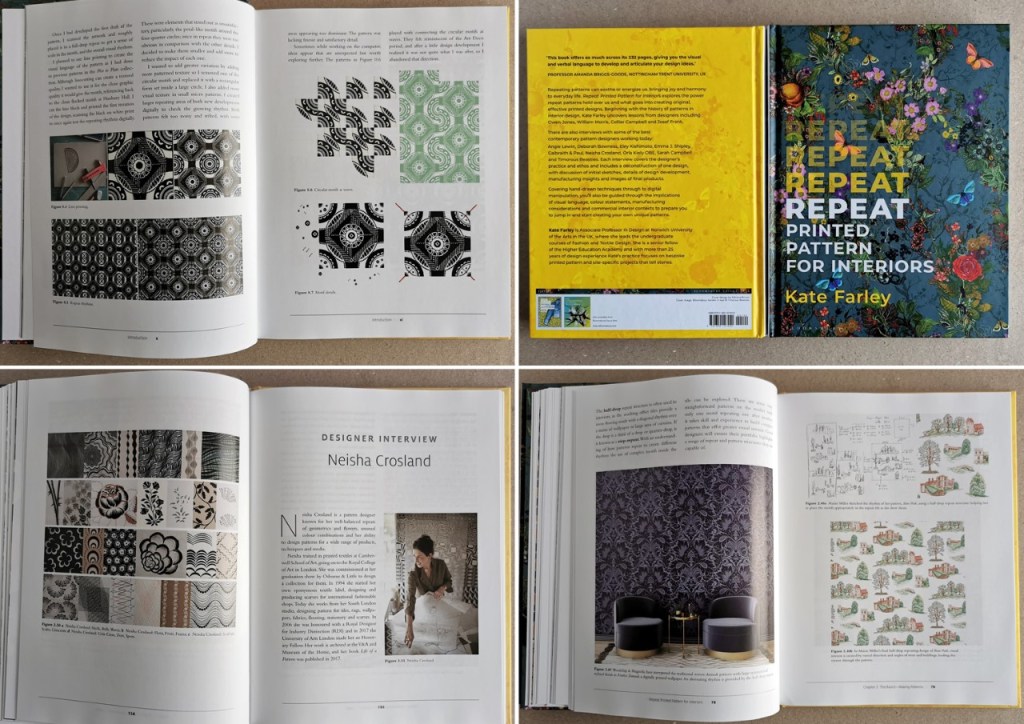
Here we are, the book project is complete with publication in the UK and US today. It’s been a journey!

With the first thoughts of writing a book about pattern back in late 2015, the development of some draft scopes, the contract signed with Bloomsbury in early 2019, a first draft of Chapter 1 delivered in late 2019, a global pandemic from 2020, unscheduled health issues requiring hospitalisation & surgery in 20/21, final manuscript submitted in June 2021, and proofreading / layout until June 2022 I have had to be very focused and patient – and all this while leading two degree courses until this Autumn (I now only lead one!).

Writing a design book had never previously been a consideration of mine, but since I’d been reviewing books a few years ago it got me thinking that this was the perfect place to bring together my design practice experience with my academic role. The idea grew on me. I’ve spent years teaching pattern design and as a result tried and tested hundreds of ways to deliver inspiring and informative design workshops. I spend lots of time analysing pattern to support my lectures, and in my spare time … and so in hindsight maybe it was a natural next step.

The introduction includes me taking the reader through my journey of designing Hanbury, my wallpaper, as well as my relationship with pattern. The three chapters are very different in nature which helped to focus the research and writing at each stage, and provides the reader with a broad look at the subject of pattern design in relation to history – Chapter 1, how to create pattern – Chapter 2, and how others do, through nine feature interviews in Chapter 3. I have to comment on the cover … I love the cover, so a huge shout out to Paul and Ali of Timorous Beasties and to my publisher Georgia at Bloomsbury who allowed me to have it just as I wanted. In fact I owe so much of this project to Georgia’s belief in me to get this done, and her unwavering support throughout. Who’d be a publisher?

Many years ago a previous boss asked me to take on delivering the design history lectures to first year undergraduates and with panic and fear I embarked on what I can now describe as one of the most overwhelmingly frightening but important career defining undertakings. I was given an opportunity to challenge myself while presenting to a lecture theatre of students on a Friday morning in Birmingham, and the result was empowerment. Without high school History qualifications behind me but a passion and base knowledge of design history I decided to engage students in how history is relevant to us now, what we can learn from, challenge and move on from. I needed it to be immediately relevant to their design projects to help them understand history is important to designers today. It took some years before I felt on top of it, but many years on I comprehend the legacy of those hours of learning in order to teach, and how that substantial investment of time led to the knowledge and experience to write Chapter 1 of this book. I could have written many thousands of words more to cover the history of pattern across the globe, but word limits provided boundaries, and without a deadline I may still be writing!

I enjoy learning. I am hugely grateful to all the students I have had the pleasure to work with over the years, for sharing their creative journeys as we discuss drawing, rhythms, compositions and colour proportions to make the most interesting repeating outcomes. I’ve learned so much along the way, and that’s what keeps me interested and passionate about the discipline of pattern design. Every studio session is an exchanging of ideas, with no single correct answer, but plenty of opportunities – a privilege to be a part of, and the inspiration behind Chapter 2. It explores the practice of repeat pattern making, presenting considerations to build stronger outcomes without stipulating one right answer. I encourage designers to embrace the process of testing variations in pattern construction so the final result has learned from all that has gone before. The designers I include to illustrate the text offer so many styles and approaches and have been so generous in sharing their working practice with me and future readers.

Just as I did with my degree dissertation back in 1996/97 there were times that required drastic measures to get things right in the writing of the book – many sheets of paper were laid out across the floor and I took scissors to the pages, literally cutting and pasting paragraphs in the process of reordering the narrative. Other times I had to diligently input data on a spreadsheet, chase consent forms or simply focus on writing.

Obtaining image permissions was probably the most arduous and stressful process of the project. Keeping to budget while securing the images from archives, individuals, estates and designers I really wished for was difficult, and sometimes I had to admit defeat and find alternatives. My editor and publisher (Faith & Georgia) were both brilliant at talking this over and I’ve been so pleased to include some absolute favourites such as Lucienne Day’s Spectators and Calyx and Josef Frank’s Mirakel – I danced when these came through! It’s also been a pleasure to include a number of works by students I have taught, some in the last five years, but also Emma J Shipley back in 2005/6 – I still remember her tour bus interior for Madonna in BA1 (one of the interviewees in Chapter 3). How time flies!

I’m grateful to all the designers / archivists who have contributed images and details of the patterns throughout the book. Quick check-ins to confirm the number of screens used, or what digital software the designer prefers was all part and parcel of getting details as correct as possible. One memorable highlight on a day of writing was a phone call from the brilliant pattern designer Marthe Armitage to talk through her contributing images for the book. I was so surprised I was rather lost for words initially, but soon we were chatting all things pattern, and I’m delighted to feature her printed wallpaper patterns in the book, as they regularly feature in my teaching presentations. A shout out goes to Sophie at Warner Textile Archive who went above and beyond tolerating last minute requests for photography to get just what I wanted! Much of my clear headed thinking happened late at night as I juggled leading two courses in the day job, and I’m grateful for all who made sense of my communications at this time.

Who knew it took so long and so many people to get a book to be a physical artefact? The proof reader was brilliant as we fired queries and answers to and fro for a frantic few weeks, and then she was gone. Then the layout was taking shape – and I think I must have been a nightmare – sorry Deborah! – I wanted every page to look its best and sent diagrams and descriptions to make that happen. Finally, following last minute queries while I was at New Designers showcase in London with my graduates in late June I had to step away and the book went off for print production.

I’ve been asked several times if there will be a second book, even before I held this one in my hands…! I’m not sure, maybe one day, but today I’m celebrating this one.

I’m grateful to all who have helped make this happen, from my tutors back at art school, to friends and colleagues who have tolerated and supported me in this project. Thanks to the brilliant team and associated individuals from team Bloomsbury and to everyone who buys a copy to share the joy of printed pattern – thank you!

I’d like to dedicate the book to my parents in deepest gratitude for providing an upbringing where experiencing art, design & culture was a given. Thanks to my mum who has survived the ups and downs of raising a creative child, I know it wasn’t always easy. My sorrow remains that I never had the chance to have an adult to adult conversation with my dad about the things we would have no doubt had as common passions, but who inadvertently taught us Farley girls that if you put your mind to something there is no reason why it won’t work out. A lasting legacy & mindset. 

You can order a copy here.

Inspired by and inspiring the textile design discipline

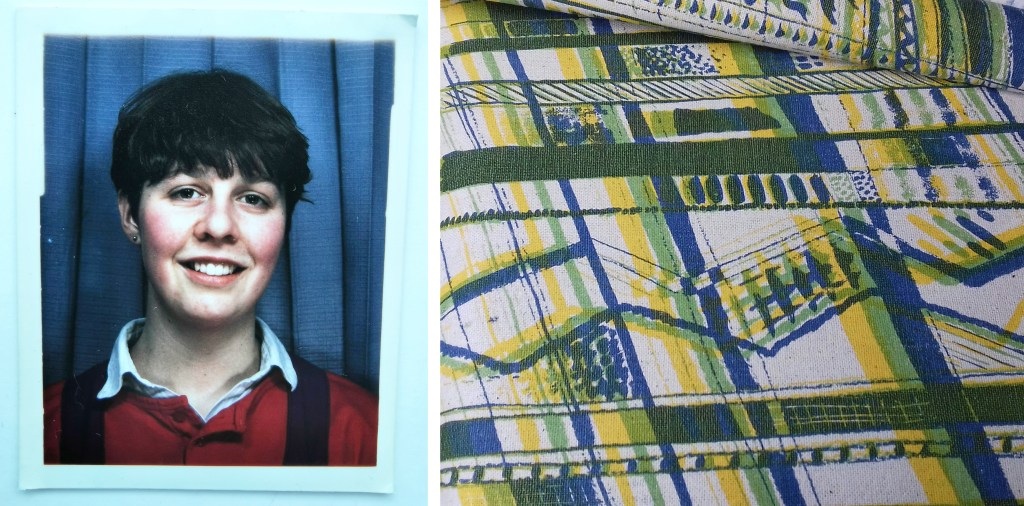
Thirty years ago I began my art school experience studying a diploma in Surface Pattern, a little unsure of what was meant by the course title, but keen to find out more as it involved drawing, printmaking, pattern and textiles. I thrived at art school, building practical skills and theoretical knowledge, growing in confidence in my ability, encouraged to experiment and play with ideas and processes. When I think back to what I understood of careers in textile design at this time, I have little memory of career planning, or job role research. This was the era of the Yellow Pages; I couldn’t Google it! I made decisions about my degree course based on the fact my tutors suggested I was more of a printer than a knitter or weaver. 

The art school student and the first screen printed pattern

During my degree I undertook a floral print project in the first year and hated it so much I nearly threw it in for fine art printmaking, but then I gave myself a talking to, and realised I wanted to frame my practice in design, to apply my thinking to scenarios, and to problem solve. This has stood me in good stead, both as a designer and academic. I believe the context in which we work is as important as the role we undertake.

I think back to those days and see a very different textile industry to the one we are experiencing now. I graduated at the dawn of digital design, without the range of composite surface materials for interior applications, or bespoke digital production that enabled me to collaborate with Formica when launching my collections in the mid 20-teens. As a freelance designer in the late 1990s I was posting hand painted textile designs in large cardboard tubes across the country to my agent and sending my portfolio out as slides (transparencies) for exhibition applications, hoping they would be returned to save me money and hassle – they rarely were! Thank goodness for the digital cloud of today, allowing files to be accessed around the globe in an instant. Laser cutting and 3D printing have become the norm (even in schools) since then, and expertise in digital software is a basic requirement in graduate jobs. It is easy to take these developments for granted – but our line of work is transformed.

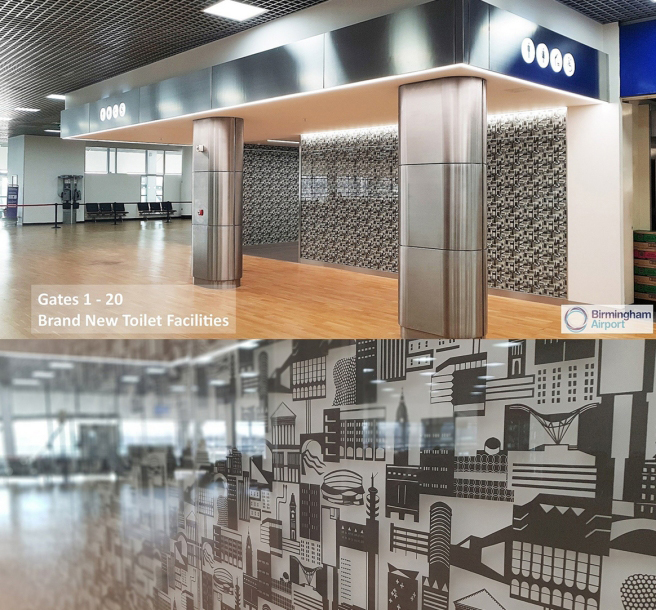
Over the years since that time, I’ve built a career embracing many different opportunities as a designer, artist and designer maker: launching my own brand collections, undertaking illustration or pattern commissions, exhibiting, designing public art (including three large gravel roofscapes and three public toilets!) as well as leading residencies in healthcare settings. I have enjoyed the variety of projects I have completed, building my understanding of several sectors of the industry. Ensuring I remain up to date with industry developments has been key to the relevance I maintain in my academic position. 

Birmingham Airport commission, fabricated by The Window Film Company

In the last twenty years we have seen the development of ‘smart’ textiles for medical applications, interactive electronic textiles for military and domestic use, bio-materials and colour developed from bacteria and new design opportunities in the digital realm within the simulated environment – the metaverse, an emerging international arena. At the same time, during a global pandemic we see a resurgence in low-tech craft with textile processes such as crochet and knit identified as beneficial activities for our wellbeing, and a fightback against the consumer culture. 

The breadth of opportunity available across the discipline of textile design today is exciting, and fast evolving. Revisiting craft practices for contemporary markets is not new. The Arts and Crafts movement spearheaded by William Morris, advocating for handicrafts and naturally dyed yarn and cloth, was an attempt to battle against technological innovation and the resulting cheap and poor-quality products flooding the market. The current growth of interest in craft practices again connects us to the heritage of making and the close relationship with material and process that nurtures us. Sustainable solutions compete with mass produced problems. Customers are easily overwhelmed by choice and price-points, single use versus something for life – future heirlooms, or landfill. Digital design provides solutions by reducing fabric waste in the fashion industry using 3D digital rendering to identify and fix issues, where previously each garment in each size or colourway would be produced and discarded as products were developed. Craft and technology are not mutually exclusive.

The creative industries we have today were unimaginable to me as a student, and now, I think about the relationship today’s students have with the industry and how far into the future they can imagine. As head of the discipline at my institution I am required to consider the future of textile design, to design an educational experience to not only equip the students and graduates for roles that we know about, but also provide them with the curiosity and creativity to shape the roles we can’t quite define. Ambitious ideas need to be partnered with strong realisation skills, traditional craft and making skills paired with digital competence. Let’s see where the next thirty years takes us!

Construct collection by Kate Farley, in collaboration with Formica

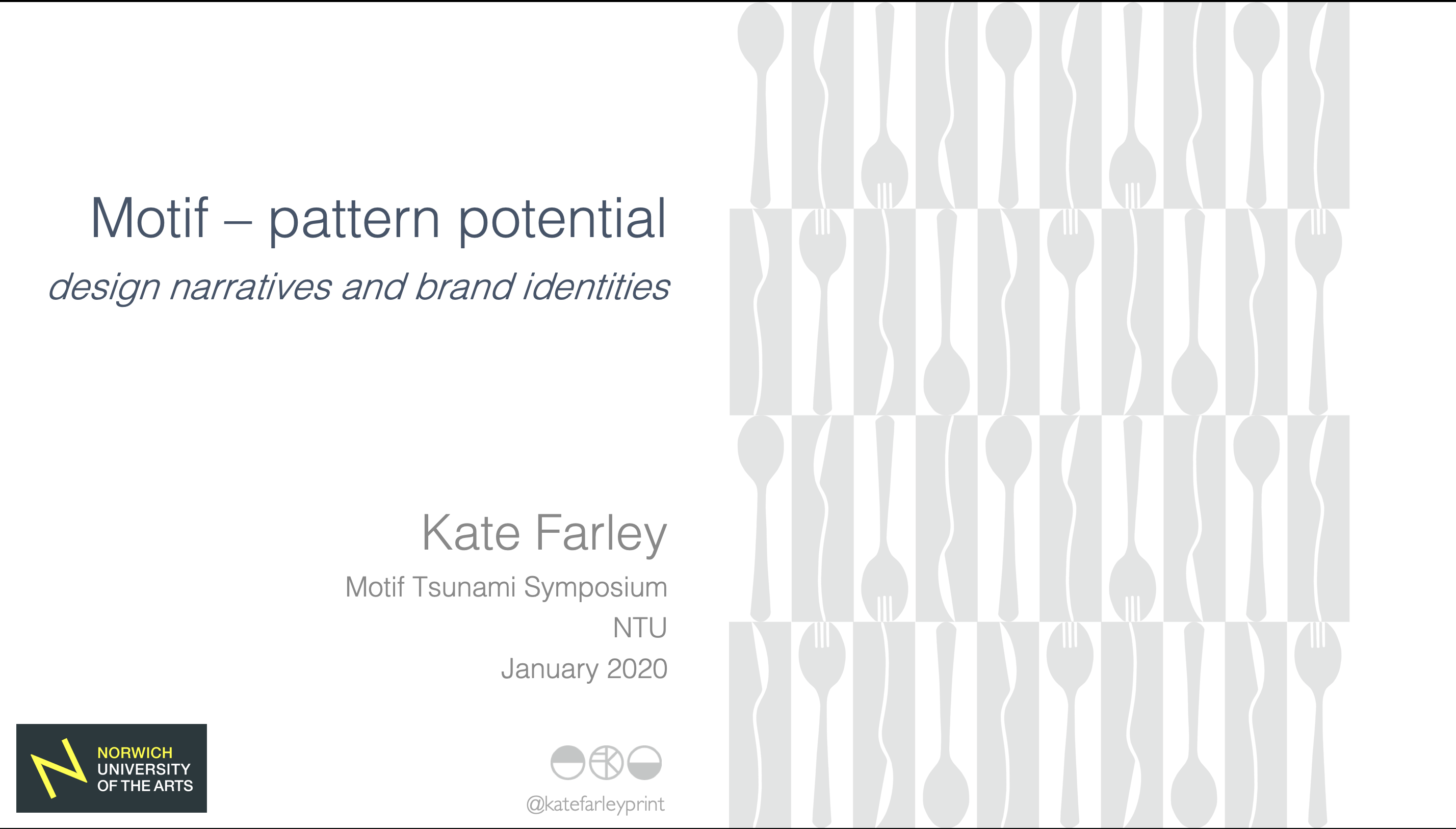
pattern potential

Tomorrow I shall be presenting a keynote paper at a symposium about Motifs at Nottingham Trent University. I’m looking forward to lots of discussions and sharing my own practice-based research including projects with David Mellor Design and Barbican.

Screenshot 2020-01-28 at 11.08.00


women designers, lost and found

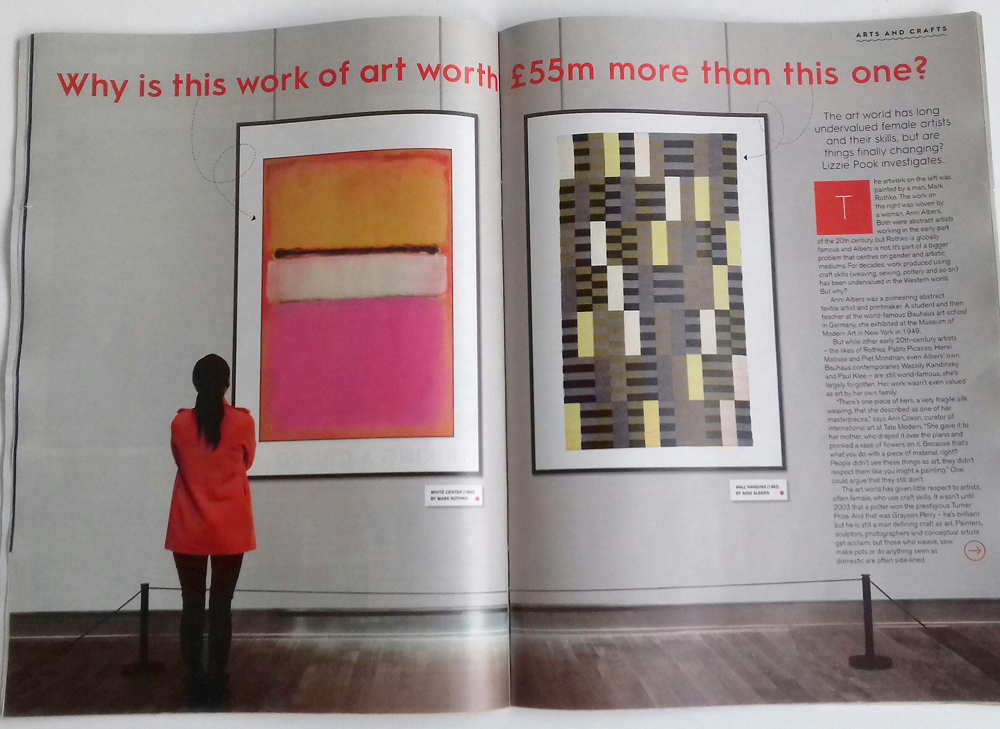
Sometimes themes seem to rattle around in my head, connecting with other dialogues I have had. Last week I attended a really interesting Study Day at the House of Illustration as part of the Women in Print series organised by Desdemona McCannon on the theme of Enid Marx and contemporaries. The subject of women’s careers, and specifically their profile compared with their male counterpoints was discussed – not a new idea, but as a recurring theme I thought it worth revisiting here. In the same week Stylist magazine featured an article about the price of artwork made by women compared to men. It was such a coincidence I’ll expand some thoughts here.

It’s not a secret that women often have a harder time gaining recognition in many lines of work in comparison to their male peers. I wrote in a previous blog post about Eric Ravilious and friends at Compton Verney that it certainly wasn’t lack of skill that kept the women such as Helen Binyon from comparable public attention, and therefore further opportunities through their careers. There are highly talented women in history who we are only just giving air-time to, but the fact is their careers may not have excelled in the way their male counterparts did, or if they did they may well have been paid less for the work because they were women.

Enid Marx chose not to take issue with gender-bias in her career, and got on with a multi-disciplined design portfolio, with impressive outputs including books, textiles and patterns which were beautifully communicated through the exhibition at the House of Illustration (sorry it’s just ended!) – but you can visit Compton Verney instead. We got to see the exhibition as well as listen to knowledgeable speakers such as Enid Marx expert Lottie Crawford giving a really insightful illustrated paper about the legacy that Enid Marx and her peers have created for us today, as well as Jane Audas taking us through a fascinating journey of clients and sales put in to a broader context of who’s who.

I have heard people wonder why we need to make a point about this being a gender issue, but I would say that this has been said from a male perspective, and not from those being subjected now and in the future to selective opportunities due to gender. As a woman designer, and female academic training mostly women to have design careers where there is a history of undervaluing female contribution, I remain concerned.

EnidMarx_patterns

It is sometimes the case that research can be discovered more easily about men because they were promoted more and as a result have a higher profile, whether through greater self-confidence, the social / commercial networks or marketing material, from family or company archives, past exhibitions or publications. During the study day in London the point was made that there was also a sense that women got on with the designing, often alongside raising a family or carrying out other domestic tasks. Did they lack the opportunity to promote themselves, didn’t see the need, or couldn’t find the time? Working in isolation at home can certainly challenge one’s self-belief compared to working in an office with colleagues who can praise you and your work as and when required. This reminds me of the freelance work of Sheila Bownas, almost accidentally discovered and collected by Chelsea Cefai, and brought to a new appreciative public in the last few years. The family knew little of the extent of her prolific output of designs as a textile designer until Chelsea pieced the jigsaw together, and thank goodness we know of her now!

There is another consideration here. Does the discipline these women are working in make a difference to their profile? Enid Marx worked across illustration and textiles, but her illustrations are better known. Is this because as an illustrator your name is usually on the cover of the book, even if it is on the inside, or on the poster? For freelance textile designers it can be quite different. The name of the company is usually printed as legend details on the selvedge, but historically not always the name of the designer. If this is the case we may never trace the designer. This remains the case today in industry when big name brands buy in freelance patterns and the designer’s name is not carried through.

The article in Stylist compares Mark Rothko and his fine art paintings to Anni Albers’ textile practice; the subject of a show coming to Tate this Autumn. When the Bauhaus opened its doors in Germany in the Twentieth century the founder, Walter Gropius, stated anyone could study any discipline, and yet the women were rather heavily steered towards the weaving workshop, considered suitable for women. That was where Anni Albers learned her skill, fell in love with the teacher Josef Albers, took his name on marriage and continued to live in his shadow; he led a fine art practice of painting while she made textiles. I can’t wait to see the Anni Albers show – and for Anni to have the publicity men with lesser creative careers have had before.

stylist_magazine_Sept18

Craft, seen as a second-rate subject to Fine Art is part of the discussion throughout the article in Stylist, and it also makes the point that textiles is seen as a domestic activity, thanks to the increased leisure time during Victorian era. Grayson Perry has made significant strides in opening up the conversation about value of craft, but far more needs to be done to change opinions. As an academic one of my biggest concerns is the lack of respect textile design currently receives as a subject in the education curriculum and agenda. It’s becoming one of my catch phrases but I really mean it – we all wear pants! How can textiles be seen predominantly as a past-time, a hobby – when we all wear textiles, sleep under textiles and protect ourselves with textiles? How dare this government puts at risk the supply chain of future textile designers because it doesn’t see it as important enough to be a GCSE? Fashion is nothing without textiles, and this industry is one of the big ones on the global stage – don’t get me started on that!

Refocusing back on the study day, we also discussed the nature of research carried out by women, and that the particular approach / nature of research writing holds a female voice that may not be considered intellectual enough; often relating to social networks, domestic arrangements and family life. Several female audience members agreed that they doubted their own confidence when finding their research voice alongside the traditional academic tone / content they believed was expected by their male counterparts. Are women undermining themselves and lacking confidence in their own abilities?

I don’t have the answers but this is not a conversation that should stop. More dialogues involving men and women about historical and contemporary design practice, craft and textiles are needed. There is not one way, this is not binary, but we need to make sure the different voices, approaches, strategies and practices in the creative subjects and beyond are given a platform. The diverse ways of being whatever it is we are should be valued, and represented by a diverse community. Wouldn’t it be lovely if talent and opportunity were really the key ingredients for building profiles, gaining opportunities, and writing about it!

Save

Save

The versatility of Ravilious & friends

There are a flurry of exhibitions on and books out at the moment relating to Eric Ravilious and Edward Bawden, as well as their peers. Since the fabulous Ravilious show at the Imperial War Museum in 2003 / 04 curated by Alan Powers, it seems this really has been their revival. Certainly according to my social media feeds we are all loving this celebration of talent from days gone by, and many contemporary designers are inspired by the styles of these greats.

The exhibition, Ravilious & Co. at Compton Verney explores this network of friends and collaborators in an extensive and beautiful show of art and design pieces, demonstrating their skills, creativity and versatility across products and for varied clients. Having seen this show in Sheffield; a touring show curated by Andy Friend and the Towner Art Gallery, Eastbourne, and previously being familiar with much of the era’s iconic designs it’s nice to see some of the exhibits rather like old friends, as well as others new to me.
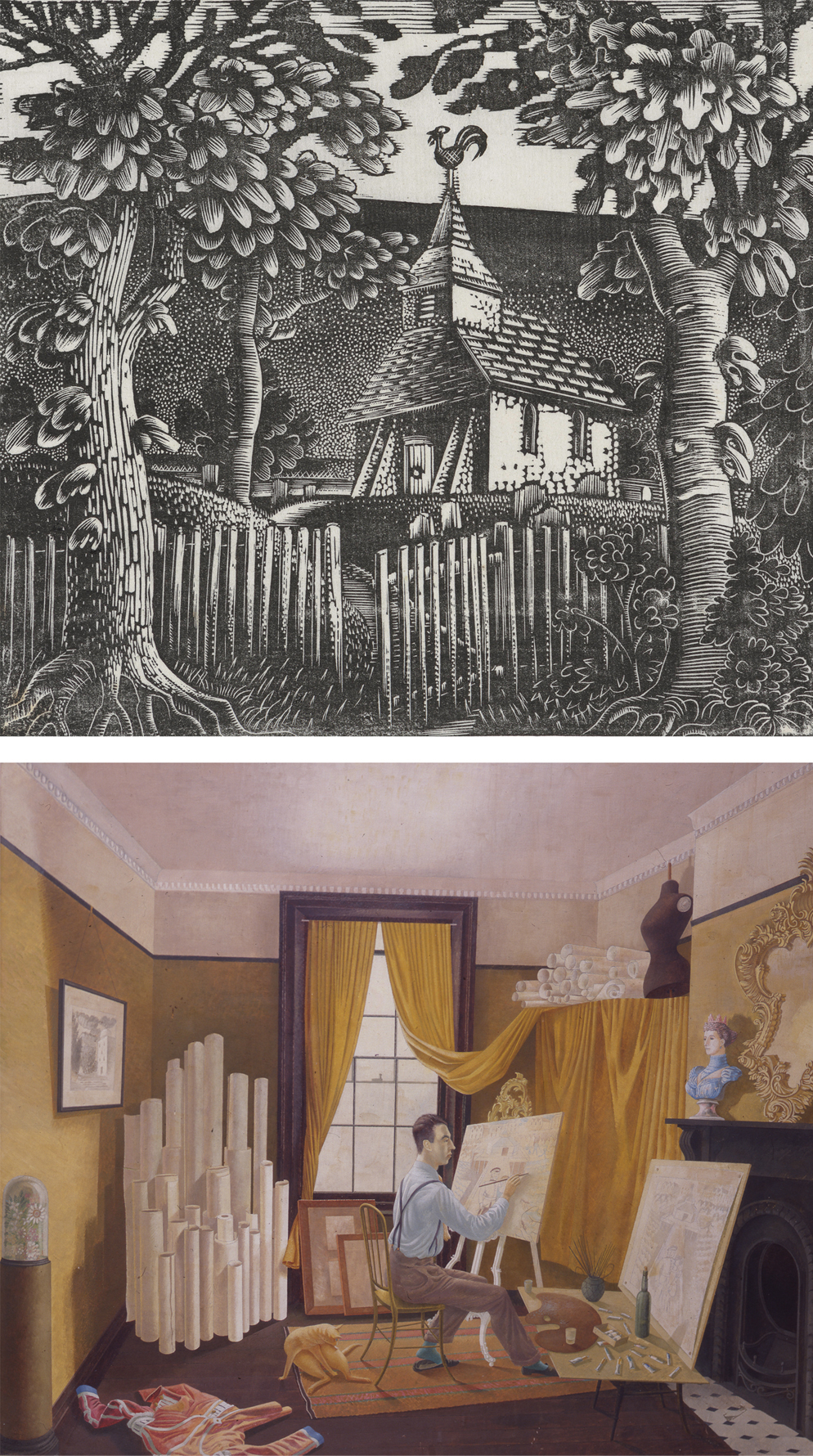
Ravilious_ComptonVerney1images kindly shared by Compton Verney:

Eric Ravilious, Sussex Church, 1924. Towner Art Gallery, Eastbourne
Eric Ravilious, Portrait of Edward Bawden, 1930. Royal College of Art

There are also new pieces and names to discover. One thing that struck me was the talent of others in the group that have not received quite the same fanfare, but should be rewarded with the recognition – Helen Binyon in particular as a print-maker in my opinion. My notes recall ‘The Wire Fence’, 1935 specifically, such a beautiful interpretation of the subject through pattern and print. I kept returning to admire it!

A section of exhibition text also struck a chord for me. It stated that Paul Nash had “believed a good artist could turn his or her hand to many things – and would need to if they were to earn a living from their talent”. Nash had taught some of this new generation of designers at the Royal College and was also seen to live by this approach of traversing the landscape of art and design. Famous for his paintings both as a War Artist and not, he also carried out commercial design briefs for companies such as Cresta Silks (owned by Patrick Heron’s father) and Edinburgh Weavers (directed by Alastair Morton) and established the rather short-lived Unit One, bringing together artists and designers of the time.

When the individuals such as Bawden and Ravilious turned their creative hands to making drawings and prints, or designing ceramics, book covers, end papers, posters, murals, fabrics and much more, they did so with such confidence and accomplishment – an understanding of each product, the form and audience, each outcome intelligently designed for the specific brief. This isn’t a case of one image translated on to multiple surfaces as so much of today’s designing tends to be – I feel strongly about this when educating my own design students! Don’t do a ‘Cath Kidston’, (not the only company to do this!) and apply any / every pattern to any surface, but consider the requirements and potential of each product, learn from the expert manufacturers about how the production of the image or pattern can work best, and learn from what has gone before while creating something of its time.
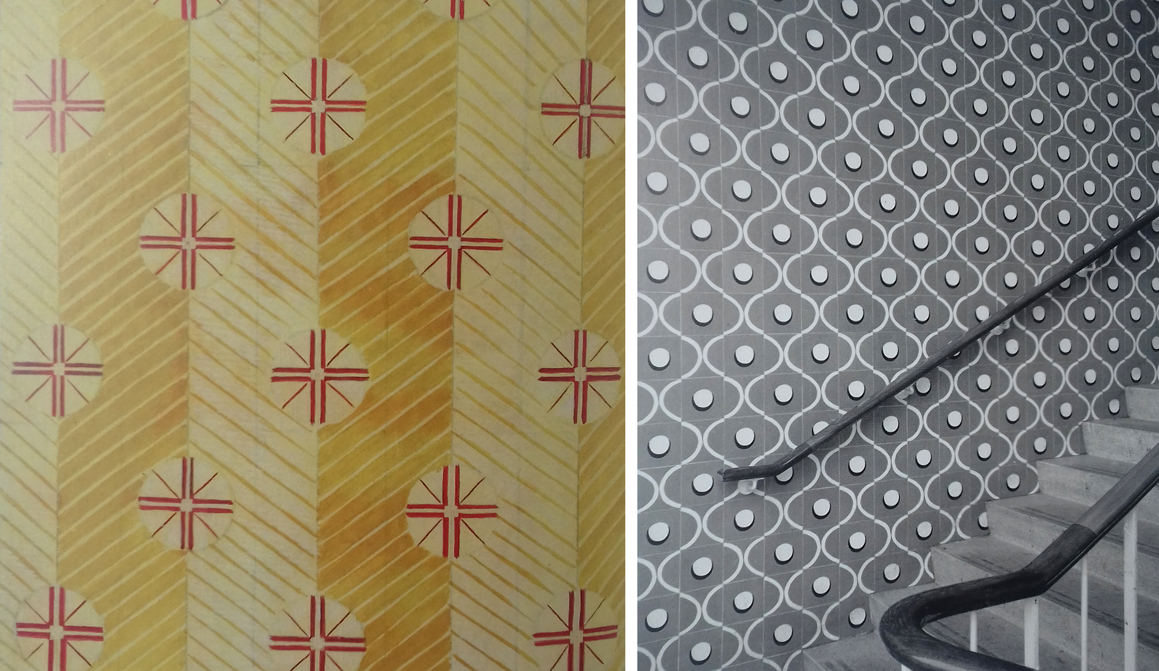
KFarley_Marx_Angus_1Image details, photographs by Kate Farley from publications: Enid Marx by Alan Powers / Peggy Angus, by James Russell:

Enid Marx, study for ‘Spot and Stripe’ Utility fabric, 1945
Peggy Angus, Tile mural, staircase, Whitefield School, Barnet, 1953/4

Yes a designer can earn a living with their versatile skills, but I also have no doubt that Eric Ravilious, Edward Bawden, Enid Marx, Peggy Angus and others of this time thrived on the creative challenges of the commercial brief alongside their fine art practices. It’s known that Enid Marx liked the confines of designing Utility fabrics for the reason the design restrictions gave her boundaries to challenge. An open brief can be far more stifling! How would you hold the cup, turn the page or approach the wall, and how can pattern relate to the space? I love learning the particulars about each new production method or new application / context I design for.

Returning again to the subject of this particular exhibition at Compton Verney, items on show include drawing studies, proofs, original painting and drawings as well as commercially printed products. The most moving item was a letter from Bawden to Ravilious’ wife Tirzah after hearing news of Eric’s death, lost over Iceland on a mission as a War Artist, that demonstrated the strength of friendship the two men had for each other. Tears filled my eyes. It’s a big show, and it takes time – you will need to be fueled by cake!

My hope as a designer and educator is that this sustained interest in such a talented network of designers whose work reached across the public domain may rub off on the new generations of designers visiting this exhibition as well as on the vision and ambition of those who commission us too! While it’s lovely to see re-issues of these great designers work, I’d like us to move forward and create a new exciting design era built on this intelligence, empathy and skill. In the meantime, see this show if you can! It ends on 10th June – so get moving!
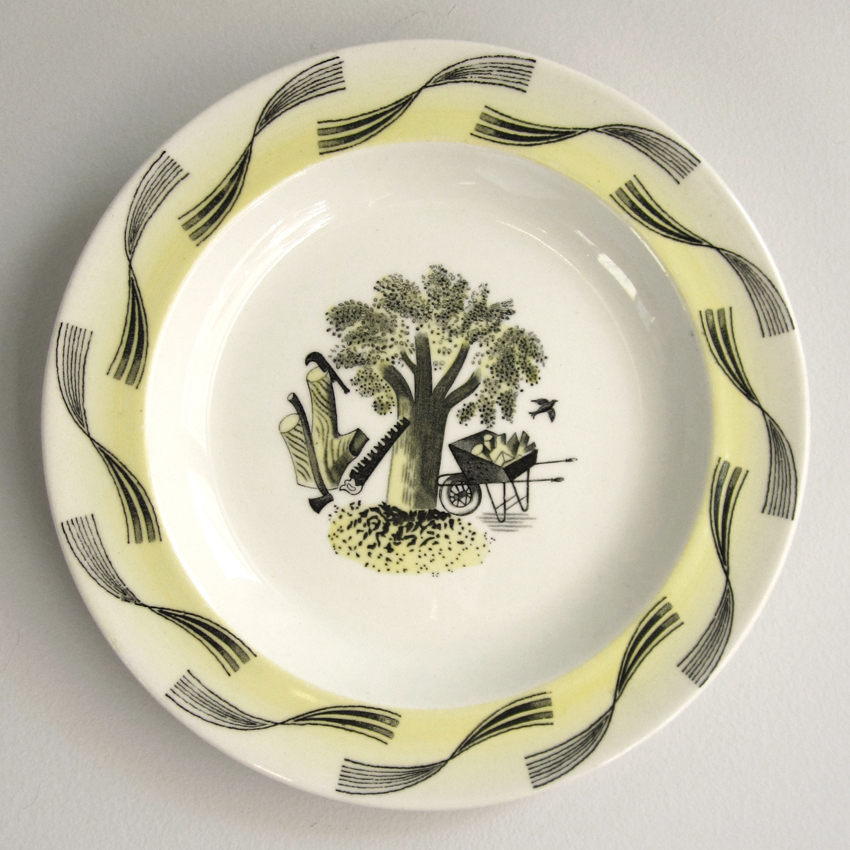
KFarley_plate_EricRaviliousImage detail, photograph by Kate Farley of plate by Eric Ravilious for Wedgwood

Also check out:

Edward Bawden at Dulwich Picture Gallery, London until 9th September 2018

Enid Marx, House of Illustration, London until 23rd September 2018

Bawden’s Beasts, The Higgins, Bedford until 27th January 2019
learning to look

I’m fascinated with how artists and designers stylise what they see. It’s a creative journey that drives me in my work too. Look at this image below of a wood engraving ‘Butterflies’ by Enid Marx, 1939. The same sort of leaves have been executed in several different ways to provide visual interest, tonal variation and depth, communicating different information about the leaves.

Butterflies_ENIDMARX

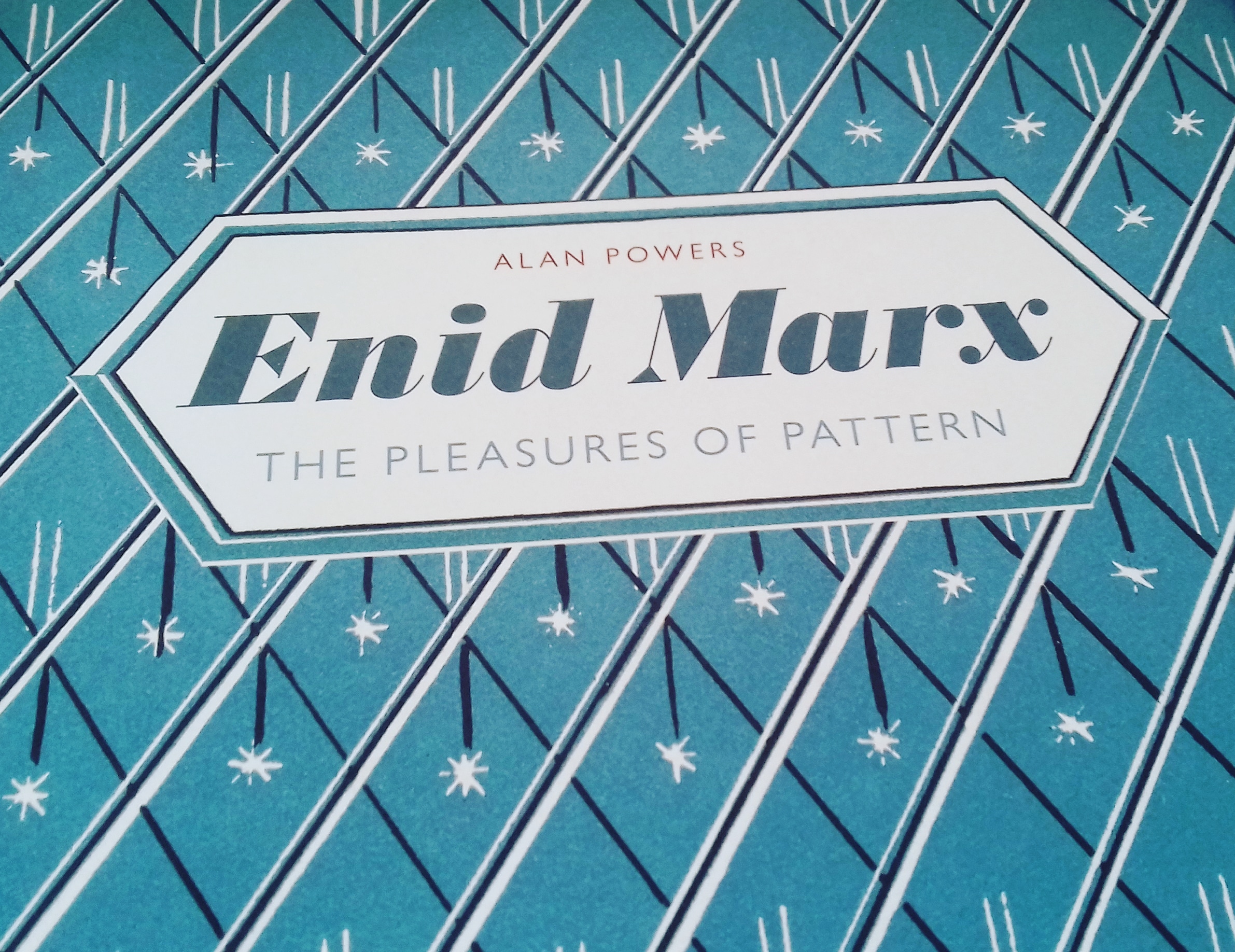
This is also a great example of how to use negative and positive shapes in printmaking / monochrome imagery, again to create visual interest and movement around the elements in the composition. I took this photograph from the fabulous Enid Marx -The Pleasures of Pattern book by Alan Powers published by Lund Humphries – I recommend it!

EnidMarx_pleasuresof patternBOOK

Also, I’d recommend a trip to Compton Verney to see her design work alongside her Folk Art collection.

woven landscape

It seems right to me that as someone keen to draw images I chose print as my medium of design rather than weave but I do think there is a strong sense of the spirit of woven cloth in how I see things, and for that I thank my upbringing in Norfolk. The strong horizontal line of the sky meeting the fields interrupted by vertical fence posts or reeds creating visual rhythms can leave me feeling utterly complete. Back in Norfolk this Easter, once again I breathed in the space, the horizontal and vertical of Horsey; one of the most perfect places.

I removed colour from this image as I wanted to clearly show the structure of the stripes, but colour is much of the joy in this landscape – the purples, greens, yellows, varying from minute to minute in the ever-changing light. I add them below. One day I will weave again.

Horseyreeds_weave130

KFarley_Horsey_palette

talking to myself through teaching

I’ve spent many hours over the last couple of years reflecting on my teaching career that stands at about 18 years, give or take a bit. In order to apply for Senior Fellow of the Higher Education Academy I had to write thousands of words that explain and reflect on the impact I have made on not only the students I have taught but the colleagues and peers across the industry I relate to in my professional practice. It has been a big ask to fit my diverse experiences in to the word count along with the cross referencing required, but I’m delighted to say my hard work over the ‘holidays’ and the work of my colleagues in writing supporting references has meant I achieved Senior Fellow and I’m rather relieved / proud. (I was however disappointed to discover that rather than receiving a fine water-marked, embossed and foil blocked certificate I had to download it! … I digress.)

I’ve written many times about how important it is for me to combine my design practice with my academic career and although it doesn’t make my life easier, it certainly makes it more fulfilling. They really are mutually supportive. The reason I am so driven to support the students in reaching their goals is because I know how rewarding a career in design can be. From having the confidence to draw in a different way, to picking up the phone to a new client, to realising your dream of seeing designs commercially available…, to be paid to do what you love doing… why would I not want to help others to do those things?

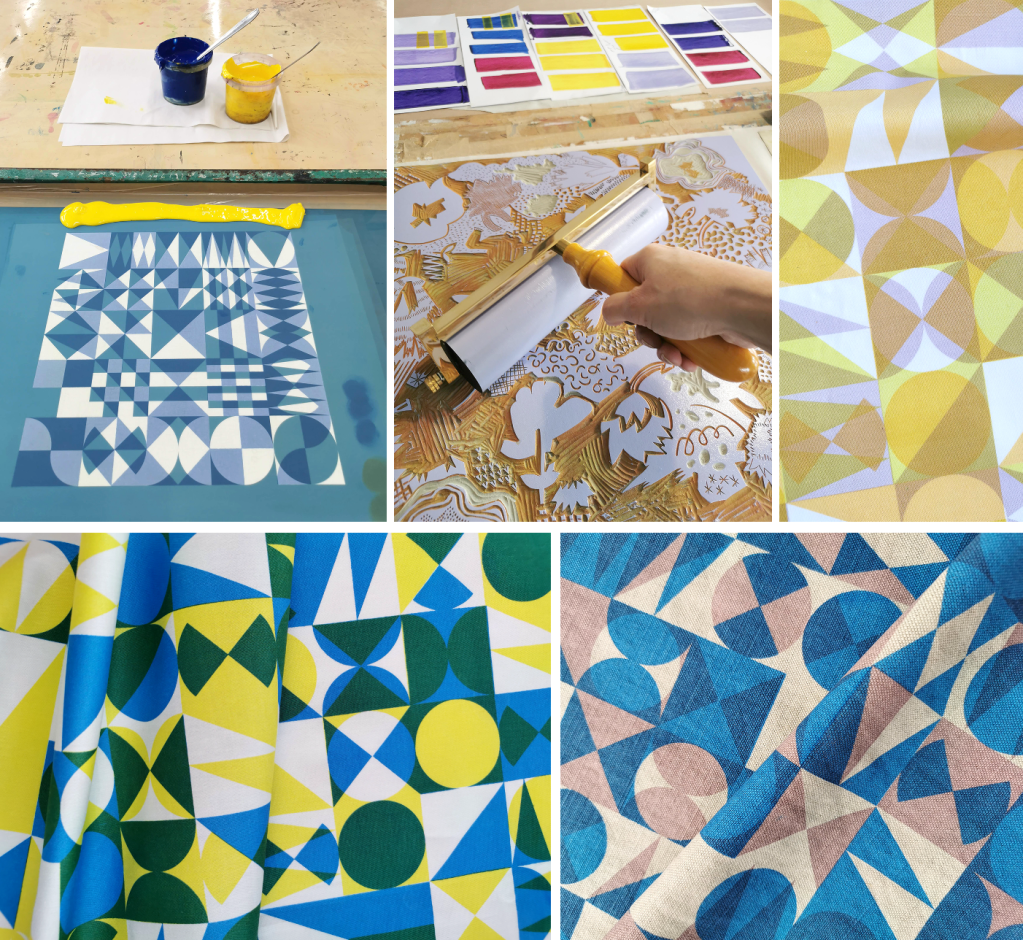
roller_fabric_blog

It’s also important to hear myself saying these things to students. It’s as if I am telling myself as well as the students! Yes I must chase that lead, make sure I’m paid a fair rate or keep my website up to date! Each creative has different ideas about how and where to move forward with their ambitions and the art of teaching is to work out how to nurture, support, push and challenge positively. Being creative is not easy. You put your sensitivities on the line to be judged, sometimes by those with less creativity than yourself, but who holds the budget. There are certainly pages in my sketchbook I wouldn’t choose to share at a group tutorial, but the process of knowing you are not alone in learning the creative process is so valuable. It’s also the case that it’s often easier to critique someone else other than yourself! Would you listen? Maybe one mis-perception is that once you graduate you stop learning – I plan to keep learning forever! Each project I work on is an excuse to learn more, not only about myself as a creative, but new practical or technical skills to take on board for me, as well as sharing with colleagues and students.

I’m very aware the reality behind social media may be far different than the stories being told online. I make sure students are made to think about that, – use the benefits of social media while considering the stories they read and the stories they create. While I like the way we can find out so much more about what’s going on, and who we need to know (can you imagine only having the yellow pages?!) there are complications with so many aspects of our practice being shared. Copying, audience expectation, peer competition versus mutual support, networking and peer validation are ups and downs of today’s design world. I approach my teaching very much like my designing. Honesty, integrity, and fulfillment…. support, encouragement and creative ambition! Even writing this is like giving myself a tutorial! What’s my homework?

KateFarley_grasslines_WIP_blog