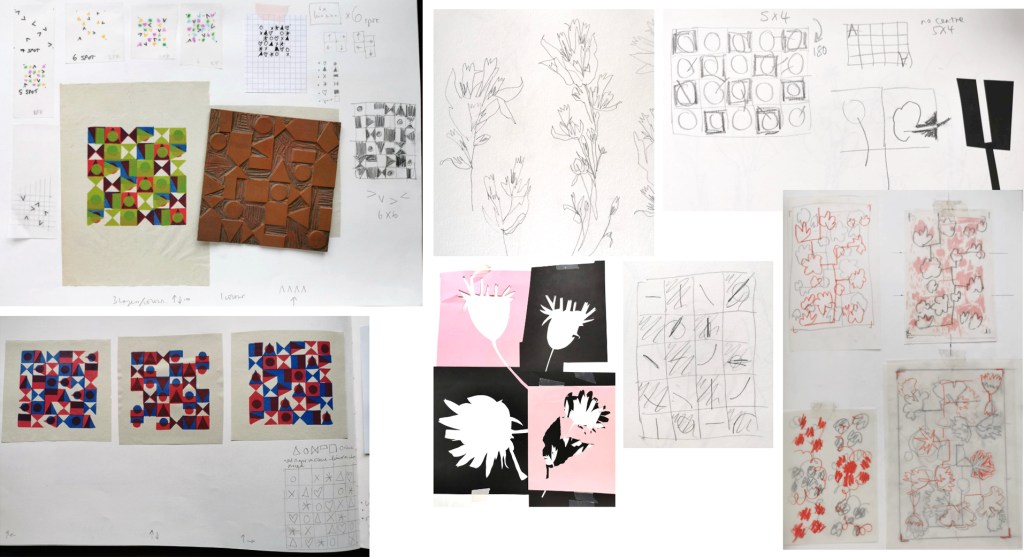
I’ve been busy printing and presenting my ongoing pattern research over the last few months, testing the design and print process, and receiving useful feedback – which may explain the lack of blog posts recently!
Last September I presented my work at the Fashion and Textiles Courses Association conference, Futurescan 6, held at De Montfort University in Leicester, and had a small exhibition of the work in progress during the conference. It was great to formalise my ongoing work at that time, and receive external feedback from the audience. It was useful to consider how I communicate the research, as the principle is simple but the process complex. I have also discussed this research as part of other presentations over the last few months, for colleagues, for undergraduate students as well as the audience of the Costume and Textiles Association’s programme of Heritage Open Week talks at the Forum in Norwich.
Last week I presented this research to the British Association of Paper Historians as part of their Spring Meeting held at St. Bride Foundation, having been invited to do so by the Wallpaper History Society. My fellow presenters covered wide ranging topics, from paper conservation, Japanese paper as cloth, the College of Arms and the current situation of the paper industry in the global context. It was a fascinating day with lots of common ideas and interests, and I received some very positive feedback to keep me on track.
I have further opportunities to share my research in a couple of months, so more news on that in due course!
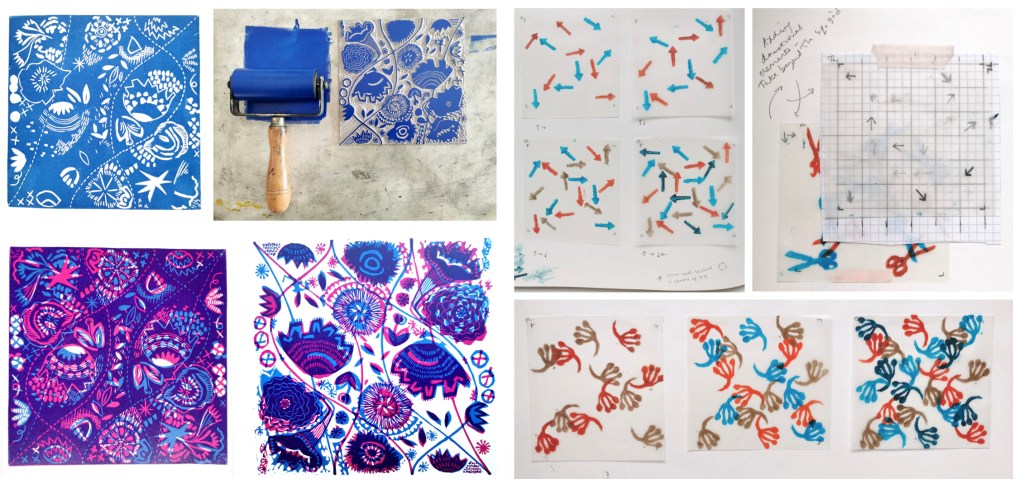
I am continuing to develop both lino blocks as well as artwork for screen printing, which enables me to test different colour handling and substrate options, for wallpaper and cloth. Colour is an important element of this research and particularly the transparency of colour in the overprinting, so the palettes will continue to evolve as I continue the exploration of primary and secondary colours.
As I gear up to making larger work for an upcoming showcase opportunity I look forward to sharing more of the work in progress.
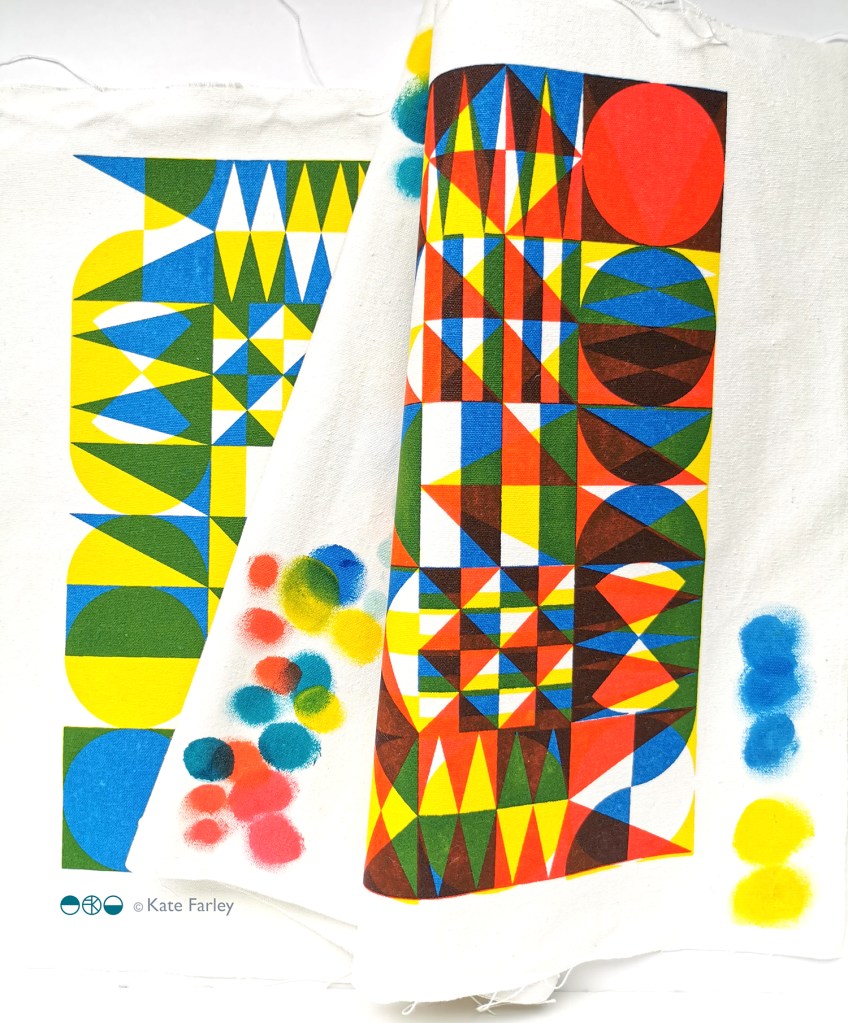
After a long academic term leading the Textile Degree at Norwich University of the Arts I finally found some time to get in to the workshop and sample some designs on fabrics. I developed the patterns rather a while ago. I love the process of screen printing, from mixing the colours, exposing the screens, pulling the squeegee and of course lifting the screen to see the new print. I even enjoy washing the screens ready for the next time!
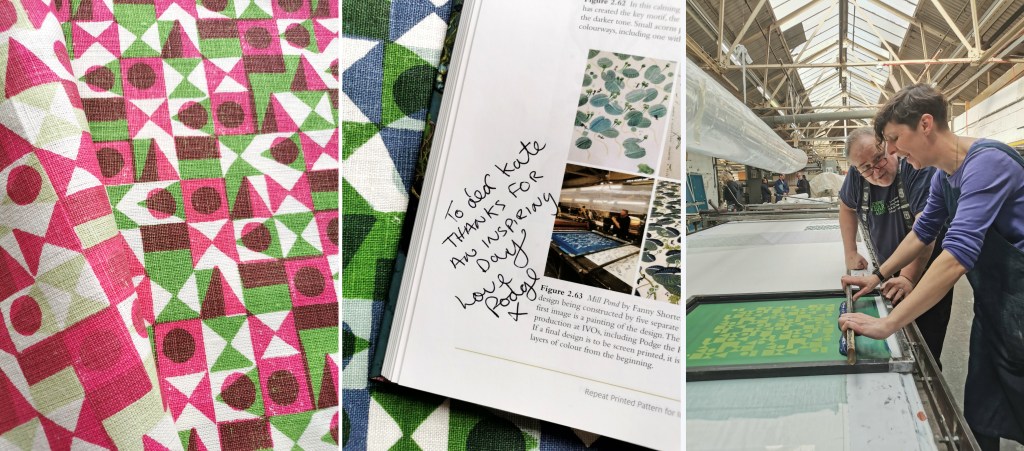
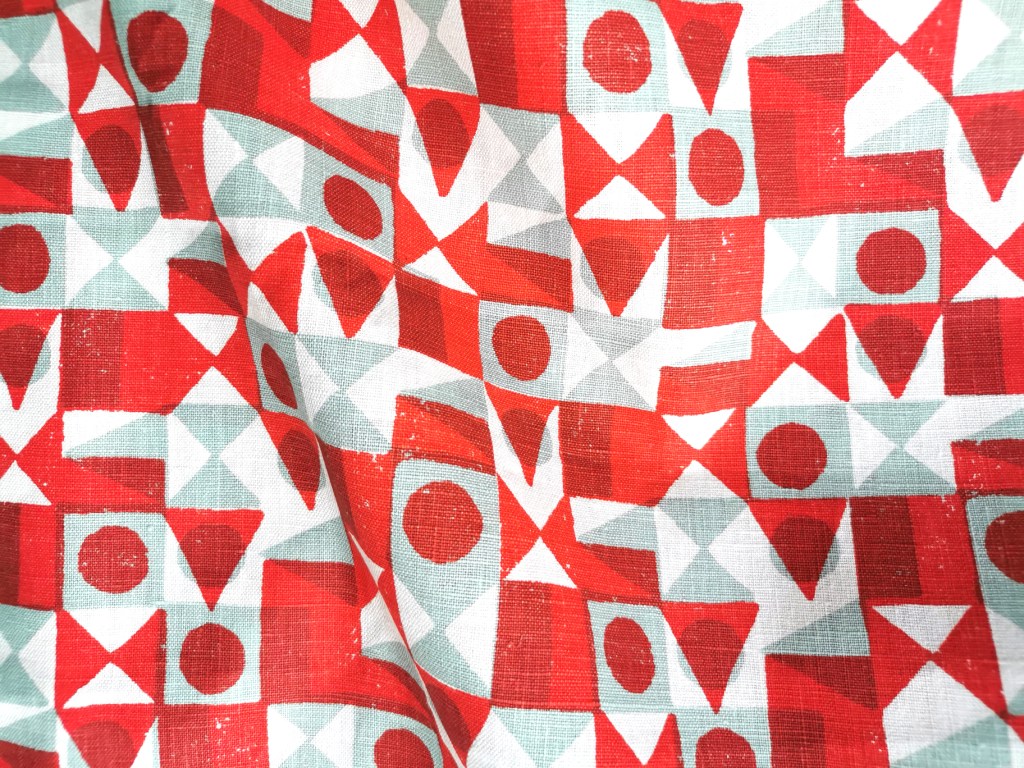
I’m not going to share all the outcomes at this point, but here’s a taster of the colours and a glimpse of one of the designs. I was working with transparencies in the pigment and binder to create the extra colours… and I’m really excited about the results!
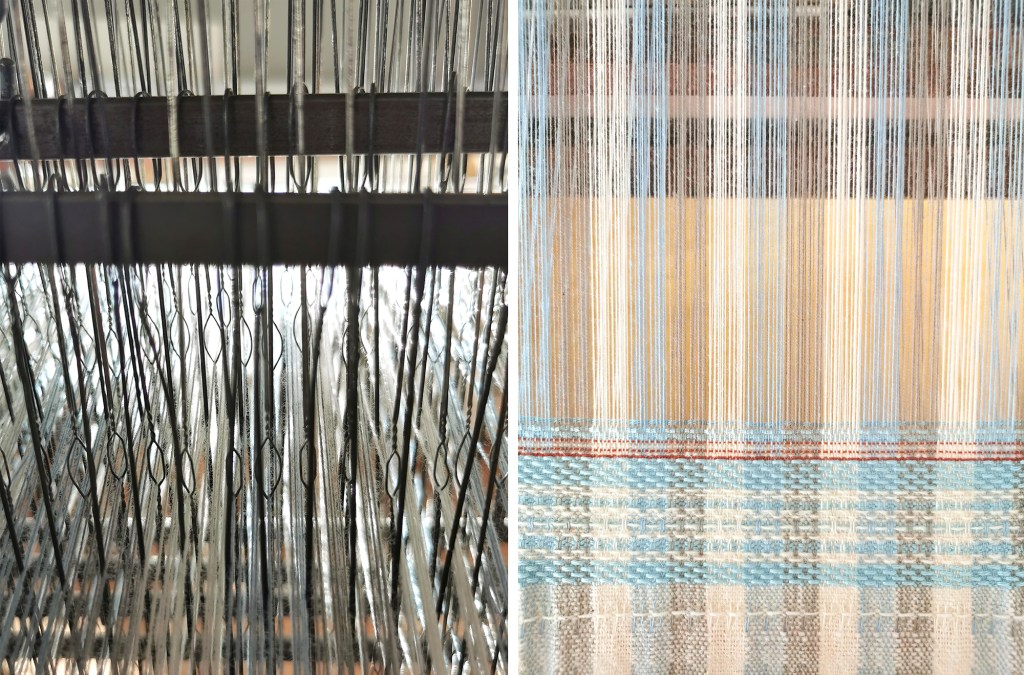
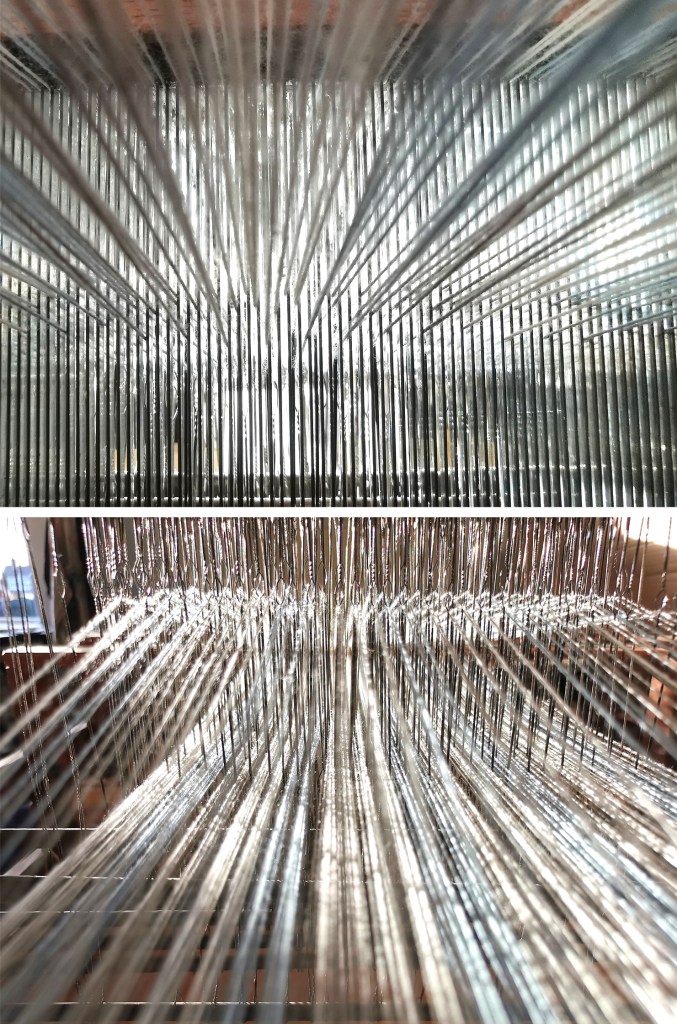
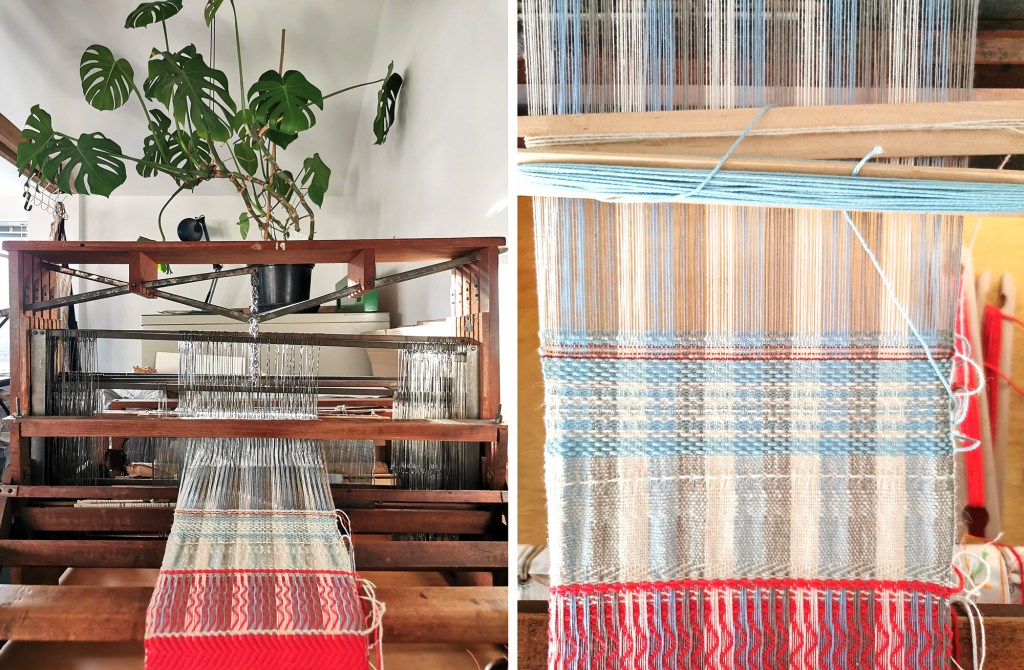
I was gifted my loom as a leaving gift from my colleagues at Birmingham City University six years ago and I’ve still got a little of the seven yards left. I’ve thoroughly enjoyed spending some spare hours over the last few years making cloth and the chapters of weaving are a record of my relationship with colours, found materials, and technical tests I’ve undertaken at the loom. As a printer this is not my natural habitat!
With a newly sorted studio space I noticed the sun was streaming in through the windows and on to the loom, so I made time last weekend to get back to my warp and weft threads. I am using the process a bit like drawing as I create marks and rhythms through textures and colour. While I’m looking forward to being able to see the entire warp woven, it’s more about the process of weaving that I’m really enjoying, and in some ways I don’t want the length to end… that’s my excuse anyway!
Part of my academic role at Norwich University of the Arts is dedicated to my research practice, exploring new knowledge in pattern and print design. Following on from the publication of my book I’ve been keen to get out in to industry and expand my practical experience of print production methods that could enable new ways of designing repeating patterns for paper and cloth. These visits also provide excellent opportunities for me to develop ideas for curriculum changes in the undergraduate course I lead, BA (Hons) Textile Design at Norwich University of the Arts, to ensure our graduates are competitive in securing roles on graduation.
A couple of years ago I spoke to Director of Ivo Textiles Limited, Suzie Zatka-Haas following her visit to our stand at New Designers, a graduate showcase held annually in London. She was keen to understand the best way to promote opportunities in the company to graduates and we discussed the right terms and definitions to ensure textiles students were attracted to the roles. We also discussed the skills they value at Ivo’s and how we can ensure students understand the potential roles open to them, (we have had a Norwich graduate work at Ivo’s for the last few years). We are both passionate about printed cloth and Suzie invited me to visit the factory when I could fit it in around my teaching schedule.
Fast-forward two years and I managed to secure some funding to spend two days onsite at Ivo’s to understand more about the technical constraints of the different printing processes they offer to clients. Suzie was brilliant in making this happen, being open to allowing me in to the factory to learn more. This felt very exciting but I wasn’t fully sure what I’d be able to help with although I offered to assist with anything. I was armed with my printing apron and old clothes—following advice from Suzie!—as well as my sketchbook of design ideas for my current research project in case I had time to talk it through with anyone.
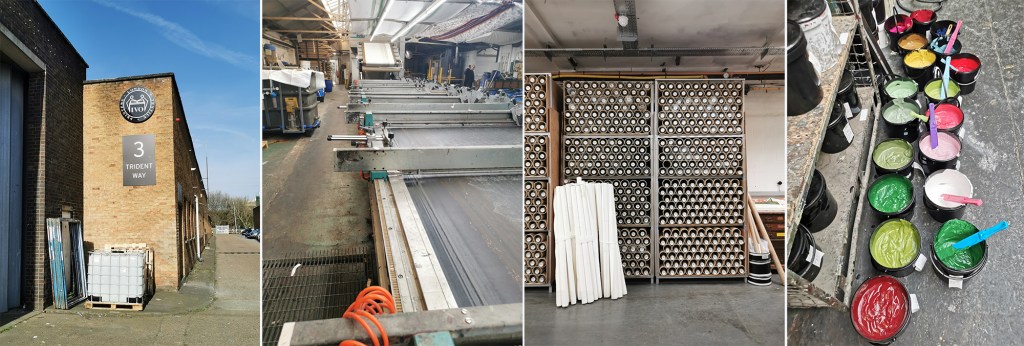
The day before my visit I’d spent the afternoon with Marthe Armitage (blog post here) in her much smaller set-up so I knew this was going to be a contrast. Walking on to a large industrial estate in west London with huge lorries thundering by, the only clue of what was going on inside number 3 were some screen frames leaning up against the outside wall awaiting collection. I was greeted at Reception and my name had made it on to the board for the day.
Once the health and safety briefing was over I was led through the factory, trying to take it all in: sights, sounds and smells, and I was re-introduced to Maisie, one of Ivo’s designers that I’d met at New Designers last year. She was to be my host for my stay and ensure I didn’t do anything silly, like wander off and put my hands in the machines. I’m incredibly grateful to Maisie for her time and interest in what I am doing. We discussed university training, the Ivo design studio set-up and then I shared with her my project. It is so useful to talk it through with different people as they all bring ways of looking and new questions.
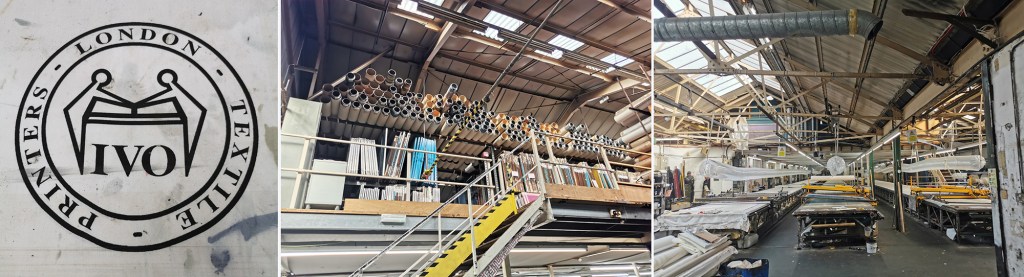
A full tour of the factory was next. There is a vast supply of cloth and screens in every space imaginable, alongside huge machines, some in action and some not, as the job list requires. The colouration department was a room of inks and colour swatches, and the colourist making and matching colour for all the processes. The colourist has been working for considerable time at Ivo’s, like so many there, they are absolute experts in what they do.
I saw the Flatbed printer working on my first day. Large flat screens raise and lower mechanically and the fabric is on the belt below, which moves along after every print is made for each colour to be printed with the subsequent screens. The belt is very long, with many metres passing by before all the colours are printed and the fabric heads off to be baked for the colour to be set at the far end of the table. I was busy taking notes and asking questions. That day a client was onsite to quality-control the printing before signing it off for production.
There is a large archive of artwork from decades ago, spanning the thousands of jobs that have been made here. Original acetates and drawings are rolled up in drawers holding the stories of design. I wasn’t able to photograph the examples – client confidentiality is important here, but it was exciting to see some key players of the 1960s featured. Maisie told me the incredible story of how Ivo’s came to be, and I met Michael, who’s family story it is, leading the company with Suzie.
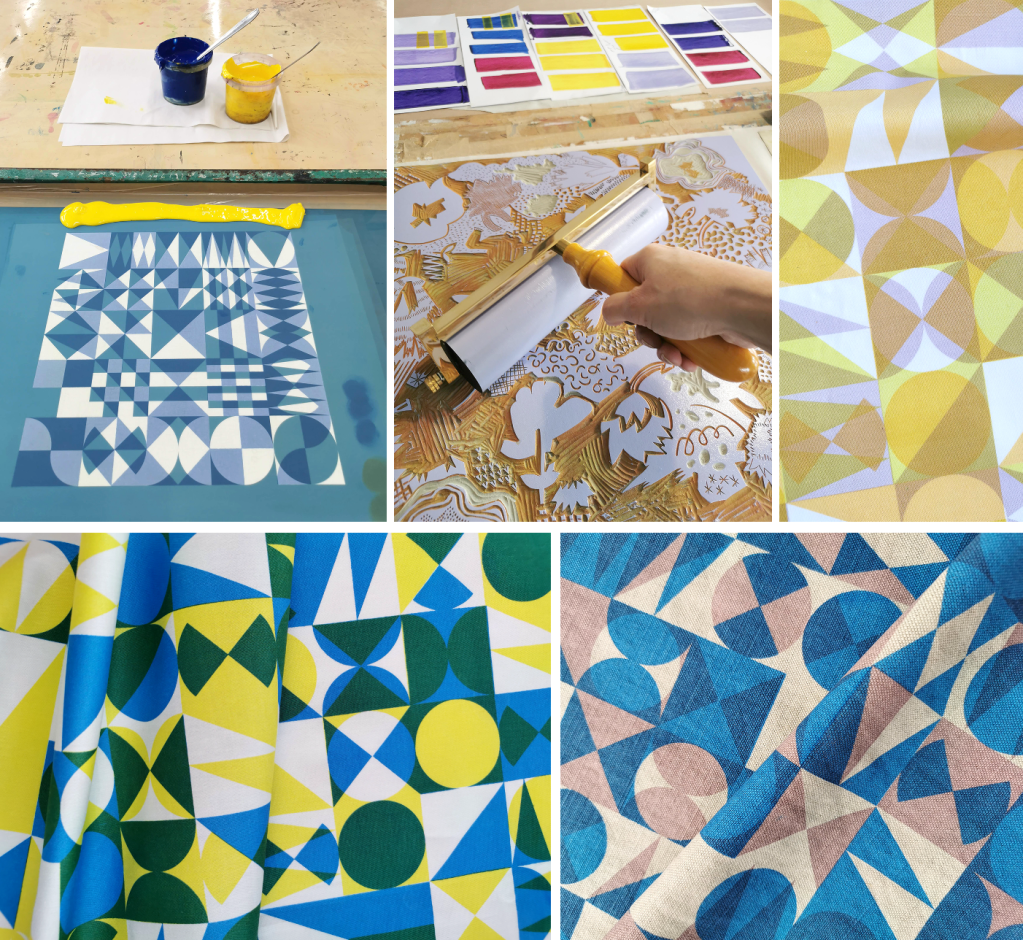
Gali printing is a further printing process used at Ivo’s (the two tables with yellow frames in the picture above, right). The print tables are fifty metres long! The screens are set up in frames and are mechanically moved up and down, with a mechanised squeegee passing over the inked screen, before lifting up and moving down to the next place to print. It is carefully operated and requires skill and a keen eye to ensure everything is happening correctly with good quality each time. The screens are then changed for each colour and the same processes run again – the gali print operator will walk several miles in creating a ten colour design!
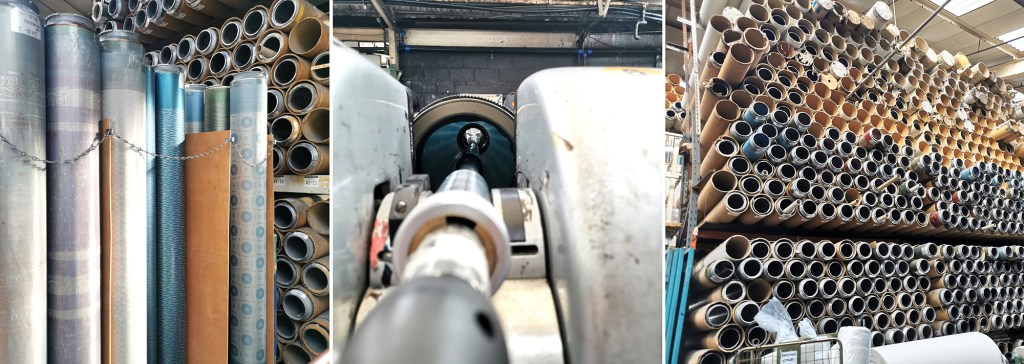
The process I was most intrigued to see was the Rotary printer. Unlike the flat screens, the artwork is prepared on a mesh that is on a cylinder (image below left). The circumference of the cylinder is the repeat size, creating a seamless repeat with fast production. A different cylinder is required for each colour, just as a flat screen per colour is required, but unlike flat bed / gali and hand printing, the squeegee sits inside the cylinder, and with the use of a magnet is pulled down to apply the pressure and add ink to the cloth through the mesh as it turns. Seeing these machines printing many colours at once is fascinating, unfortunately I couldn’t take pictures as it was printing for a client.
On my first day at Ivo’s I also saw a length being hand screen printed, but again, no pictures. It was a very slick operation that is clearly well-rehearsed!
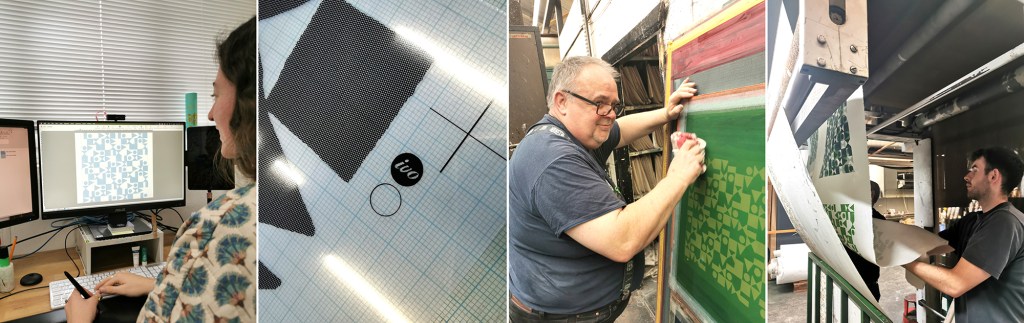
Following the tour we returned to the design studio and I was introduced to some of the different design tasks the designers are involved in. A new graduate had recently started, Caris, so it was good to see her settling in well and enjoying her first professional experience, guided by Maisie. Putting original artwork in to repeat can take several weeks with meticulous digital design work using AVA software. Maisie upped the excitement by suggesting we could work on one of my designs that afternoon and have a day printing with Podge the Printer, a legend for those in the know – wow! Maisie prepped the artwork, with me taking notes and soon the screen positives were ready to be exposed.
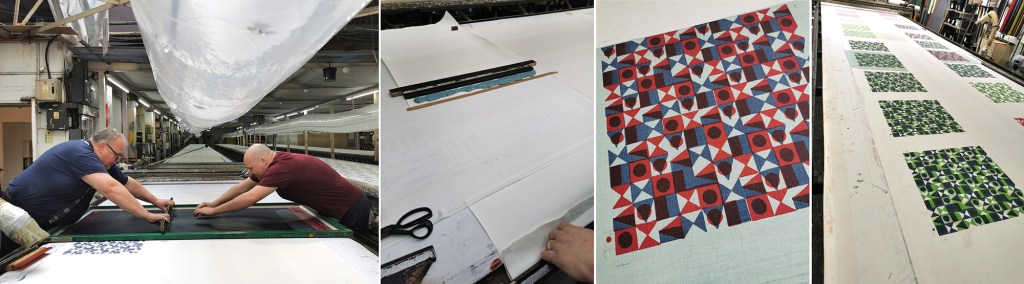
Arriving on the second day, my screens were ready, Podge had prepped the table laying lots of fabric down for me to print on to. Podge is a character – we hit it off! At first he wasn’t quite sure what my research was about, but soon he was getting in to the spirit of it and suggesting options. He said it made a change to have someone exploring options rather than simply being in production mode. We chose some large screens from the archive to add a few tricks he had up his sleeve. Buckets of colour were mine to use. I had a lesson in printing the Podge way and he made sure I held the squeegee at the correct angle with hands over the top – he kept monitoring me so I had to stay on it! He also showed me the S-blade method of printing flat colour without the screen – surprisingly satisfying.
Factory lunch is a set 30 minutes and soon we were back in action. Each time I wanted to change colour, the screen was taken away to be washed / dried ready. I’m not used to having such (any) great service and support when I print in my own studio! It was a really productive day with many metres of fabric printed with several layers of colour, testing my research ideas. Podge’s son who spends lots of time on the Gali came to lend a hand at printing the larger screens, enabling me to try other prints over the top.
With the deadline to get my fabric set we had to stop printing, I watched as the fabric went through the baker and it came out very hot, but ready for home. I was exhausted, it was hot in the factory and I’d been busy on my feet since 8am. One of the last jobs was to ask Podge to write in the special copy of my book on pattern, as he was included in an image supplied by Fanny Shorter who prints here.
At the end of the day I caught back up with Suzie and thanked her for the opportunity she enabled me to have at Ivo’s. The factory has to run smoothly, meeting industry deadlines and costings for clients so to be open for me to learn from them and explore my research with their expertise was an absolute privilege – they were very generous. I headed home with a bag full of printed cloth and I ached all over from such a physical day, but with a head full of the experience I won’t forget in a hurry … Thank you all at Ivo’s!
Combining a design career with an academic role often means my weeks are busy and varied, but I had a week at the beginning of this month that was very different to the rest! I’ve been lucky enough to be given an amazing experience as academic at Norwich University of the Arts – a trip to Armenia. The university was successful in securing a British Council bid to work with students at the Tumo Institute in Yerevan, Armenia to help students to create design work with the aim of making products to sell when they come to work at the university in a few weeks time. This is speed educating! A team of three of us, Will – a business mentor from the university, Mia – a graduate from the BA in Textile Design and me – the lead subject academic. Fortunately we all got on brilliantly, complimenting each others’ skills and all being very happy to adapt in order to make the most of the experience. I was only able to be there a few days, while the other two stayed longer.
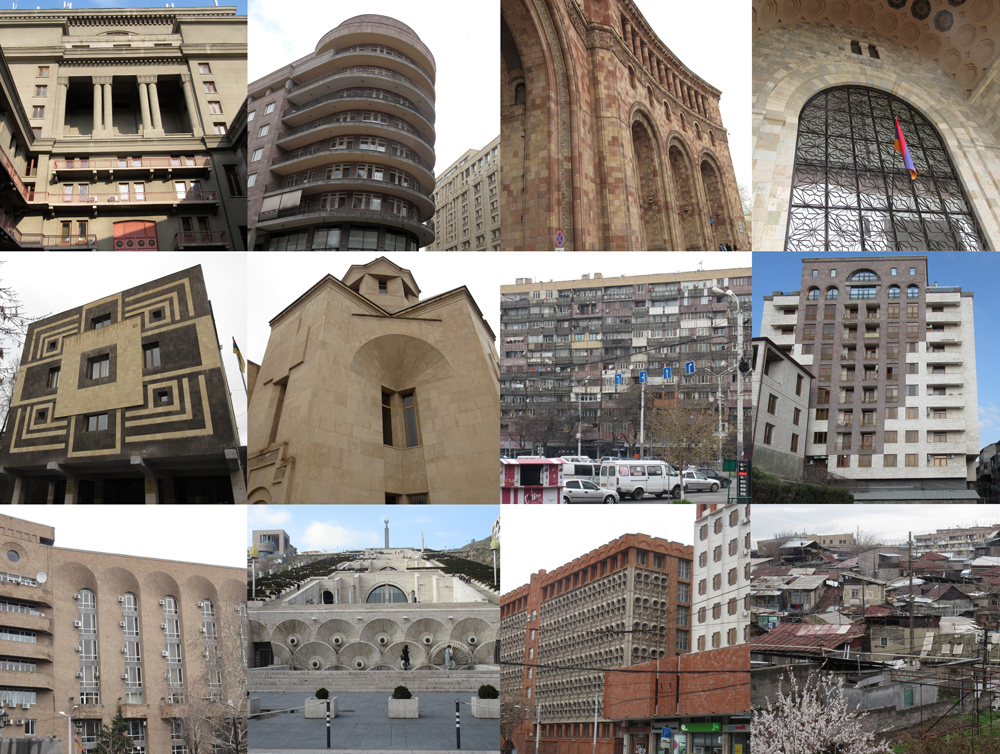
The journey was long, transferring in Istanbul and we arrived in Yerevan in the middle of the night so it wasn’t until the morning that we could see what the city looked like. We had some time to rest, so we didn’t! … and instead got up and explored … of course! The architecture was a mix of Modernist Brutalism, Art Deco and Post-Modernism mainly and a pink stone was dominant. Many of the buildings featured wonderful carvings and at many points all three of us were heads and cameras up capturing the city. The food in Yerevan was a complete hit with us and I could have stayed far longer and become far wider. Everywhere we went there was wonderful fresh produce: cheeses and meats, pastries, vegetables and breads, all beautifully presented. Luckily we were all happy to share the dishes to ensure we could try as much as possible.
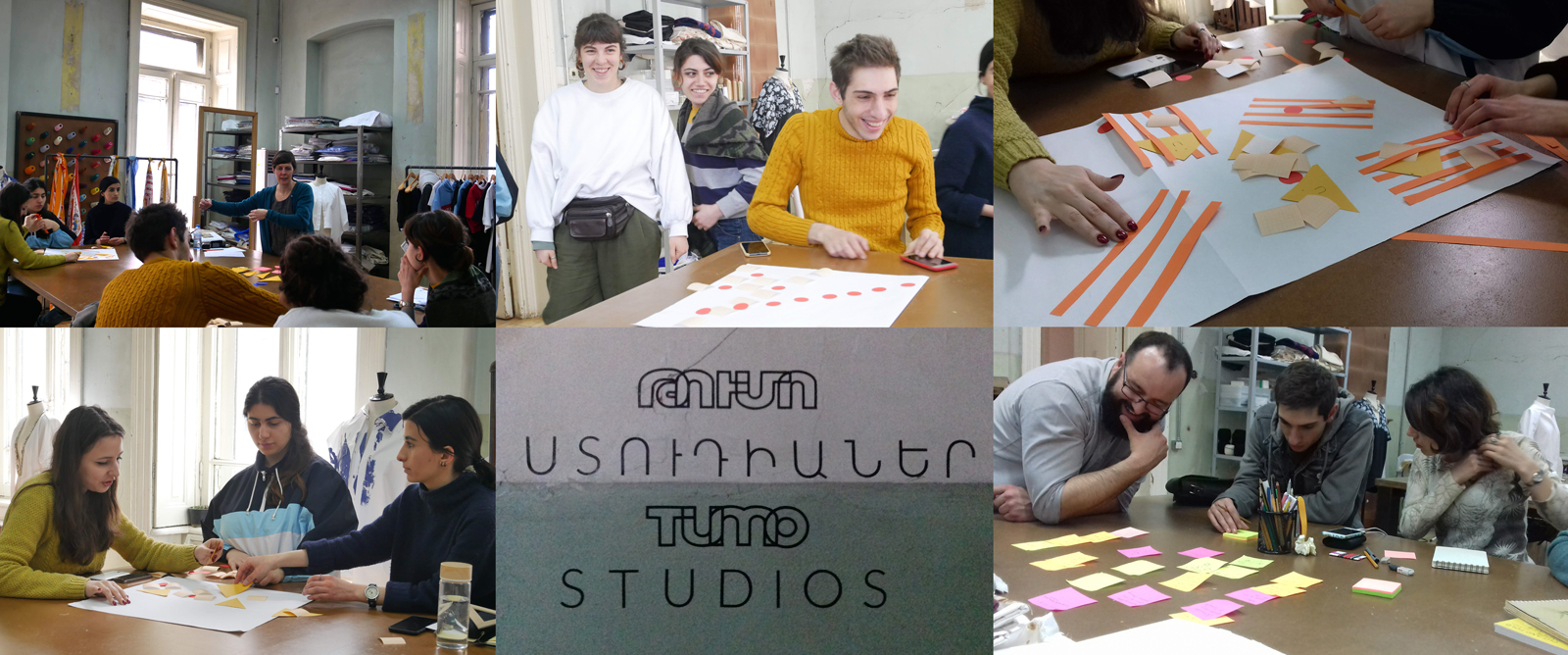
There was much excitement as we went to meet the team of students we were going to be working with, and we took examples of our work to introduce ourselves as well as a general plan, and open ears, so we could discuss with them all their own creative ambitions. These first few days were really important to get the project up and running before I had to return to the UK. Tumo studios was set up on the first floor of what was previously home to a wealthy family and there were signs of the better days including murals on the ceilings and ornate tiles. The workshop spaces were really inspiring, catering for print, ceramics, jewellery, sewing and more. Products made by students were available for sale too.
Everyone was very friendly and helpful, as well as really excited to get stuck in. We shared our ideas and thoughts about the project and Mia and I talked briefly through some of our own work. The first afternoon went by quickly and then the three of us were off to explore the city again – I really wanted to see Mount Ararat – the mountain taller than Mont Blanc, (and apparent resting place of Noah’s ark) that has in history been on Armenian soil, but is now behind a Turkish border. We climbed steps and more steps to the highest part of the city giving us views over the varied levels of prosperity in the capital . With sunglasses on, when there was a break in the clouds we could just spot the snow and shady top of Ararat, but sadly the view was not easily captured on camera – Wikipedia has better pics!
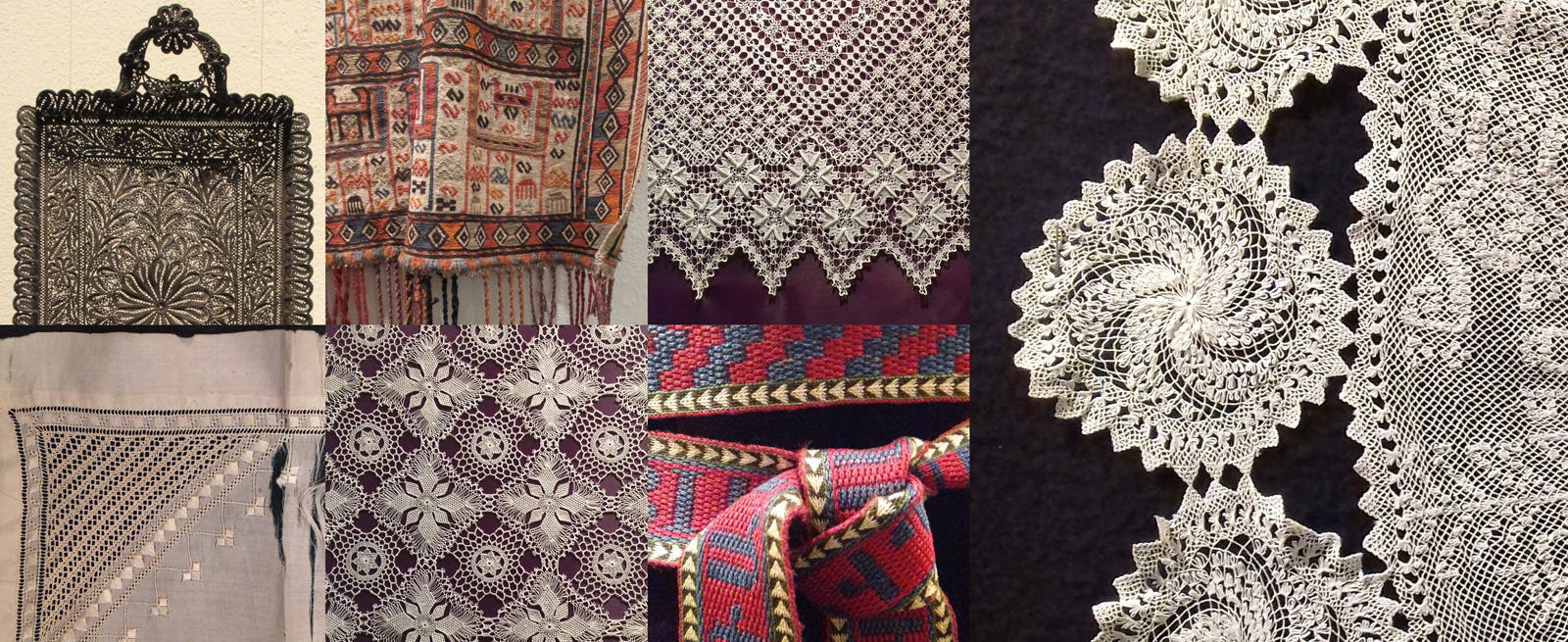
The next day was a very long but hugely inspiring one. With our local guides and our researcher eyes in we set off to visit three fabulous places to gain inspiration. The city museum presented the history of Armenia. We learned about traditions, society, historic events and politics, and of course the section about the Armenian genocide was hugely upsetting. We were not allowed to take photographs there but we had other places to go so we crossed the city, including a short trip on the metro (it has one line) to get to the Folk Museum. This was a smaller museum but packed with so much beauty! Here we heard about and saw the traditional crafts and our guide explained the processes, tools and materials involved. I took many photographs! The lace and filigree were particular favourites of mine.
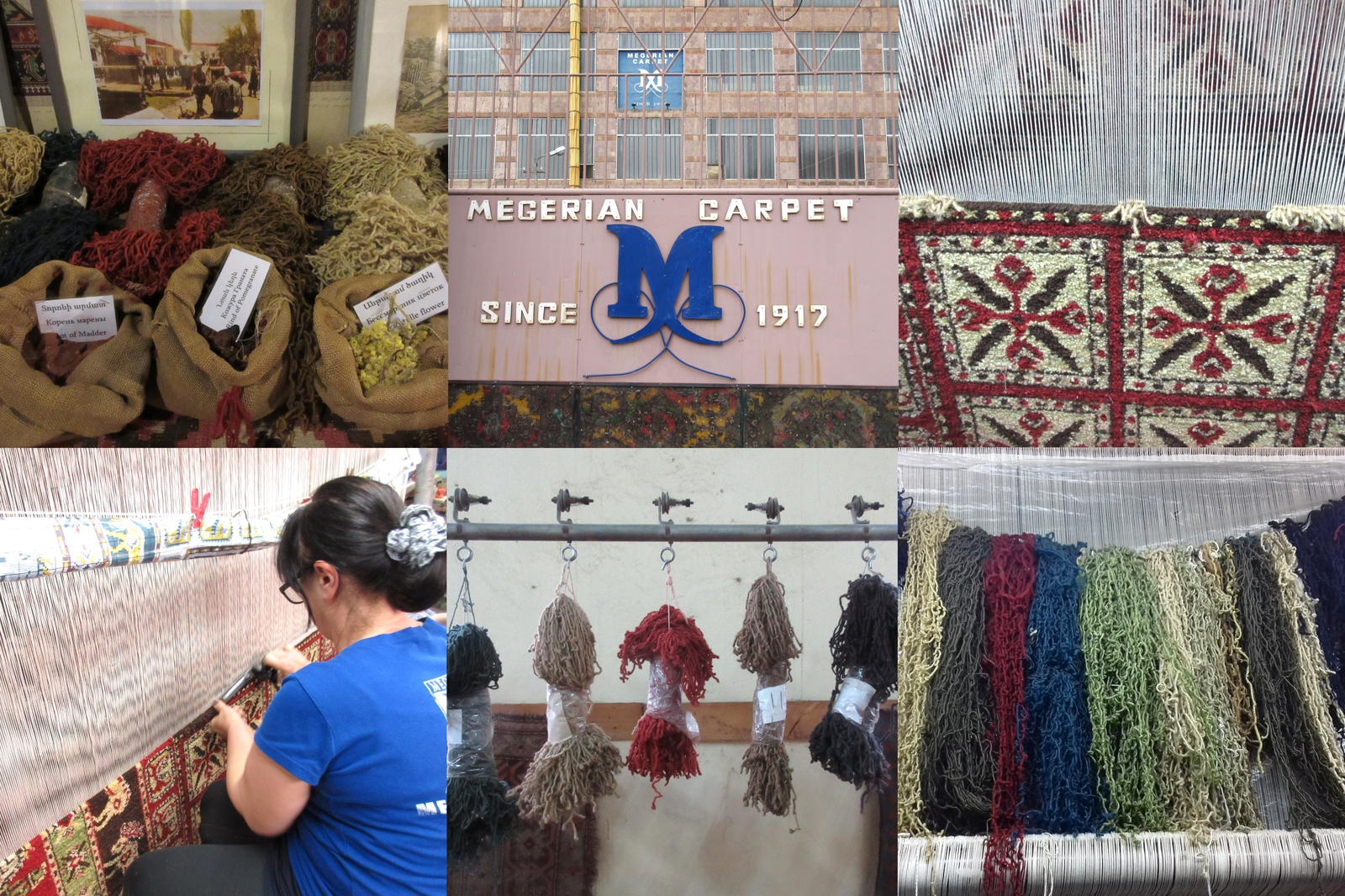
We were full of inspiration but needed energy so lunch was in a restaurant with our hosts helping us to navigate a menu of local dishes – I had lamb soup with pomegranate and mint – it was very good! Soon we were whisked off to the carpet museum / factory and the journey was a great opportunity to see more of the city and suburbs. It was fascinating to hear the history of carpet / rug making in Armenia and I even had a go at learning the right knot but I was very slow in comparison – there is video footage somewhere – and in the picture below, top row, right hand side, you can see my four cream coloured tufts that they have no doubt got rid of once I turned my eyes!
The colours used to dye the yarns are still made from natural ingredients and it was right up Mia’s street! There were some secret ingredients of course! We were all inspired by the sights, stories and the motifs, border patterns and processes involved. What an amazing day. We headed back to the studio to think about what we had seen, captured some ideas on some post-it notes and discussed the plans for the next day. Another evening of foraging fabulous food in the restaurants of Yerevan did us well – we all ate too much again.
My final full day was spent in Tumo studios leading some workshops to develop the projects. Will, Mia and I planned the next week of workshops and activities, sharing all our different knowledge and experience, alongside talking through the individual ideas with the participants. I ran a session about motif and composition development and it was fascinating to see how differently these young people took on the challenge compared to the undergraduates in England I have worked with. These students were far happier to play with the process and not worry about it not working, and gave the testing much more time. Can this be the different schooling? Several attempts at the same thing, sharing and much discussion, lots of giggling and trying again got us to where we needed to be, lunch!
We decided to eat all together in the studio so we ordered in food, (I tried cheese soup – it really is like fondue) and as we sat together we tried to learn some of the language … we laughed a lot. We were also bought a local honey cake to try which was very good. In the afternoon I led a practical session about repeat patterns and design rhythms, and again we talked through individual ambitions for design ideas and product potential. The participants will be heading to Norwich next month to develop and resolve product outcomes to test in a commercial setting. We discussed differences between Norwich and Yerevan and about the next phase of the project. At times we had visitors popping in to see what was going on but we kept on track and too soon I was having to say my farewells and leave the group – with the silver lining of knowing I’d see them in Norwich in May.
One more meal, a final evening with Will and Mia, a supermarket sweep around a 24/7 shop to buy gifts, back to the hotel to pack up, a twenty minute nap and that was that, it was Thursday – I flew out of Yerevan in the very early hours, swapping ‘planes in Istanbul and on to home.
I was so sad to leave the people and city, and was so envious that Mia and Will had another week to see more. In only a few days I had experienced somewhere so interesting that before getting there had felt daunting. Everyone we met were so friendly, helpful and proud of the city and country. I had the chance to learn about a different country and textile culture while working on a really different project, testing my teaching in a very different situation. It really was a great opportunity, hooray for saying yes!
Thanks to Will and Mia for some of the photography and being such great team mates!
If you are interested in textiles and haven’t heard about the Anni Albers show now on at Tate Modern in London, then a.) where have you been? and b.) get there fast if you can!
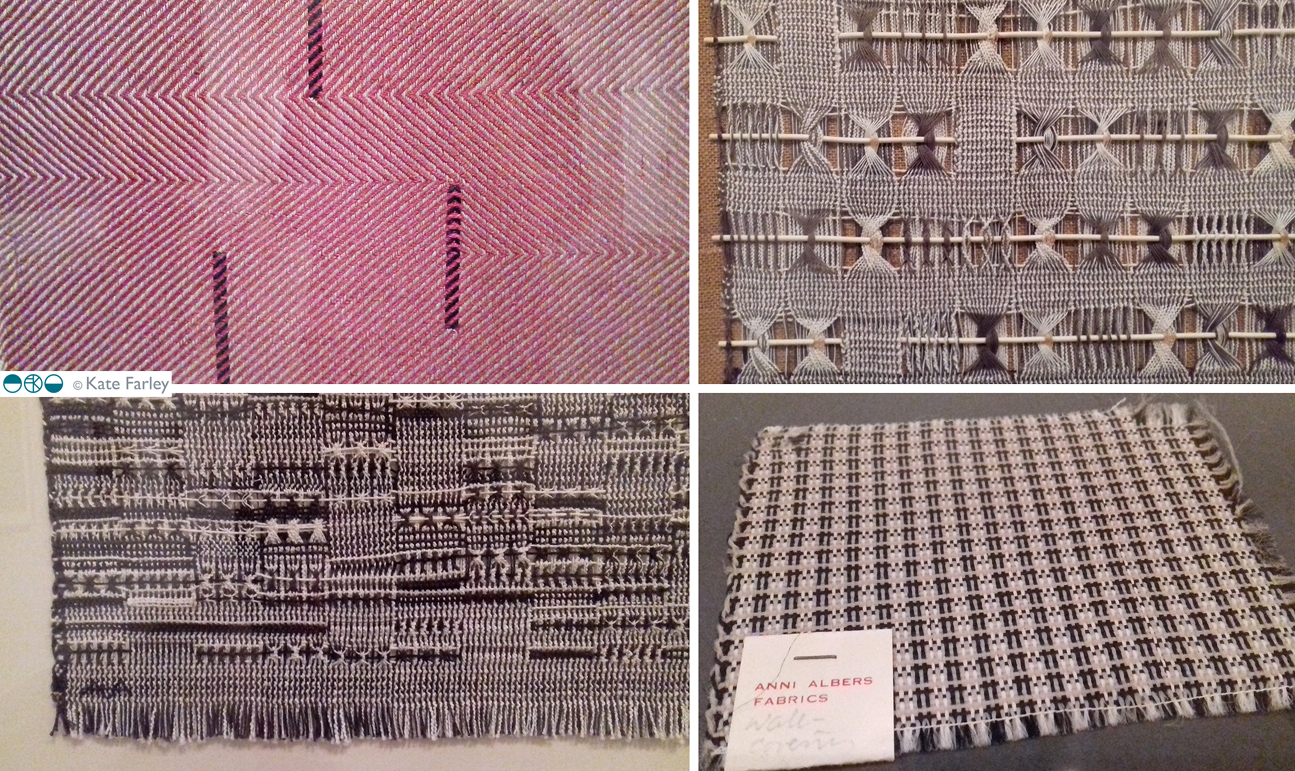
This has been a much anticipated show for me. Having been enjoying many other people’s pictures via Instagram since the exhibition opened I was most excited to get to the show and I’m so glad I did – I went round it several times and breathed in the history I had learned as an art student myself; typewriter patterns from Bauhaus lessons, the infamous diploma piece with sounds absorbing properties in the yarn, and those classic Bauhaus photographs, but there was so much more. Colour, cloth, pattern, rhythms, photographs, works on paper, products … The woven structures and yarns drew everyone in for a closer look – so much so that the alarms kept being set off and the guilty took a sheepish step back! There was a fascinating display of the research of historical textiles from Albers’ own collection that made perfect sense in how she interpreted and worked with the process of weaving.
Experimental, commercial commissions, religious pieces and jewellery are some of the aspects of this considerable show. As with most well-received shows, the audience conversations themselves were fascinating; lots of discussions about experiences of weaving, hours at the loom as well as working out what she must have done.
It has been the architects, the painters and the product designers, usually men, who have become far more well known from the Bauhaus, including Anni’s husband Josef Albers. The avant-garde German art school’s first director Walter Gropius stated there were equal opportunities for all when it was established in 1919 and yet women were generally encouraged towards the textiles workshop, a place and craft deemed more suitable. Anni never let this distract from her focus despite wanting to be a painter. Her creative output of a lifetime, as edited in this exhibition, goes a long way to demonstrate her will to explore both the context of design and the development of art. She will have no doubt inspired many who have been introduced to her as a result of the show and her legacy will continue to influence far beyond the context of textiles as a craft for women. I came away with many notes and a head filled textile excitement – happy weaving everyone!
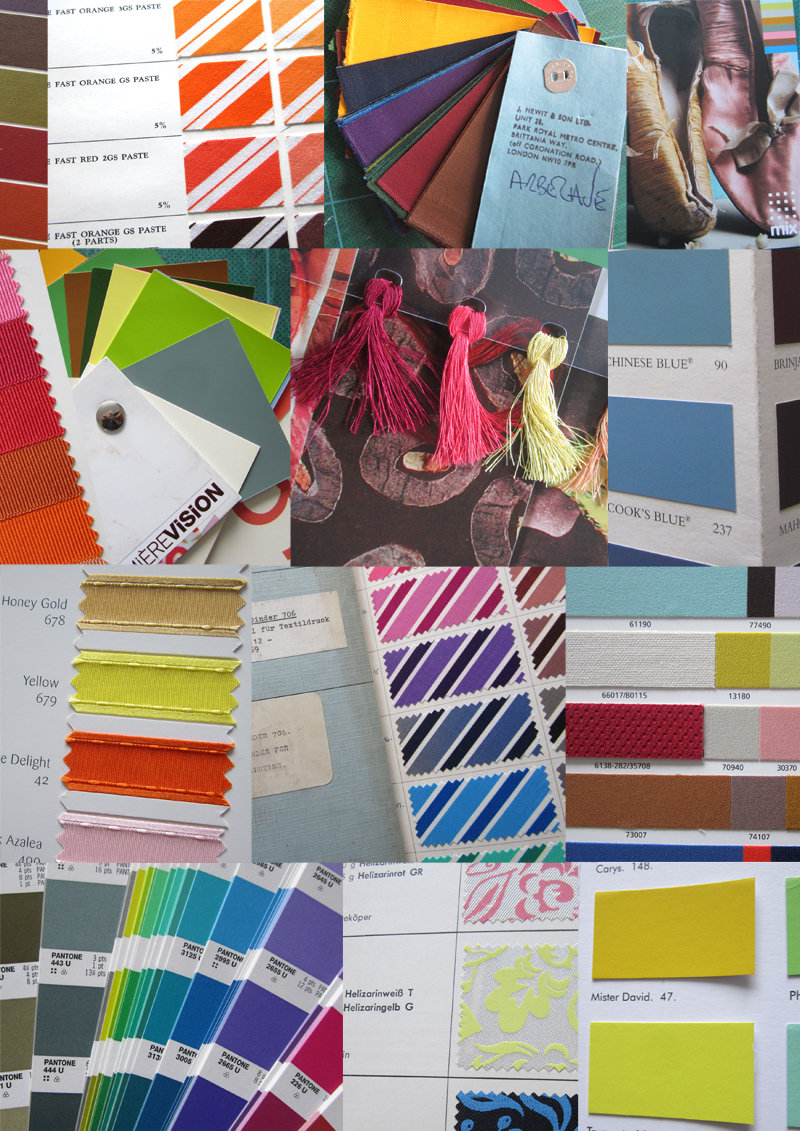
Evocative, technical, predictive, informative, for matching, mixing, ordering, cataloguing, of materials, surfaces, finishes, whims and traditions…
Working across the fields of surface design, textiles, public art and fine art I have come across many ways to represent colour in order to communicate qualities. Whether it be for perfecting a match for production, or generating an evocative palette for a client, each niche within the industry has its way of doing things. Black for the Northern Line, double yellow for no parking, gold for the winner, and red for wrong. From Global Color, to Farrow & Ball, Pantone to Berisfords the language of colour is key. Some give codes, other names, sometimes a swatch, others a smudge, universal, local, a science and an art!
Seductive, formal, in a book, or on a card, each help to create the colours in the world around us, and while the skills of the individuals choosing, producing and matching will no doubt be overlooked by most, may the colours continue to sing, calm, provoke and much more.
I’ve brought some of the various forms of colour I work with together to brighten up this grey, wet Monday in February.

 Kate Farley - drawn to design