The season of textile design portfolios

As a student traveling up and down the country for interviews for a place on a degree course back in the mid 1990s I had little idea of what I would do on the degree course, let alone beyond the eternity of three years studying. My A1 black portfolio demonstrated my love of drawing, printmaking, pattern and ‘potential’. Now, in my role of lecturer at Birmingham City University each year I participate in the rounds of interviews to select the new members of our textile community and each year as I help them open the black A1 folio it reminds me of the journey I started all those year ago. The industry has changed, the world has changed, technology is utterly different and yet those nerves belonging to those individuals are as real as ever, and I remember that feeling so clearly. The unknown, the untrodden path I stumbled along; the Norfolk girl living in Leeds to turn drawings in to designs.

I’ve questioned most decisions I’ve made along the way, worrying about whether I should study art or design, printmaking or illustration, book art or textiles and yet somehow I seem to have all of those elements in my everyday practice, and that suits me fine. I remember the challenging task of confirming a description of myself and practice for my graduation show and degree postcard. (I opted for Artist / Designer, in case you wonder.) I couldn’t get the wording right, and really thought it mattered.

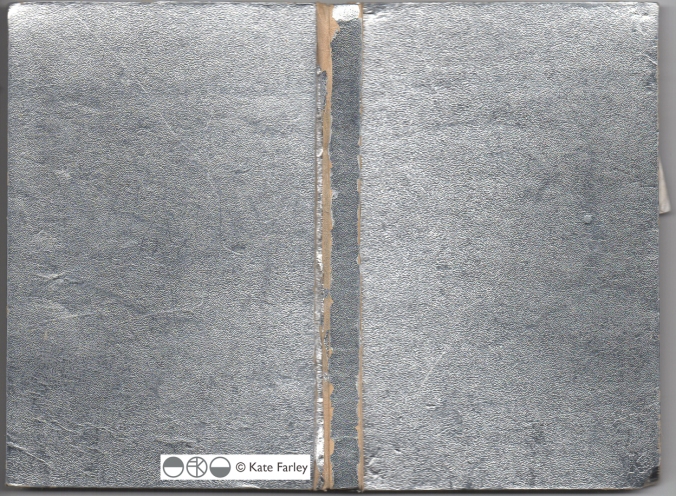
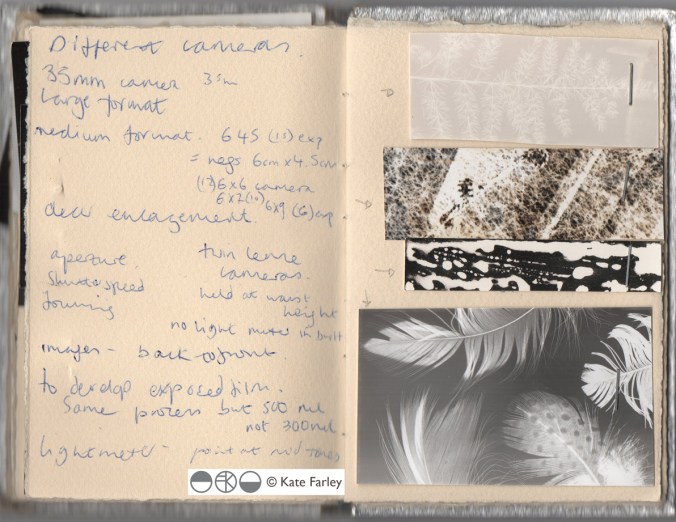
KF_degree_blog(images from degree study)

Having spent last Saturday interviewing students, on introduction I described myself to the visitors as a Printed Textile Designer, which in so many ways completely fails to describe what I do, but somehow seemed right to say at the time. Now I ask myself why it doesn’t fit and maybe I conclude that the term feels too predictable, so tidy, so comprehensive, and yet the thing I am most proud of in my career to date is the breadth of art and design experience I have gained, the materials I’ve designed for, the clients I’ve had, and the lessons I’ve learned, despite as a student, no idea that all that was possible on graduation.

Many times through the day I spoke with interviewees about their art and design experiences and came to realise that their own understanding of art and design had more to do with the educational delivery they were currently receiving and far less about how they defined themselves. An interesting conundrum, and after all that, does it really matter? What made me most excited about being part of the interview process was that all the students were starting out on their own journeys, some of which I hope I shall be involved in, and with the potential of a great course to guide them through, inspiring staff and great facilities they really can do all they understand they want, and so much more than that. Daunting, and exhilarating, and I wish them all good luck!

I didn’t know it at the time but the work I was creating all those years ago as a student still holds such relevance to me now, and it doesn’t matter what label I give myself, it’s all about the creative process, and I don’t worry about boundaries there…

the patterns of 2014

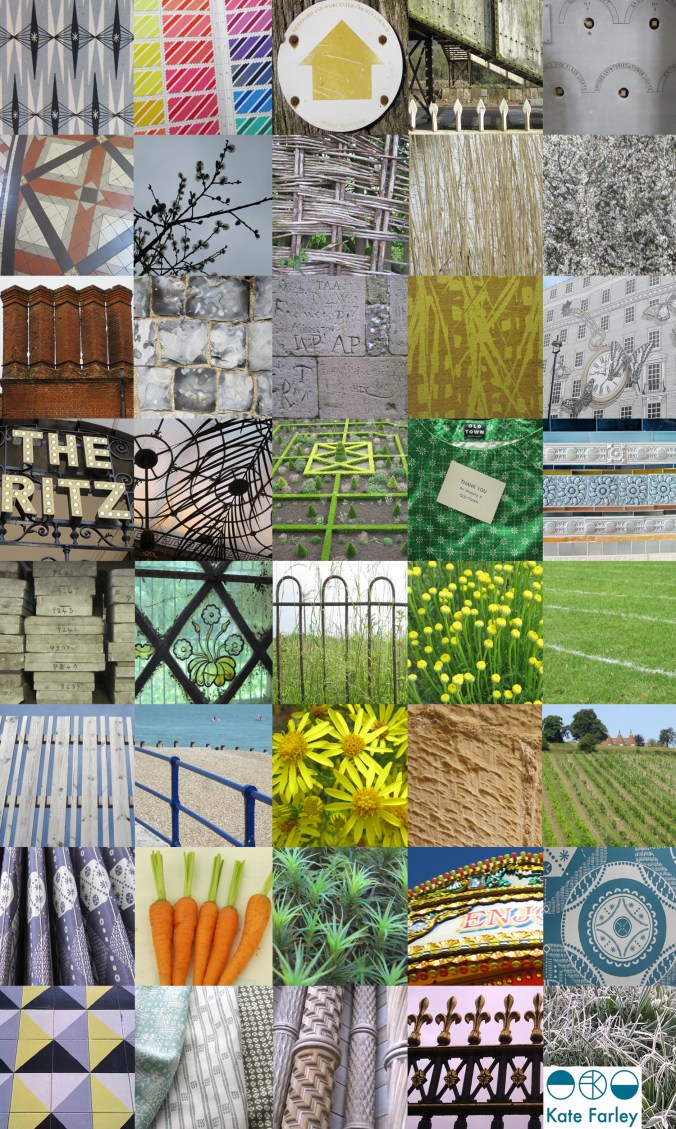
It’s been one of the years I shall remember as particularly busy, continuing to juggle the commitments of family life, my roles as artist, designer, lecturer and of course allotmenteer, and the small matter of a big Birthday. All the time spent doing any one of those things provided opportunities to spy inspiration, food for thought and visual stimuli for me so having looked back over the last twelve months I have enjoyed creating a record of the patterns I’ve seen. The record includes family holidays, research trips, and days out; from the school sports day track, Birthday celebrations, to the rivets in the railway bridge, the stately home and the walk to work, it’s a record of some of what I saw in 2014.

Key themes appear: geometry, stripes and railings and although in a chronological order, there are some great pairings in terms of colours, textures and pattern.

2014tiles_blog

a new starting line

I’ve spent more than two years developing designs and products in the ‘Plot to Plate‘ collection and was incredibly proud to show the collection, with the new ‘Hanbury’ wallpaper at TentLondon in the London Design Festival in September to a great reception. Allotments and kitchen gardens inspired the limited edition prints which inspired the patterns, British manufacturers make the products and I’ve documented much of this process here in the blog.

During this time I’ve also been working on really exciting projects that are at stages too early to share here, and I’ve created commercial print designs for clients in both interior and fashion sectors. Each of these briefs have been creative, with a variety of factors to balance, and most importantly with a client at the end of it. I enjoy juggling a range of projects, each one fulfilling my design drive, alongside my role as lecturer.

Now is the time to take stock of my own research practice again and take issue with ideas that have been germinating in the hinterland of my mind in relation to principle concerns in my design practice, which sit in harmony with my artistic and creative journey. It’s amazing how many threads of research and practice, when brought together make perfect sense, and reveal their value to me. Some discussions I had with visitors at TentLondon were opportunities to hear myself testing these notions, and so it is, back in the studio, with ink on a brush, ink on a roller and ink in the printer, I have started a new chapter, a new sketchbook and a new head-space.

It’s exciting, very daunting, and what drives me… I look forward to sharing this journey in the coming months, for now there is a glimpse…

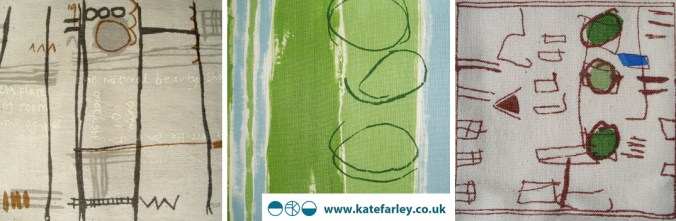
KateFarley_startingLine

working with nature and nature working with us

One of the things that has inspired and influenced my creative practice is how we work with the land; to farm, build roads, wear the paths where we shouldn’t walk as well as create boundaries. These are signs of man asserting influence over nature, and the natural landscape. Of course the way things were thousands of years ago will never return but modern-day farm machinery and larger field sizes are two things that have shaped our contemporary countryside.

I have never quite understood topiary but am intrigued when I see orchards with heavily structured boughs, turning a natural system in to a geometric diagram. We ask nature to do what it does not naturally want to do. We expect plants to grow in the wrong soils, because we like the look of them despite our climate, and we can be unforgiving if a ‘weed’ dares to grow where we don’t want it to.

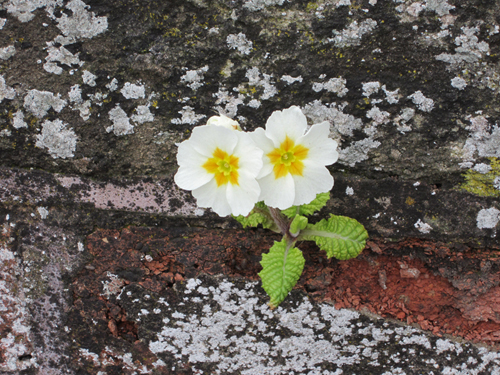
With this in mind I do like to see subversive and anarchic challenges from nature, and nature trying to make its mark where it shouldn’t. Like graffiti on the wrong walls; art in a gallery, vandalism on the streets, plants do sometimes have their own agenda. I found this beautiful plant surviving, flourishing even, in the mortar of a very old wall in Ledbury. It made me laugh. It wasn’t the usual ivy or buddleia, but a beautiful primula, proud as punch of its achievements. Okay, so the leaves are rather small relative to the flower heads but I couldnt help feeling rather pleased for it too.

Image