tribal textiles in the Midlands

Happy New year to you!

Seeing as I work in the professional world of textiles I’m not surprised that I spend more time than most considering our relationship with textiles. To simplify things – I question what relationship we have with fabric, and the inspiration behind our choices of garments and the materials, colours and patterns that we fill our wardrobes with – when we’ve picked the clothes up from the floor!

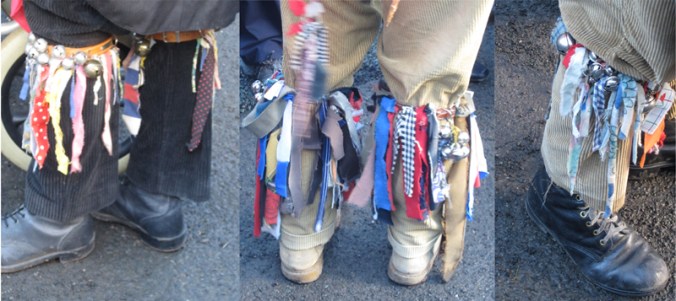
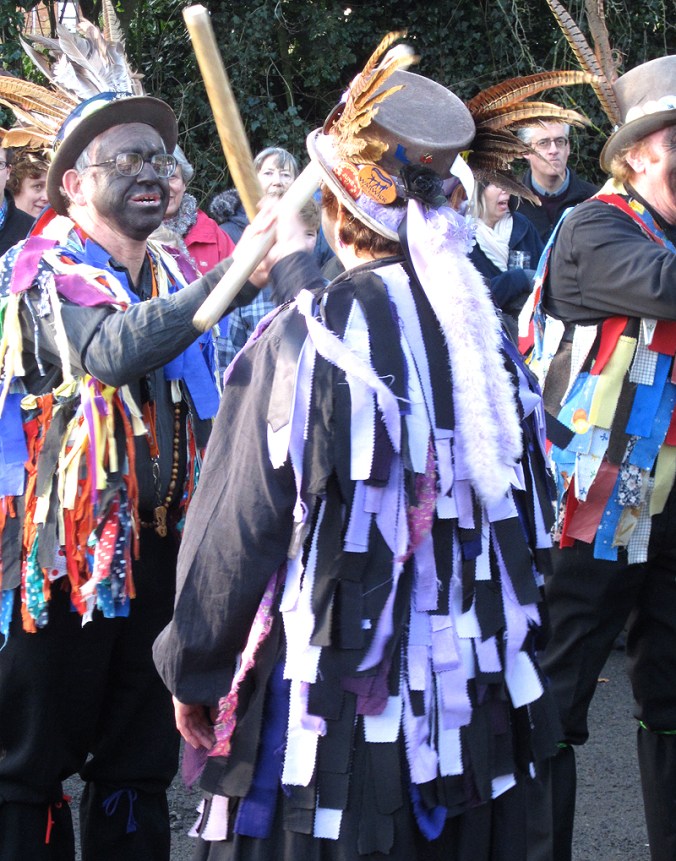
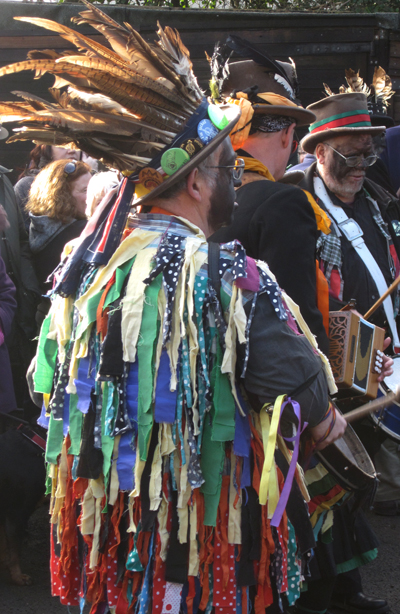
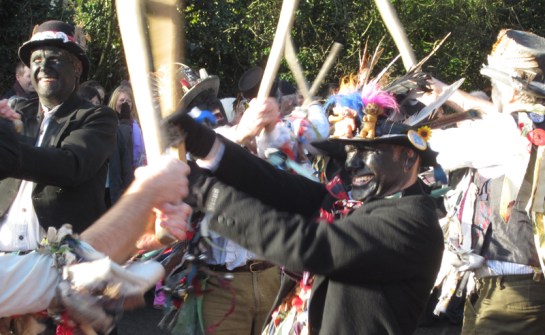
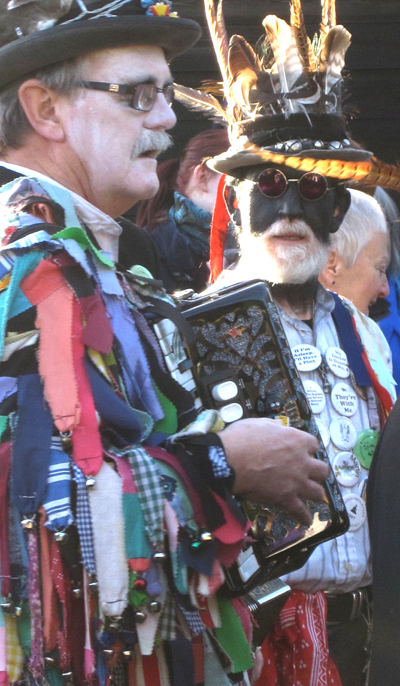
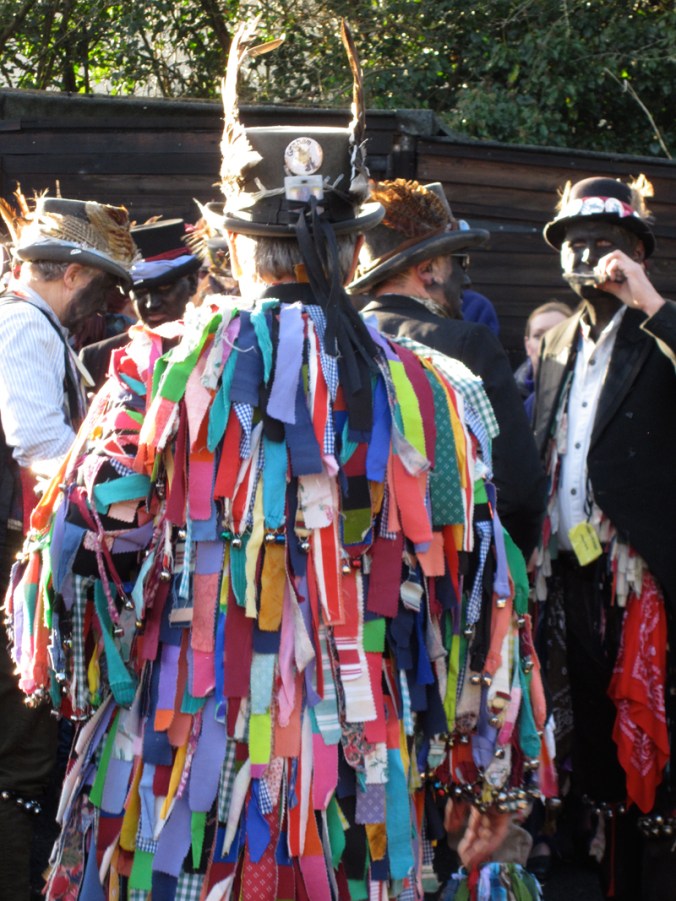
To celebrate the new year we went to Alvechurch to see the Alvechurch Morris dancers who put on a show each New Year in the pub car park of the Crown Inn at Withybed. As well as their dances they also perform their entertaining politically cheeky response to the past year’s news in the shape of a traditional George and the Dragon style Mummer’s play. They were also joined by several other dance groups from the region, all proudly dressed in variations of what you would expect Morris dancers to be wearing. There were plenty of pairs of beige jumbo corduroy trousers, and of course the bells round the lower leg, but the use of the strips of fabrics on the backs of the jackets and the feathers in hats really made it a spectacle of eccentric British-ness some would be surprised to see still in existence.

Having lectured on the subject of textiles for a number of years and having tried to make the education experience not British-centric the experience of seeing the Morris dancers in Alvechurch are a reminder of our own tribal dress; just as interesting, ceremonial, entertaining and socially telling as some tribal dress from far flung corners of the world a long way from here.

Some outfits appear rather more planned than others and its tricky to see if some are trying to look ‘thrown together’ but are to the contrary. Some groups (is there a collective noun for Morris dancers?) stick to set colours and one group of women were a sort of goth vamp group at Halloween with a dash of silver – I mean that in the nicest way! Personally I prefer the more traditional looking ones with a collection of faded what looks like Laura Ashley prints alongside stripes and spots. They look more like a mood board than a dance outfit.

Of course the sound and movement is lacking in the photographs but I hope they go someway to celebrate the dress code found in one small pub car park in the Midlands today and every New Years Day.
morris1 morris8 morris7 morris6 morris5

morris4morris3  morris2

http://www.alvechurch-morris.org.uk/index.htm

http://www.thecrownalvechurch.co.uk/index.html

Art for all – good design for all

My design ethos is one of quality and appropriateness for the place. Good design should be all around us, big and small, the dot on the i, the cushion on the sofa, the roof on the building – no excuses. Why settle for second best, why copy others if you can be original? It is so sad to read of big companies risking reputations, not buying the best but producing poor quality copies – stealing designs. My students tolerate my monologues on the subject!

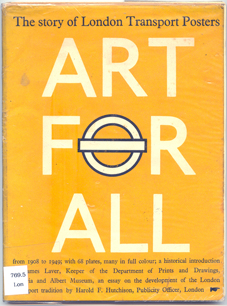
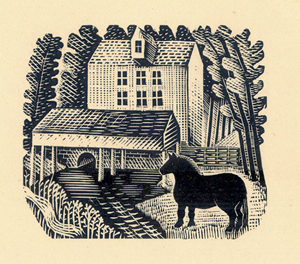
This blog entry celebrates some examples of quality design – because that’s what we should all aim for when making but also when buying. I have come across a great book called ‘Art for All’, telling the story of London Transport Posters. The book has black and white reproductions as well as colour, but the real charm is in the illustrations from original engravings of birds by Clare Leighton, printed in a salmon pink, as well as illustrations by Eric Ravilious (see below).

Image

Image Image

(Art for All – London Transport Posters 1908 – 1949, Art and Technics Ltd. London, 1949)

The quality of design in these images is inspiring, with a great sense of detail without being fussy, and such skill in creating these images in only one colour while containing so much information of texture and pattern. I admire these artists but also the people who commissioned the pieces and enabled these images to be ‘Art for All’. As an aside, Both Leighton and Ravilious produced stunning designs for Wedgwood too.

It makes me think of my own practice and how I generate imagery using drawing and printmaking to create the visual language. Yes, the computer plays a large part in ‘tweaking’ for final output / reproduction these days but it’s the marks and textures, the print quality, a smudge of graphite, that cannot be created by computer. It might be quicker creating the whole image on the computer but it wont be as good as I want it to be. Having said that, it is also the creative process of working out, testing and feeling the work resolve on paper that I most enjoy. Was the design process meant to be easy? Its the struggle and questioning that keeps me doing what I do – I’m enjoying the journey. When so much time as part of having a design practice can be spent on the computer it is important to remember to turn it off and walk away to DO the creative things…and to get better at it…